
Review: Minerva triple date moon phase chronograph
Vintage Minerva triple date with moon phase and 12 hour chronograph
I thought I would post this review of my new vintage Minerva on the Montblanc Forum rather than on the HoMe Forum, as it is the current 'home' for Minerva. Hope you find it interesting.
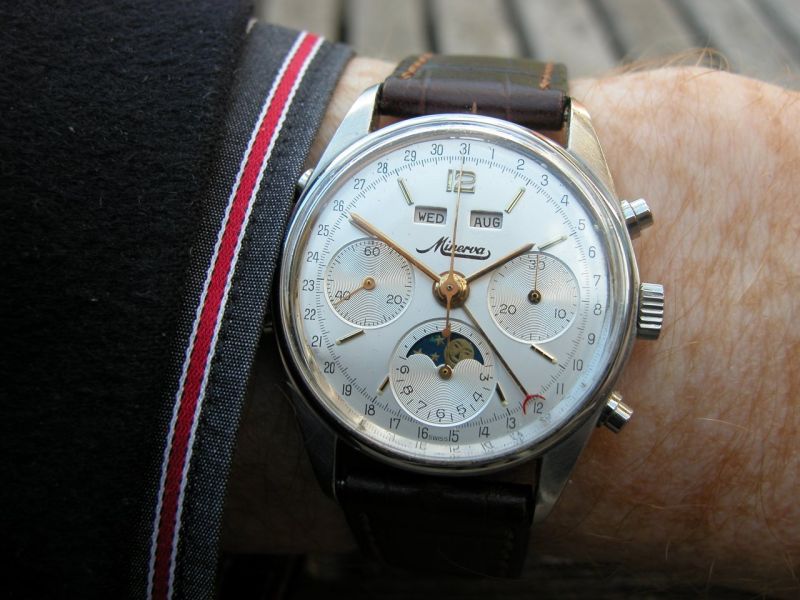
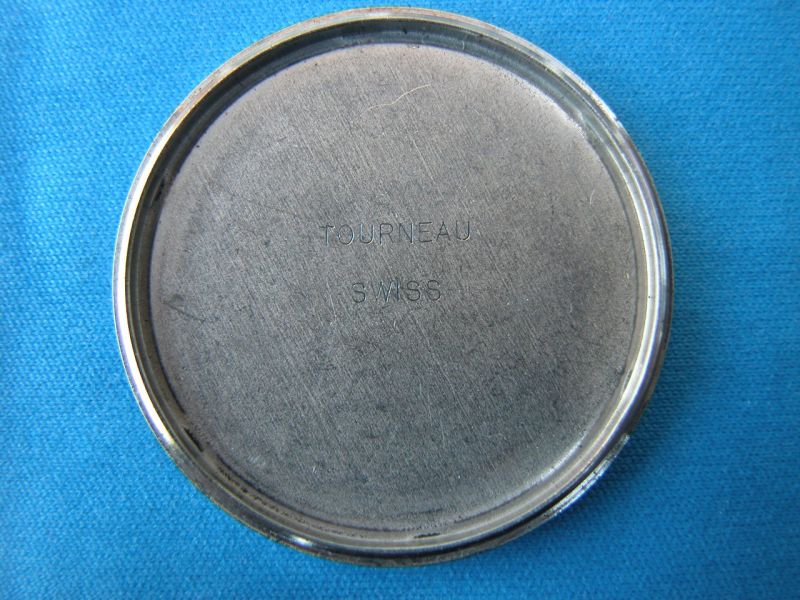
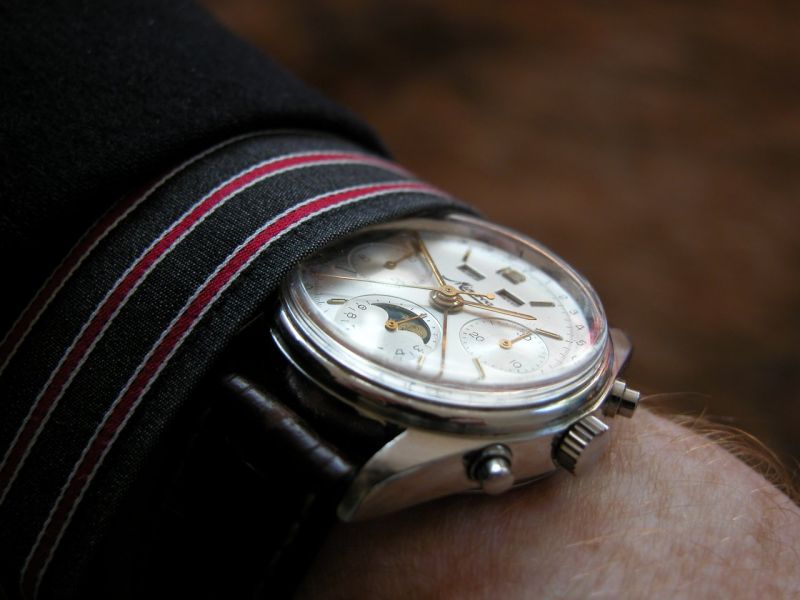
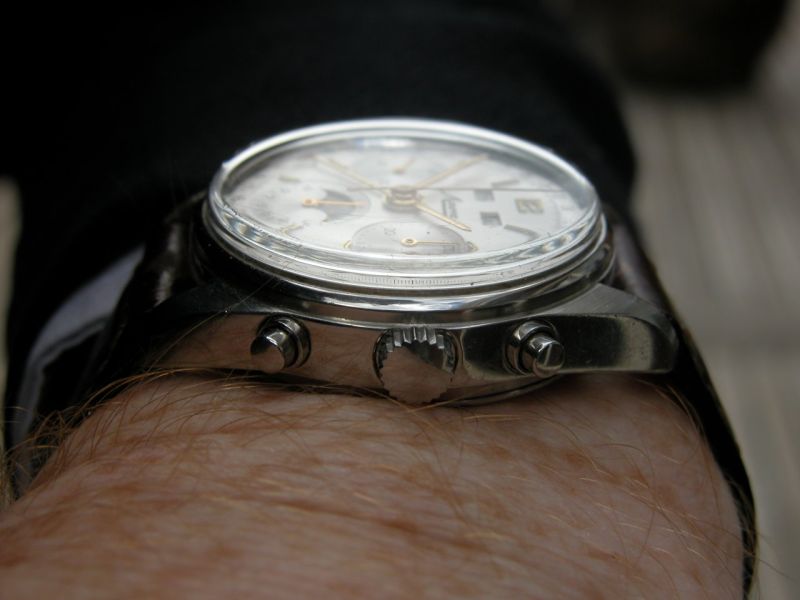
Firstly a description: the watch is housed in a steel case measuring 36 x 13mm (excluding crown) with a 19mm lug spacing. The inside case back is signed “Tourneau” after the American watch retailer. Although now an international chain, at the time this Minerva was sold Tourneau was working from their original New York premises. They assembled their own watches and distributed many Swiss brands including Minerva. They also had an extensive service division. Some watches were co-signed “Minerva” and “Tourneau” on the dial and others had “Tourneau” engraved on the case back.
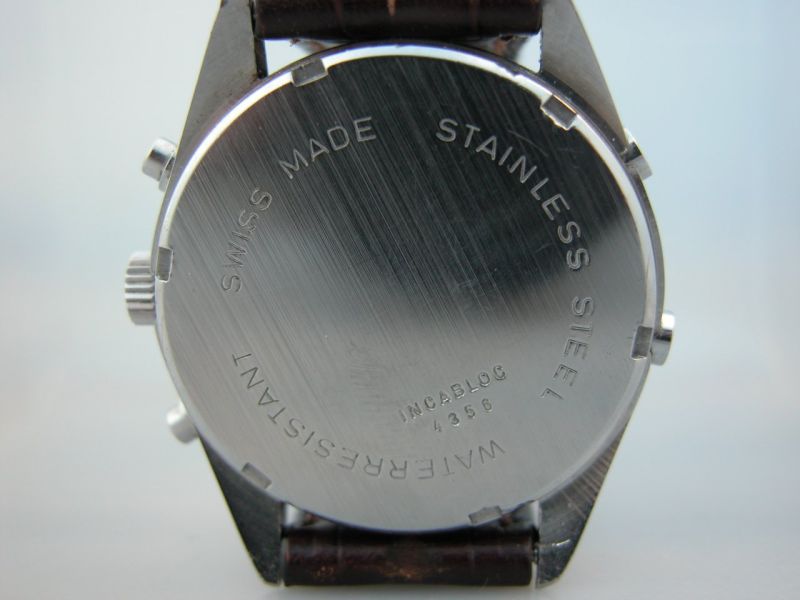
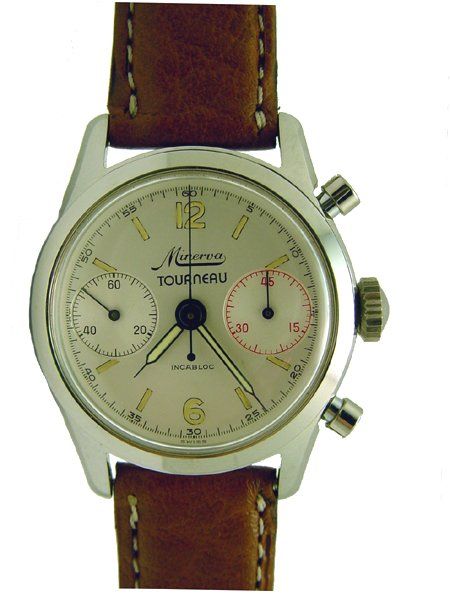
The precise number of these Minerva triple date moonphase chronographs produced is not officially known although unsubstantiated internet rumour suggests 50 in gold and 50 in steel cases. The model run appears to be quite long however, consistent with other Minerva models, extending from the 1950’s into the early 1970’s with minor dial variations.
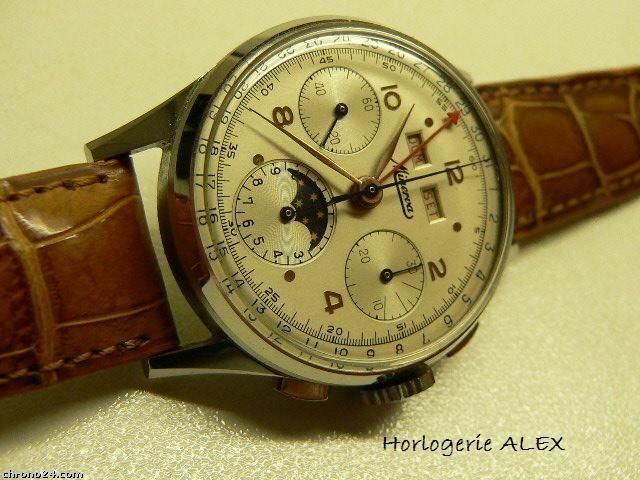
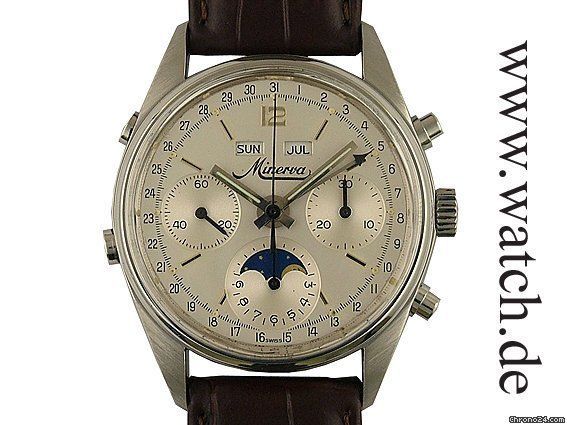
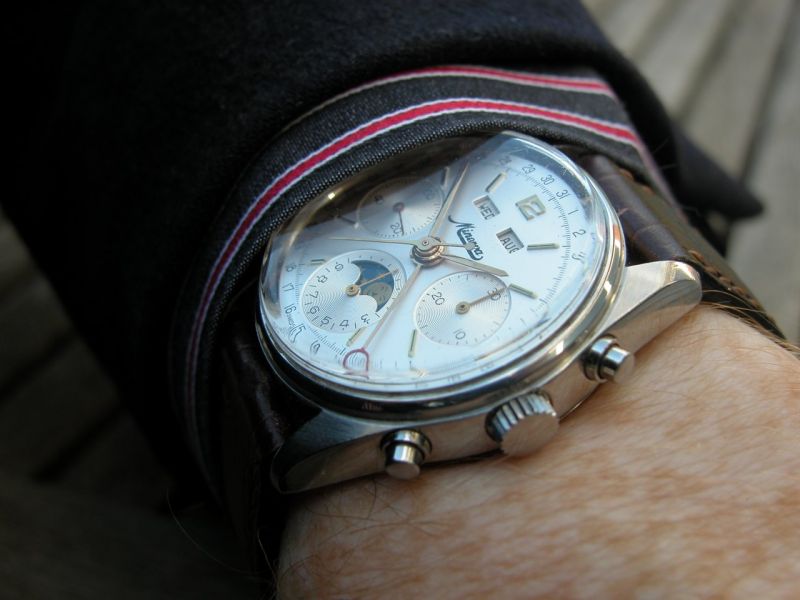
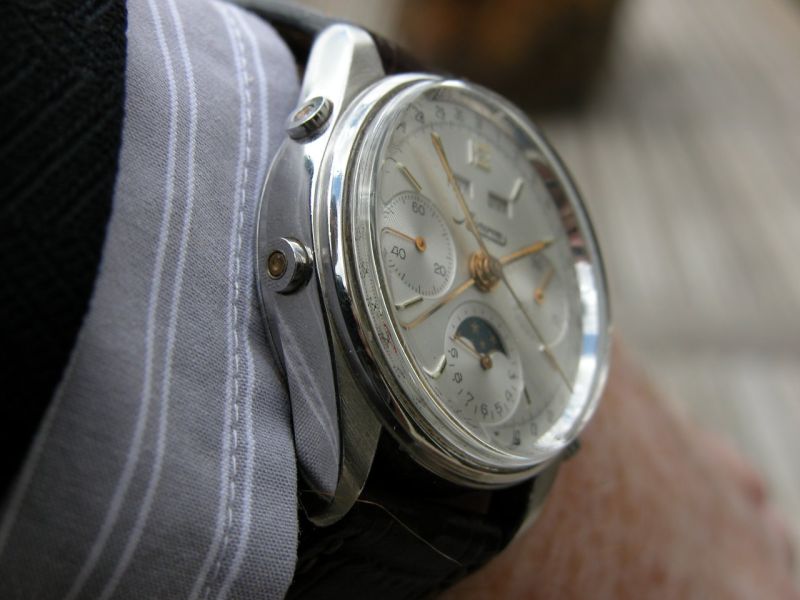
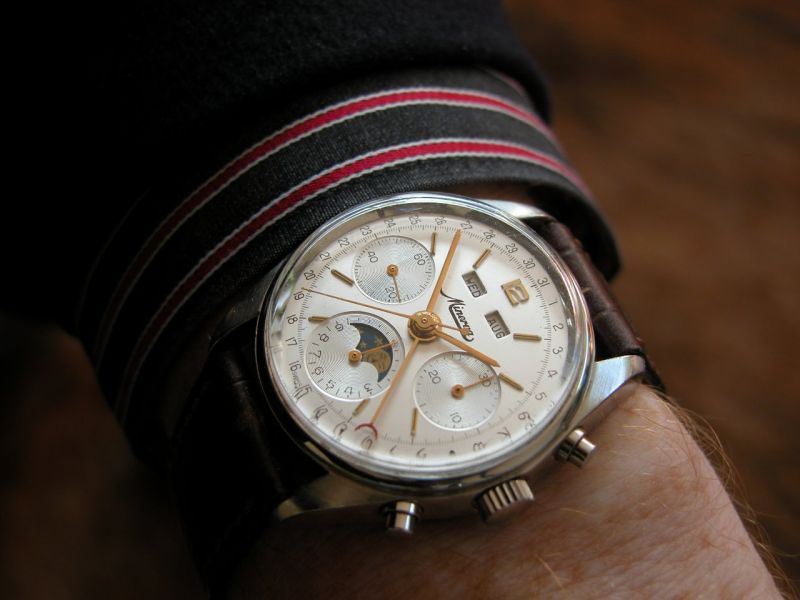
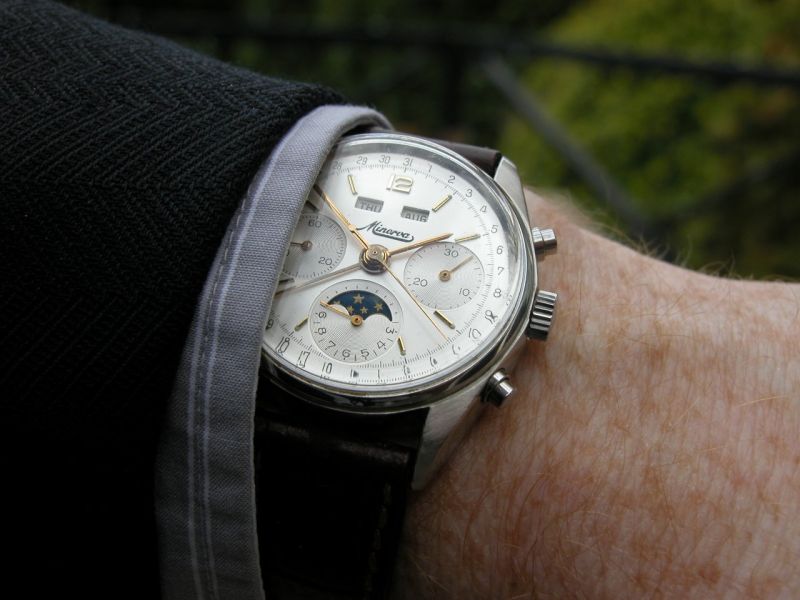
The dial is a silver colour with applied onyx inlaid gold markers with tritium dots, an Arabic “12” and matching gold hands. The perimeter date pointer has a red painted crescent. There is an inner 1/5 second chronograph track. The Tricompax display has a 30 minute chronograph recorder at 3:00, combination 12 hour chronograph recorder and moon phase at 6:00 and constant seconds at 9:00. Day and month windows complete a dial signed “Minerva” and “Swiss”. The corrector button at 10:00 advances the month when partially depressed and both the day and month when fully depressed. The corrector button at 8:30 advances the date pointer when partially depressed and both the moon and date when fully depressed. The pushers cannot be used to advance the day, month or date indicators between 2000 and 0200 hours or the date and moonphase indicators between 1000 and 1400 hours when the automatic jumping occurs.

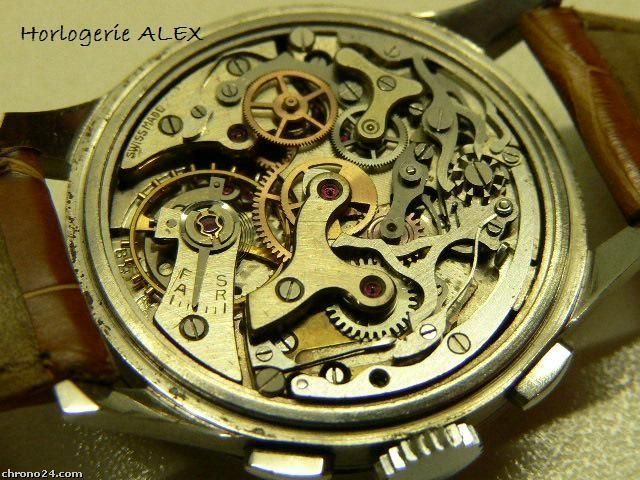
The movement is a gold plated Valjoux Calibre 730, 17 jewel column wheel chronograph. The Cal. 730 was the final evolution of a family of chronograph movements that began in the 1950’s and ceased production in 1974: the Cal. 72 was a three-register chronograph; the Cal. 72C had a triple calendar added (hence the “C” designation) and the Cal. 88 had a moonphase.
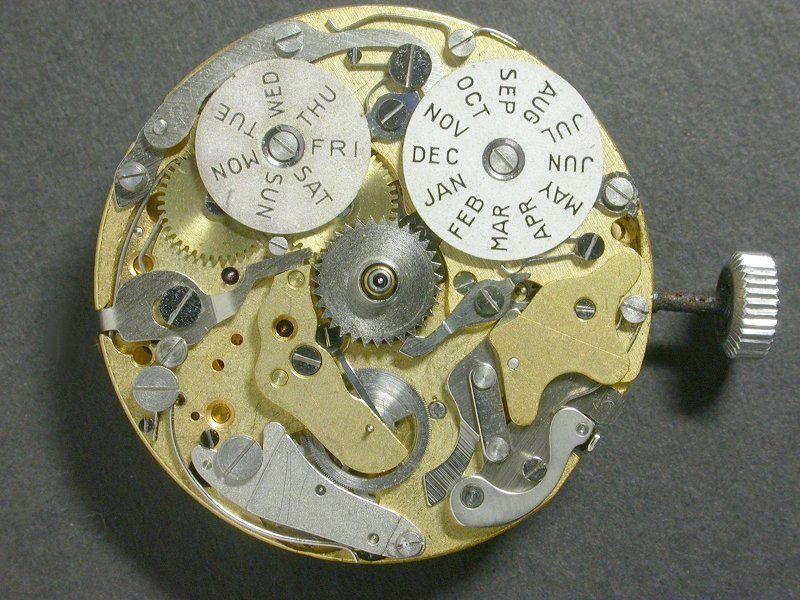
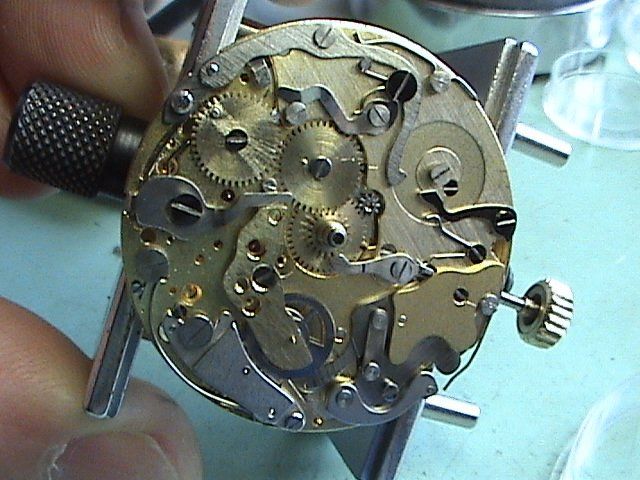
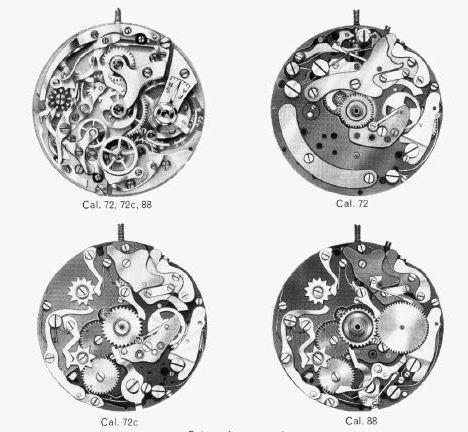
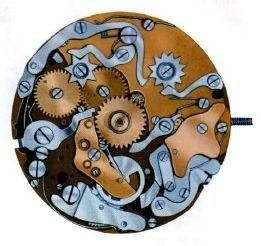
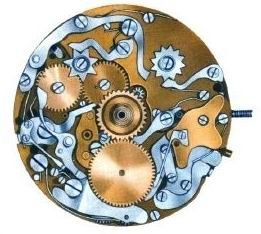
The Cal. 730 was an upgraded 72C used by a range of manufactures including Rolex, Vacheron Constantin, Breguet, JLC, Breitling (Wakmann), Heuer, Record and Ulysse Nardin. The Cal. 730 had a larger glucyder balance wheel without balance screws which beat at 21,600vph (Cal. 72C 18,000vph), gold-finished plates, a Triovis microregulator and a modified detent system for easier servicing.
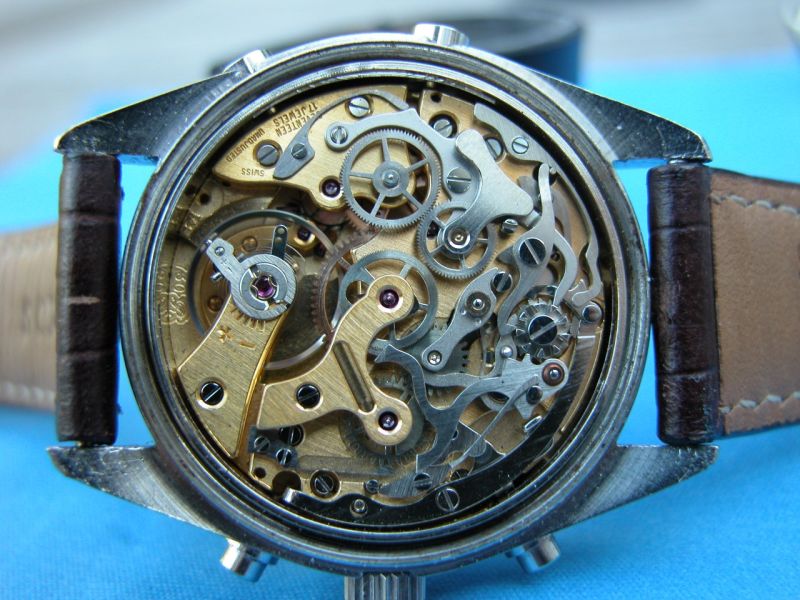
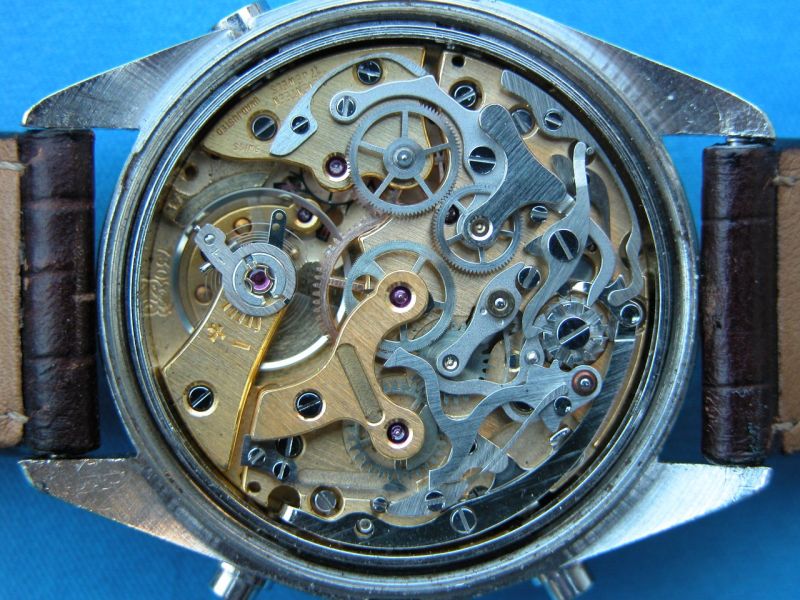
While the Cal. 88 is the variant with moonphase, the movement in this watch is marked 730 and has a moonphase. Could this be some sort of variant of the Cal. 730 or is something more sinister afoot? You will notice also that the bridge has had the manufacturers name removed.
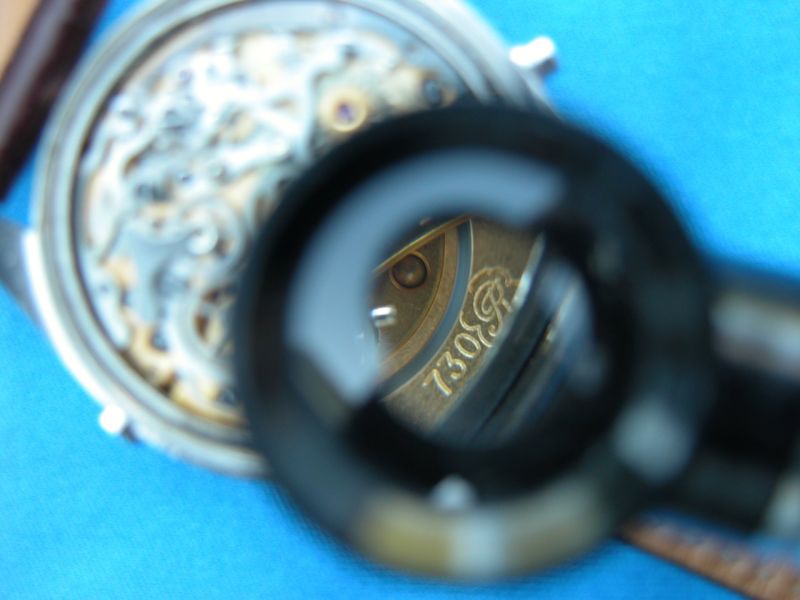
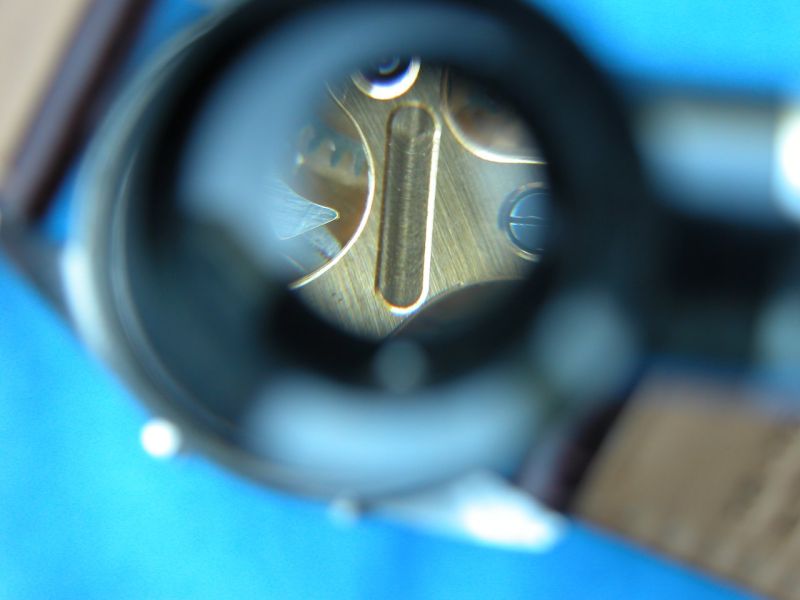
So, what is going on with this movement? The Cal. 730 shouldn’t have a moonphase as far as I can tell, but I am happy to be wrong. The defaced bridge and lack of Minerva signature on the movement suggest that the original movement may have been swapped out at some point. Were Tourneau assembling these watches themselves in the 1960’s and using movements such as this, or has something happened in the intervening years? Could additional parts have been added to a Cal. 730 base to provide a moonphase display and is this movement some sort of frankenhybrid? Perhaps you might have some other theories?
Despite these issues there is a lot to like with this watch. The 36mm case has a stocky appearance accentuated by the high acrylic lens and it is extremely comfortabe on the wrist. The chronograph has a distinct activation and ‘whizzing’ sound on reset. The dial is a joy to look at and despite the number of hands and amount of information displayed it is very easy to read the time or date at a glance. The corrector pushers in the case allow quick setting of the displays but, as per all Valjoux calibres, the month must be advanced manually. Finally the watch has a complex mechanical ticking that I love to listen to – there really sounds like there is a lot going on inside. Although the lack of a signed movement probably reduces the value of the piece, the overall watch is a pleasure to wear, the case, dial and movement are in good condition and I like a bit of intrigue.
Andrew


There's a special place in heaven for those who manage . . .
. . . to review vintage watches . . . many, many thanks, Andrew. For anyone that hasn't written one, it's quite a feat to pull off in the space of a week, especially when you have a demanding day job! I would say that despite the multiplicity of complications, sub-dials, hands, and pushers, the overall aesthetic effect isn't at all busy, nor is the dial overwhelmed . . . quite an impressive feat when you consider how easily Minerva could have got it wrong. Question: if Montblanc is able to service the watch, will you ask them replace the chronograph bridge with a signed Minerva bridge? Cordially, Art
Kind words, Art, thanks…
Despite the wealth of knowledge available on the internet, it is difficult to find a lot of reliable information. All the retired watchmakers out there better start sharing their accumulated knowledge before it is lost!
Not such a huge task to prepare this report for PPro as I had done a lot of research before committing to the watch – didn’t notice that bridge though! The one thing my kids have taught me is how to multitask.
You will remember my questions a couple of months ago on the issue of Minerva servicing. This watch wasn’t available to me at that point but the servicing of vintage Minerva pieces was on my mind. I was reassured to hear that they would and that the MB network could be used to get the watch safely back to Switzerland.
I wonder what sort of parts Minerva keep in stock? With this little ‘surprise’, however, I wonder what Minerva /MB will say and I don’t expect they will want to touch the watch. These Valjoux movements were quite common in a range of brands in the 50’s and 60’s. Would others just get this movement serviced by a competent local watchmaker?
Most importantly can anyone tell me how this apparent Cal. 730 has a functional moonphase?
Andrew
It was around midnight after a long day when I first read your review . . .
. . . but now that I'm reading it again in the morning (before coffee!), the implication of the milled chronograph bridge and mismatching movement number is startlingly clear. My apologies - I shouldn't have asked what in retrospect seems like a very silly question. Obviously, Montblanc wouldn't try to render a replacement movement as the genuine article . . . now, off to brew the morning coffee! Cordially, Art

Concerning the "special place in heaven"...
do you have any inside knowledge about heaven´s architecture, Art?
I know you just want to express your appreciation of Andrew´s reviewing his vintage Minerva, but what on earth has this to do with heaven  ?
?
To my knowledge we can read in John chapter 14 that Jesus says in his father´s house are many mansions and he is going to prepare a place for his followers there. But there´s no special mention of vintage watch review authors!
This is not to insult you, Art, but I´m a bit sensitive when it comes to trivialize things that (depending of what beliefs you hold) may be of eternal importance, i.e. valid beyond the limits of time that we watch enthusiasts are so much concerned with.
Best regards,
anaesdoc
Hi, anaesdoc . . .


What a beautiful vintage piece, Andrew!
IMO that’s one of the “tastiest” blends in watchmaking: a chronograph / full calendar / moonphase and your gorgeous Minerva is a pretty nice example of how it can be perfectly executed.
Thanks for the review and pictures, and congratulations
Marcelo

Awesome review Andrew..
Nice addition to your collection.
Not quite sure about the origins of your movement. I'll ask MB if they can shed some light on this mystery.
Thanks again for posting this wonderful review,
Best, MIke
That would be appreciated …
Thanks Mike,
It would be great to get more information from MB/Minerva. The 4356 stamped on the case may be a serial number to help the investigation.
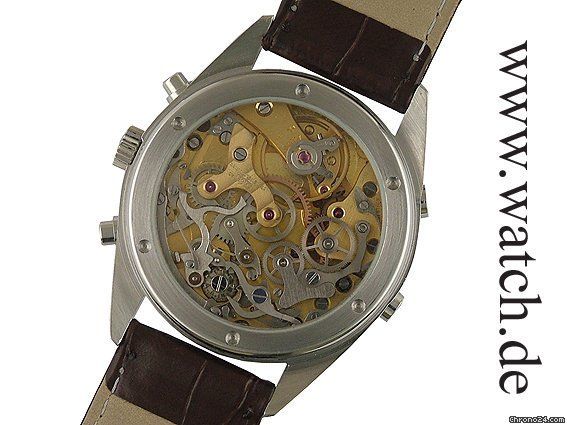
Looking at the later triple date moonphase Minerva below superimposed on my movement, the escapement also appears to be from a Cal. 730. It appears to be possible to add the moonphase complication to the basic 730 calibre and this would have had some other advantages over the older Cal. 88 movement.
However, the milled bridge suggests that this movement was not original to the watch, but there may be another explanation.
I am hoping that someone with knowledge of these Valjoux movements and perhaps Minerva and Tourneau’s practices at the time can shed more light.
Regards
Andrew

Now I know at least something about Minerva
Thanks to your review, Andrew!
I like the watch´s look and interior life - thanks for your effort to present this lovely vintage chronograph again.
Best,
anaesdoc
Now that's a watch. Congratulations.
Thanks for this great review! I really like your new watch, even with the machined bridge. By the way, it does appear that the machinist did a careful job of removing the offending name - It looks like he beveled the edges and everything
I have a few Minerva chronographs (including one from 1941 with a Val71) and have wondered what to do when it's service time. I had two of them serviced by an independent watchmaker, and I'm sorry to say I don't want to repeat that mistake, so I'm hoping Montblanc will offer to service these watches, which are now part of their heritage.
As to the proportions of the watch, you do get used to it. One of mine is 37mm and quite tall, but that's part of the vintage vibe and it feels so nice to put one of these on after wearing modern watches. They just feel right. Maybe one of these days I'll find a 72C for my collection. I do love them.
Cheers,
Jeff
Servicing …
Thanks Jeff, I appreciate your comments.
That bridge is interesting, isn’t it? It certainly wasn’t a hatchet job. The movement is otherwise in very nice condition.
Click here for that earlier thread on MB service . It sounds promising that they will help with service needs.
I am very pleased with the proportions and it really is a pleasure to wear.
You should post some images of your Minerva’s; I would love to see them.
Regards
Andrew
Hi Andrew,

Here is the back of the vintage piece. Mine has a snap-on back as you can see on the right side of the image. I had an extra back made with a window so I can see the movement.

Small watches unite!

Jeff
Nice ...
Thanks Jeff,
Very nice chronographs and great to be able to see those movements. Legibility on the black dial looks excellent and I also like the 45 minute chrono counter.
The size looks perfect to me!
Andrew


Great reading, Andrew!
Thanks for presenting some background on the model, as well. As usual, I've learned a lot from your post. Congratulations on a great new vintage watch. You wear it well (Great wrist shots!).
Cheers,
Daos
Wrist shots …
When I read your comments I realised that I had only posted wrist shots rather than static posed photos. Despite the fact that one can control lighting, reflections etc more easily in a posed shot, I really prefer the ‘life’ that a wristshot brings to a piece. Movement images are a different thing of course.
As someone wittier than me once said: “a watch that is not worn on the wrist is a clock”.
Thanks for your kind comments and I am pleased you like the Minerva.
Andrew

A very nice watch and an informative post...
The solution to the mystery of the ablation of the bridge engraving is eagerly awaited.
tempusfugit

Power Reserve ...
Some additional information I did not put in the initial review:
The power reserve of the Cal. 730R has been consistently 44 hours from fully wound.
While my preference is for manual wind watches to have a PR comfortably over 48 hours so that they do not stop if one forgets to wind the watch on one day, in practice the 44 hours has produced consistent time keeping with a quick wind each morning.
A
Minerva triple date moon phase chronograph
but your Minerva is not from 1050th, nore from 1970th, it is a re-assempled of the middle of 1980th with a Wakmann caliber Valjoux 730 upcraded to a Valjoux 88.8. Because this the name "Wakmann" on the bridge is reamed.
After the end of produktion of Wakmmann swiss, there were found some calibers, some watch brands made new assembled editions of these movements, so as Longines masterpieces or Chronoswiss, and also some watchmakers of the old Minerva factory build some of these moonphase chronographs. It is not an original Minerva factory watch.