
crown comfort
12358

The 80ies, a decade of bad taste, bad fashion…a lost decade???
I think we are all observing the trend that the 70ies are very fashionable right now. Watches from the 70ies are really sought after and demand is outpacing supply.
But what about the 80ies? No way, the 80ies!!!
The decade of the worst haircuts:
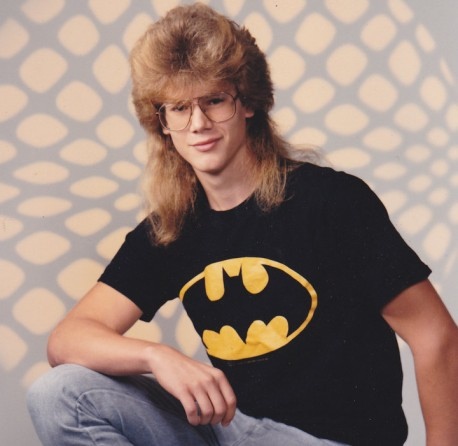 That’s not me!!!
The decade of shoulder pads:
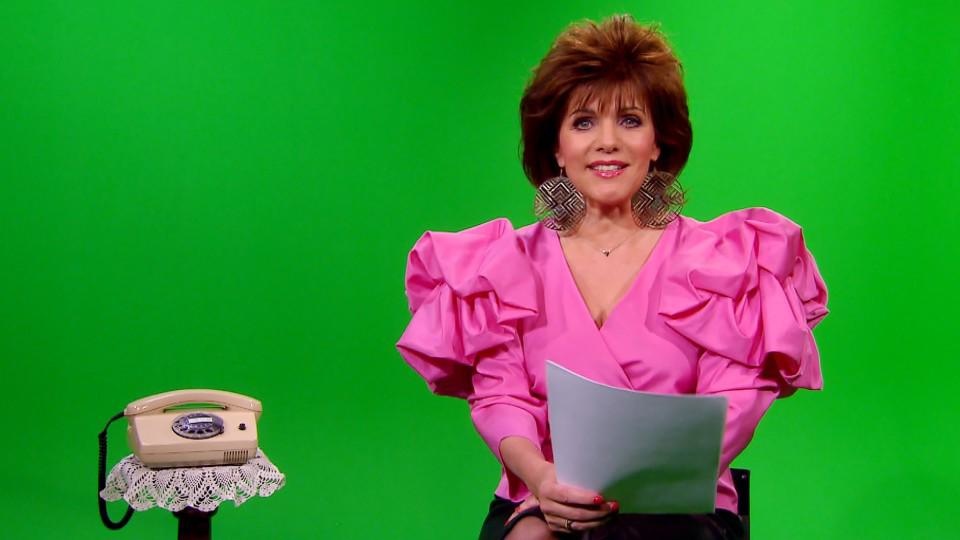 Look at the phone!
The decade of questionable taste in music (of course with some exceptions):
 Not “Too Shy”…brrrrr
The decade of calculator watches:
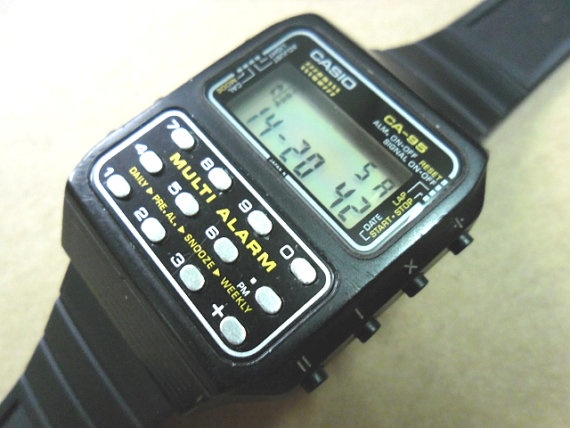 a school boy’s wet dream
And weird looking cars:
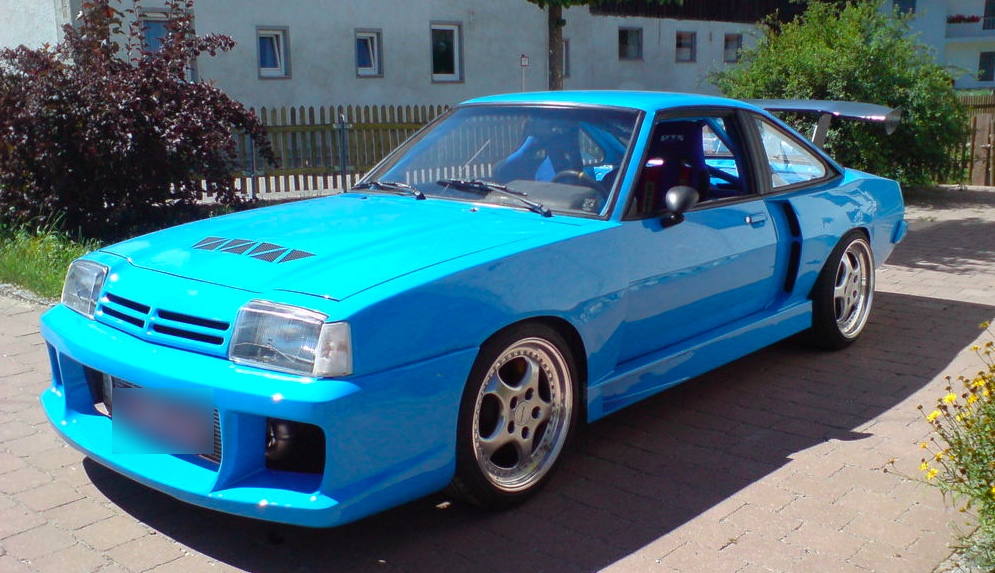 downforce of an F16 jet flying up-side-down
There can’t possibly be anything interesting for a Purist watch collector, right?
Well, maybe time to rethink. In the late 80ies, Girard-Perregaux introduced the Chronograph 7000 line.
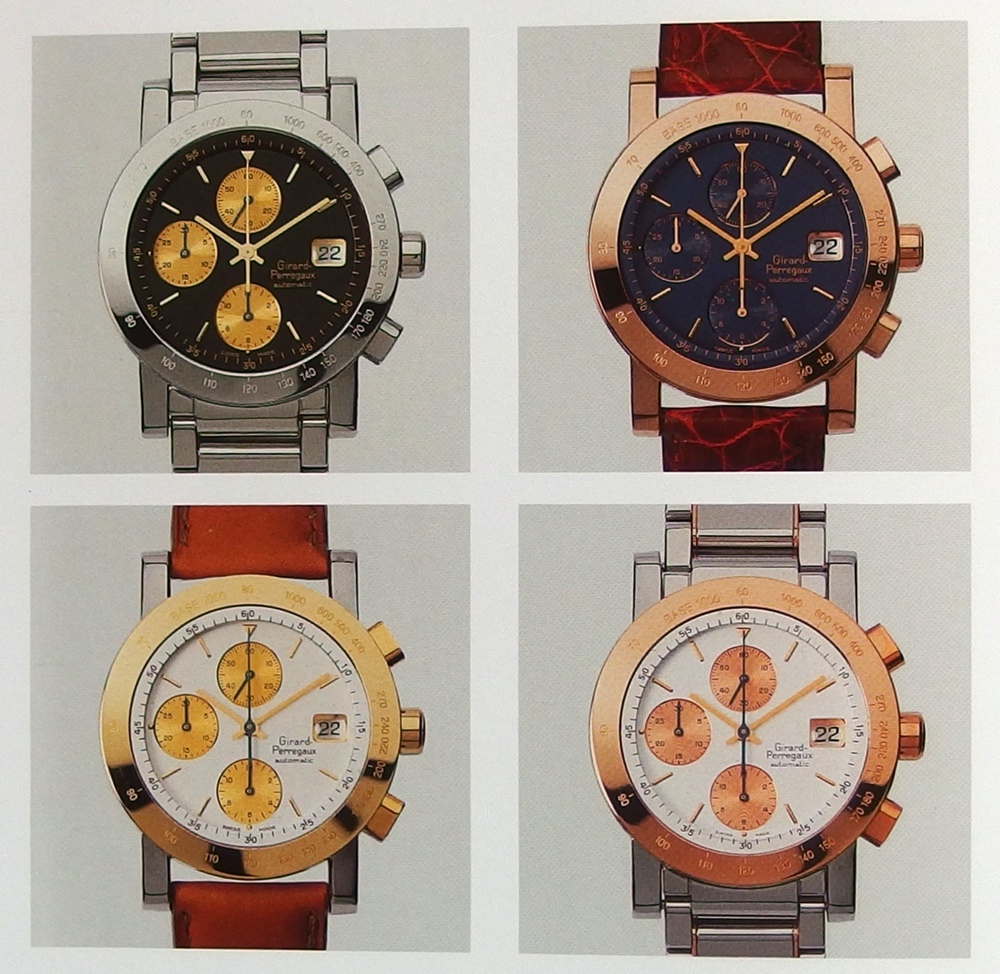
When looking at these watches with a modern eye, we easily dismiss them as 80ies look. True, but when you put them into perspective of other 80ies design failures, then probably one can see the fine effort and style of these watches.
What makes the 7000 Chronograph line interesting is that although it was created in the late 80ies, it remained in the catalogue till then end of the 90ies and during those 10 years has seen a number of slight updates and also a vast amount of different dial designs and case material combinations. We are talking about white, white/black, white/gold, blue, blue/gold, black, black/gold, red/gold, gold and and and in steel or gold or steel/gold combination cases.
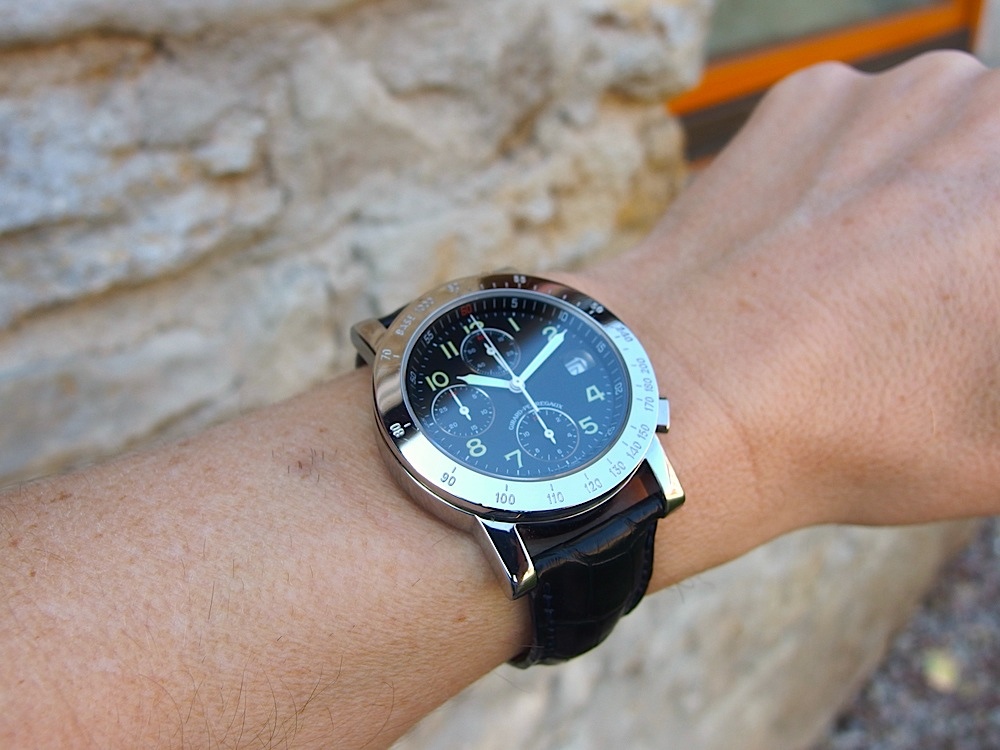
The most prominent feature of the 7000 line is the polished flat bezel with the engraved tachy scale and its triangular chronograph pushers, same as on the Richeville 2750. The straight lugs add to the 80ies style and we can also see those in the GP Traveller and Sea Hawk lines from that time period.
The case diameter is 38mm, so just right and width between lugs is standard 20mm, providing a wide choice of possible straps.
Hunting and finding a Chronograph 7000 is relatively easy. There are still many many around, however, as always there is a catch.
Mainly, the most difficult part is to decide which of the many versions is the one that someone likes most. Secondly, finding a good condition is also not that simple. The polished bezel easily attracts scratches and if they have then been polished, the engraving most likely has suffered. Also some dials have issues with age. The caliber is ETA based and usually if looked after, in good working order without major problems.
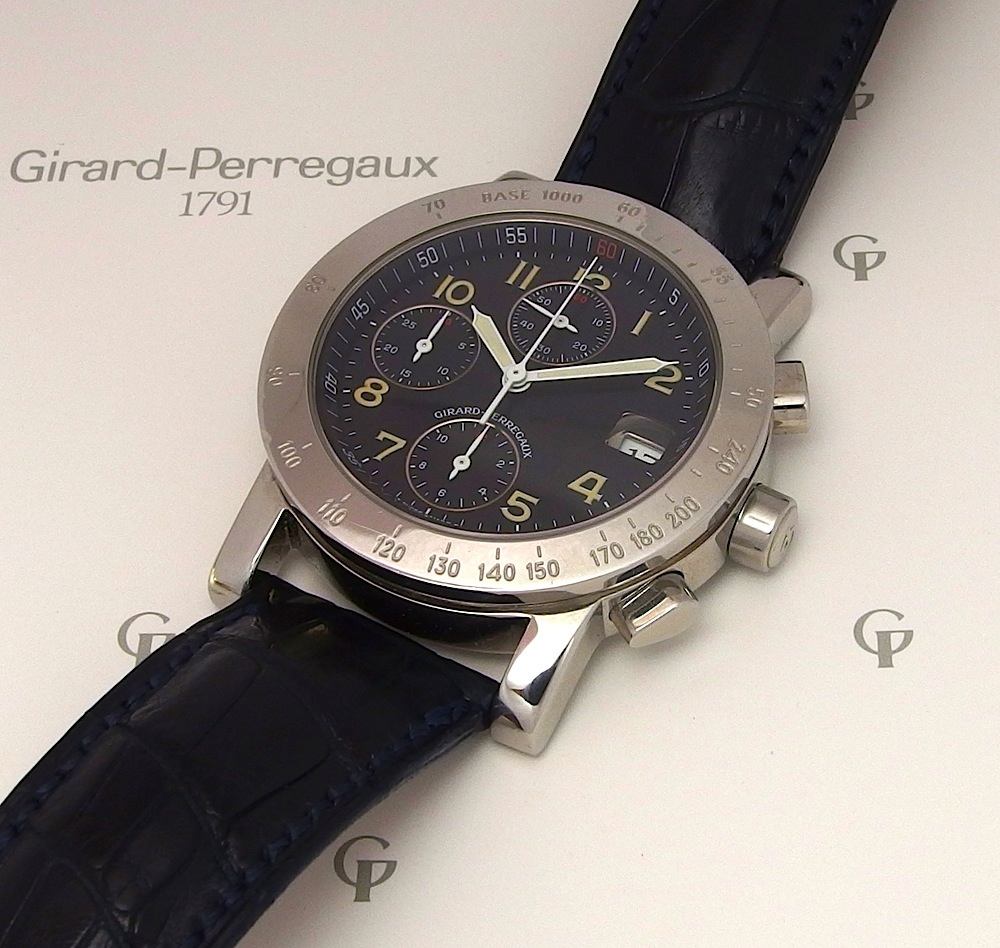
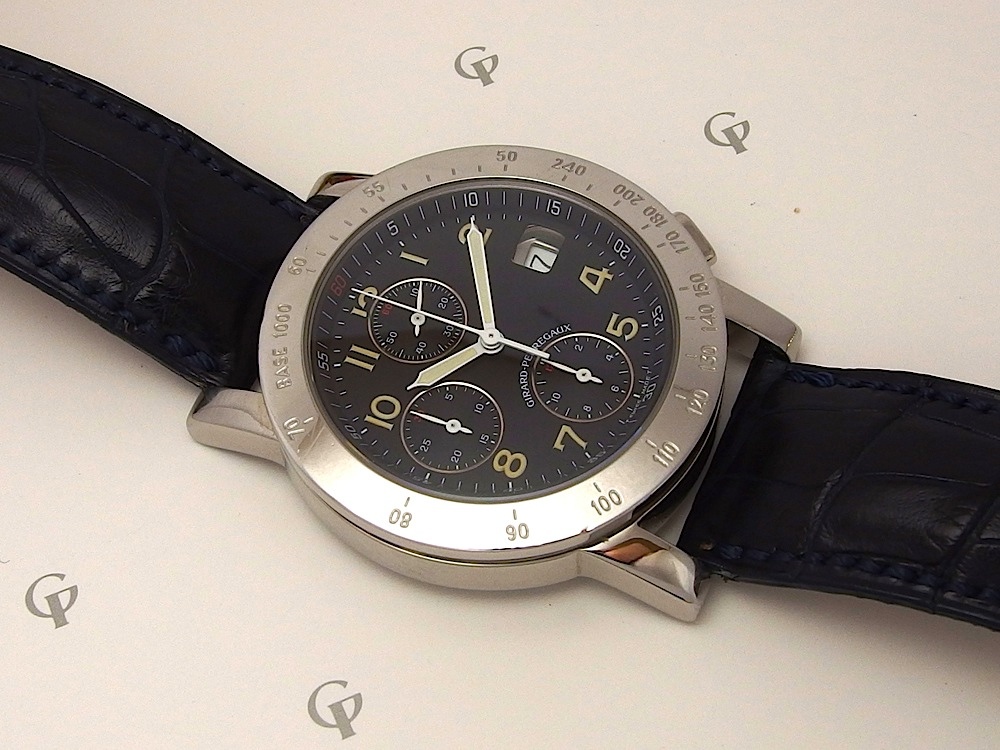
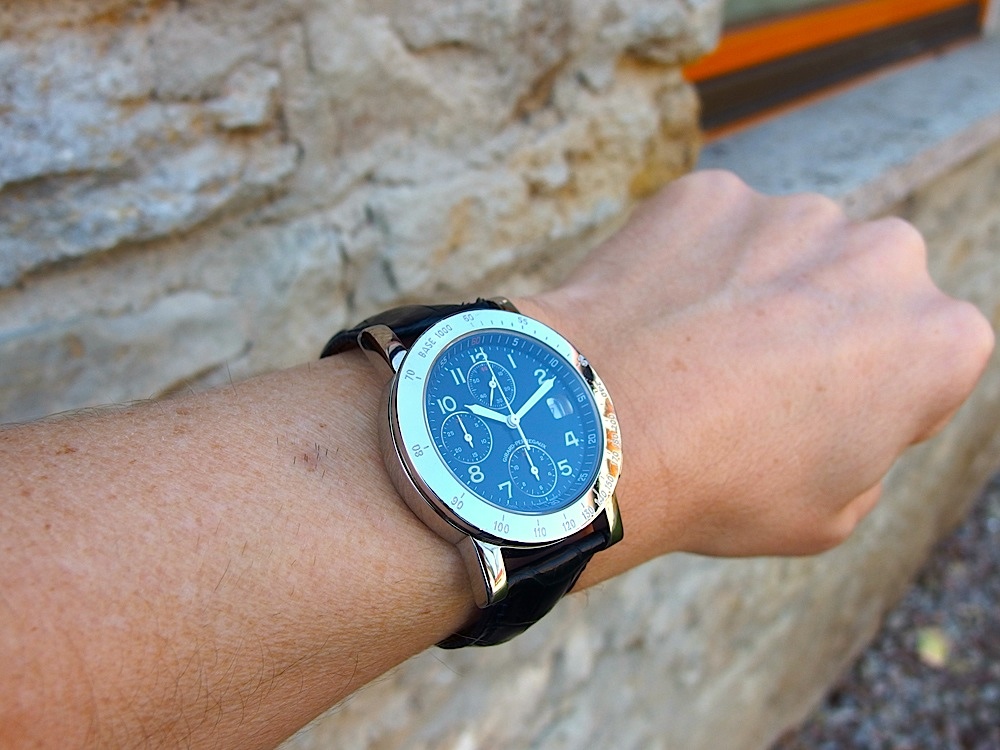
So, what version did I opt for in the end? I considered a blue or black dial with the gold subdials in an all steel case or an all blue dial for a long time, but then I saw a later version with Arabic lume numerals and a black/dark grey dial. That one immediately reminded me a bit of the Breguet Type XX and I really liked the look on this version. It took me some months hunting to find the right one, but I now can report success.
But wait, those are damn nice and with some effort still real bargains. So why dismiss the blue dial?
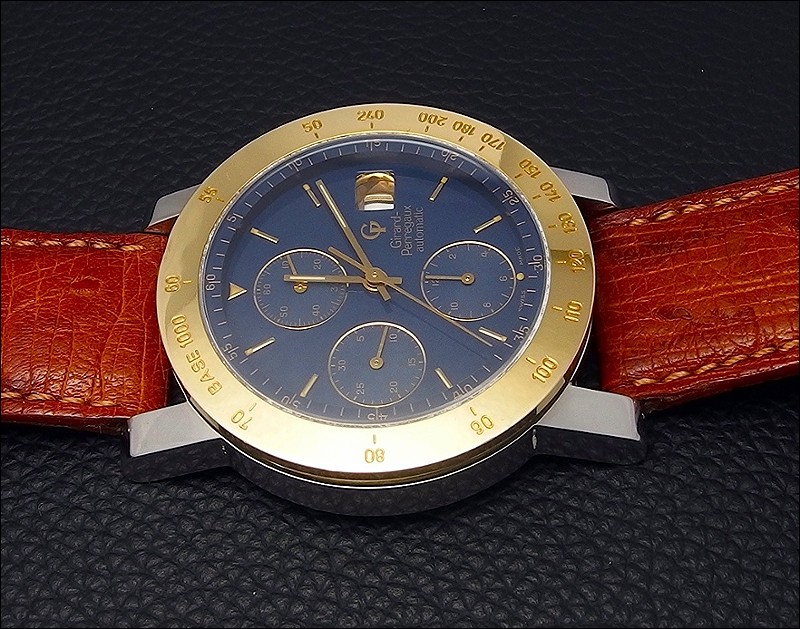
Yes, I had to get both of them.
So, the black dial of my 7000s is one of the very last versions. It is Ref 70016 and appears in the 1998 catalogue. What puzzles me a bit is that in the catalogue, the watch has a red chrono central seconds hand, while my watch has a white one. I’m sure the hand is original as the shape is exactly the same and it also does not look like repainted. It is quite possible that GP also manufactured a version with a white hand or perhaps it was changed at a service. After some concerns, I now actually prefer the white hand over the red. There are still enough red accents on the dial.
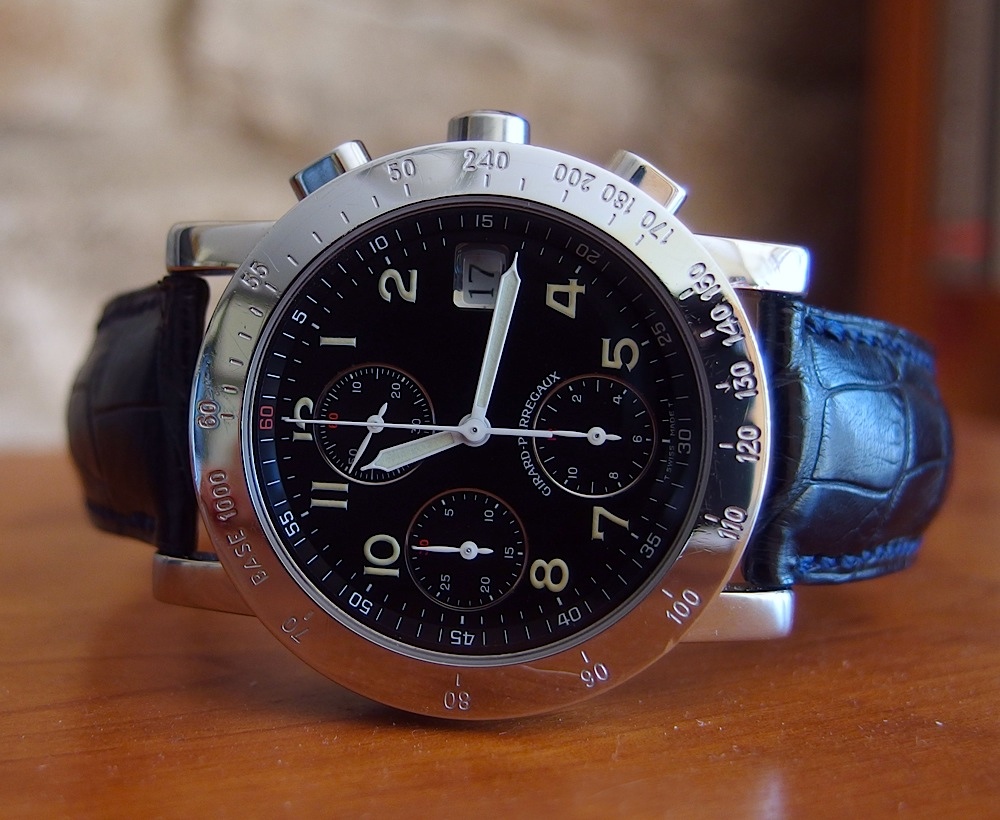
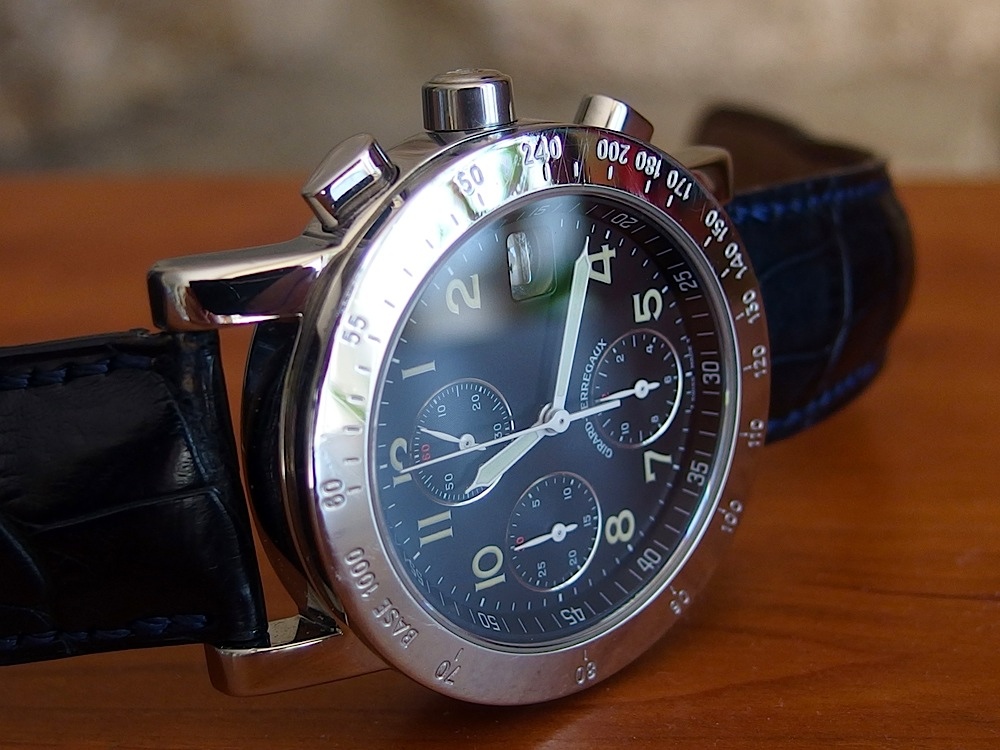
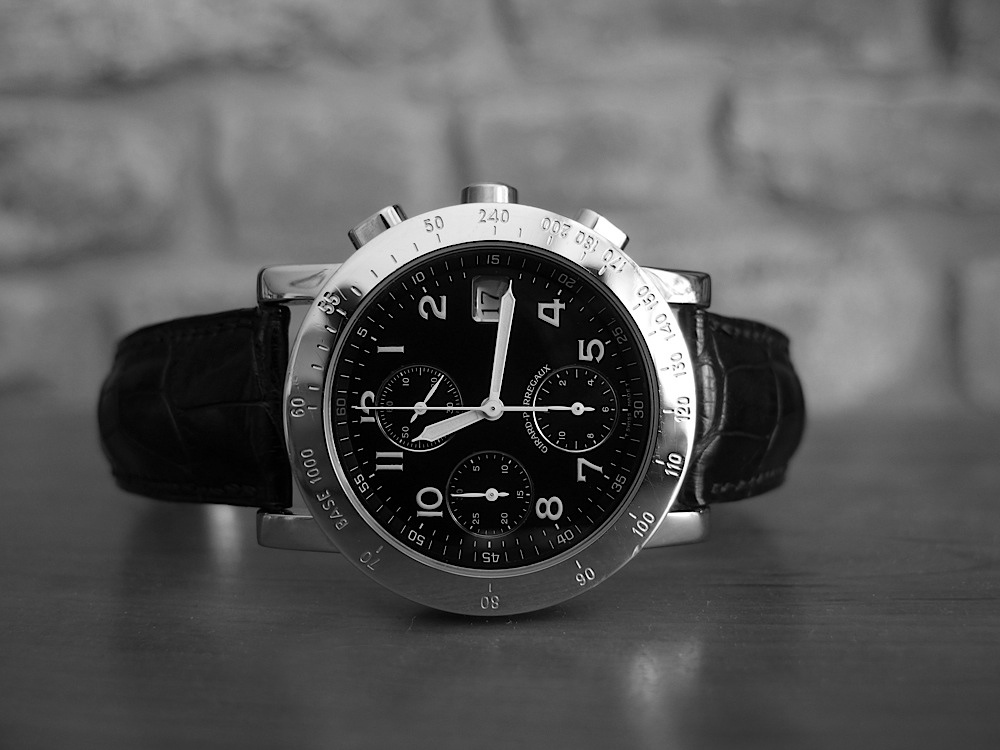
Another prominent feature is the inner loupe date window, giving it a very retro look, although I confess it renders the date window useless for me as I find it even harder to see than without a loupe due to reflections and distortions.
My choice of strap is a GP dark blue alligator strap with a deployment buckle. I think a tan brown also works well, but I already have that combo on too many watches.
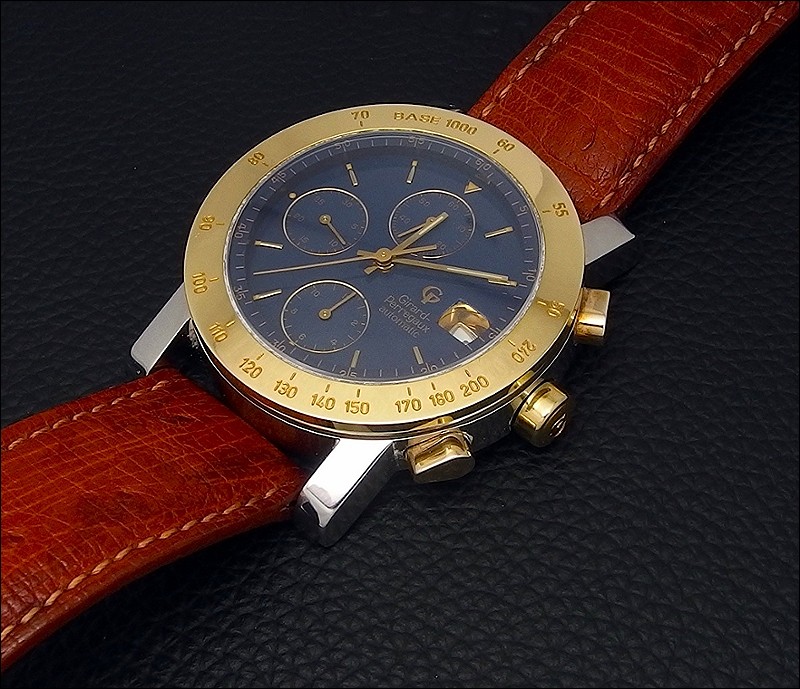
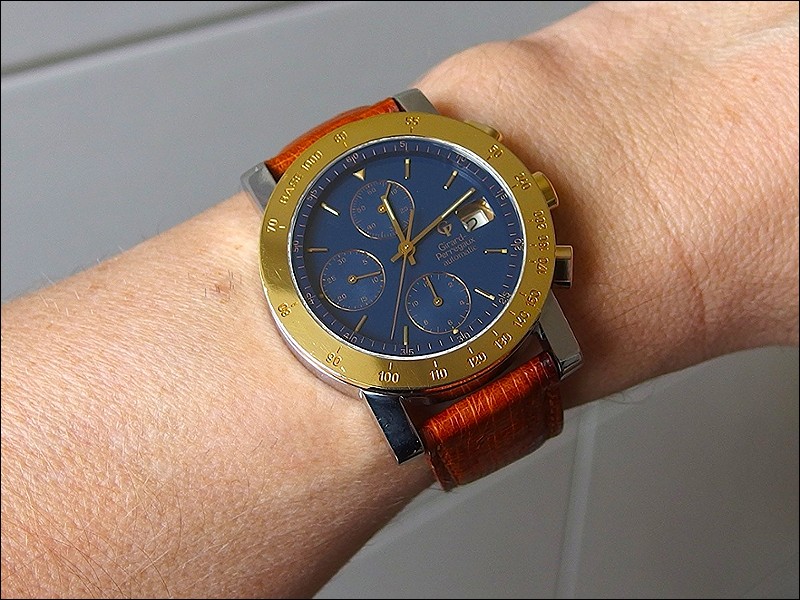
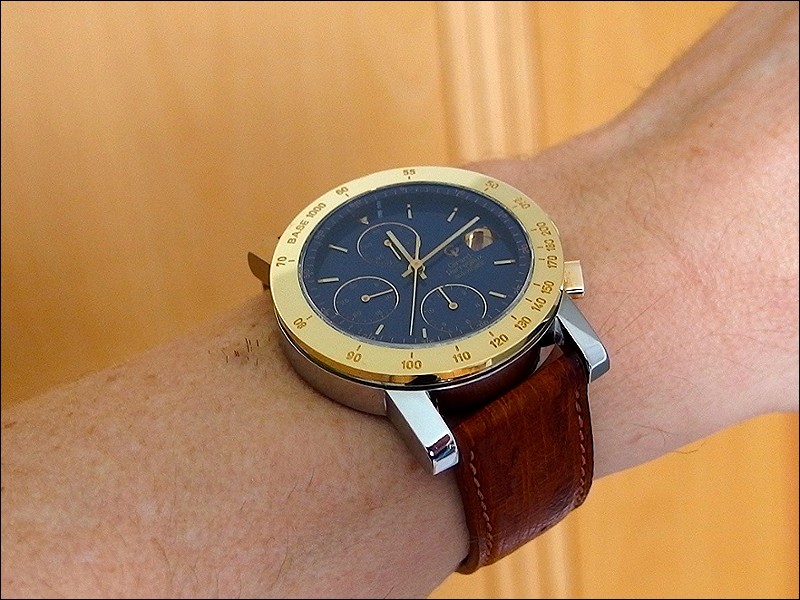
As the blue dial kept bugging me, I had to pull the trigger on a second 7000. This one is much older, dating to 1991. The design of the hands and subdials were different than in the later model, less modern. The blue dial version has a Gold/Steel case. Normally, not my thing, but for some reason here it works really well.
The earlier versions also had the older style buckle in 18mm instead of 16mm. So combining the blue, gold and steel with a nice cognac brown alligator strap.
And on the wrist? Very retro but kinda cool.
For me a real discovery of a watch that is probably often under-rated or dismissed by GP enthusiasts but in fact deserves more attention. So maybe the start of more ventures into the 80ies GP wonders…?
CC


The 80ies, a decade of bad taste, bad fashion…a lost decade???

Of course, child of the 80ies myself

That's an outstanding post ...
Thanks Nilo, I'm flattered

Well, the clothes and hair were really horrendous in the 80ies
Oh yes, the music of the 80ies

Love it...
Ah, someone else
The "Elevensies" are any better?
Hmm, I must have missed the trend to neon clothes

What a nice read & great pictorial !.. These 7000x siblings & relatives are pretty up-to-date, even by today's criteria, IMHO !.. :))
My pleasure, HS
No need to point out it's not you.....

The start of your post was quite a visual shock. ;)
Visual shock?

Very interesting!
Yes, often underrated

The 80's is the decade I would have been young, hip, and rich..
funny pics you sharing
If you have lived through that time

GP had a huge success with the Chronograph 7000!
Very cool pics, my friend
