Review
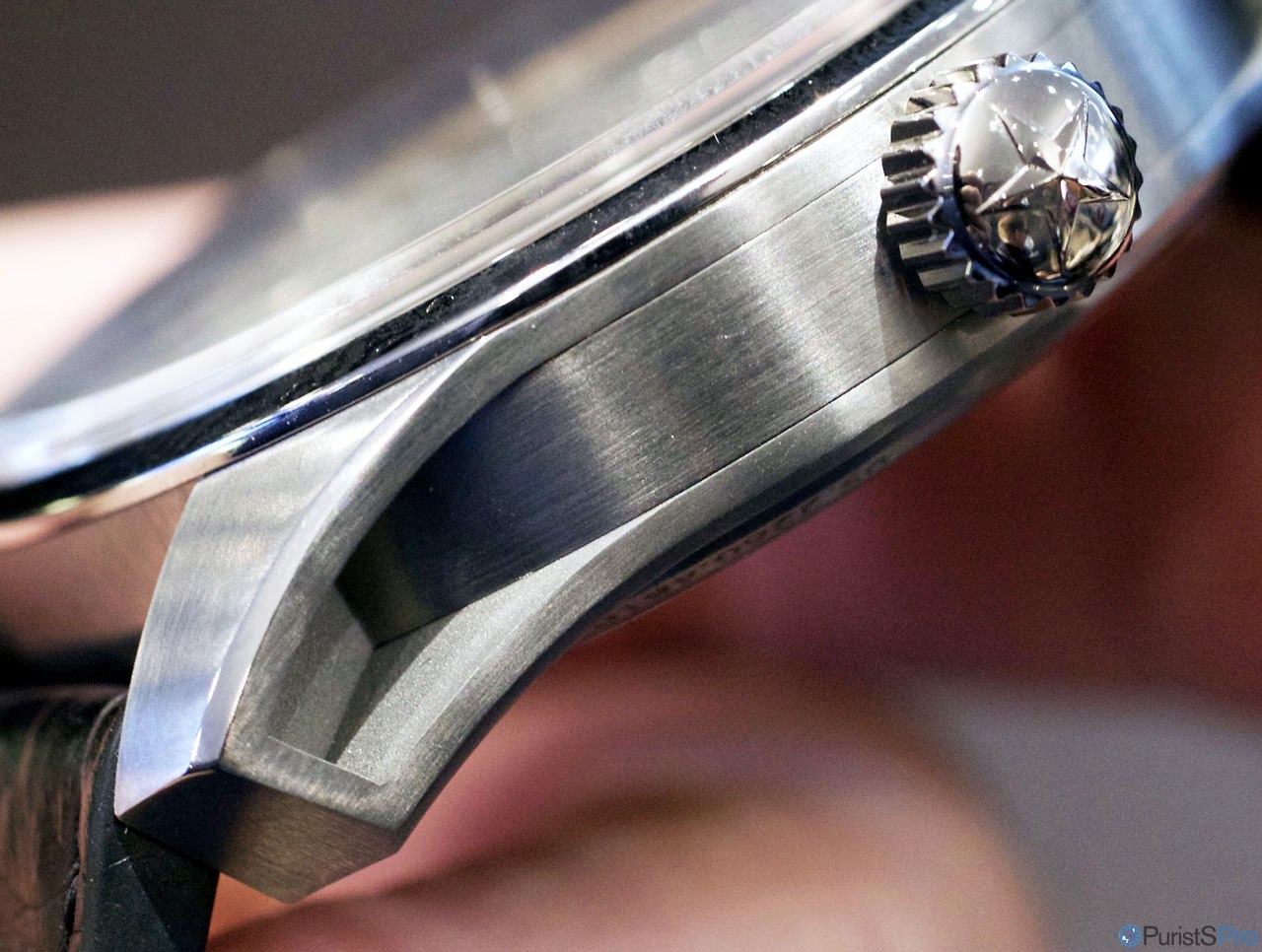
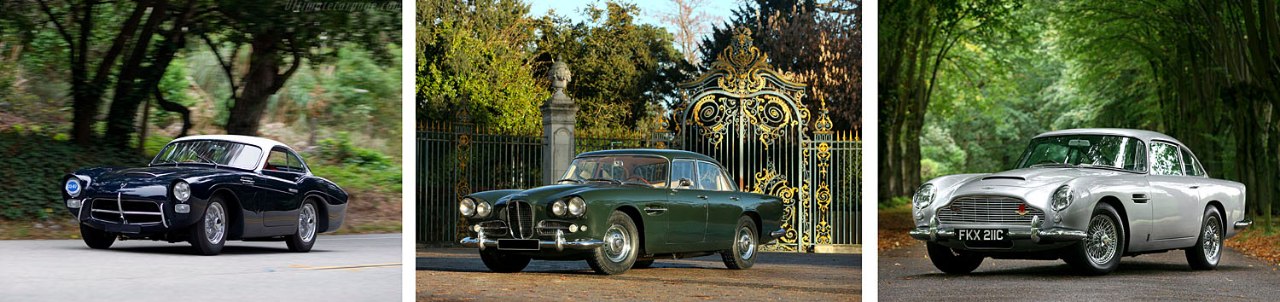
Ornatus-Mundi delivers a compelling hands-on review of the Zenith El Primero Georges Favre-Jacot Titanium, celebrating its 150th Anniversary. He meticulously dissects the watch's innovative titanium case construction, drawing parallels to the automotive 'Superleggera' concept. This detailed analysis offers a profound appreciation for Zenith's blend of historical movement and forward-thinking design.


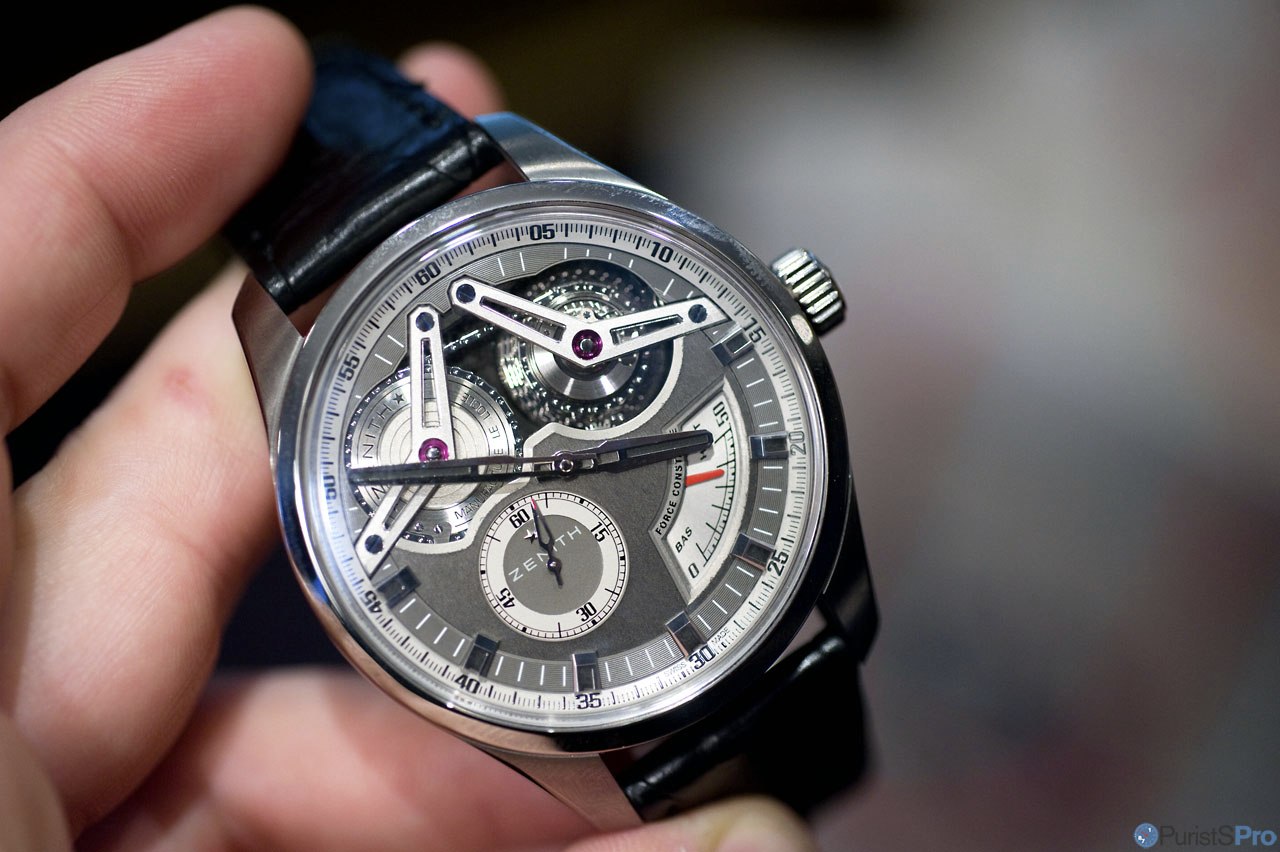
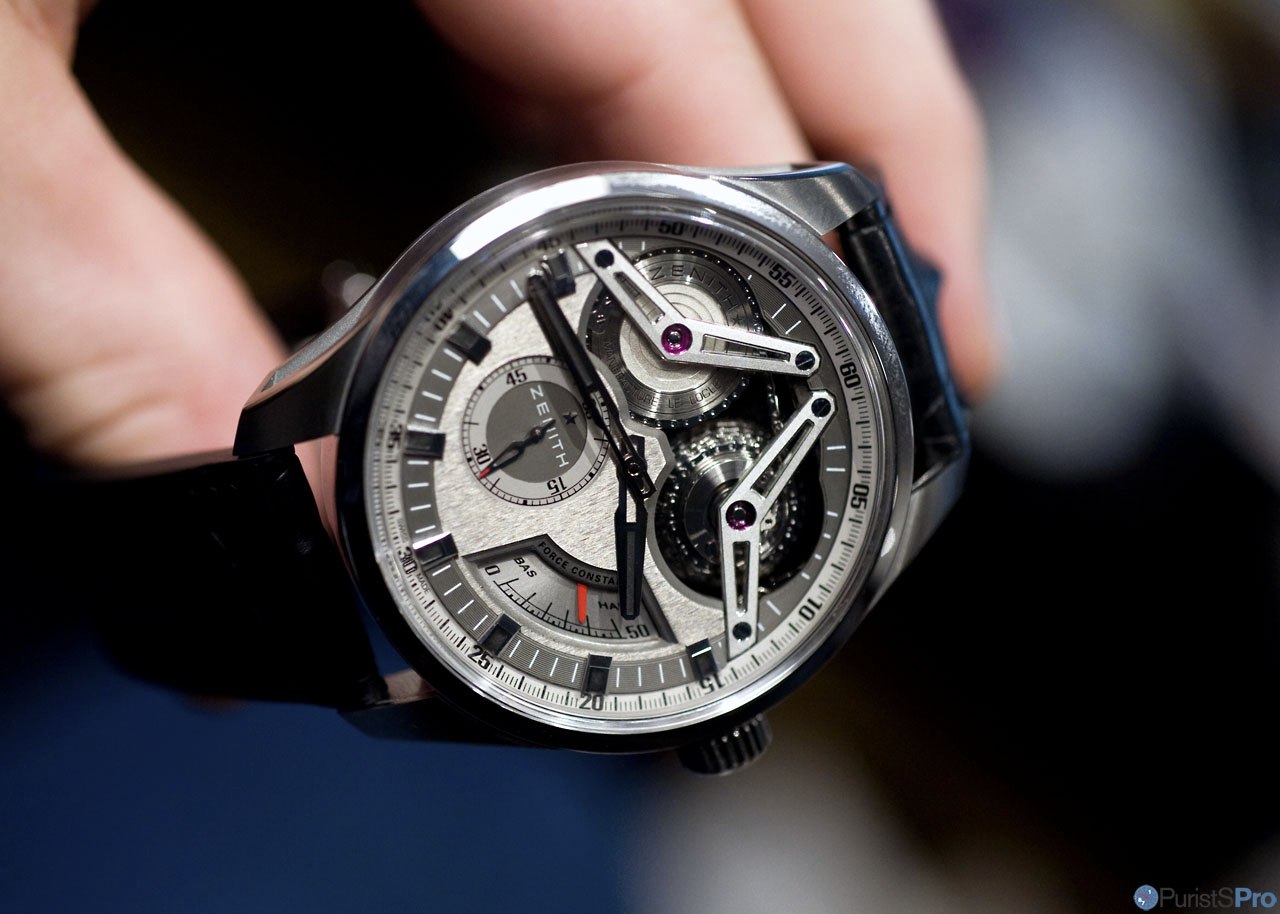
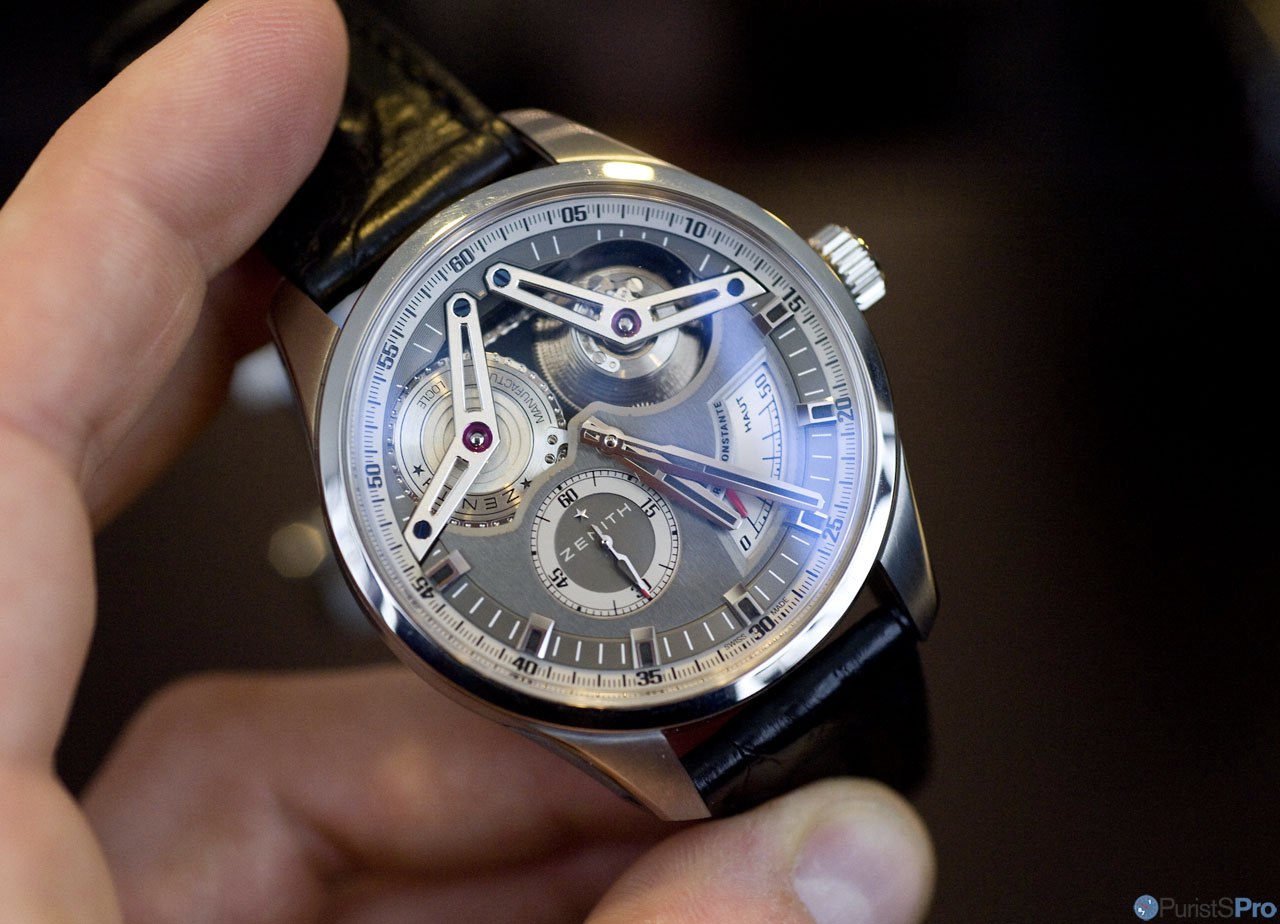
Plenty of nuances of grey colour you certainly noted how I did my best to avoid the obvious reference) manage to create a tension which is just too mesmerising to look at.
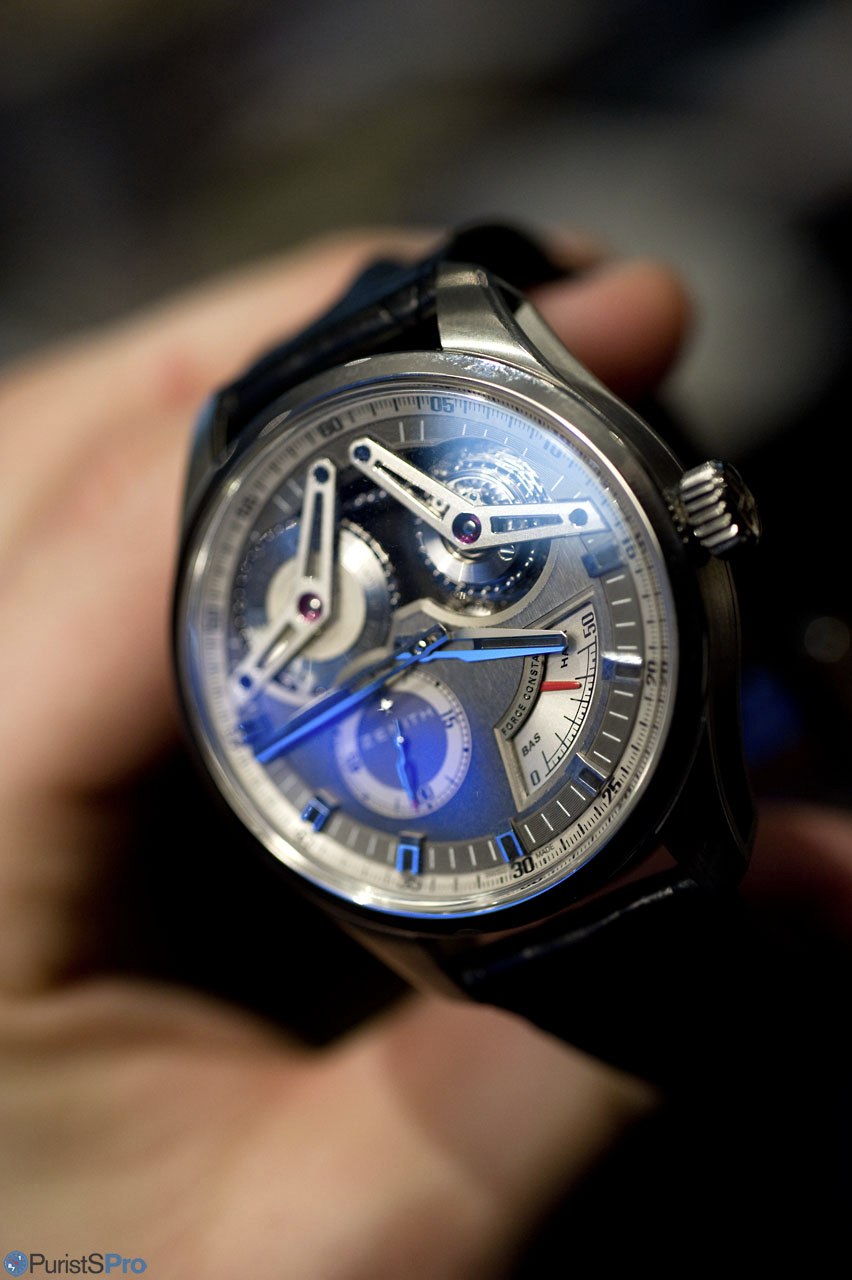
Depending on light, dark may turn to bright and bright may turn dark (compare the images above and below):
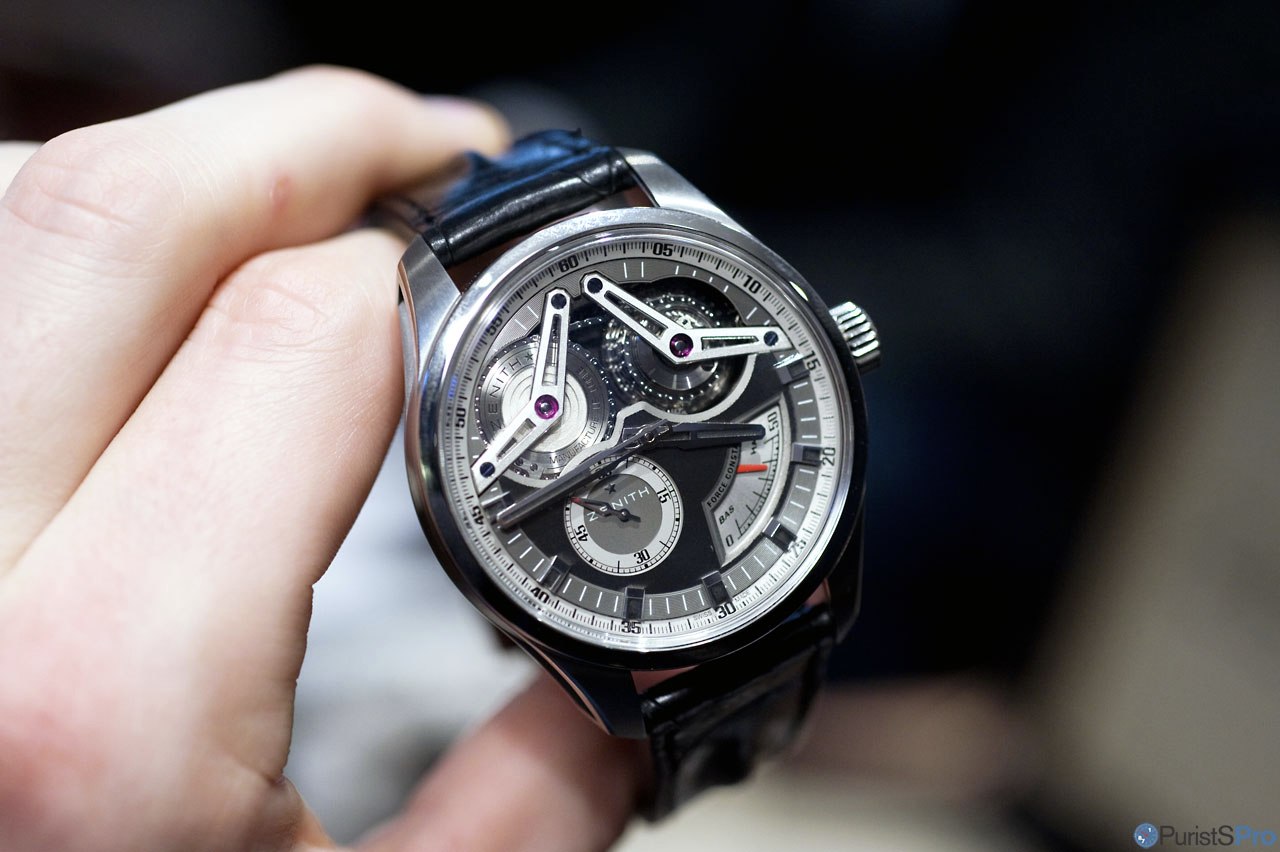
Certainly, prominent mechanical features on the dial need counterbalances. Zenith has perfected this brilliantly and plays on many levels.
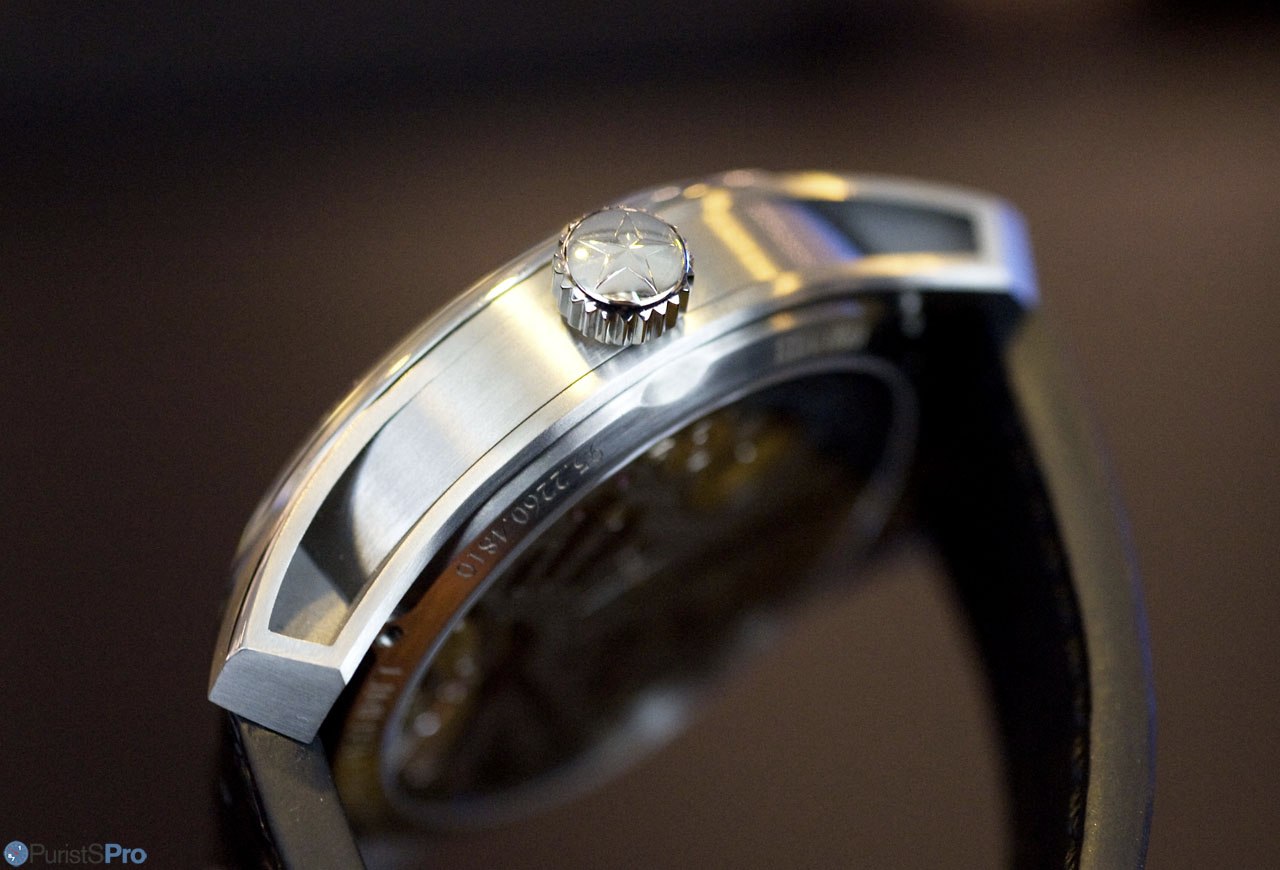
Below are few detail shots to illustrate my points:
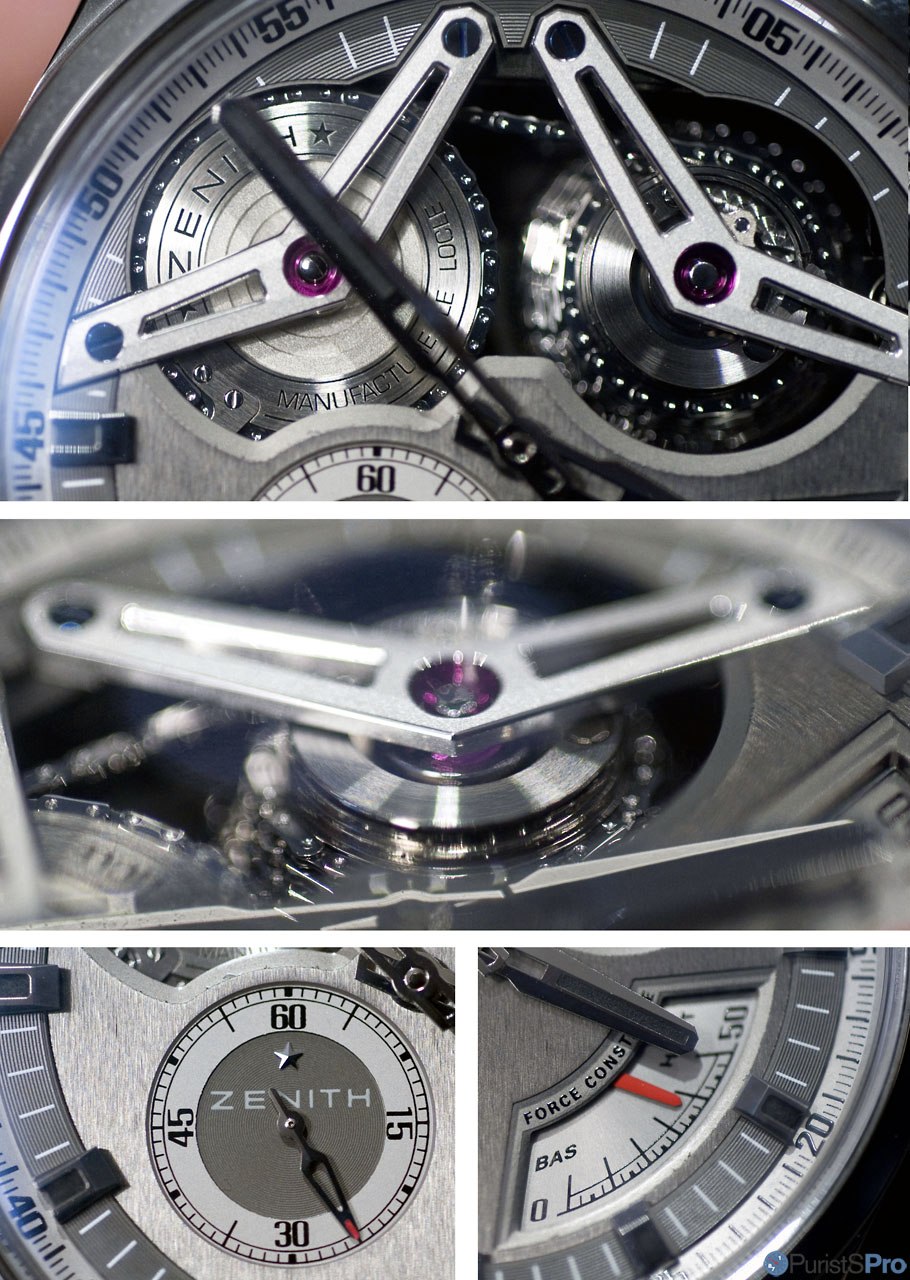
The central selling point of the watch is certainly the emotionally enthralling and optically simply stupendous force constante mechanism, in watchmaking French called a fusée à chaine . Basically, translated this means the watch possesses an enchained driving gear. In a way, that is quite literally correct: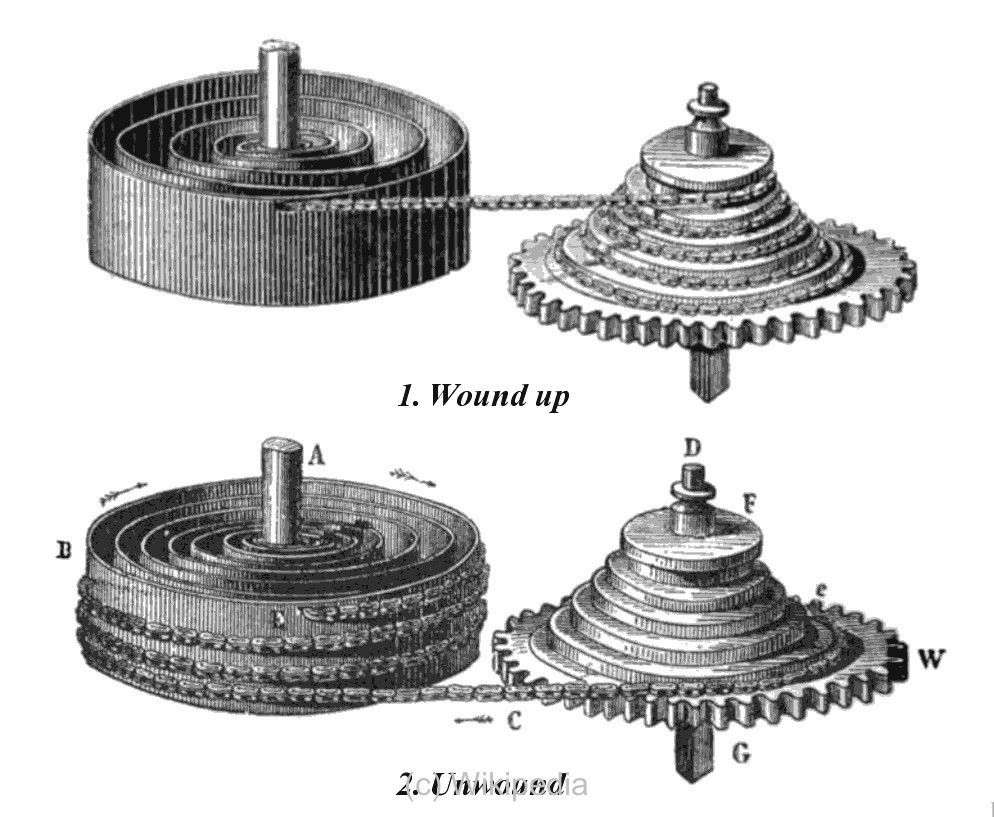
Composed of a cone-shaped pulley with a helical groove around it (above, right), wound with a cord or chain which is attached to the mainspring barrel. Fusees were used from the 15th century to the early 20th century to improve timekeeping by equalizing the uneven pull of the mainspring as it ran down. I explained the technology already extensively in the technically identical classical version (El Primero Georges Favre-Jacot) - just take a look here: click me !
A simple solution to an eminent problem, back then. And a charming one to boot! Advances in material research but particularly the development of the anchor escpement made the timekeeping precision much more indepedent from changes in the driving force, thus eliminating the need for compensating devices such as this.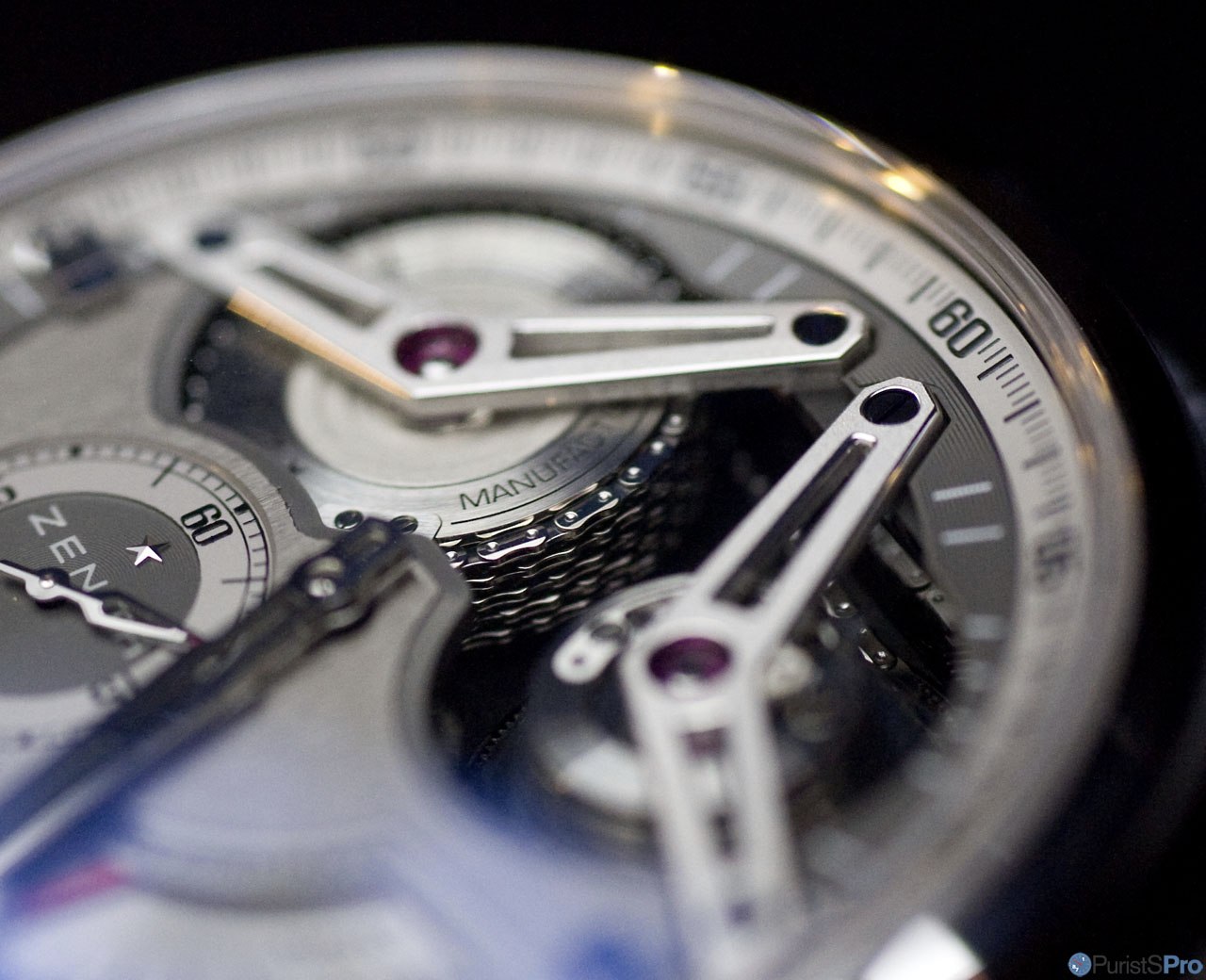
Above a fine view on the miniscule chain. The techncial details of this component are simply breathtaking:
The pulley on the opposite end gives a demonstrative impression of the watch's depth. Note also how the entire dial section is a melding point of structures, finishes and colours:
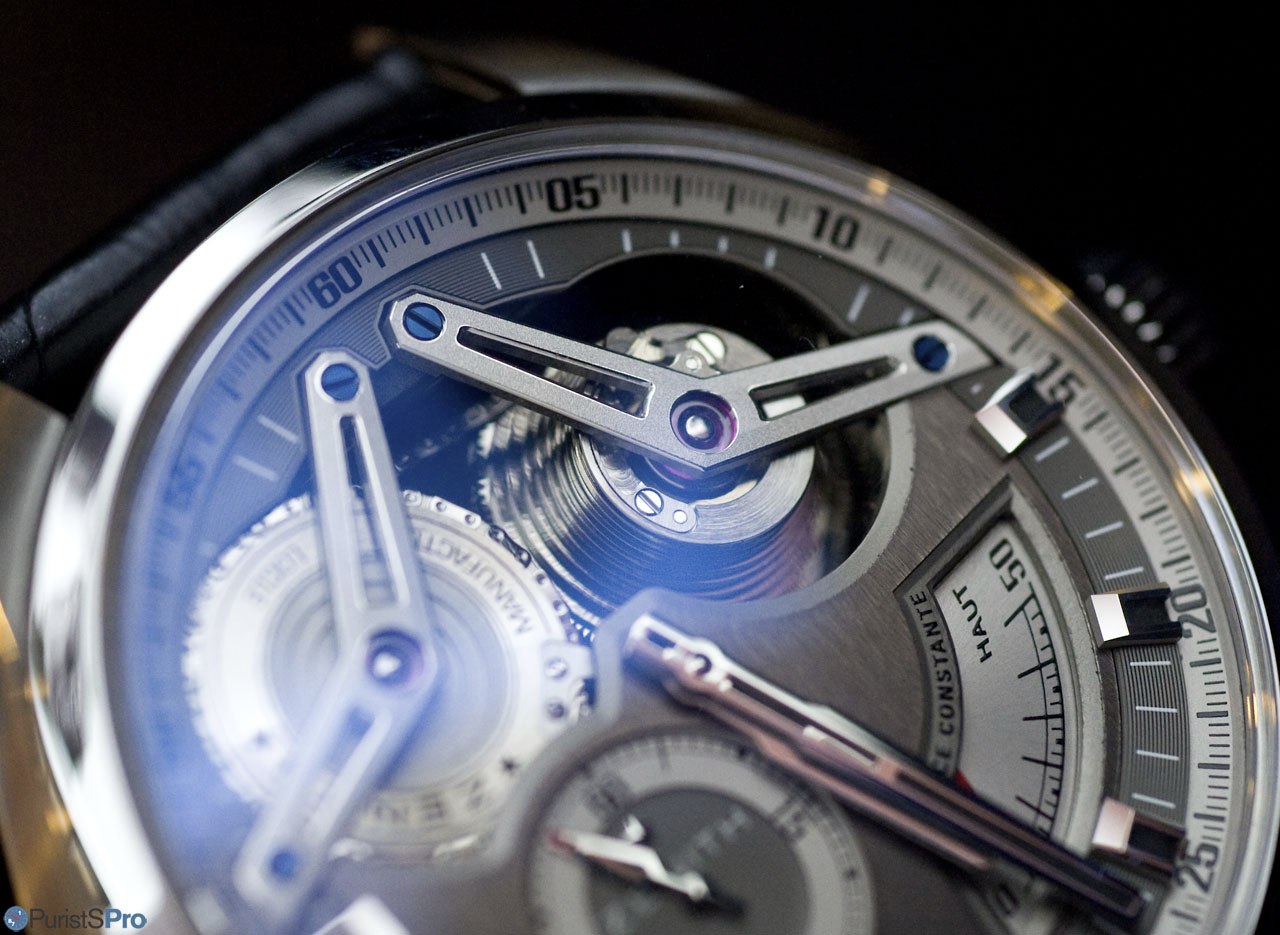
As a last note, the fusée à chaine mechanism provides for a most sensual feeling while winding the watch. I can only encourage you to try it should you have the chance to handle this timepiece!
In the midst all this excellence, the remainder of the movement naturally has to take a backseat. Not that it is bad or uninteresting, but the juice clearly is on the front side. Nevertheless, a few notes as well:
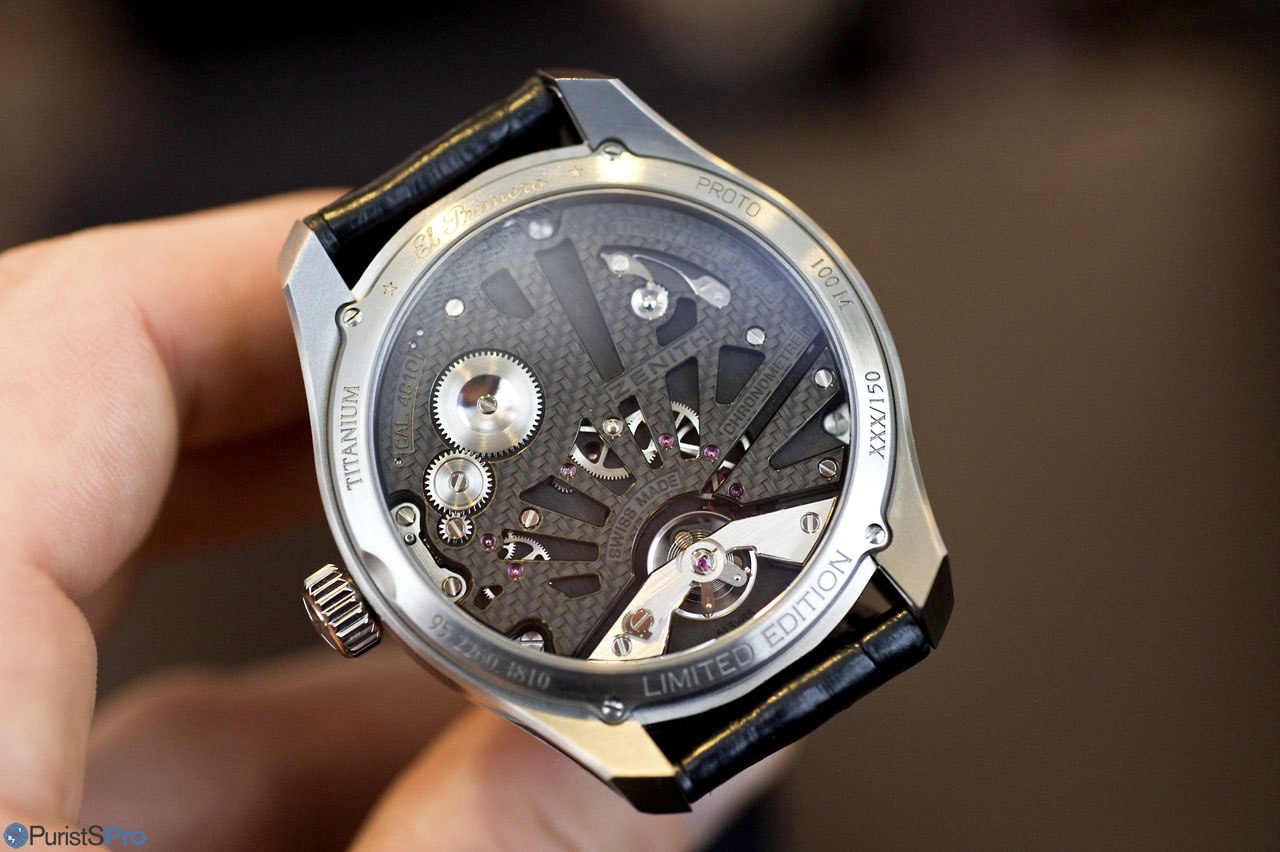
Or in other words: plenty of opportunities... 
In addition, as an El Primero, the Georges Favre-Jacot watches of course feature a high-beat (36.000 bph) silicon escapement:
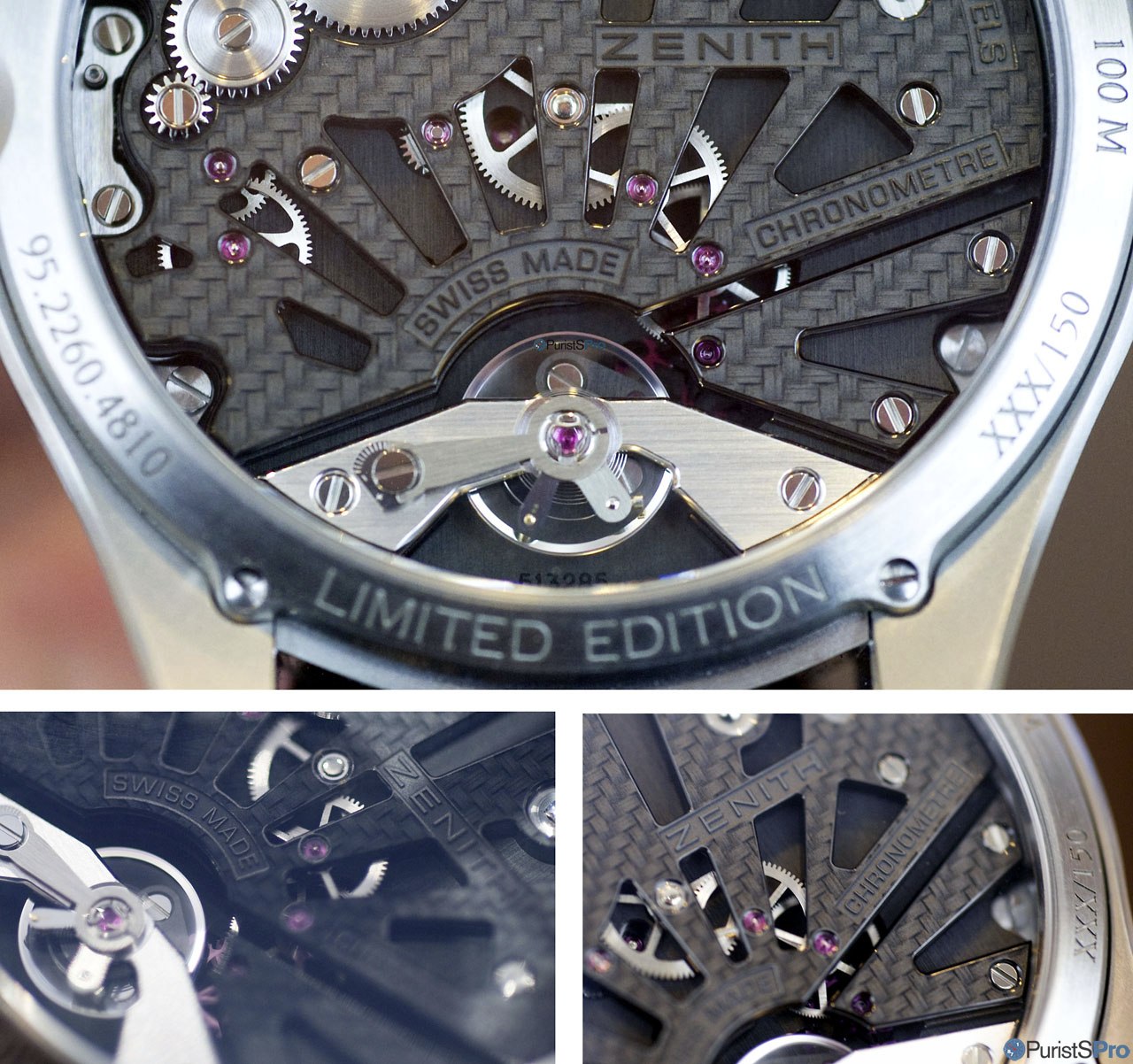
Now, let's finally come to the business end og the review: how does it tick?
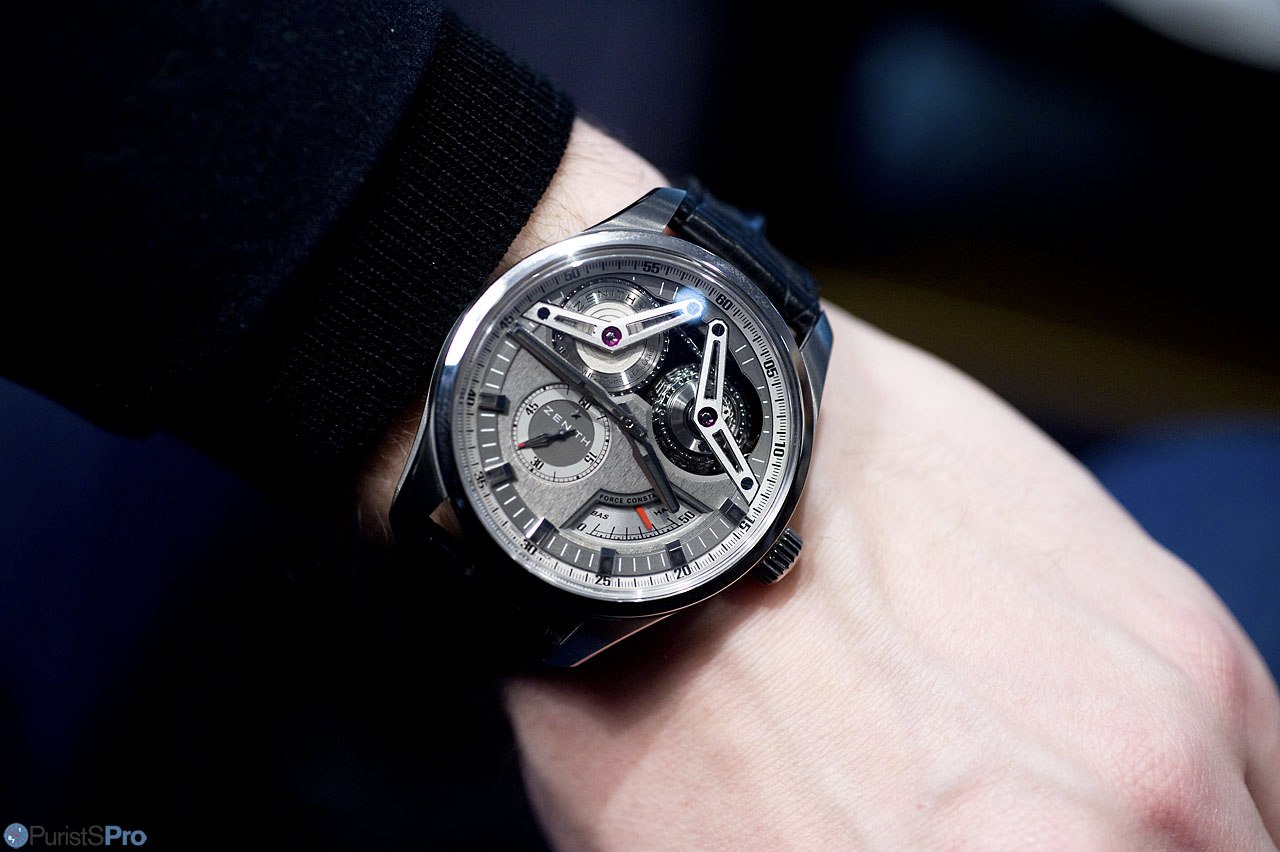
The entire conceptual design bears the danger that it would look too techy, too cold, too contemporary (or, trendy in the sense that affection might fade out soon) or too much of an attention getter.
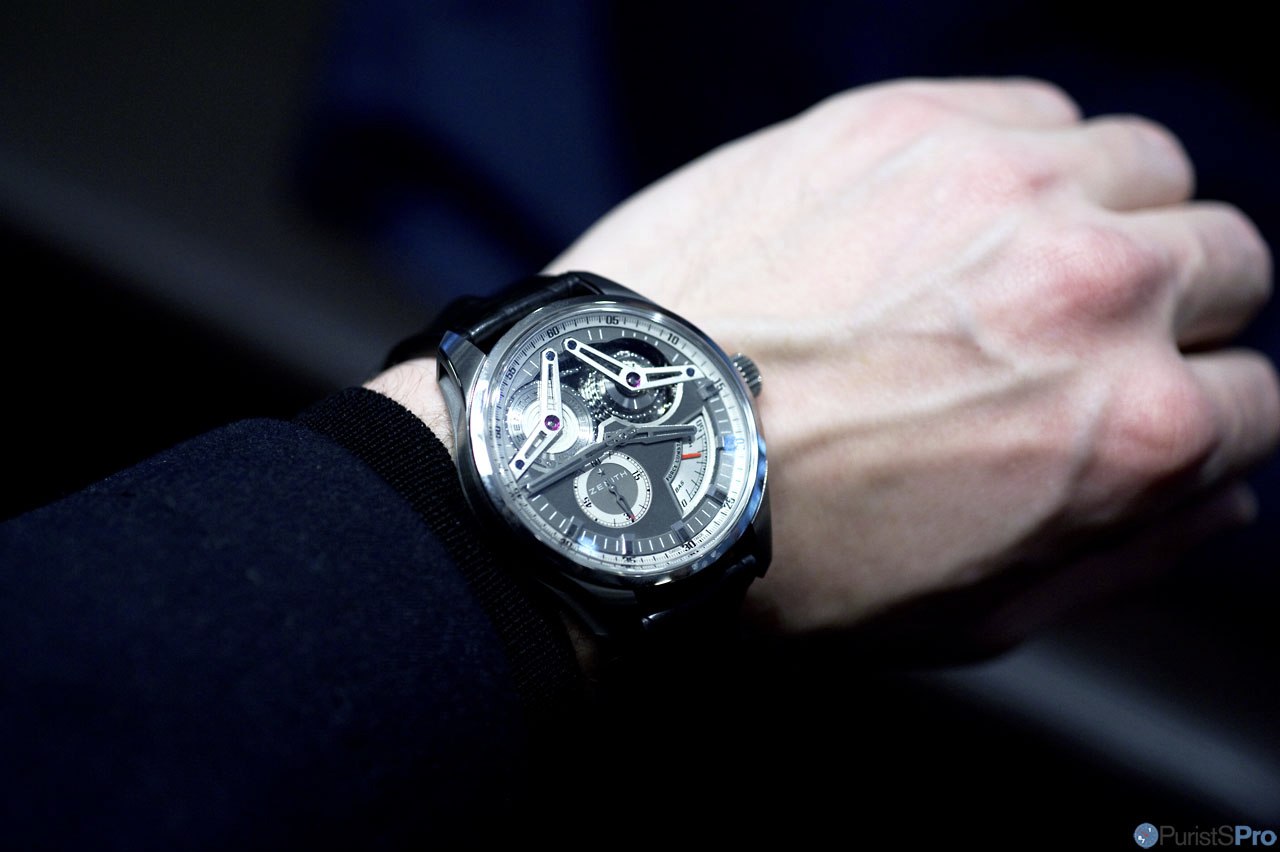
But all of these concerns are not warranted. It wears light - light in its literal sense, of course, as the case material really would make any other result difficult to achieve. But it wears light also in the sense that there is an effortlessness that comes with strapping it on - the watch just fits.
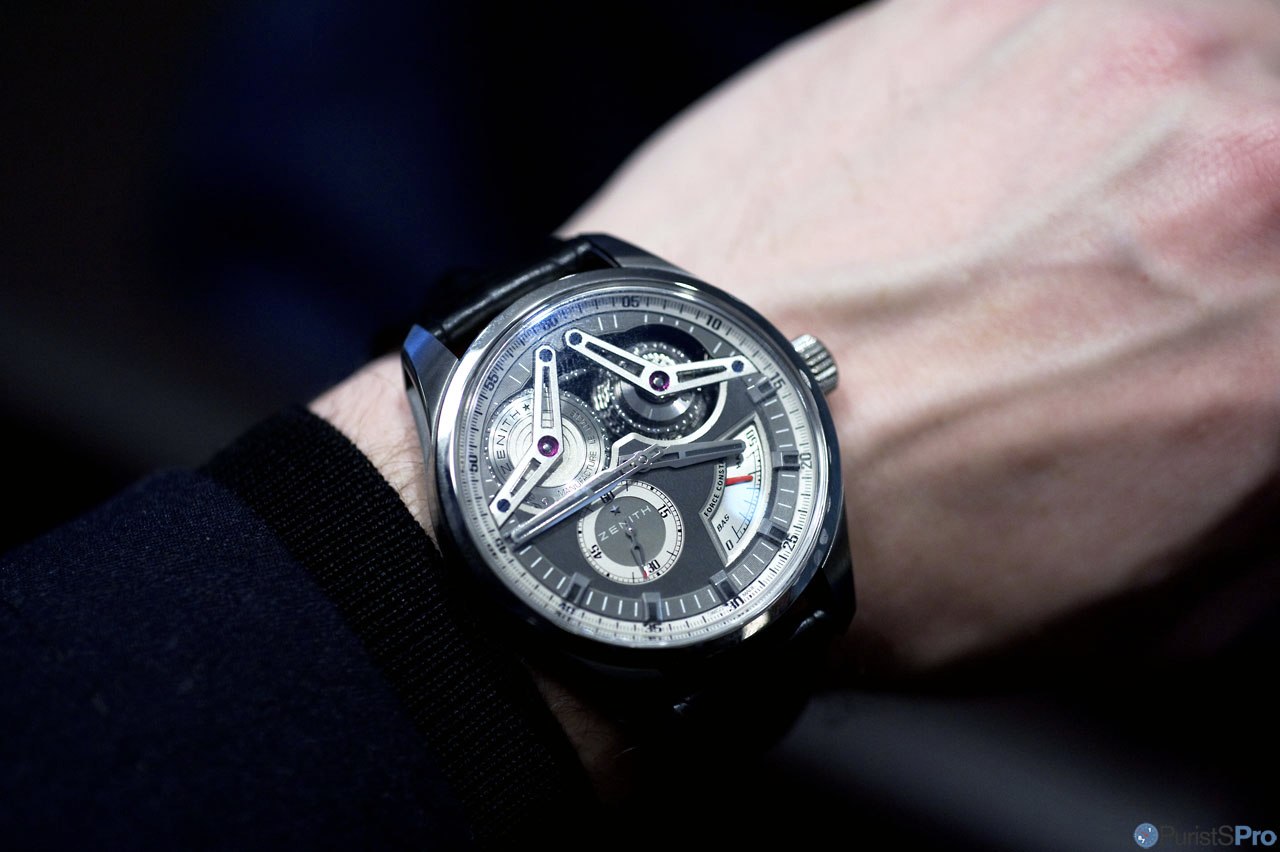
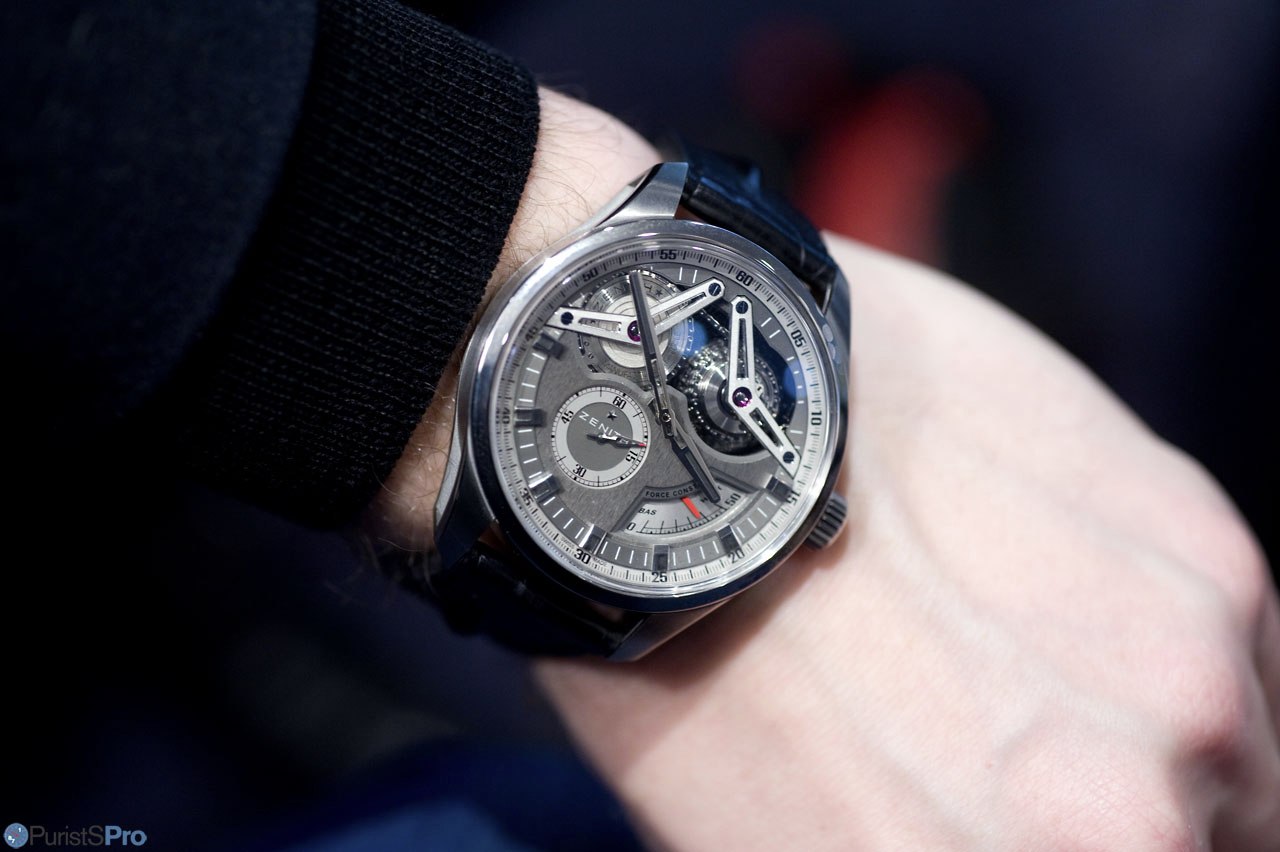
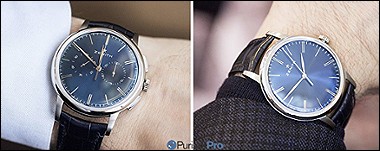
The El Primero Georges Favre-Jacot Titanium is surprisingly unassuming and blends nicely into a variety of situations. Business casual (above) - of course! Office attire - certainly (see below)!
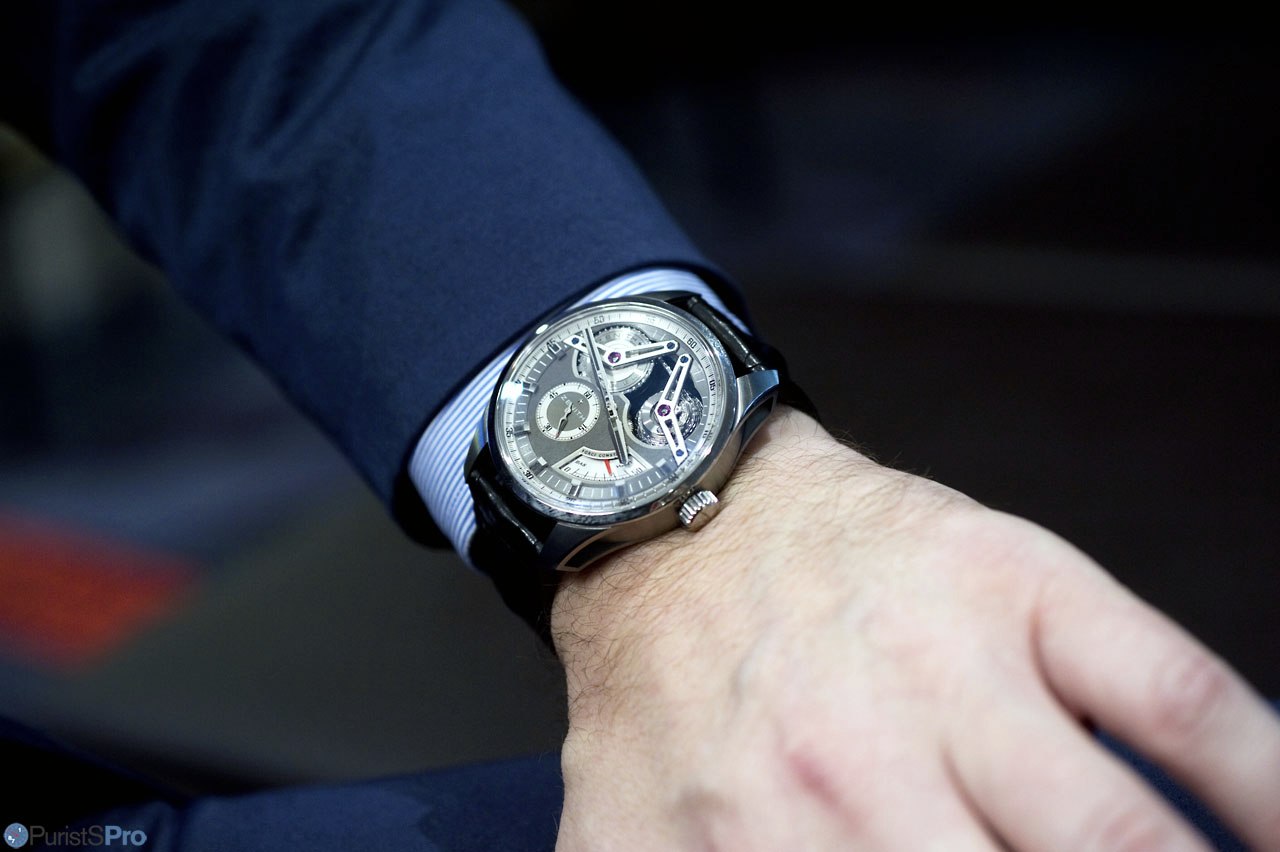
It makes a great presence even or (reasonably) smaller wrist like Oliver's below.
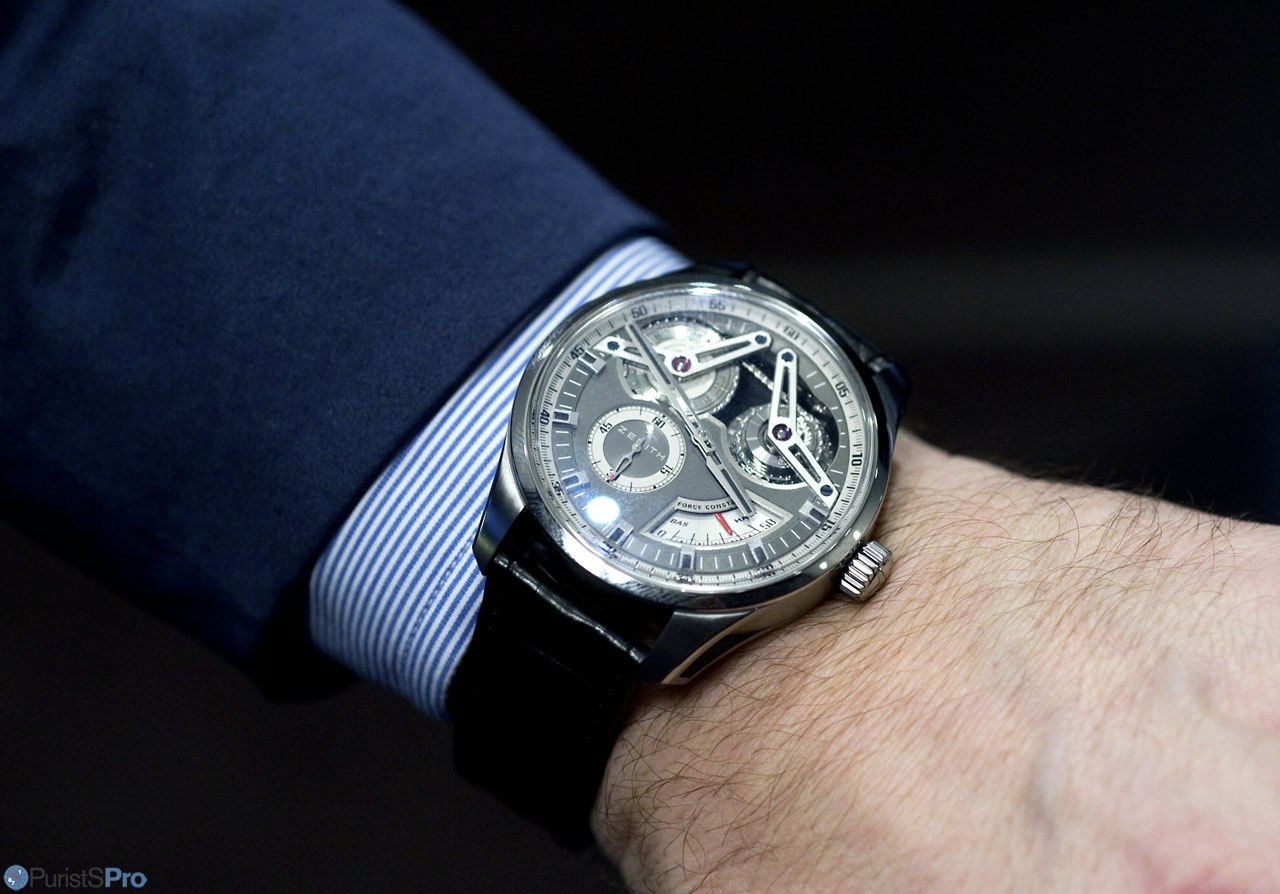
After-work party? Bien sure, c'est parfait!
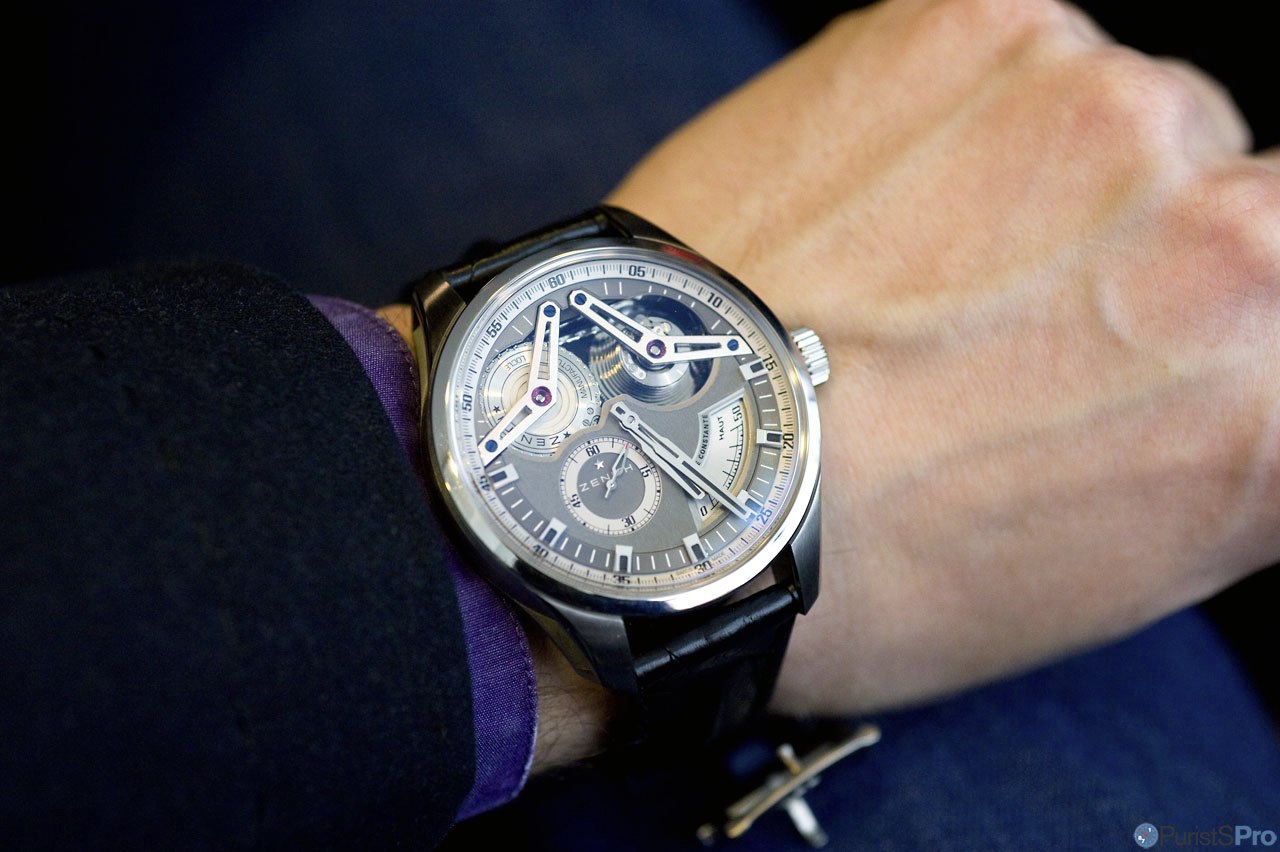
In all the situations above the watch plays the magic game of letting its horological delicacies appear simply as technical attributes - and I believe this is the largest common ground it shares with the superleggera master-cars mentioned at the beginning of this review.
This, dear Zenith team, is a hugely accomplished design!
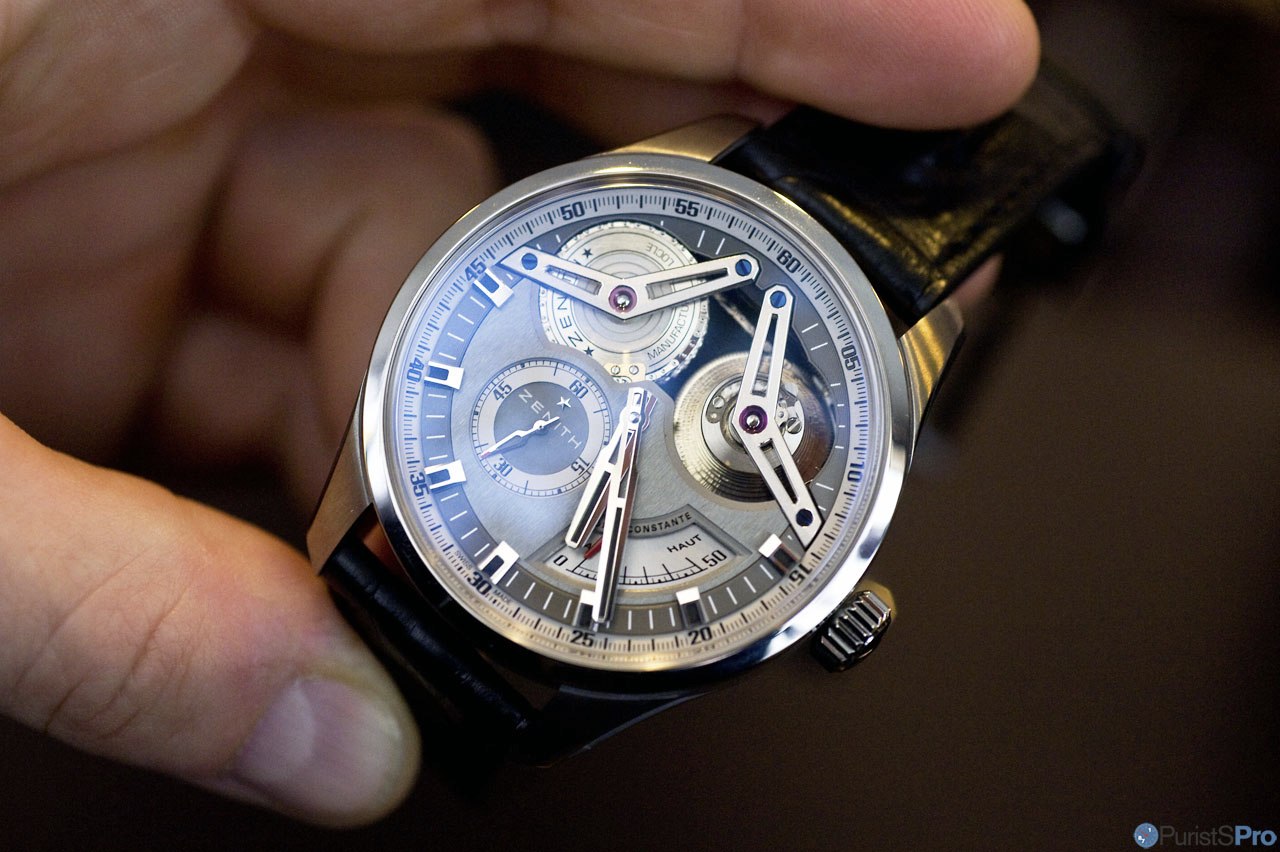
Now, if I should conclude on this timepiece I am immediately put into a difficult situation. Why? Because right now I cannot finally place it into the strategy of Zenith. Is this the first hint of where the watchmaker intends to go for the future? Is this 'just' a new flavour to attract a certain (young) clientele? An outlier?
I do not know at this time. Basel 2015 was not the eye-opener I hoped it would be. Personally, I was a bit dissappointed when I was presented the novelties. Not that any of the watches were sub-par, no way. But for its 175th anniversary I expected more pacemakers, more guiding lights. With the shaken history in the last decade I expected that a clear message would be given to the audience. It was not. The titanium pieces first and then the totally opposite Elite 6150.
That would speak for the Titanium as an outlier, or at least an add-on. But then the Zenith team also showed a new tourbillon built exactly like this piece here (review to follow in the next installment). This again would support the notion of a way to the future.
Let's be blunt: Zenith needs a new 'face' if it wants to continue being relevant (as opposed to be just a successful market participant). Zenith needs to increasingly focus on where it can contributs to the industry's advancement just in the way it did with the El Primero, and before that with its chronometric legacy. Right now, the brand lives largely on its past achievement, with the El Primero already 45 years in existence.
The El Primero Georges Favre-Jacot Titanium in my view would represent a perfect platform for such a bold move. It blends technical attribute such that they do not stand out, but merely appear as a cogent consequence of a watch's concept.
In other words, the titanium Georges Favre-Jacot concept would strangely force the brand onto a path which leaves no alternative than to reinvigorate the brand's technical leadership in a very consistent way. No need for marketing somersaults to 'write something into existence'.
The idea suggests itself that with the Titanium there is no such choice to start with. Let's call it The Great Conqueror!
....
Having been absorbed in my thoughts, I suddenly noticed that The Great Conqueror shyly - befitting a timepiece - turned - heat-blue... My dear, there is no need for this !
Thanks for reading,
Magnus
The Zenith Elite 6150 represents a contemporary interpretation of the brand's classic dress watch aesthetic, distinguished by its larger case size and the introduction of a new iteration of the Elite movement. This reference aimed to offer a more modern presence on the wrist while retaining the refined characteristics associated with the Elite collection, positioning it as a versatile option within Zenith's non-chronograph offerings. It marked a period of exploration for the Elite line, moving towards broader appeal.
This particular reference features a stainless steel case with a diameter of 42mm, housing the in-house Zenith Elite 6150 automatic movement. The movement provides a substantial power reserve of 100 hours, a notable enhancement for daily wear. The watch is fitted with a domed sapphire crystal, contributing to its understated profile, and typically includes a transparent sapphire case back to display the movement.
For collectors, the Elite 6150 appeals to those seeking a contemporary dress watch from a manufacture with significant horological heritage, particularly valuing the Elite movement's architecture and extended power reserve. It stands as an example of Zenith's commitment to developing its non-El Primero calibers, offering an alternative for enthusiasts who appreciate a clean, time-only display with robust technical specifications. This reference is often considered for its balance of size, movement quality, and design.
This watch is a great combination of sports & dress IMO. How's the sound when you manually wind the crown? Is it noticeable louder than most watches? And nice tactile feel too? Cheers, Anthony
as it has a smooth feel with some regular subtle resistance to it. As for the sound - it totally lacks the fine whirr usually associated with winding. Best, Magnus
As you said, the El Primero movement is nearly 50 years old. I wonder what would have transpired if the manufacture tools HAD been destroyed as ordered by management? Would Zenith have never survived as a manufacture? Would Rolex never have developed the Cosmograph (Daytona) model? Would Zenith have been forced to have developed a modern chronograph movement to establish a link with history? Regards, MTF
I have no finite answer to your first two questions, but I assume that (i) would be a 'no', and (ii) a 'perhaps'. Rolex had chronographs in its portfolio before, and the non-availability of the El Primero might have simply delayed the introduction of the Daytona. If (i) would have been answered with 'yes', then I think that - regardless of current availability of the El Primero - the answer is a convinced 'yes'. The El Primero is a great movement still, but in the last decade much has changed an
Dear Magnus, Usually, to read your reviews leave me without nothing to add, since you have the rare capability to analyze watches from a lot of point of view, adding everytime something emotional and spicy. This time it's slightly different, since yours is not simply a review. Right? However, to comment on your today's post is not that easy, since you've put serious questions on the path that Zenith is following/should follow. I'll try to express something both on the watch and on the Brand. Wit
This thread is active on the Zenith forum with 12 replies. Share your knowledge with fellow collectors.
Join the Discussion →