Independents
SJX introduces Wilhelm Rieber, a highly private independent watchmaker from Germany's Black Forest, renowned for his tourbillon wristwatches. This article delves into Rieber's meticulous craft, highlighting his dedication to producing a single, exceptional flying tourbillon caliber, with nearly all components fabricated in-house. It offers a rare glimpse into the world of a watchmaker who prioritizes traditional craftsmanship over mass production or frequent model changes.


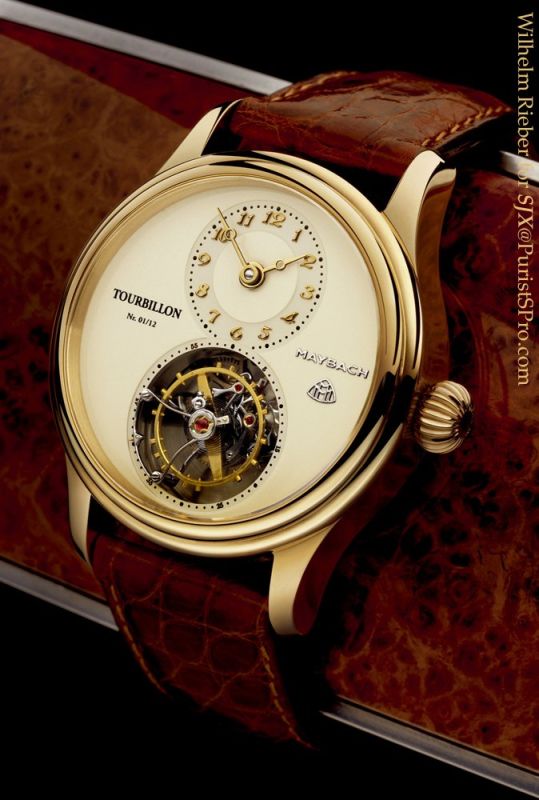


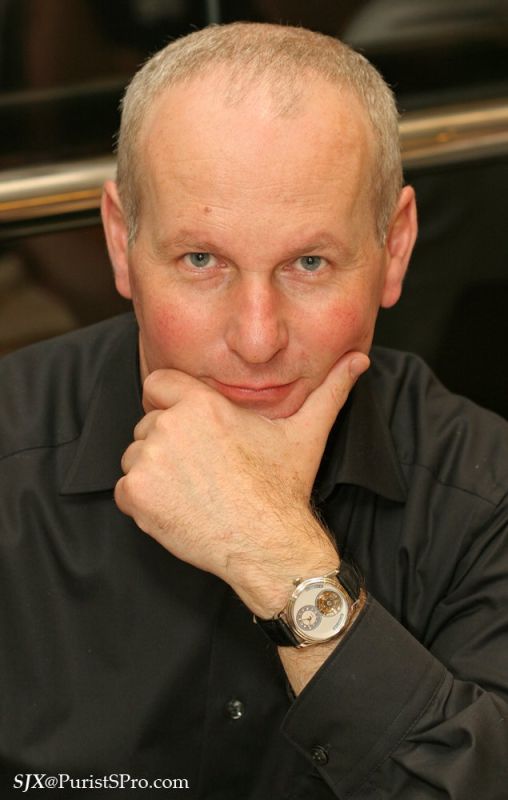
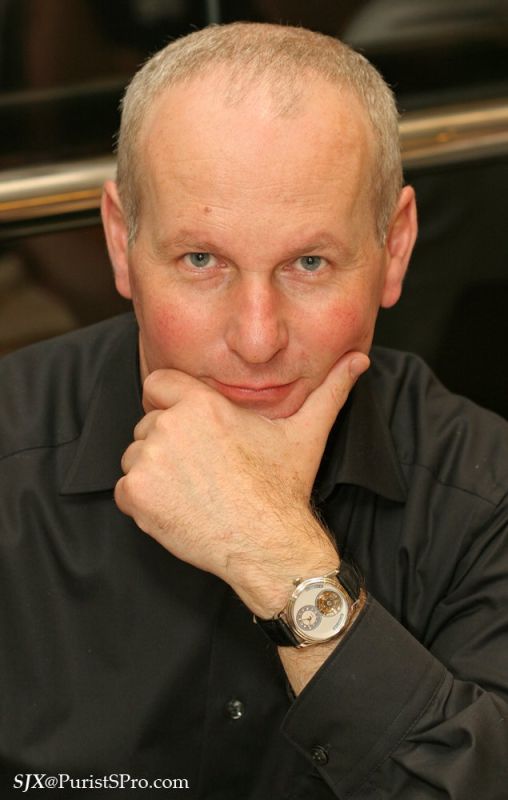
Unusually for an independent watchmaker, especially one who makes a tourbillion wristwatch, Wilhelm Rieber keeps a very low profile. I first came across Wilhelm Rieber’s tourbillion when I saw a press release from Maybach announcing the Maybach tourbillion wristwatch available to owners of the car. The Maybach, by the way, is Mercedes Benz’s response to Rolls-Royce, an incredibly opulent car available in two sizes: big and enormous, which are 5.7 and 6.2 m respectively in length.

Maybach 62
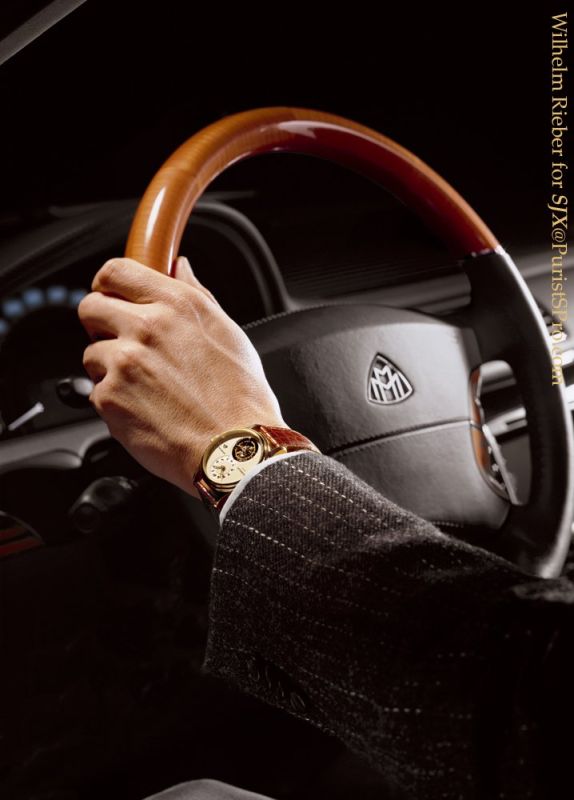
Maybach Tourbillon
Fortunately, Wilhelm was in Singapore late last year to deliver a watch to a customer here, I was fortunate enough to meet him and examine his tourbillion.
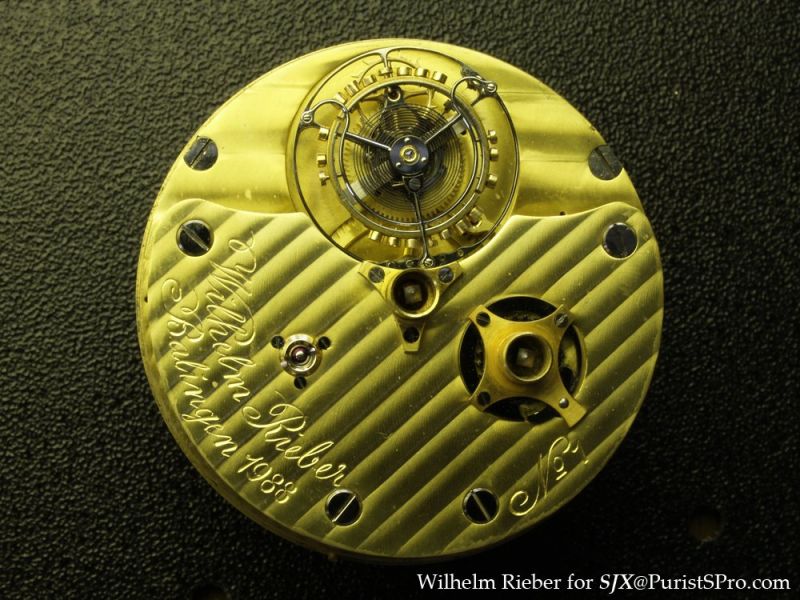
Wilhelm has been a watchmaker since 1977, having learnt the craft at a watchmaking school in Furtwangen in the Black Forest. He started work on his first tourbillion, a key-wound pocket watch, in 1984 and completed it four years later. Wilhelm fabricated almost all the parts of the pocket watch movement, including the balance wheel and hairspring.
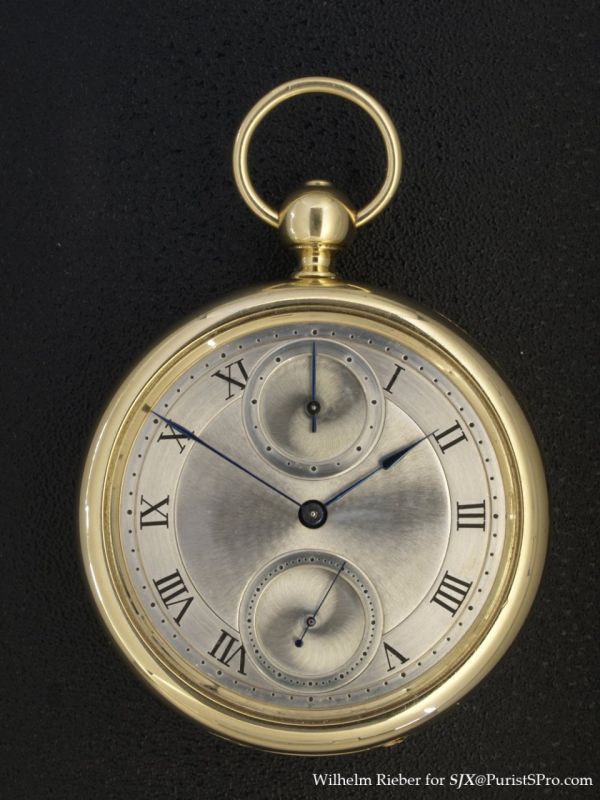
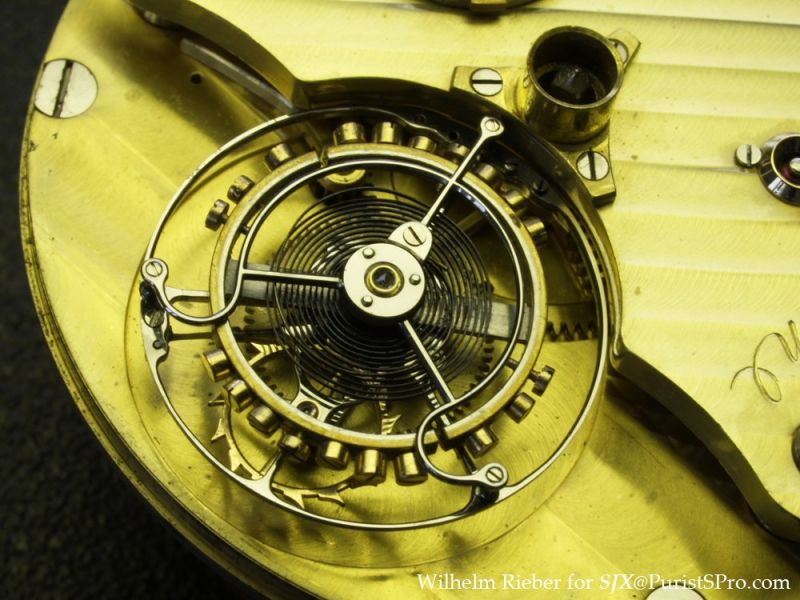
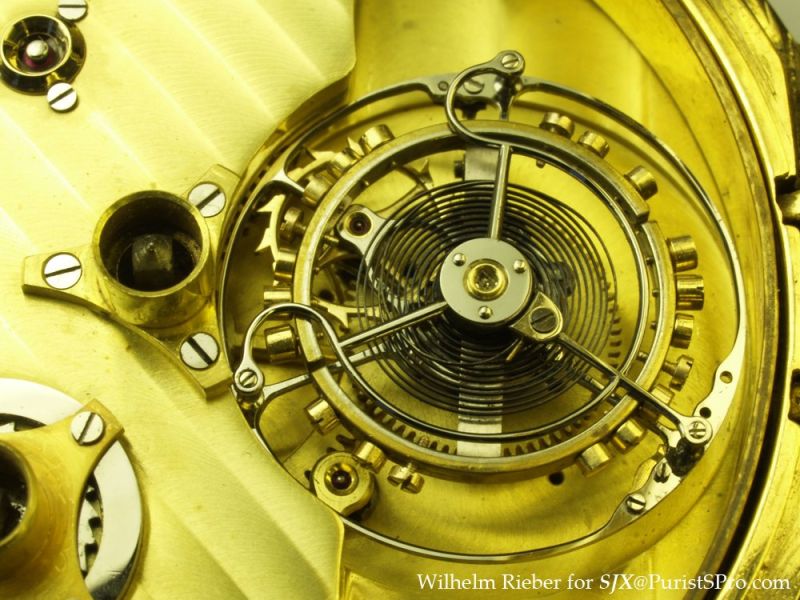
He finished the first wristwatch tourbillion in 1996 and today he continues to make that, and only that. The tourbillion is available in several case and dial variations according to customer request – several customers have ordered watches with initials or names on the dial – but the movement is the same flying tourbillion calibre. Wilhelm has been doing what he likes for a long time and shows no inclination to do anything else. When asked if he has any plans to introduce another model or modify the current movement, the answer is “Never.”
Nearly all the components of the movement are made by Wilhelm – he works along – at his workshop in Tiefenbronn-Mulhausen near the watchmaking city of Pforzheim. He obtains the hairspring, balance wheel, some screws and wheels from specialists, but makes everything else himself. External components, dial, case, crown, strap and buckle are also outsourced, but the hands of the watch are cut and finished by hand.
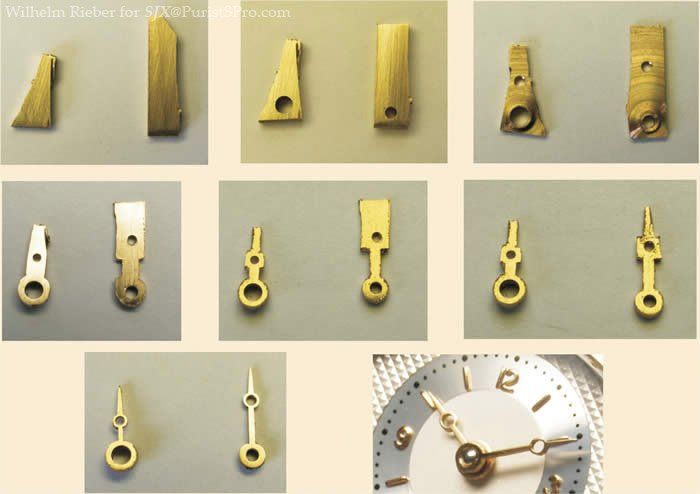
Hand-made hands
Appropriately the movement features a German silver bridge and base plate, as well as jewels set in screwed, gold chatons. It is also engraved with the serial number, year of production, as well as the customer’s country if desired. According to Wilhelm, the balance wheel of the tourbillion is the largest used in a tourbillion where the hands and balance are on separate axes; Beat Haldimann’s tourbillion is larger but the balance and hands are co-axial.
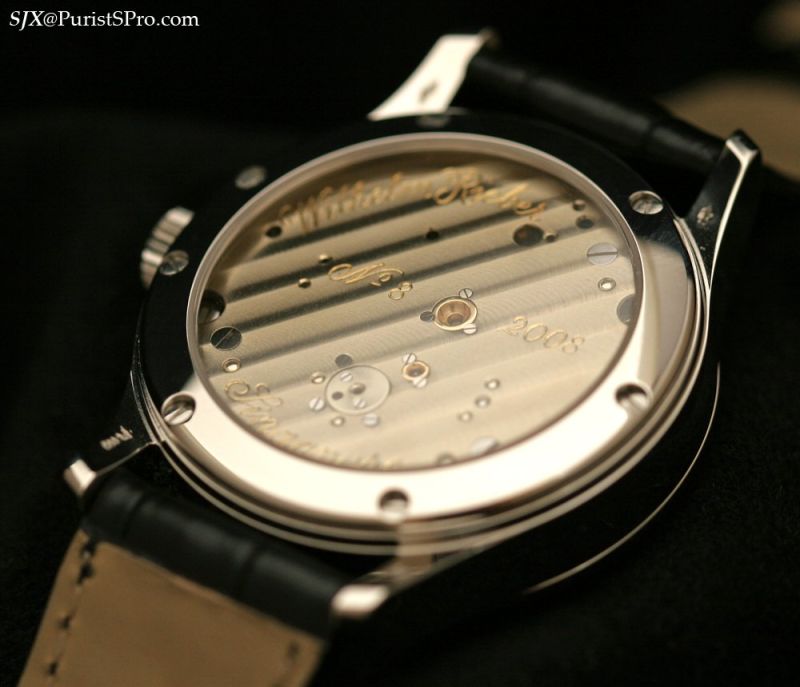
Aside from making his tourbillion, Wilhelm also restores vintage timepieces. Uncommonly, Wilhelm does his press photography in-house; he took all the pictures on the press CD. Wilhelm’s wife is a talented calligrapher and she is responsible for the certificate that accompanies each watch. This is in-house taken to the extreme.
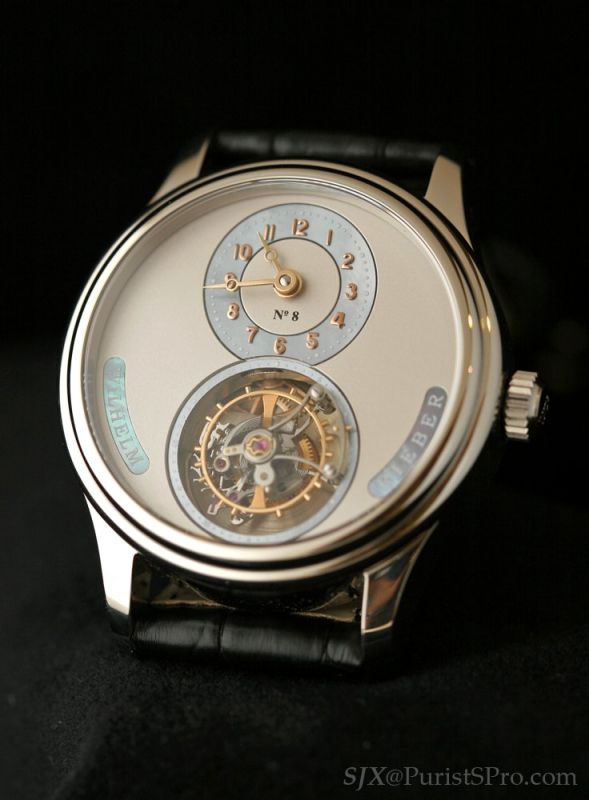
Wilhelm Rieber Tourbillon
The resulting tourbillion watch is reflective of its creation. It is neither slick nor well packaged, but it has charm, displaying a measure of care and craft that is lacking in many of the famous independent watchmakers. This watch feels like a very honest product; there is no pretence, no pretension. In fact, comparing the Maybach tourbillion, which was designed in collaboration with Maybach, and Wilhelm’s own wristwatches, exhibits the difference clearly. The Maybach watch is the product of a company, a watch backed up a corporate idea, while Wilhelm’s watch is clearly his own.
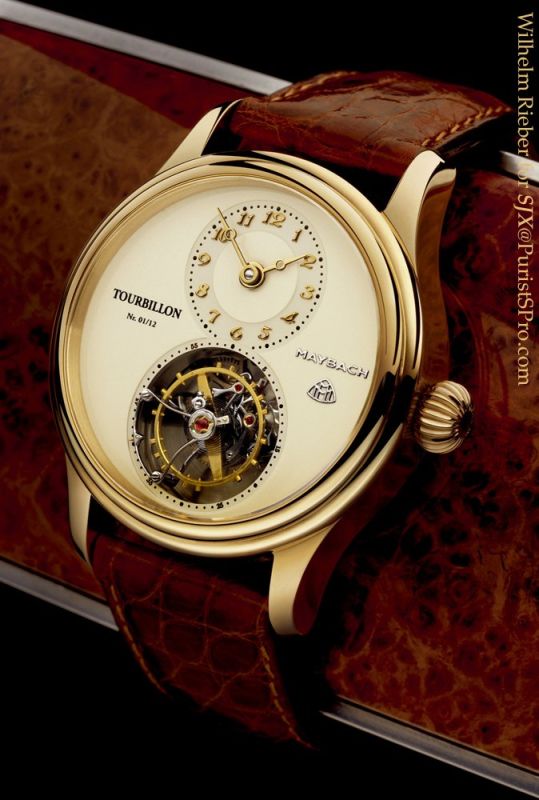
Maybach Tourbillon
Majority of his clients are in Germany and aside from the advertising done by Maybach, nearly all are introduced to his product via word of mouth. Besides Maybach owners, Wilhelm’s clients include some famous personalities including an F1 driver who is a known collector of watches. Wilhelm reminds me of independent watchmaker 10 years ago, when even the superstars of today were barely known outside a small circle and they were hardly talked about, even on the internet. Although Wilhelm is adamant that he will continue to make only the wristwatch tourbillion, I hope to see his work develop over time.
This message has been edited by SJX on 2009-02-19 19:09:22Thanks for taking all the time to dig up these things and assemble the reviews for our benefit. Cheers Mike aka Cazalea
Thanks SJX for a wonderful writeup. This makes me think of JDN tourbillon by Roth the Man. Wondering how these two traditionally hand-made tourbillon would compare in the flesh? From photos alone, it seems JDN is more difficult and more time consuming to make. And personally, I would prefer handcraft and various guilloche patterns on JDN dial. But for those who could afford Maybach or prefer a Made in Germany, Wilhelm Rieber should be a real deal. Another great watch I could not afford... sigh.
I have never seen a JDN tourbillon in person, but based on the few photos available, it does look more elaborate. It has a guilloche dial, form movement, highly decorated bridges. That being said, the delivery of the JDN tourbillon is erratic at best. In fact, some industry sources told me, although this was a year ago, that none of the tourbillons have been delivered at all at that time. Wilhelm, on the other hand, delivers 2 tourbillons a year, and has been doing it for many years. - SJX
Thanks so much SJX for more fantastic info and photos.
Thank you for showing these beautiful timepieces. Unusually for me, I even liked the Tonneua shaped watch. Your photos, certainly do these masterpieces justice.
This thread is active on the Independents forum with 16 replies. Share your knowledge with fellow collectors.
Join the Discussion →