Discussion
Mkt33 initiates a critical discussion on the subjective nature of 'fine finishing' in watchmaking, referencing an earlier thread on the topic. He questions the lack of industry-defined standards for evaluating finishing quality, contrasting it with established seals like the Geneva Seal, Qualité Fleurier, and the Patek Seal. Mkt33 aims to provoke thought on how collectors can objectively value this crucial aspect of horology.
In regards to the value of "fine finishing"? click here
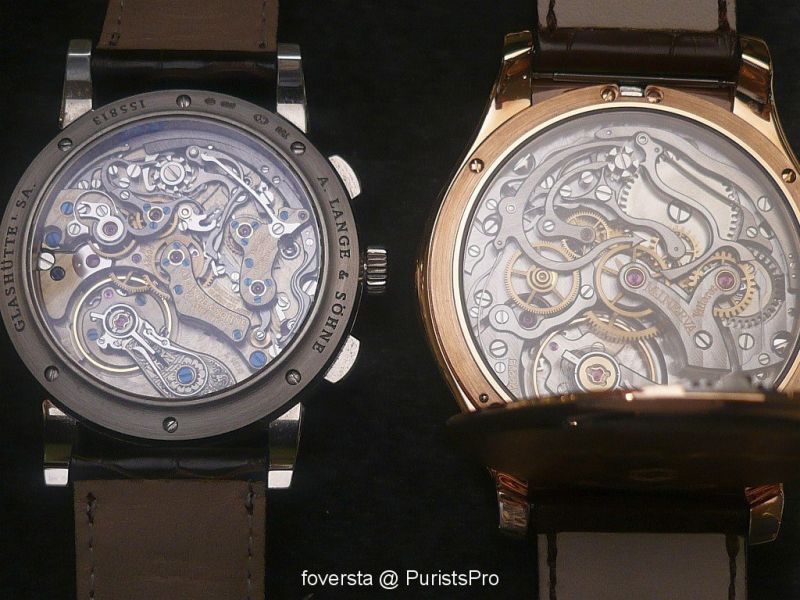
I hope you take the time to read the thread completely because it really highlights the opinions of PuristS from all over the world, of differing backgrounds, and at different levels of "collecting"
In the end, I found myself scratching my head still!
Really how do we value something when it seems like there is no industry defined "standard" to reference and compare?
Like Art so wonderfully commented: Dilution affects perception. Unless we define fine finishing, it does become insignificant when every manufacture claim that they possess the skill, know how, and resources to produce such quality.
For background we have the "gold standard" Geneva seal qualifications.click here
Obviously not many companies who claim they have fine qualities/finishing have obtained this seal.
Then if you look further we have the finishing criteria which are required to obtain the next generation of "quality seals" which not only incorporate the movements but also the entire watch after casing. It is evident that these brands want to set themselves apart. (why can we not all agree to some ISO standard so watches from Swiss, Germany, Japan, Italy, China (gasp) can all be compared?)
There are set finishing standards for the Qualite Fleurier seal. click here
Then there are set finishing standards for the new Patek seal. click here
So Montblanc Villert joins this distinguished group and clearly defines their aesthetic protocol for all to see. click here (takes time to upload the interactive page)
Why am I writing all this? It is great to talk about the nuances of fine finishing....As long as we all play by the same rules to start with a common definition. To build our passion and appreciation of this art once we have the background set. Once you have the basics down then you can elborate, interpret, and innovate ( A master surgeon giving advice to lowly surgical residents on how to approach certain surgical procedures)
Shortly Art will be posting a review of a Villert Retour a Zero. I have not doubt that a part of the review will incorporate his personal thoughts on Montblanc Villeret's finishing and I am looking foward to his insights.
Thoughts?
Mike
...completely outside of the timepiece itself. The individual analyzing the finish -- do they know what makes a good finish? What traits are they looking for? Would they recognize those aspects if they saw them? One person's mid-grade finish may be another's fantastic finishing depending upon education, and experience in how to determine what exactly "fine" finishing is. Coupled with all the various finishing standards you cite and the differences in volume between programs at large manufactures
and how the definitions and criteria have changed or "forgotten" over the years. This was the point which I thought was missing in that long thread. Basic aspects of fine finishing should be definable, standardized, and not open for interpretation. Volume should not make a difference. In fact I would argue if Fine finishing is a skill, the more you do, the better you should get if time is not a factor. How the different aspects are combined, utilized (i.e the different "wave patterns of Cotes de
Hi, Mike, Ever read the epically poetic reviews of the "warm" music from a tube amps and pre-amps vs the "cold and clinical" solid state stuff, quiet, reliable and consistent though it may be? What about the artistic interpretations of Yehudi Menuhin or Itzhak Perlman vs the technical perfection of Isaac Stern, or Sophie Perlmutter? How does one describe, let alone quantify, the mouth filling, ever changing and complex bouquet and flavours of a great wine? The so called "Leica" look of Leica len
I am not sure what an objective criteria for warmth or glow in watch finishing would be, but I have a theory how it comes about and maybe why it is so seldom. As I have never tried to test the theory, actually a musical analogy, I don't know if it really holds water, but let's see what you think. My analogy is with Barbershop Quartet singing. Whether you like the repertoire or not, barbershop quartets use some special techniques that are the basis for their special, in my opinion "warm" and "glo
Don...are you spilling trade secrets? I think your hunch is correct. It is mastery of the individual decorative elements, then putting them together in the right combination and location which, at least in my opinion, provide for that "warmth" That barbershop quartet example was nice. Thank you, Mike
...Montblanc review with that lovely Minerva movement, I had a thought that was reinforced by your comments above, Mike. "It is mastery of the individual decorative elements, then putting them together in the right combination and location which, at least in my opinion, provide for that "warmth"." While I find it an almost impossible task to define what makes a movement ' warm ', I think it's perhaps easier to define certain elements that detract from that warmth. Such as: Almost electric blue s
This thread is active on the Montblanc forum with 14 replies. Share your knowledge with fellow collectors.
Join the Discussion →