DonCorson's hands-on report on the URWERK EMC from Geneva Watch Week 2014 delves into one of the most innovative timepieces of its era. This article provides a detailed exploration of how URWERK seamlessly integrates mechanical horology with electronic precision, allowing owners to measure and adjust their watch's rate. DonCorson's insights, including a discussion with designer Martin Frei, illuminate the groundbreaking engineering behind this unique self-timing watch.
Geneva Watch Week 2014 - Trying out the URWERK EMC First announced last year at BaselWorld my first impression was, they can't be serious. And from the press material I saw it looked like a monster, unfortunately I missed out seeing it in real.
Here in Geneva I had the time to see, try out and have a long discussion with Martin Frei, the designer in the Urwerk team of Martin Frei, Felix Baumgartner.
And you know what? The ERC really is a watch (not a monster). Let us start out with a wrist shot just to prove its wearability. The EMC on my skinny wrist.
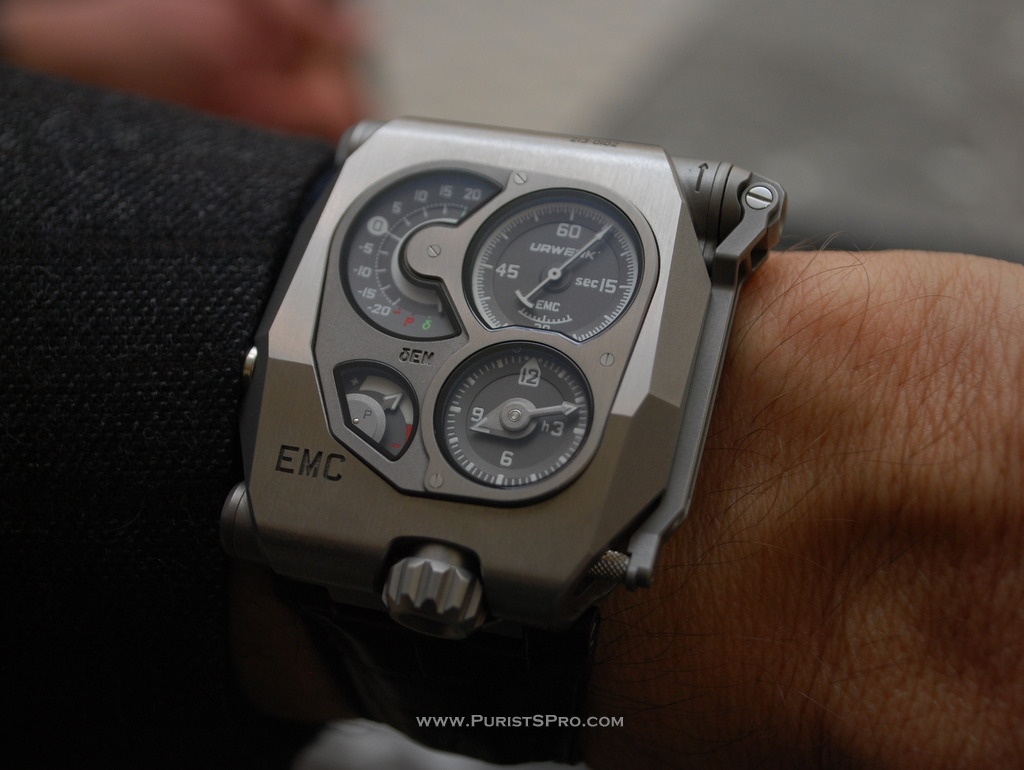
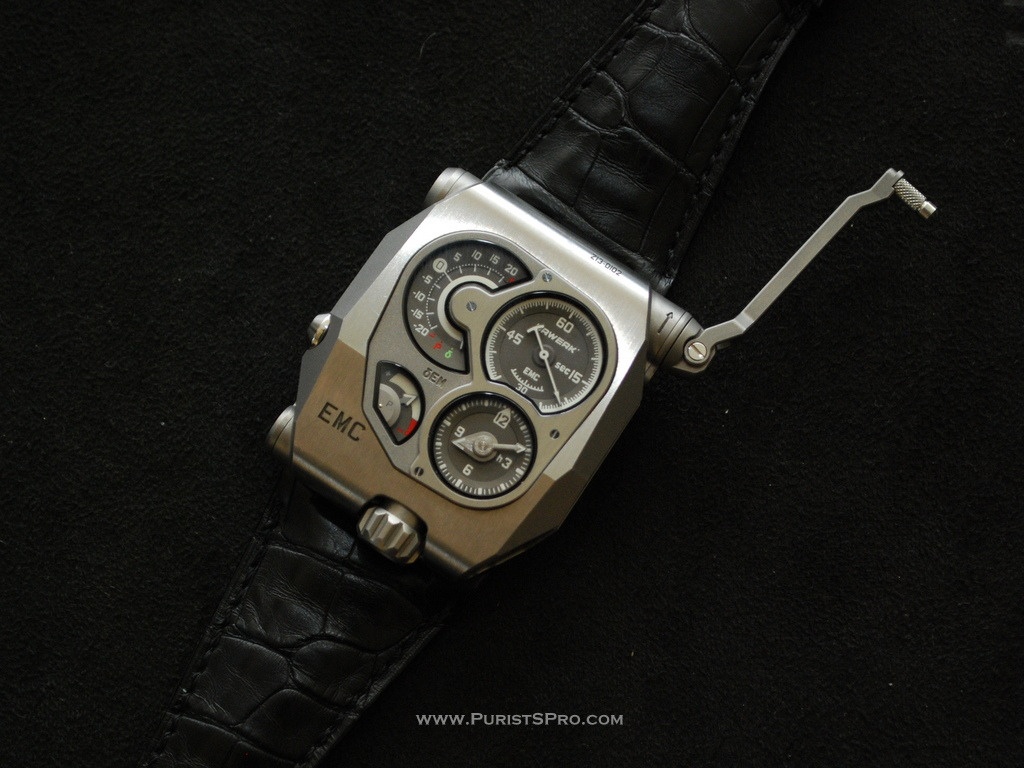
We see immediately the long lever on the right taking the space were one would normally imagine the crown. Of course URWERK watches have the crown at the top or bottom so this is no problem.
What is this lever for ? and what are these cryptic symbols on the corners of the watch?
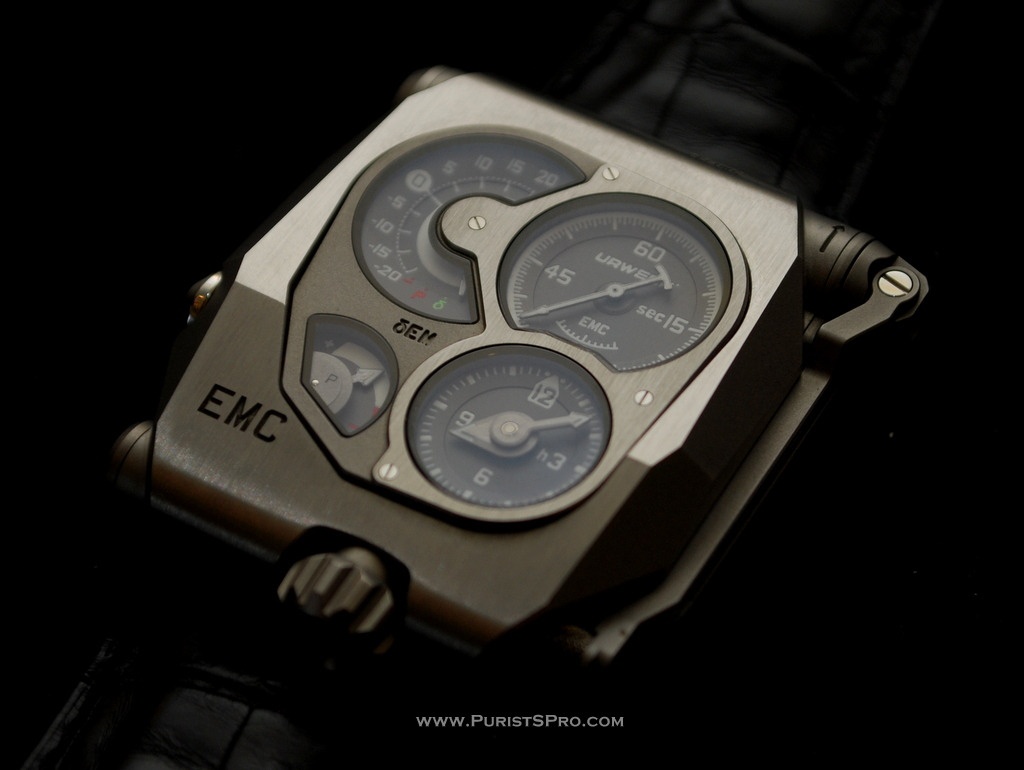
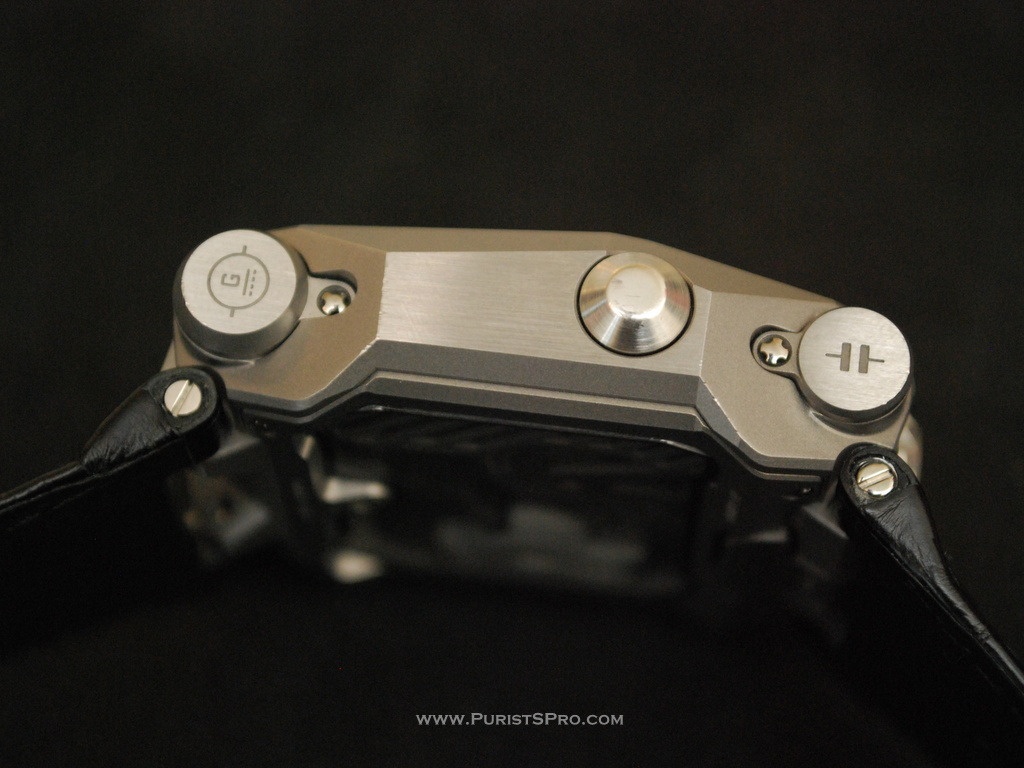
Here we see the lever flipped out. This is the winder for the generator that makes the power for the internal timing machine of the EMC. The symbols at the corners of the watch above are the symbols for a generator and a capacitor (an electrical energy storage element). To control the rate of the mechanical oscillator of your EMC you start by winding with the winder about 20 times. Turning a tiny generator this stores enough energy in a capacitor to run the test.
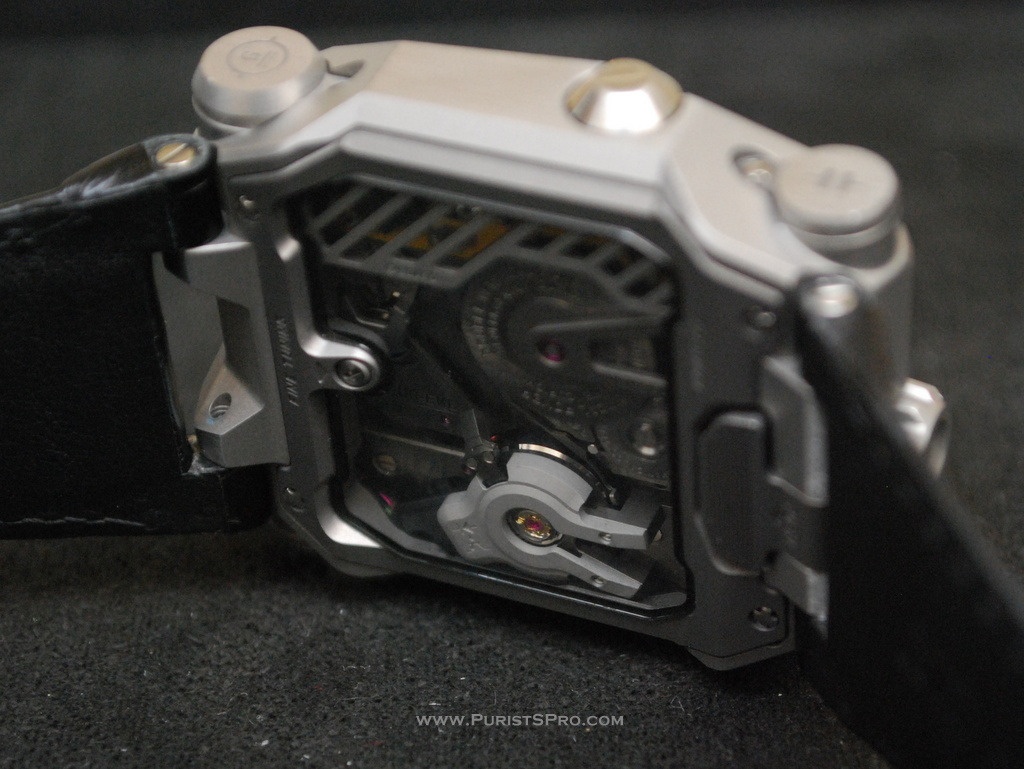
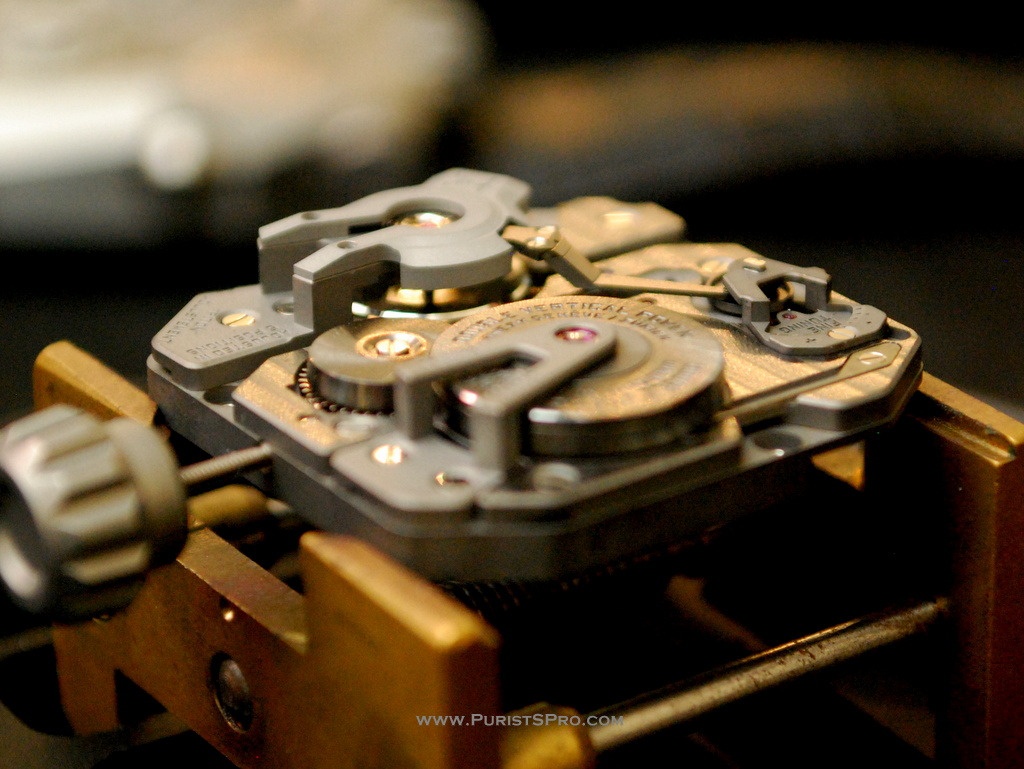
At the back of the watch we can see the electrical printed circuit board with the circuitry for the timing machine behind the slats at the right next to the watch barrel. The balance itself is at the left under a cap. I presume that the cap is to eliminate any possible disturbances from ambient light during the timing test as the sensor is optical, reading directly on the balance wheel.
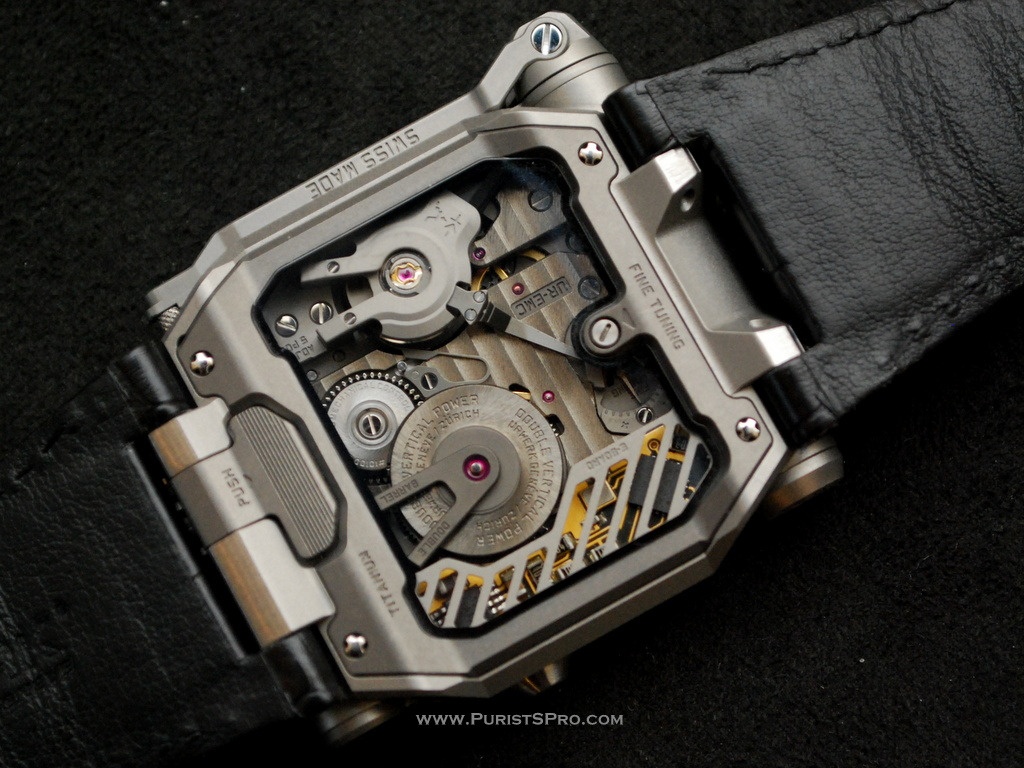
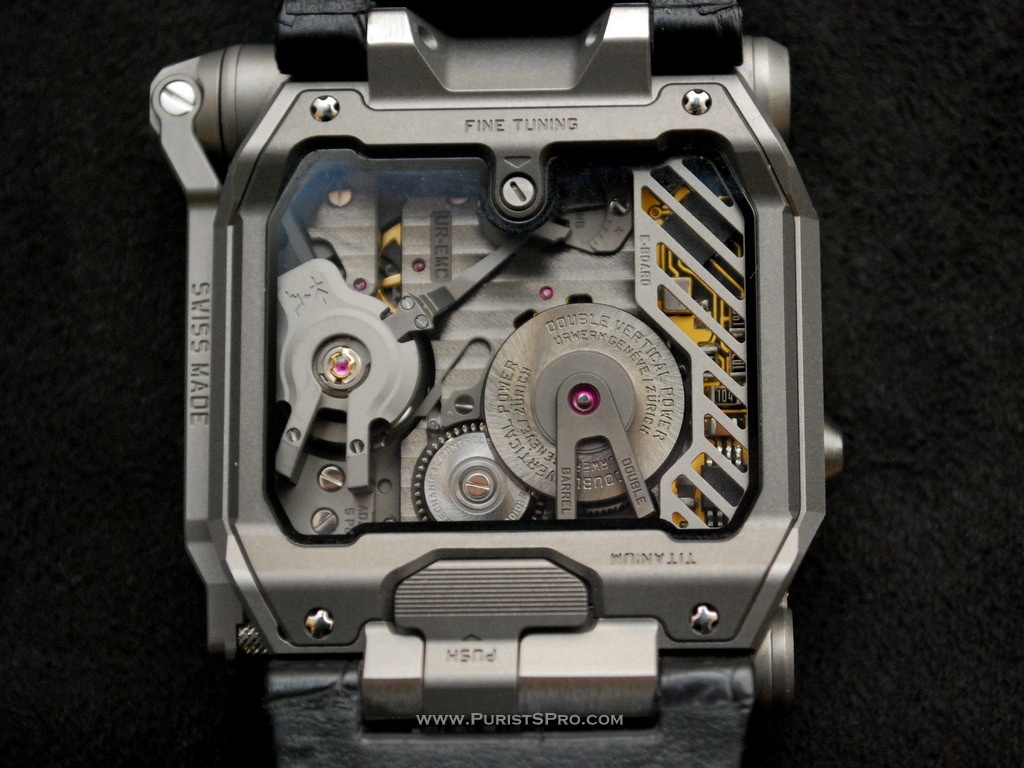
Here we have a look at the mechanical movement. In the first picture we can see the balance wheel under the cap. The squarish hole in the balance wheel at the right is used for the optical frequency measurement. The optical sensor is not mounted here in this picture, but attaches to the cap at the left.
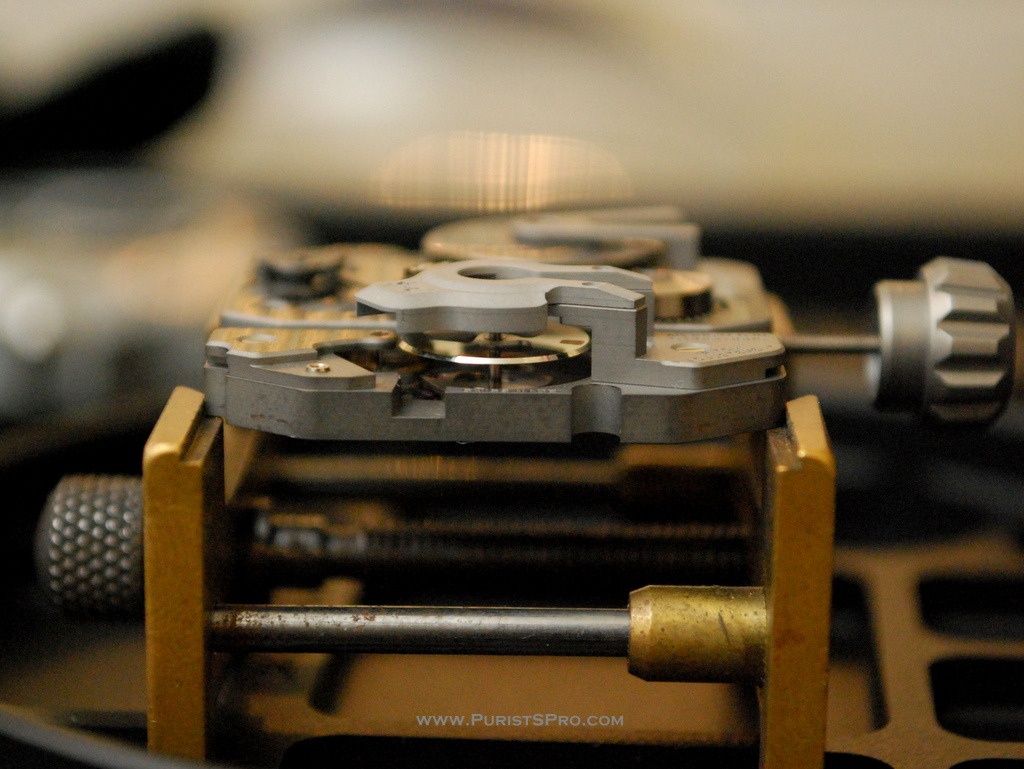
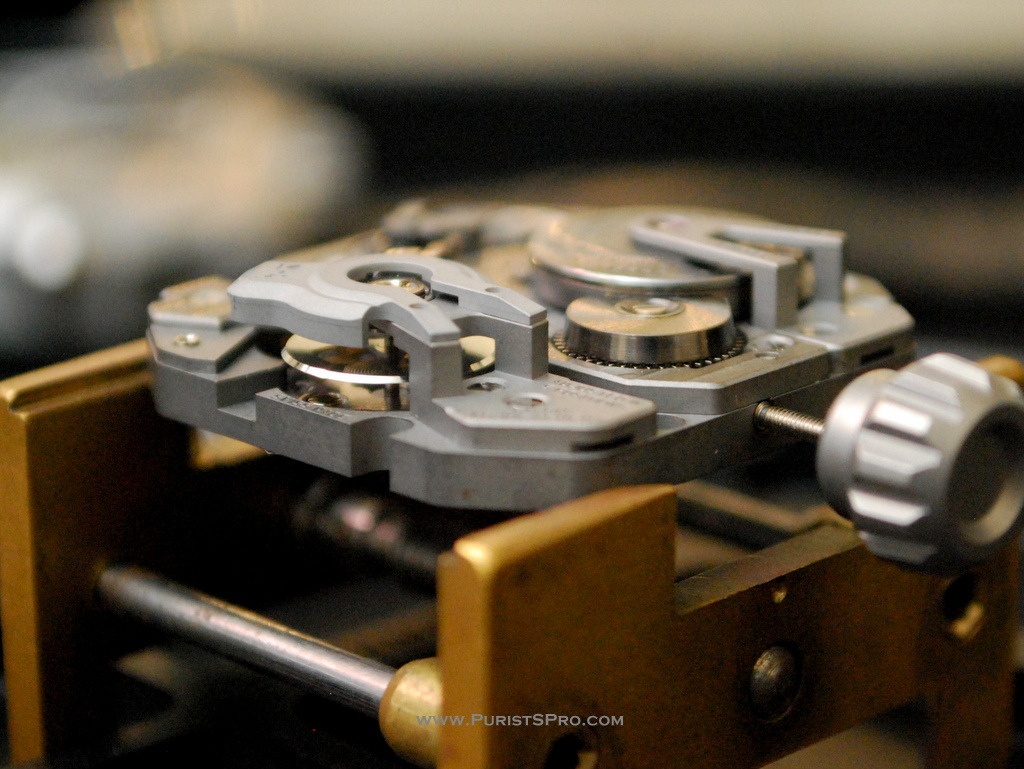
Here we can see the lever which is part of the manual timing adjustment. What is the use of having a timing machine in ones watch if one can not adjust the timing ones self? A slotted screw on the back of the case allows this.
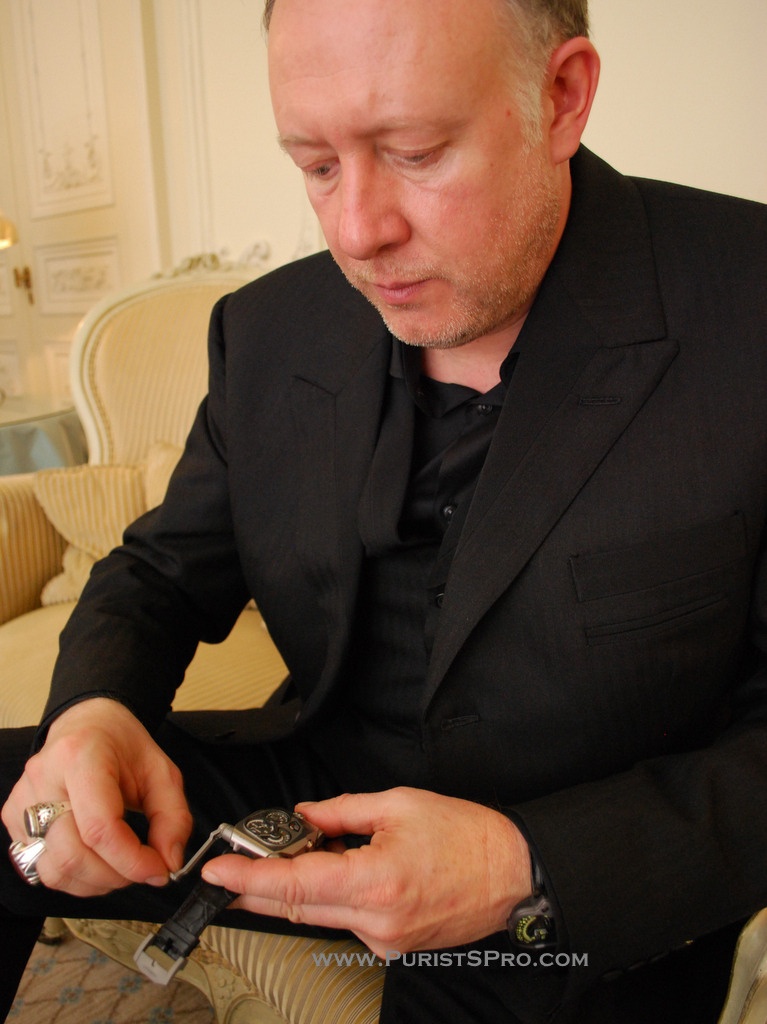
Let's allow Martin Frei to do a demonstration for us.
1) Wind the generator for at least 20 turns.
The big semi-circular scale calibrated from -20 to 20 is the seconds per day scale. In this position the hand is all the way at the bottom, the timer is off.
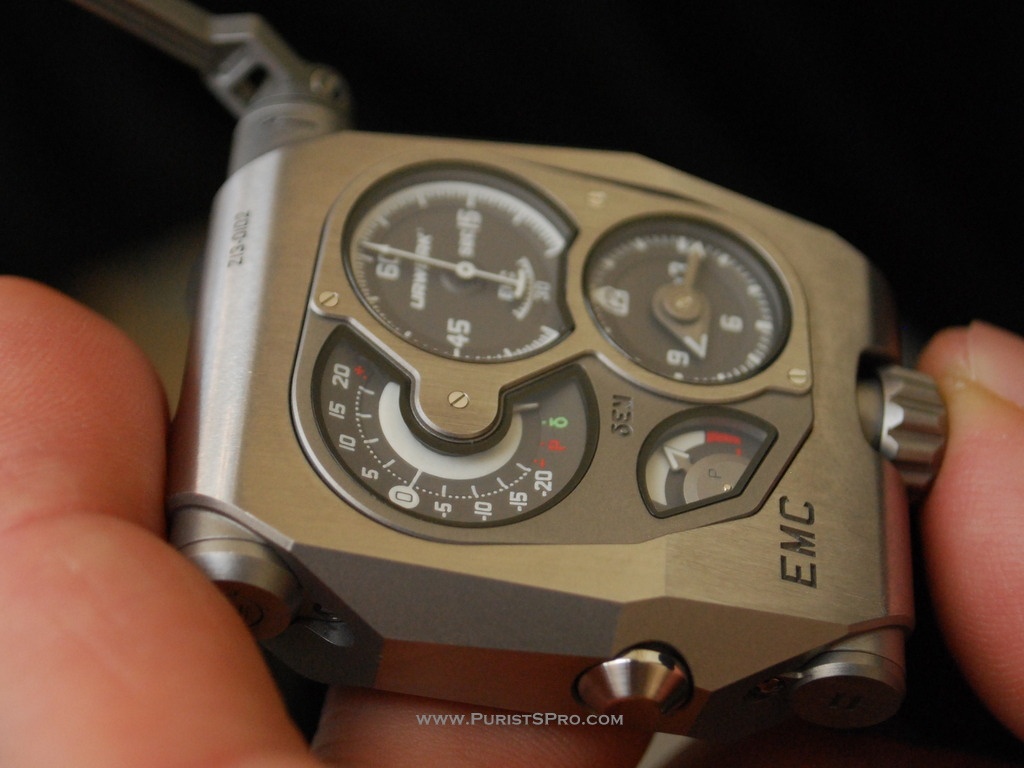
2) After winding, press the button at the left of the watch and the test starts. During the test the hand points to the white delta symbol as it is measuring the "delta" or difference between the measured rate and a perfect rate.
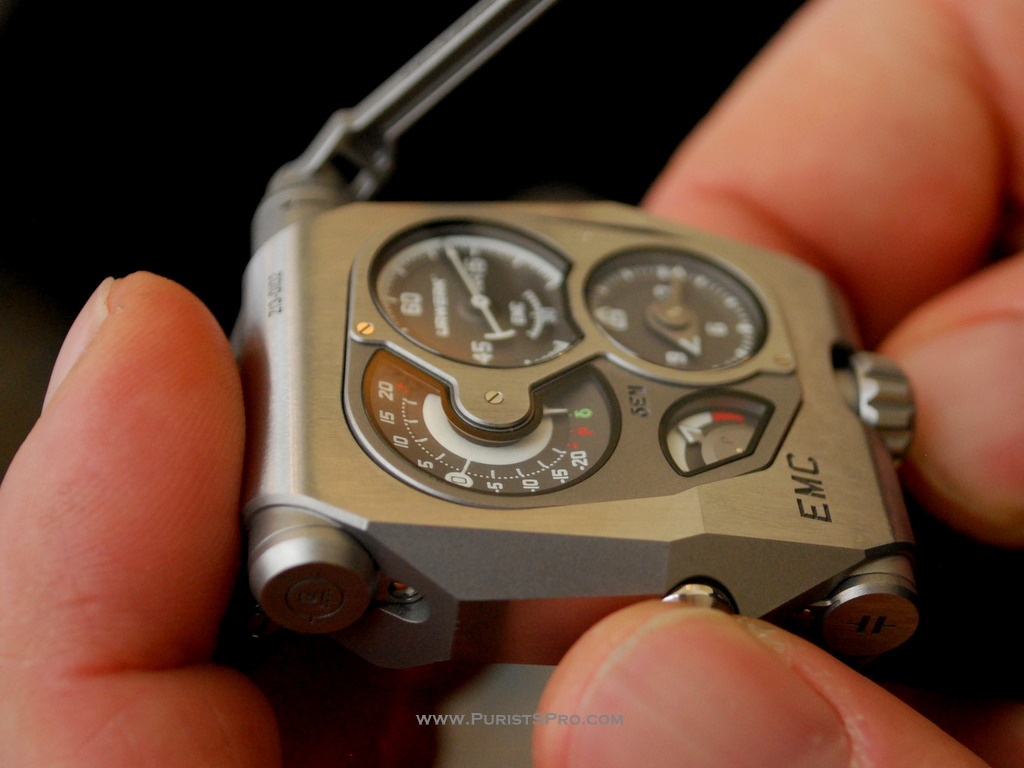
3) When the test has been made the hand moves to display the results. In this case the watch is running about 2.5 seconds slow.
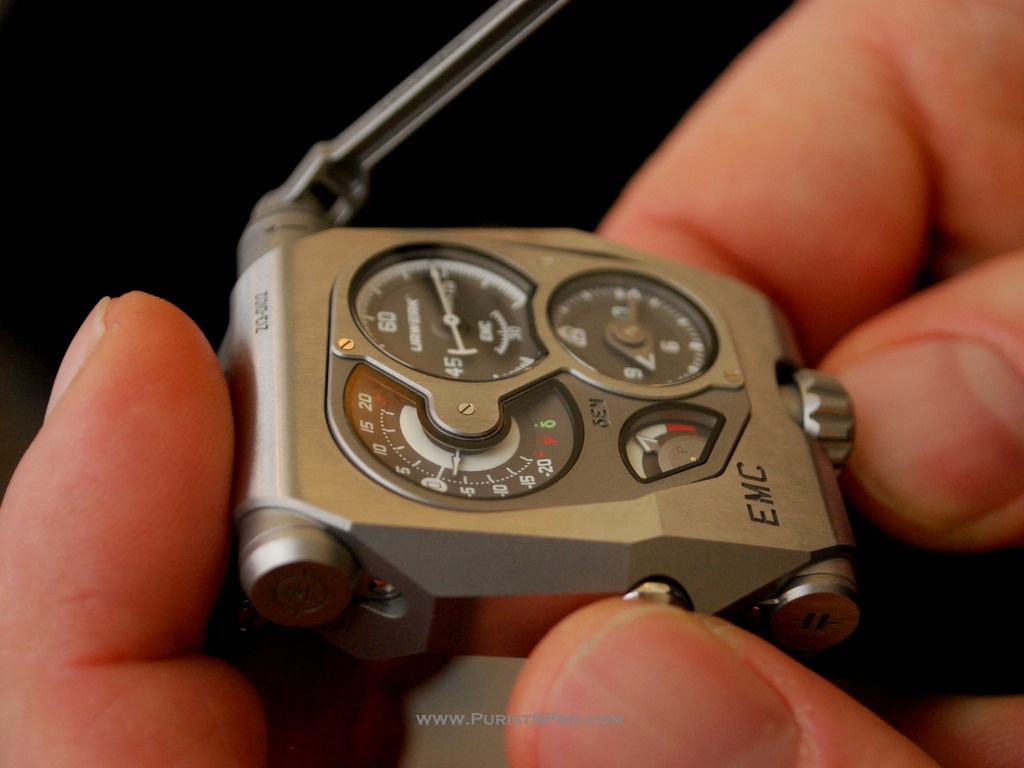
That's it.
A gratutitus picture of what is on Martin Frei's wrist.
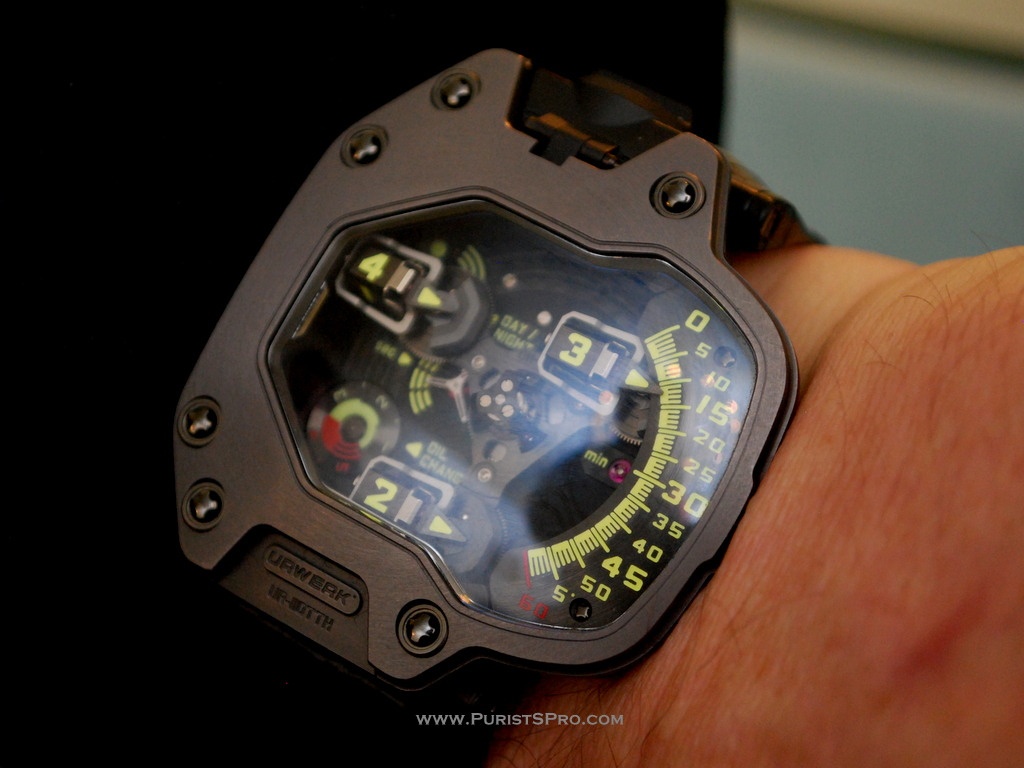
Back on my wrist the EMC is a very handsome watch, which follows none of the usual codes. My only personal knit-pick is that I would have placed the time in the biggest dial. (I still thaink that watches are first and formost for telling the time, stone-age me)
I am very curious to see where this developemt is going to lead URWERK in the future. I have the impression that they have gotten near to finishing their exploration of time displays and are now setting out on a new course. Time will show us their way.
This message has been edited by DonCorson on 2014-02-10 09:33:42


