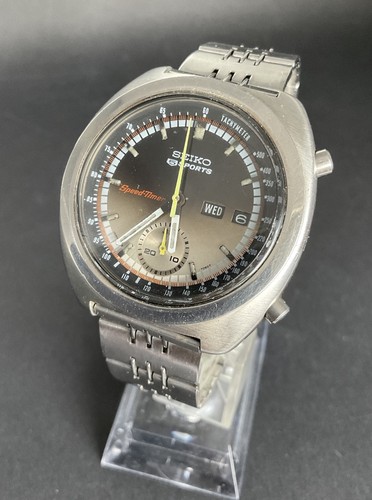
Seiko 6139 Chronograph Restoration
Service

Seiko 6139 Chronograph Restoration

By cazalea · Aug 7, 2015 · 3 replies
cazalea
WPS member · Seiko forum
3 replies1940 views12 photos
f 𝕏 in 💬 🔗

Cazalea's detailed account of restoring a vintage Seiko 6139 chronograph offers valuable insights into the philosophy of preserving old watches without over-restoring them. His practical guide demonstrates how a careful cleaning and reassembly can bring a well-loved timepiece back to life, emphasizing the importance of respecting its original character. This post is a testament to the enduring appeal of vintage Seiko chronographs and the satisfaction of hands-on watch care.

3 collectors discussing this on the WatchProSite forumJoin the Conversation →
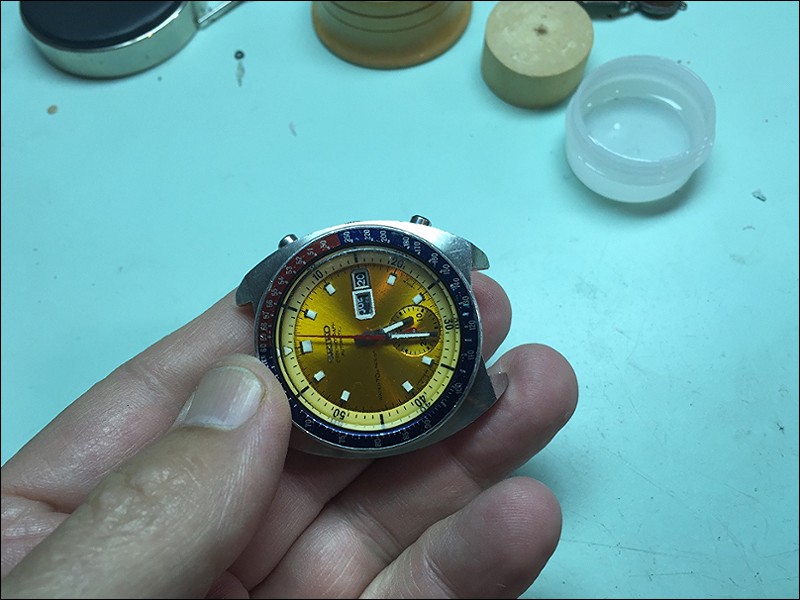
Yesterday I showed my friend's Seiko Chrono in a pitiful state (cosmetically), and promised to clean it up. I then threatened to put it away for a few months (to make the owner simmer). But I decided this morning to finish up its spa treatment.

In my world of old watches, we don't make it look like a new one you bought at the store, or sent to the Rolex factory. We just clean them up, give them a brush and polish, and hand them back. This watch was running fine, so I didn't mess with the movement, especially since many parts are no longer available. I know others may disagree with this philosophy, but once you start taking things apart (especially pulling hands) you are on thin ice...

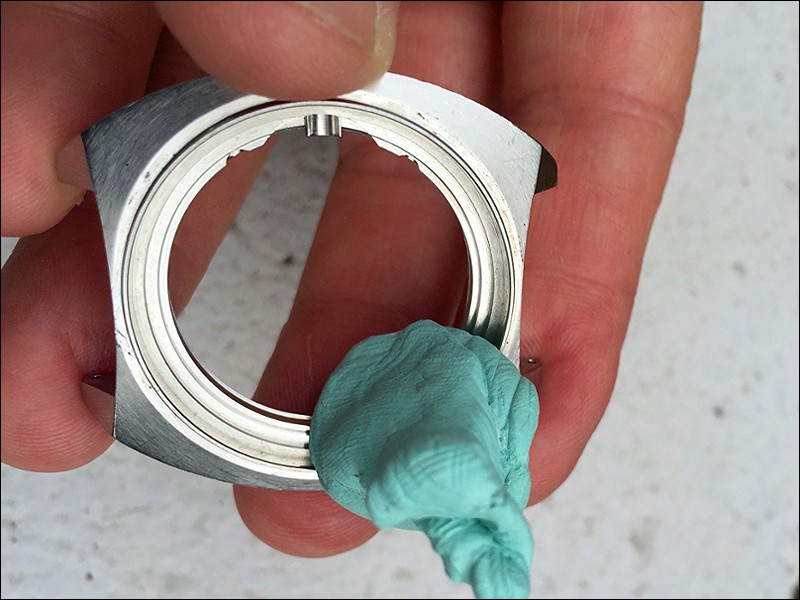
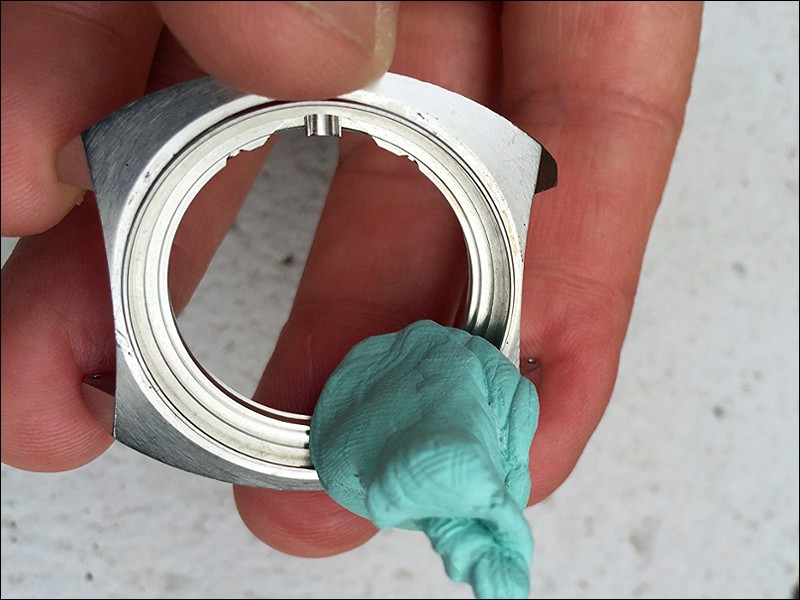
Even though it had been in the ultrasonic tank for an hour last night, I cleaned up the case's bezel edges with a fine file, then with Rodico (a cleaning putty).


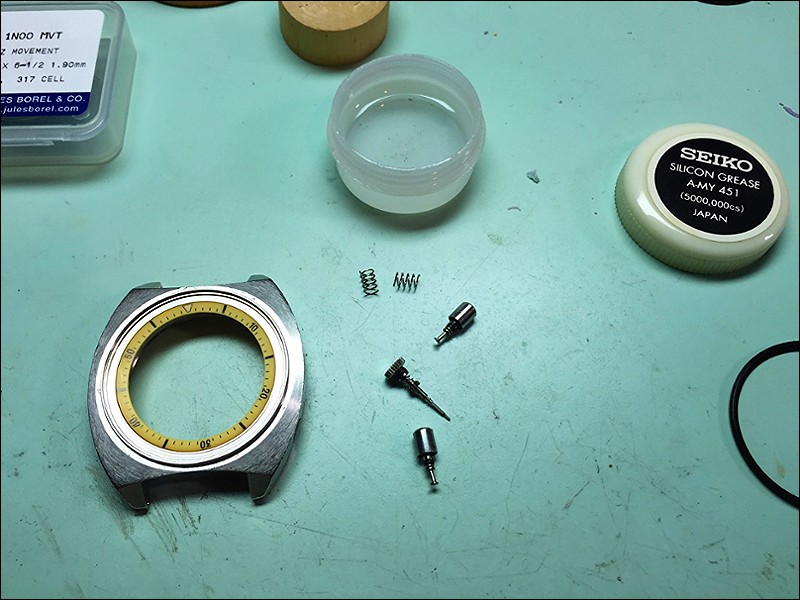
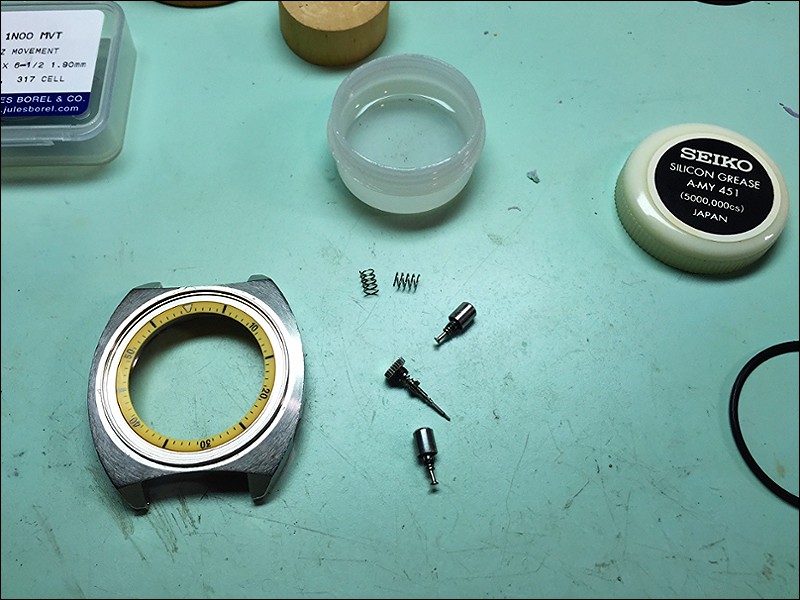
I put Seiko silicone grease on every gasket surface. That's on each pusher, on the crown, on the back gasket and the crystal gasket. This grease is extremely slippery and it helps to seal the watch, as well as protect the gaskets from damage when screwing down the case back.


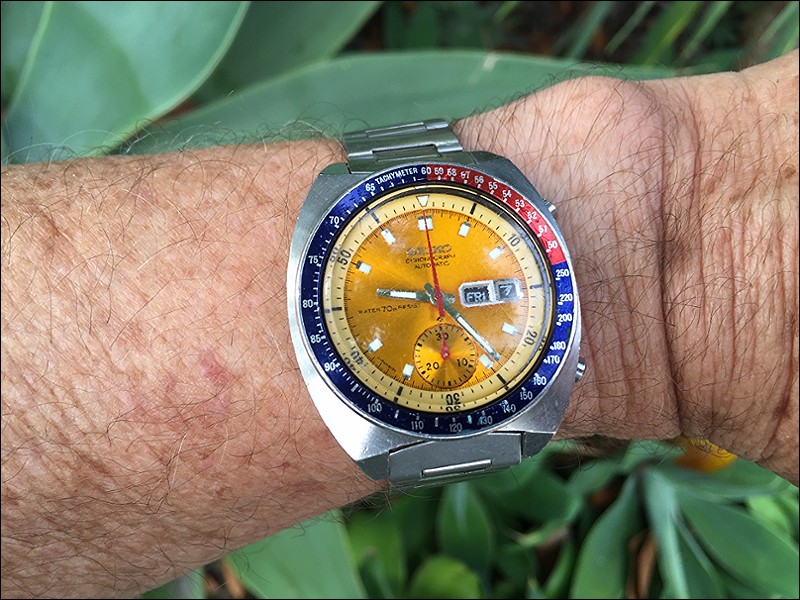
Nothing was torn or stretched, so I simply put it back together carefully.  By the way, that crown and stem is a very special piece. Rotating the crown in the rest position turns the inner (yellow) scale. Pressing in the crown gently changes the date. Pressing in the crown fully changes the day of the week. Pulling out the crown allows you to set the time. 

You can only wind this automatic watch by moving it around - my wife calls these "Shake-O" watches.

The bezel gets pressed on with a crystal press.


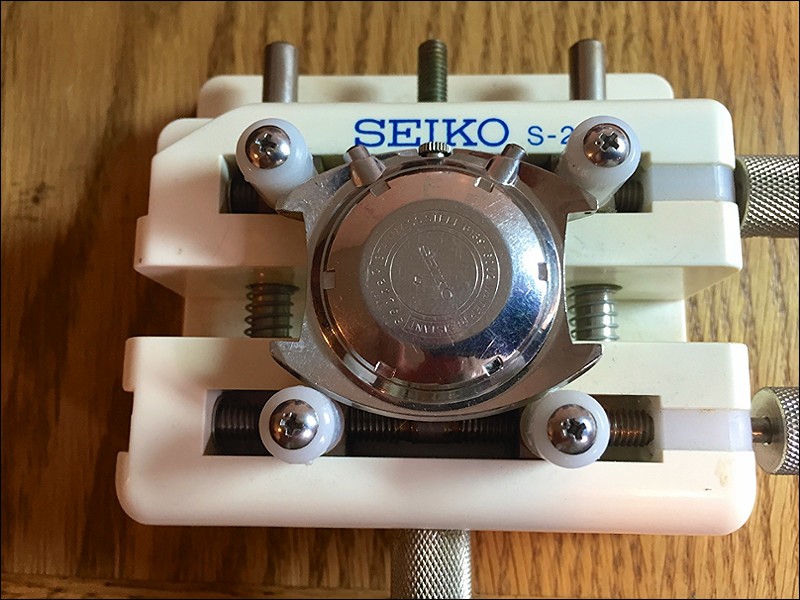
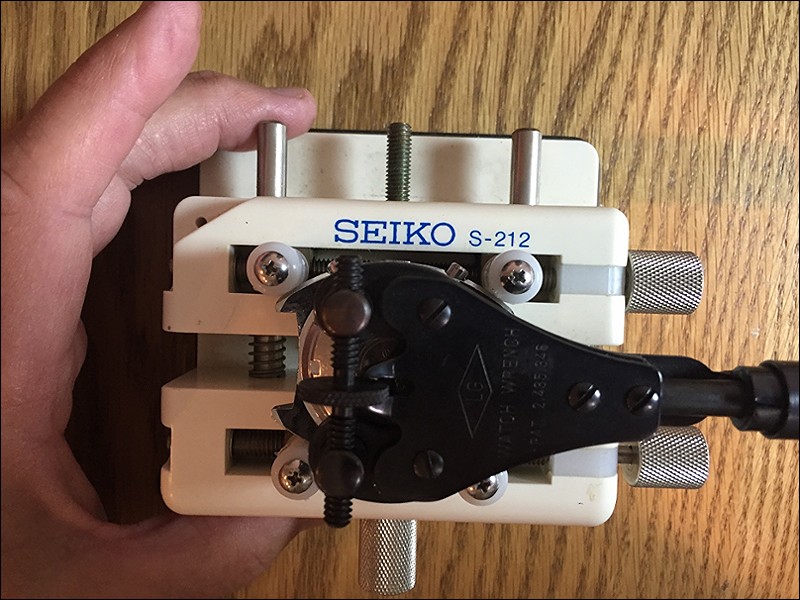
Back screwed into the case.


And tightened down securely.


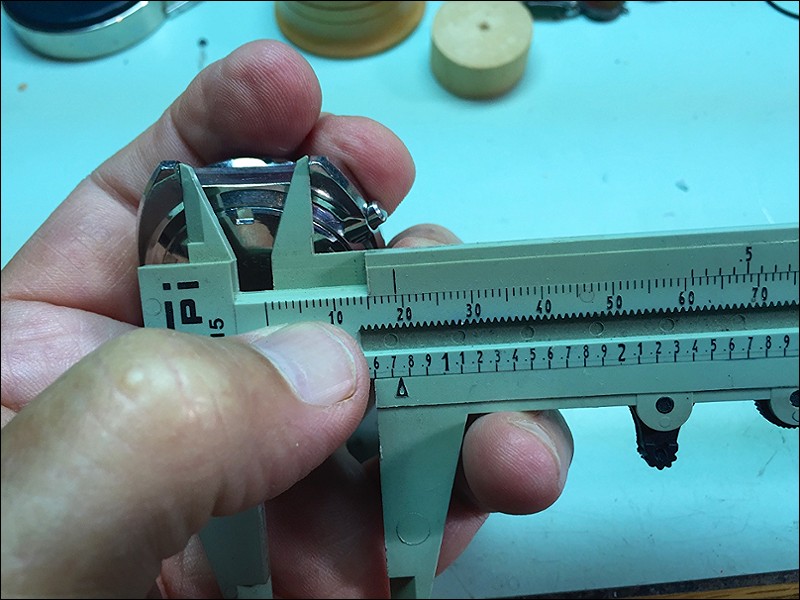
19mm across the lugs, so I dig out some new spring bars of the correct size.


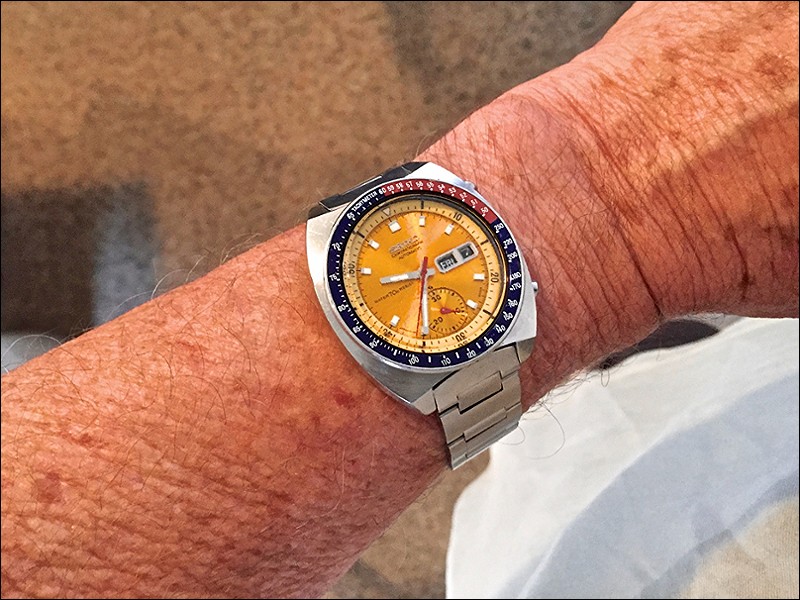
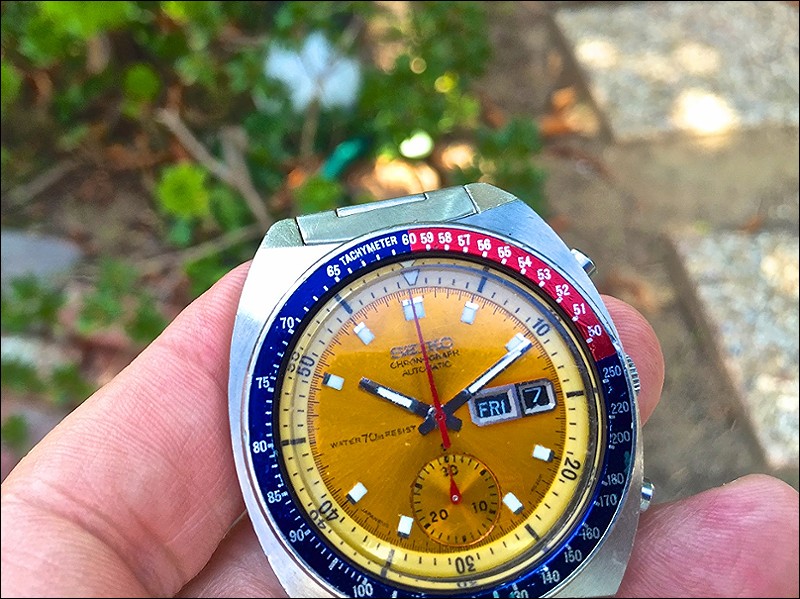
Aha. Perhaps I should have spent more time on the crystal, but you can only go so far in reviving a hard-used piece of plastic. I know for sure that Jim can't see without his cheaters on, so this is probably not going to bother him (if he even notices).


It seems to be running quite happily. Chronograph is just fine; starting and resetting to zero as it should. 


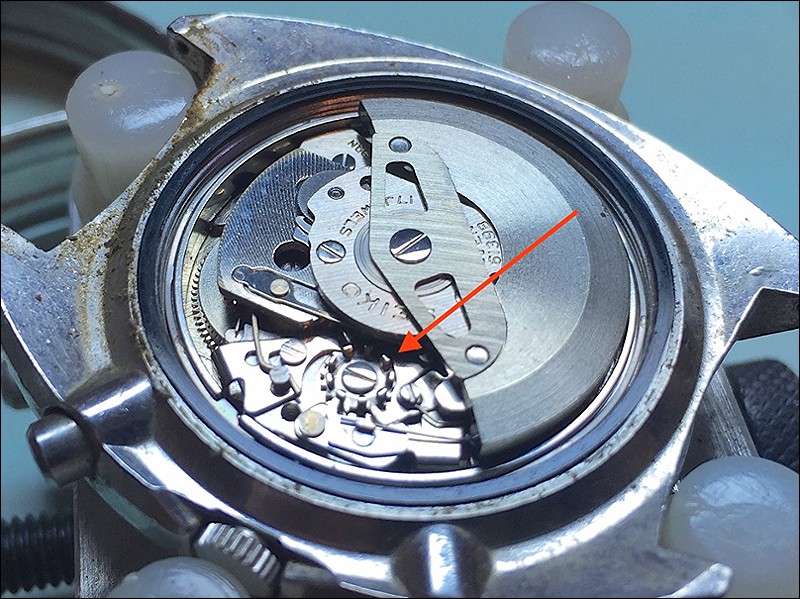
Did you notice it's a column wheel design? 


So that's it. A clean watch, running again, ready for the occasional use - when I tell him how popular these are and what they  are worth, he'll be more careful.


About the Seiko Seiko Chronograph Ref. 6139

The Seiko 6139 chronograph movement, introduced in 1969, was a significant development in automatic chronograph technology. It was one of the world's first automatic chronographs to feature both a column wheel and a vertical clutch mechanism, innovations that contributed to its precise operation and smooth chronograph engagement. This movement was designed for robustness and reliability, reflecting Seiko's engineering capabilities during that era.

The 6139 caliber powered a variety of Seiko chronographs, often housed in distinctively styled cases that became popular among collectors. Its integrated design meant that the chronograph functions were built directly into the movement, rather than being modular additions. The movement typically featured a single sub-dial for chronograph minutes and a day/date complication.

For collectors, the Seiko 6139 series represents a pivotal moment in chronograph history, offering advanced technical features at an accessible price point. Its historical significance as an early automatic column wheel chronograph, combined with its diverse range of case and dial variations, makes it a sought-after vintage reference.

Specifications

Caliber
6139
Case
Stainless Steel
Dial
Various
Water Resist.
70m
Crystal
Hardlex

Key Points from the Discussion

Advertisement
The Discussion
JM
jml_watches
Aug 7, 2015
Before and After

Hi Love the before and after of part 1 and 2. Also the comment about stuffing in a draw for 3 months before doing something. Looks a whole lot better after you've finished part2. Have to say I've been snooping around vintage Seiko Chronos for the last few months. They definitely have something about them. Cheers JML

KI
KIH
Aug 7, 2015
Vintage Seiko Chrono...

... never cut the corner. Almost all the vintage Seiko chrono is column wheel mechanism. Very nice. 61 Chrono, 7016 Chrono as well.... Anyway, great job, Mike! You are a very good watchmaker, indeed. Nice, nice, nice. You did a great service to the SEIKO and its owner. Ken

EC
Echi
Aug 10, 2015
Wow, thanks for part 2...

Great series! I hear you about parts. I had several vintage pieces but sold them all due to this frustration. Well, goes to show I wasn't meant to go vintage! Thank you again. Echi

Available on the marketplace

Continue the conversation

This thread is active on the Seiko forum with 3 replies. Share your knowledge with fellow collectors.

Join the Discussion →