26 replies18783 views6 photos
Le Monde Edmond presents a detailed comparison of two iconic Rolex 'small crown' Submariner references, the 6536/1 and the 5508. This post meticulously highlights their subtle yet significant differences, offering invaluable insights for collectors interested in these vintage 'James Bond' era timepieces.

We are surprised this has not been done before. A comparison of two Iconic Rolex submariner models also known as the small crowns. Both are so similar but yet so different at the same time. Although there are more than two references of the small crowns submariners -also sometimes known as the 'James Bond models' (collectors often refer to all submariner without crown guards to James Bond models), we will be concentrating on only two in this post: The 6536/1 and the 5508. The 6536/1 came along after the 6536 which was only produced for one year in 1955 and was clearly a transitional model for Rolex. The 6536-1 was introduced in 1955 and ended in 1959- although it is unclear of the ending year is accurate. The 5508 came later than the 6536/1 and was introduced in 1957 for four years with production ending in 1961. The 5508 was the last submariner to carry the 100m depth rating (it would increase later to 200m). Both references are similar in size and both the 5508 and 6536/1 have small crowns (6mm) and have no crown guards. The diameter of the dial is also the same size. Lets look more closely at both models starting with the bezel.

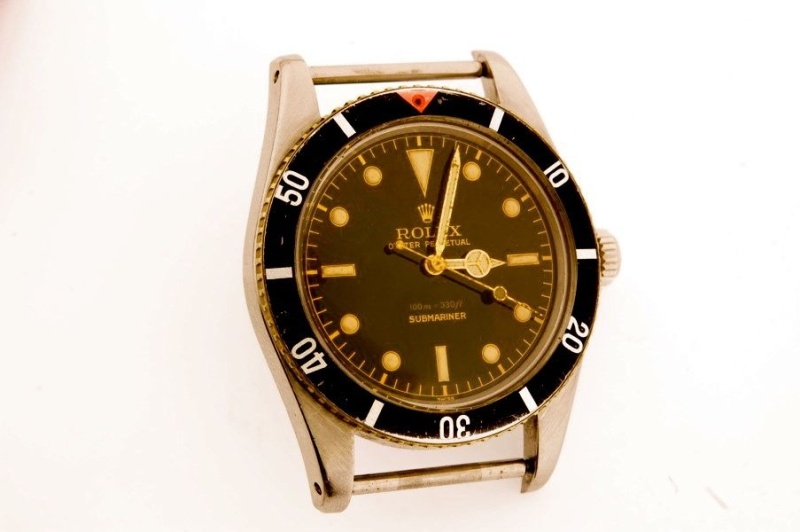
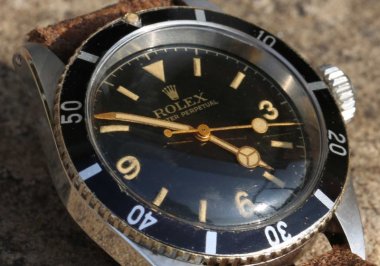
The bezel on the 6536/1 is different than on the 5508-especially with the early models. Early models were known to have the markers in 10 minute intervals and also had a red triangle (see picture above). Later models of the 6536/1 then carried the first 15 minute marker which is common on most Rolex models today. The 5508 had only the 15minute marker and are not known to have the bezel marker in 10 minute intervals like the 6536/1 (see picture below).

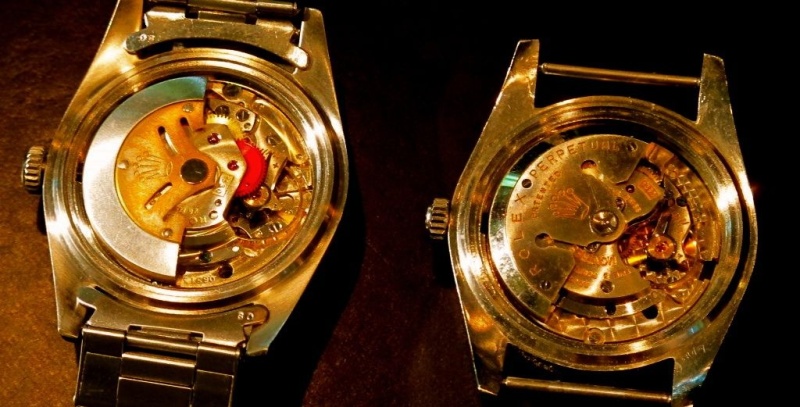
Both watches share a very similar dial. Both in original form are CR (Chapter ring) dials with swiss signed below. Naturally both are Gilt dials with the depth writing (100m) for both the 6536/1 and the 5508 in silver. The hands are 'mercedes' on both models and both in their original form are also glossy (black laquer dials). The movement on the 6536/1 is a calibre 1030. The 5508 came after the 6536/1 and thus carries the newer movement and successor movement to the 6536/1, calibre 1530 which was a more modern and reliable movement than the 1030. Both are so called 'Butterfly movements' because of the rotor which is shaped like a Butterfly on both the 6536/1 and the 5508 (see picture below). Movement of 6536/1 is on the right, 5508 is on the left.

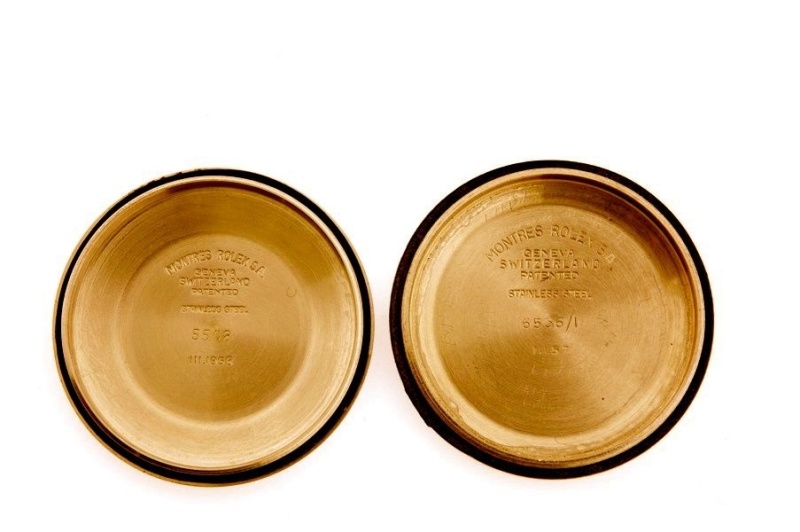
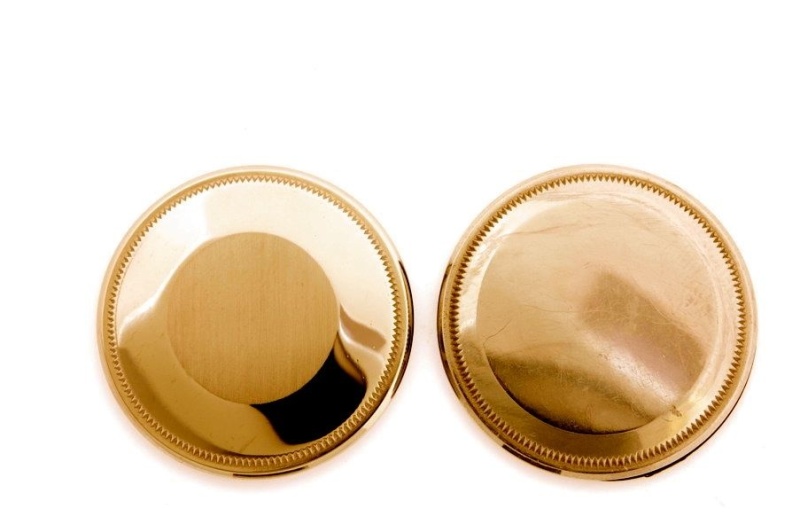
The outer case back of both references are quite different. The 6536/1 is on the right and is quite different in shape than the smaller diameter case of the 5508 on the left (see picture below). The inner case back ofcourse is marked with the respective dates. On the left you have 5508 which has the smaller diameter also on the inside of the case back. It is also clearly marked with the date 1958. On the right you have the date marked III 1957 - third quarter 1957 of the 6536/1. See picture below.


My conclusion: Both these early 'small crown' submariners without crown guards are charming. They are more wearable than their larger big crown brothers and are just as collectable.
About the Rolex Oyster Perpetual Ref. 1030
The Rolex Oyster Perpetual reference 1030 represents an early iteration of the self-winding Oyster Perpetual line, a foundational model for the brand. This reference is distinguished by its automatic movement, housed within the robust Oyster case, which established the core principles of water resistance and automatic winding that became hallmarks of Rolex watches. It was part of the broader Oyster Perpetual family that emphasized reliability and everyday wearability.
This reference typically features a stainless steel Oyster case, housing the Rolex Caliber 1030, an automatic movement. The case diameter is commonly found around 34mm, a standard size for men's watches of its era. The watch is fitted with a domed acrylic crystal, contributing to its vintage aesthetic. The Caliber 1030 movement provides a power reserve suitable for daily use.
For collectors, the reference 1030 is significant as it showcases Rolex's commitment to developing durable and precise automatic timepieces. It appeals to those interested in the evolution of the Oyster Perpetual series and the early application of Rolex's self-winding technology. Variants exist with different dial configurations and hour markers, offering diversity within the reference.
Specifications
- Caliber
- 1030
- Case
- Stainless Steel
- Diameter
- 34mm
- Dial
- Silver
- Water Resist.
- 50m
- Crystal
- Acrylic
About the Rolex Oyster Perpetual Ref. 1530
The Rolex Reference 1530 is notable for its distinctive case design, which predates and shares characteristics with the Oysterquartz models, yet houses a mechanical movement. This reference represents a transitional period in Rolex design, offering a unique aesthetic that sets it apart from the more traditional Oyster Perpetual cases of its era. It was produced in limited quantities, contributing to its specialized appeal among collectors. The integration of a mechanical caliber within this angular case profile provides a different wearing experience compared to its more common contemporaries.
This reference features a stainless steel case measuring 36 mm in diameter, a departure from the typical round cases. It is fitted with an acrylic crystal and a smooth bezel. The watch is powered by the automatic Rolex Caliber 1570, a robust and reliable movement known for its precision. This movement provides a power reserve of 48 hours and includes a date complication, visible through an aperture on the dial. The water resistance is rated at 100 meters, consistent with Rolex's Oyster case standards.
For collectors, the Reference 1530 is significant due to its unusual case architecture and its mechanical heart, making it a precursor to the Oysterquartz line. It appeals to those interested in the evolution of Rolex design and production anomalies. Its scarcity and unique design language differentiate it from other Oyster Perpetual models, positioning it as a distinct piece within the brand's history. The silver dial and Oyster bracelet complete its integrated design.
Specifications
- Caliber
- 1570
- Case
- Stainless steel
- Diameter
- 36 mm
- Dial
- Silver
- Water Resist.
- 100m
- Crystal
- Acrylic
About the Rolex Submariner Ref. 5508
The Rolex Submariner reference 5508 represents the No Date series within the Submariner model range. Produced from 1958 to 1962, this reference is distinguished by its black dial that has developed spider patina over time.
The 5508 features a 37mm stainless steel case fitted with an acrylic crystal and rotating bezel. Water resistance is rated to 200 meters. The automatic Cal. 1530 movement provides 42-48 hours of power reserve. The watch is paired with a steel bracelet.
This reference appeals to collectors focused on vintage Submariner variants from the late 1950s and early 1960s production period. The spider patina dial condition represents a specific aging characteristic that develops over decades. Within the No Date Submariner lineup, the 5508 occupies the position of a four-year production run reference with the Cal. 1530 movement.
Specifications
- Caliber
- Cal. 1530
- Case
- Stainless steel
- Diameter
- 37 mm
- Dial
- Black with spider patina
- Water Resist.
- 200m
- Crystal
- Acrylic
About the Rolex Submariner Ref. 5510
The Submariner reference 5510 is a notable example within the early production of the model line, distinguished by its "Big Crown" design. This reference was produced for a very short period, making it one of the rarer variants. It represents a transitional phase in the Submariner's development, bridging earlier designs with later, more standardized configurations. Its aesthetic aligns with the functional tool watch philosophy prevalent at the time of its introduction.
The case of the reference 5510 is constructed from stainless steel, featuring a diameter characteristic of its era. It houses an automatic movement, specifically the Caliber 1530, which provides reliable timekeeping. The crystal protecting the dial is made of acrylic, a common material for watches of this period, contributing to its period-correct appearance. The water resistance rating was a significant feature for the model at its release.
This reference appeals to collectors interested in the foundational period of the Submariner. Its limited production run and specific design elements, particularly the oversized winding crown, contribute to its desirability. The 5510 is considered a key reference for understanding the evolution of the Submariner series, showcasing the design language and technical specifications that preceded subsequent iterations.
Specifications
- Caliber
- Cal. 1530
- Case
- Stainless steel
- Diameter
- 38mm
- Dial
- Black
- Water Resist.
- 200m
- Crystal
- Acrylic
About the Rolex Submariner Ref. 6536
The Rolex GMT-Master reference 6536 is an early example of the GMT-Master line, distinguished by its smaller case size compared to later iterations. This reference is notable for its introduction of the GMT complication, allowing for the simultaneous display of two time zones. It represents a foundational piece in the development of Rolex's travel watch offerings, preceding the more commonly seen 6542.
This reference features a stainless steel case measuring 37 mm in diameter, housing an automatic movement, specifically the caliber 1030. The watch is fitted with an acrylic crystal and offers a water resistance of 200 meters. The power reserve for this movement is approximately 42 hours, providing reliable timekeeping for daily wear.
For collectors, the 6536 holds interest as an early and less common GMT-Master reference. Its position in the lineage of the model highlights the initial design language and technical specifications before subsequent refinements. Variants within this reference may include subtle dial or bezel differences, which are often points of scrutiny for enthusiasts seeking originality.
Specifications
- Caliber
- 1030
- Case
- Stainless steel
- Diameter
- 37 mm
- Dial
- Black
- Water Resist.
- 200m
- Crystal
- Acrylic
Key Points from the Discussion
- The 6536/1 and 5508 Submariners are considered 'small crown' models, both lacking crown guards and sharing similar case dimensions and dial sizes.
- Early 6536/1 models featured bezels with 10-minute interval markers and a red triangle, distinguishing them from later 6536/1 and all 5508 models which had 15-minute markers.
- Both references originally came with glossy gilt 'Chapter Ring' dials, 'Mercedes' hands, and silver depth ratings (100m).
- The 6536/1 utilized the Caliber 1030 movement, while the later 5508 featured the more modern and reliable Caliber 1530, both known as 'Butterfly movements' due to their rotor shape.
- The 5508 was the last Submariner to carry the 100m depth rating before it increased to 200m in subsequent models.
- The discussion expands to include other significant 'no crown guard' Rolex and Tudor Submariners like the 6204, 6205, and Tudor 7922, suggesting a broader collecting theme.
Advertisement
Continue the conversation
This thread is active on the Rolex forum with 26 replies. Share your knowledge with fellow collectors.
Join the Discussion →