Rolex GMT-Master II 16710 Stick Dial Guide
Reference Guide

Rolex GMT-Master II 16710 Stick Dial Guide

By Baron - Mr Red · Sep 3, 2018 · 36 replies
Baron - Mr Red
WPS member · Rolex forum
36 replies30897 views6 photos
f 𝕏 in 💬 🔗

Baron - Mr Red continues his series on identifying future classic Rolex models from the 1990-2018 era, focusing on the Rolex GMT-Master II Reference 16710 'Stick Dial'. This installment delves into the subtle yet significant dial variation that distinguishes certain late-production 16710 models, offering valuable insights for collectors seeking future classics.

36 collectors discussing this on the WatchProSite forumJoin the Conversation →
This is Part 4 of the series of “Identifying future classic Rolex from the 1990-2018 era”. I am attaching Parts 1, 2 and 3 below in case anyone missed them.

Part 1: www.watchprosite.com

Part 2: www.watchprosite.com /

Part 3:  www.watchprosite.com /


Part 4  - The Rolex GMT-Master II   "The Stick dial"

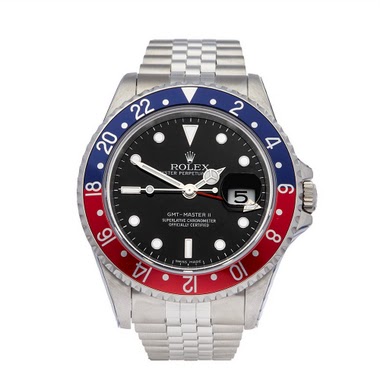
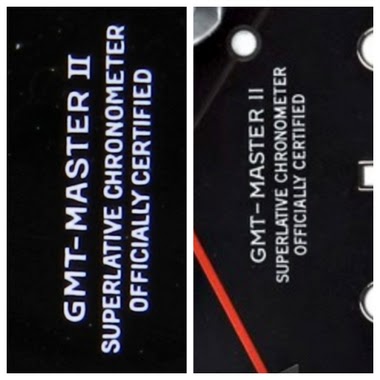
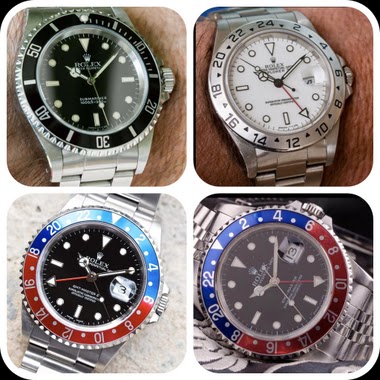
The Rolex GMT Master II Reference 16710 was produced from 1989-2007. It was the last GMT before the ceramic inserts took over. It was typically supplied with the 3185 caliber but late models saw an upgrade to the 3186 caliber. As detailed in Part 3 of this series, the 16710 dial saw a number of evolutions as tritium was replaced with luminova and then super luminova. However, the 16710 also saw another dial variation that marks it as collectible. Namely, towards the end of its production cycle, the typeface on GMT Master II was changed and gave rise to what has become known as the “Stick Dial”.


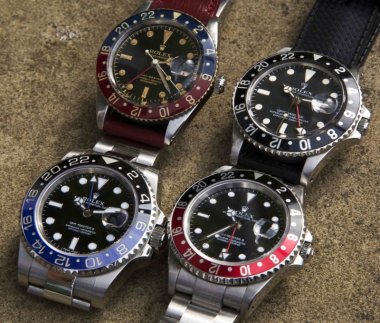
In the latter years of production of the 16710, Rolex introduced a subtle dial variation. GMT Master II originally saw the “II” written in Roman numerals. In latter years of production, the change saw it move to GMT Master II written as a form of straight stick rather than Roman numeral (see image below). Some students of Rolex have argued that the “Stick dial” represents the transition from the 3185 caliber to the 3186 caliber. To be blunt, sometimes Rolex just did things without anyone really knowing why. It is part of the frustration as well as part of the fun of collecting Rolex. I think it is fairly hard to be definitive on why Rolex made a dial alteration on the 16710, but they did. Rolex, being Rolex, put this new variant dial on the latter year runs of caliber 3185 as well as the new 3186. In either caliber, the dial variation is rare. Empirically, I have seen about the same number in a 3185 as a 3186. I think it is fair to say that all both are rare.


I see the 16710 “Stick Dial” as a future classic for a number of reasons;


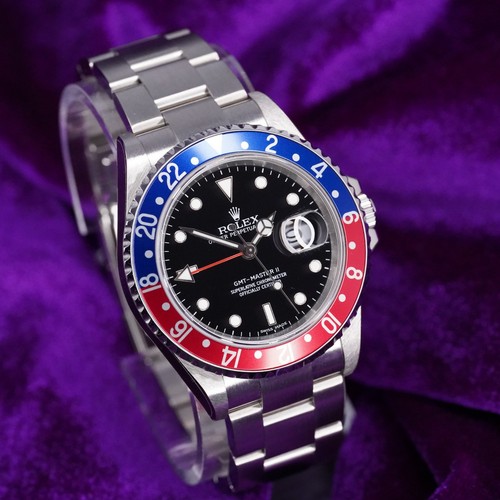
1) It is a transition model away from the traditional inserts to the modern ceramic insert. The last traditional Pepsi insert in fact.

2) The 3185 caliber is a Rolex warhorse of a movement. Now out of use, but one of the most reliable and sturdy movements that Rolex have ever made.

3) There is a dial variation that is easy to identify that differentiates the “Stick dial” from other 16710 dials. In terms of scarcity, one does not see many “Stick dials” simple because not that many were made. On Chrono24, I can see around 400 GMT 16710s for sale. Perhaps 5-7% of this total contain “Stick dials”. That makes it rare enough to differentiate it against ordinary 16710s, but also not so impossible as to make the hunt unrealistic.


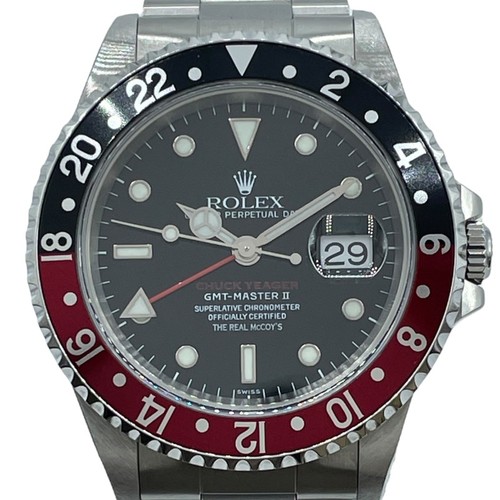
Rolex GMTs are, and always have been, very popular references. To find a nice “neo-vintage” Pepsi or Coke GMT that is totally reliable, in great condition that also has a dial variation that makes it rare is something that ticks a lot of boxes. I think it is fair to say that the 16710 GMT-Master II “Stick dial” is already starting to become a collectors target. I think this will continue to be the case and this watch definitely deserves a place in my Top 10 future classics list.


About the Rolex 16710 Ref. 16710

The Rolex GMT-Master II reference 16710 represents a significant evolution in the brand's dual time zone offerings, succeeding the reference 16760. It maintained the core functionality of displaying two time zones simultaneously, distinguishing itself through a slimmer case profile compared to its predecessor and the introduction of different bezel insert options. This reference was produced for an extended period, allowing for various dial and bezel configurations that are of interest to collectors. It is a transitional model that bridges earlier five-digit references with modern six-digit iterations.

This reference features a 40 mm stainless steel case, housing the automatic caliber 3185, which provides a power reserve of 48 hours. The watch is fitted with a sapphire crystal, contributing to its water resistance of 100 meters. The bidirectional rotating bezel, often seen with a Pepsi (red and blue) aluminum insert, allows for tracking a third time zone. The dial is black, and the watch is typically paired with a steel Oyster bracelet.

For collectors, the 16710 is notable for its versatility and the variations available throughout its production run, including different luminova types on the dial and the availability of black, Coke (black and red), and Pepsi bezel inserts. Its position as a robust and functional tool watch, combined with its classic proportions and the reliability of its movement, makes it a frequently sought-after reference. It appeals to those who appreciate the traditional aesthetic of Rolex's GMT-Master II line before the introduction of ceramic bezels and larger cases.

Specifications

Caliber
3185
Case
Stainless steel
Diameter
40 mm
Dial
Black
Water Resist.
100m
Crystal
Sapphire crystal

Key Points from the Discussion

Advertisement
The Discussion
AR
Arie - Mr Orange
Sep 3, 2018
Coke probably less produced then Pepsi?

Another question: what is the correct box to go with one of these? I see some (same year) with the old boxes and some with the new boxes?

BA
Baron - Mr Red
Sep 3, 2018
Tricky.....

.......Coke is probably rarer though Pepsi is more popular. As for the boxes, I will need to check as the production run is so long that the box style will almost certainly have changed.

BO
Boris
Sep 3, 2018
Very well researched, as usual

However, I am not sure how this qualifies as a "future" classic, given that these "stick dial" versions of 16710 and their 3186 movement already command significant premiums over regular 16710's.

AR
Arie - Mr Orange
Sep 3, 2018
Perhaps because wealth in the world is increasing so the demand for pieces like this will increase as well.

We all want what we ‘can’t’ have/get (easily)...

BA
Baron - Mr Red
Sep 3, 2018
Yes.... exactly. [nt]

BA
Baron - Mr Red
Sep 3, 2018
Boris....

.... everything is relative. Yes, there is a premium building on these but it’s not at a point where it can be described as a “classic”. Think of it as a spectrum. It’s moving along that spectrum.

Available on the marketplace

Continue the conversation

This thread is active on the Rolex forum with 36 replies. Share your knowledge with fellow collectors.

Join the Discussion →