Manufacture
Andrew H (219) offers an exclusive look into the manufacturing marvel behind the Richard Mille RM056 Sapphire, a watch that captivated SIHH 2012. His detailed post, enriched with behind-the-scenes imagery from Stettler Sapphire, explores the audacious engineering required to craft a case entirely from sapphire. This article delves into the 'why' and 'how' of such a challenging horological endeavor, highlighting the blend of innovation and risk that defines Richard Mille's approach.
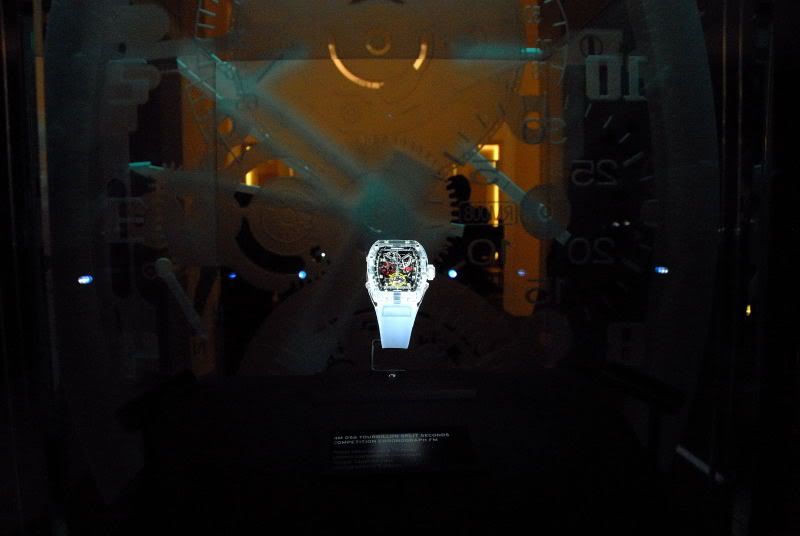
The Richard Mille RM056-01 represents a significant advancement in the brand's use of sapphire in watchmaking, following the original RM056. This model distinguishes itself by extending the use of transparent sapphire beyond the case to include the baseplate and bridges of the movement. This design choice highlights the intricate mechanics of the caliber, making every component visible to the observer.
The case of the RM056-01 is crafted from solid blocks of sapphire, a material known for its extreme hardness and scratch resistance, requiring specialized ultrasonic machining and polishing techniques. The movement, a manual-winding tourbillon caliber, is specifically designed to integrate with the transparent components, showcasing its architectural complexity. The watch maintains a high level of finishing on all visible parts, a necessity given the transparent construction.
For collectors, the RM056-01 is notable for its technical innovation and extreme exclusivity. Its production demands a highly specialized manufacturing process, resulting in very limited availability. This reference is considered a pinnacle of Richard Mille's experimental approach to materials and transparency, appealing to those who value cutting-edge horological engineering and a distinctive aesthetic.
It was the star of the show at SIHH 2012. Richard’s RM056 was a ghost of a machine as it appeared to levitate in the display case. Almost without exception, the reaction was one of awe. How could this be! How, with a complex three part case, could the case be made from crystal, second only to diamond in hardness, and with so many intricate surfaces and shapes? Not least of which, the curvature of the case in three parts to match together perfectly. Seeing the crystal case manufacture and the cas
Excellent and instructive report , thanks for sharing....certainly there is nothing impossible for RM , simply outstanding
.
g To undertake the project, Richard turned to Switzerland’s (and possibly the worlds) foremost crystal firm: Stettler Sapphire. A privately held, family run firm, it is the typical example of a Swiss specialisation. Stettler produce the sapphire crystals for a number of high end watch firms; certainly a few from the Richemont Group, from the LVMH group, and other larger and smaller independents who require complex crystal shapes for their watches. Richard uses Stettler for the crystal dials on h
nt
Very interesting. Vte
This thread is active on the Richard Mille forum with 36 replies. Share your knowledge with fellow collectors.
Join the Discussion →