Review
iim7v7im7 shares invaluable insights from a watch-shopping trip in NYC, emphasizing that hands-on experience is crucial for evaluating luxury timepieces. His detailed observations on dial colors, rose gold hues, watch sizes, and dial details offer a practical guide for collectors navigating the complexities of selecting a dress watch.


Hi,
I am fortunate enough to live near enough to a metropolitan center (NYC) where one can try on many of the watches that we talk about here on the Purists. I visited many of the mid-town boutiques (AP, BP, Breguet, Chopard, GP, Journe, Piaget , PP in Tiffany and VC) and top ADs (Cellini and Tourneau, Wempe) to look for the lack of a better word “dress watch”. I use this term in that it’s not for black tie events but a watch that is at home when you are a bit dressed up in social and business situations.
Like many of us, I had researched a number of watches via the internet and watch discussion forums. This pointed me to a number of potential contenders based on my research and recommendations of forum contributors. Here are a number of things that I learned:
Color of Dials: Their where a number of black dialed rose gold watches (AP Jules Audemars, JLC Grand Master Ultra Thin) that I was considering. In person, I really did not care for them aesthetically and from a legibility perspective. I also thought that they might wear smaller (dark typically wears smaller than white in clothing for example) but the opposite is true. The sharp value contrast with the gold bezels emphasizes the watches perimeter and amplifies the perception of size in my view. Light dials were both easier to read and integrated with the case metal better.
Color of Rose Gold: There were large differences in the hue of the rose gold alloys used by the different companies. Some were yellower and others redder. I preferred the more red alloys. I also found that it was important to take the watch away from the halogen lights typically used in many dealers. They tend to emphasize a yellow tone within many of the cases.
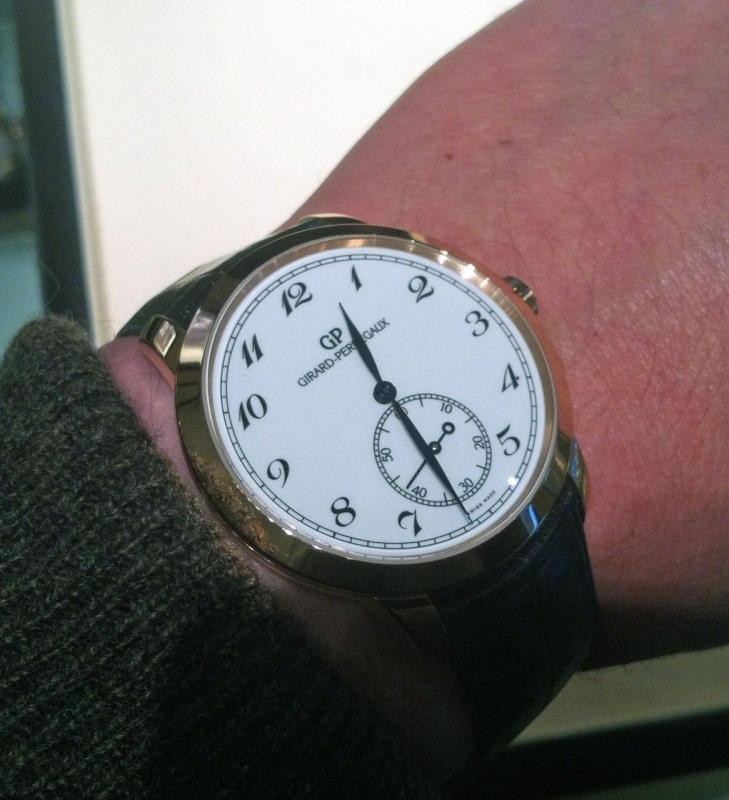
Watch Size: Not really a revelation but your perception of a watches size is visually influenced by the size ratio of the dial diameter vs. the case diameter. Some 40 mm watches looked huge (JLC GMUT) and others wore nicely (GP 1966 Small Seconds). The other aspect was the lug design and how the watch sat on your wrist. For example, I absolutely adored the ALS Richard Lange that I tried on, but at 40.5 mm in diameter and 10.7 mm in thickness, it was really more of a masculine, precision timekeeper and lost some of the dress elegance of the ALS Saxonias in my view.
Dial Details: The subtleties of a dials finish, appliqués, numbers, and chapter ring can only really be fully perceived in person despite the plethora of images available out there. For example the Grand Feu enamel dial on the GP 1966 Small Seconds was beautiful and is not captured by images. I also came to understand that I need minute/second indices either in a chapter ring or in a sub-dial to be happy. Simpler more abstract designs like the Moser Mayu or Piaget Altiplano’s while elegant were not my cup of tea.
Movement Details: From a design perspective it was interesting to spend some time looking at pieces under a loop. All were nicely finished, but you could capture philosophical differences. AP, Breguet and PP appeared more modern in their movement escapements and balances and Vacheron and ALS where much more traditional in each of their approaches. In terms of finish the AP and PP had a similar look to them in the bridge plates and anglage. The Breguet had a more detailed/machined perfection aesthetic to it. The VC was elegant and simple and kind of fell between the AP/PP and Breguet in a balance of precision and hand craftsmanship. The ALS is difficult to compare because of its Saxon approach (3/4 plate, German silver, screwed chantons etc.) but under the loop was more akin to the AP/PP school of hand finishing, but in its own paradigm of watchmaking. Some watches had very small movements with respect to their cases which actually looks a bit odd. The GP 1966 case is quite large with respect to its GP Calibre 3300 within.
Design: A watch needs to move you
emotionally. It is a personal accessory
that is an extension of YOU. There were many fine watches that when I tried
them on did nothing for me aesthetically despite their horological provenance. They were either so classical in their design
and some were so sterile and clean that the piece while well crafted felt “generic”,
with no point of view. There is no surprise here,
but confirmed an expensive mistake driven by WIS desires.
These are the four watches that I liked the most out of the many that I tried
on:
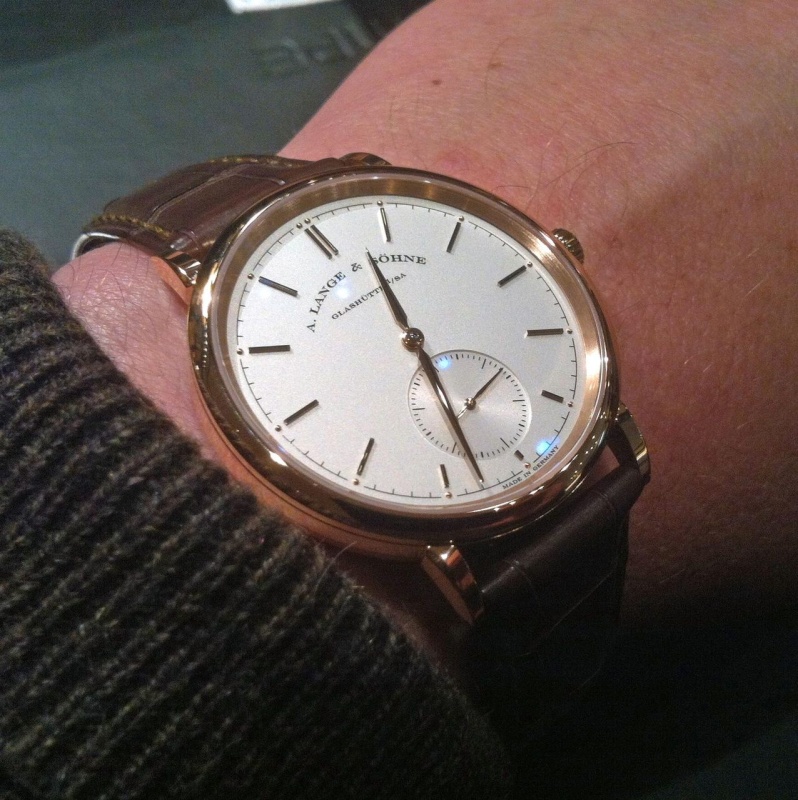
Saxonia Automatik
38.5 x 7.8 mm
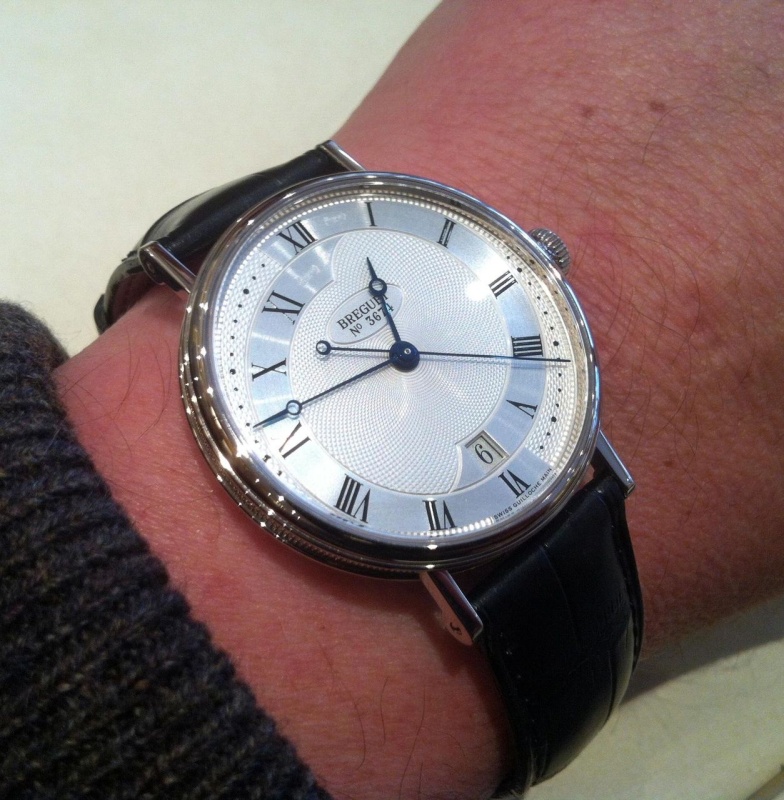
Breguet(Swatch Group)
Classique 5197
35.5 mm x 7.5 mm
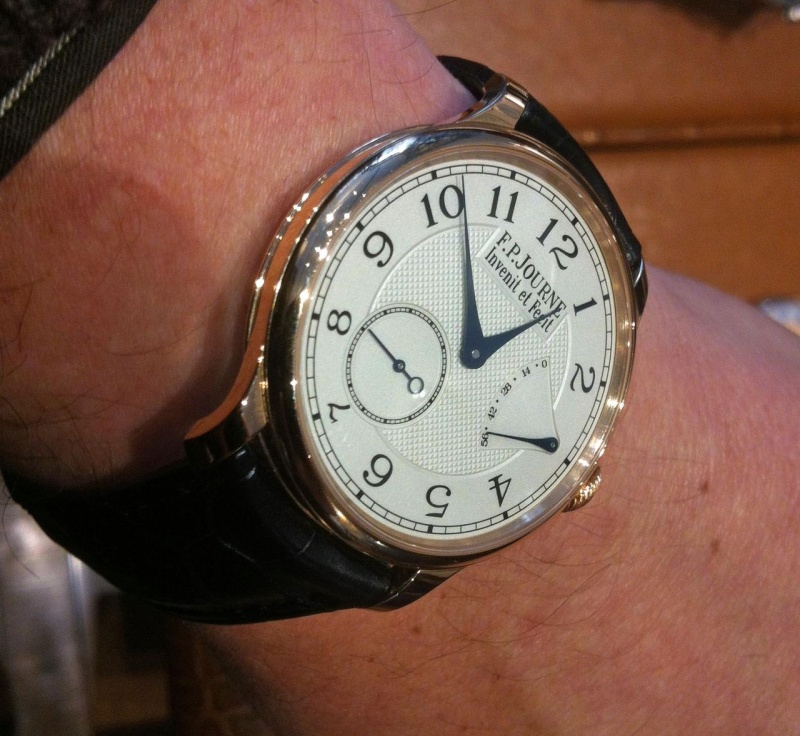
F.P. Journe
Chronometre Souverain
38.0mm x 8.6 mm
Girard-Perregaux(PPR)
1966 Small Seconds
38.5mm x 8.5 mm
I know need to give this some thought, but I thought that I would share my experience with the forum. Your thoughts and comments are both welcomed and as always are appreciated.
Best,
Bob
The 1966 Ford Mustang represents a significant year for the model, building on the initial success of its introduction. This reference is part of the first generation, which established the Mustang as a distinct category of American automobile. It continued to offer a range of body styles and engine options, allowing for considerable personalization and appealing to a broad market segment. The 1966 model year saw refinements rather than radical changes, solidifying its design language and market position.
The vehicle's construction typically featured a steel unibody chassis. Various engine configurations were available, including inline-six and V8 options, paired with manual or automatic transmissions. Specific dimensions varied slightly depending on the body style, such as coupe, convertible, or fastback. The interior offered a functional layout, with instrumentation focused on driver information.
This reference holds interest for collectors due to its place in the early history of the Mustang and its enduring popularity. The availability of different engine and trim levels means that specific examples can vary widely in their features and performance. It remains a recognizable and sought-after classic, often celebrated at automotive events worldwide.
But once you see a watch in the real, then you can discuss it, here, to get others" opinion. It is a complementary and very useful way to make your own mind. You said it very well: All the nuances of a watch cannot be captured through the lense of a camera, and I don't even mention the feeling a watch can provide, in the real life. That is the ultmiate test. Best, and thanks for this very interesting post. Nicolas.
great follow up post to your dress watch thread. not surprised you ended up with the Lange in one of your top 4. For me, the WG lange saxonia base narrrowly beat out the patek 5196P for a dress watch. The journe CS is nice, but the tantalum chronometre bleu is nicer.
I am only 28 but have for a number of years always been drawn to Breguet designs (I don't own one but would love to one day). I love the classic look at first appearance and then as you said, the amazing level of detail you begin to notice upon close inspection. I was in London over christmas and spent an hour in the Watchmakers museum in the Guildhall where they have a good selection of pocket watches on display - many of them obviously Bregeut's. I think their design cues are some of the best
Great follow up report. I love 'em all -- from a personal taste perspective, I might choose the FPJ, but as you have learned, the important thing is to select something that speaks to you! Best, Gary G
Some very nice pieces you have selected, and a tough (and important) decision to make. The one that stood out for me immediately was the FP Journe. It would be my first choice. Beautiful well-integrated design that won't date, less common than the other brands represented, and quality internals. Coming in second for me would be the Breguet. Good luck and all the best!
... my personal preference would be Breguet and GP, from classical, simplicity and size perspective. Watches are worn by people, not the other way around. Ken
This thread is active on the Horological Meandering forum with 23 replies. Share your knowledge with fellow collectors.
Join the Discussion →