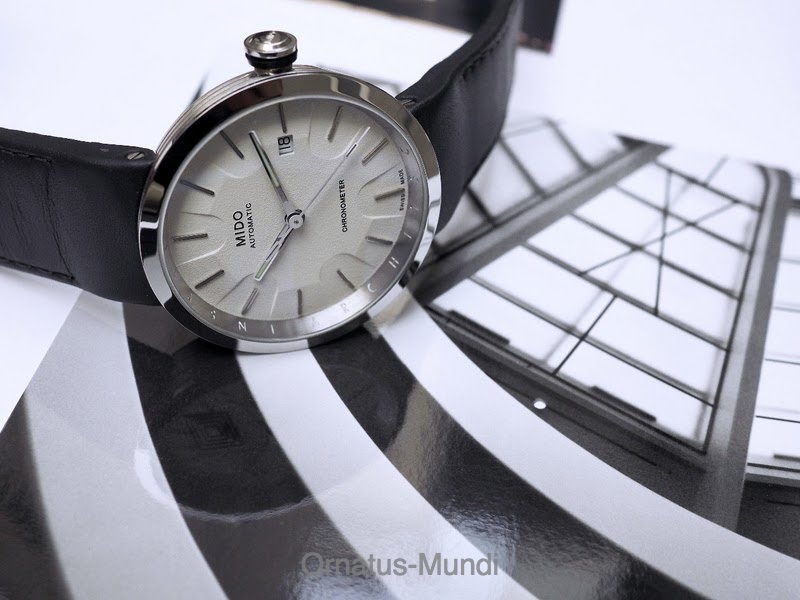
Ornatus-Mundi presents a hands-on review of the Mido Inspired by Architecture: The Guggenheim Museum Watch, a limited edition piece that explicitly draws design cues from Frank Lloyd Wright's iconic building. This article delves into the watch's unique aesthetic elements and technical specifications, contextualizing its architectural inspiration.
Architecture is a three-dimensional art, and on top plays with a number of other features such as colour, light, or texture - essentially, exactly like watch makers as well. The notion that buildings could drive watch design is therefore not very surprising, yet it is rarely promoted further.
Mido is one of the few watchmakers who explicitly draw inspiration from famous architects with their I
nspired by Architecture: The Guggenheim Museum Watch:

The technical specifications are quickly listed as follows (and quite remarkable at its price point):
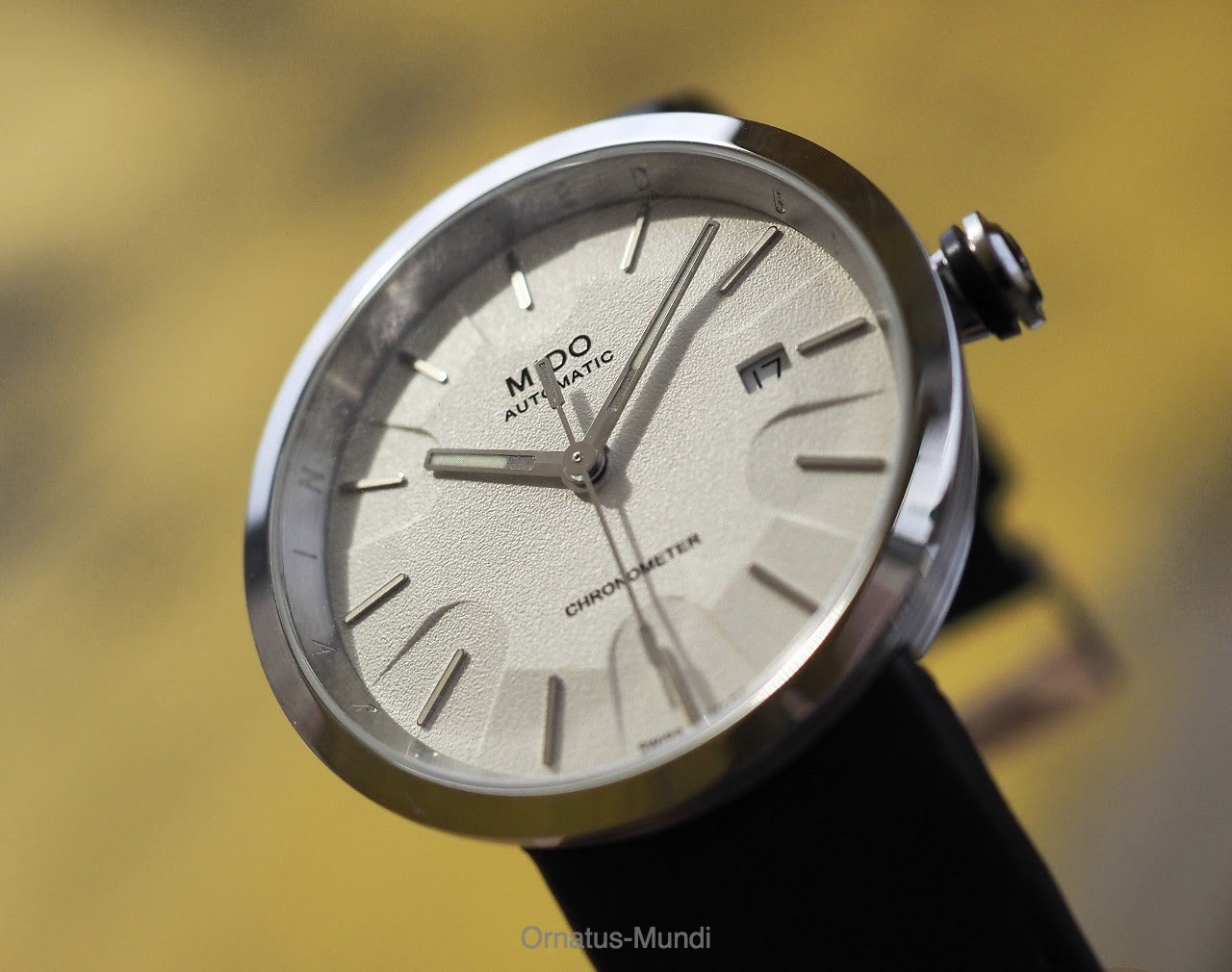
- Stainless steel case (40mm x 12mm, 50 meters water resistance)
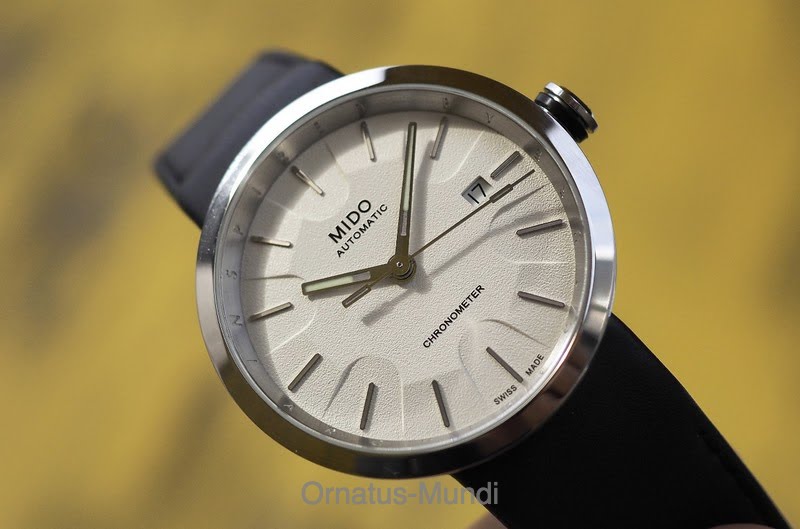
- Dial with a concrete-like colour and structure
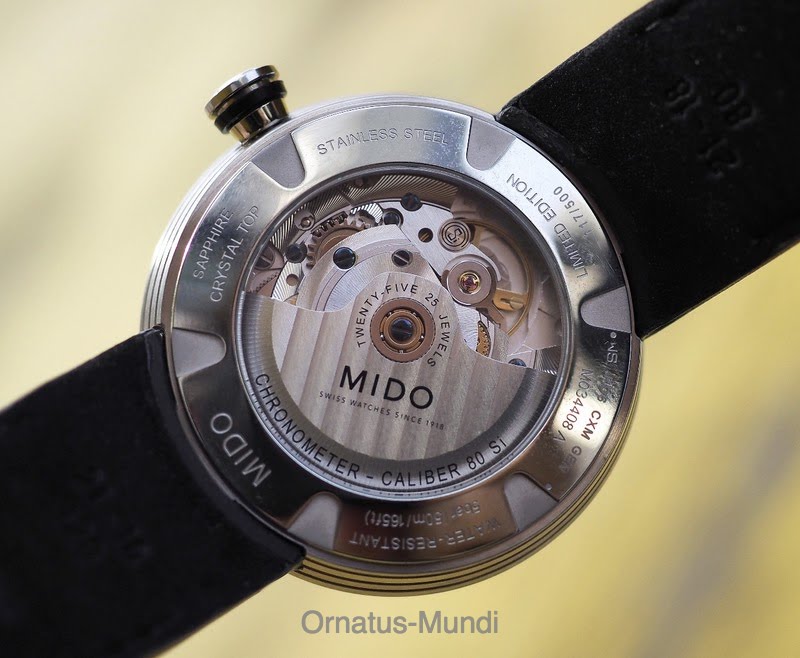
- COSC-certified automatic movement Caliber 80 Si, with silicon balance-spring; power reserve of up to 80 hours
- Produced in a limited edition of just 500 pieces
Now, lets take a closer look!
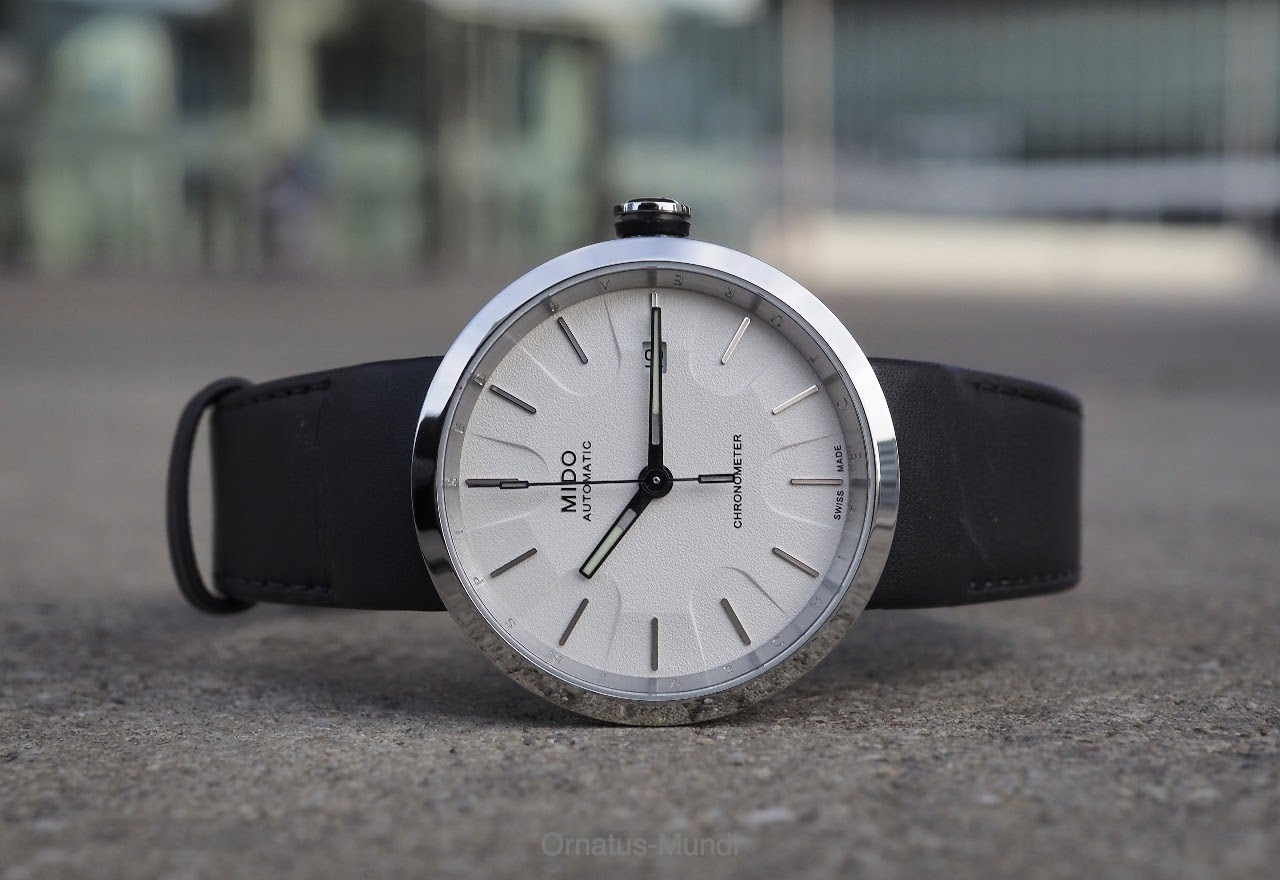
The Mido watch has a simple, restrained case, but one which actually comes with a number of interesting elements. The conical shape of the case side, the faceted dial with its unusual structure and egg-shell colour, the inner bezel...
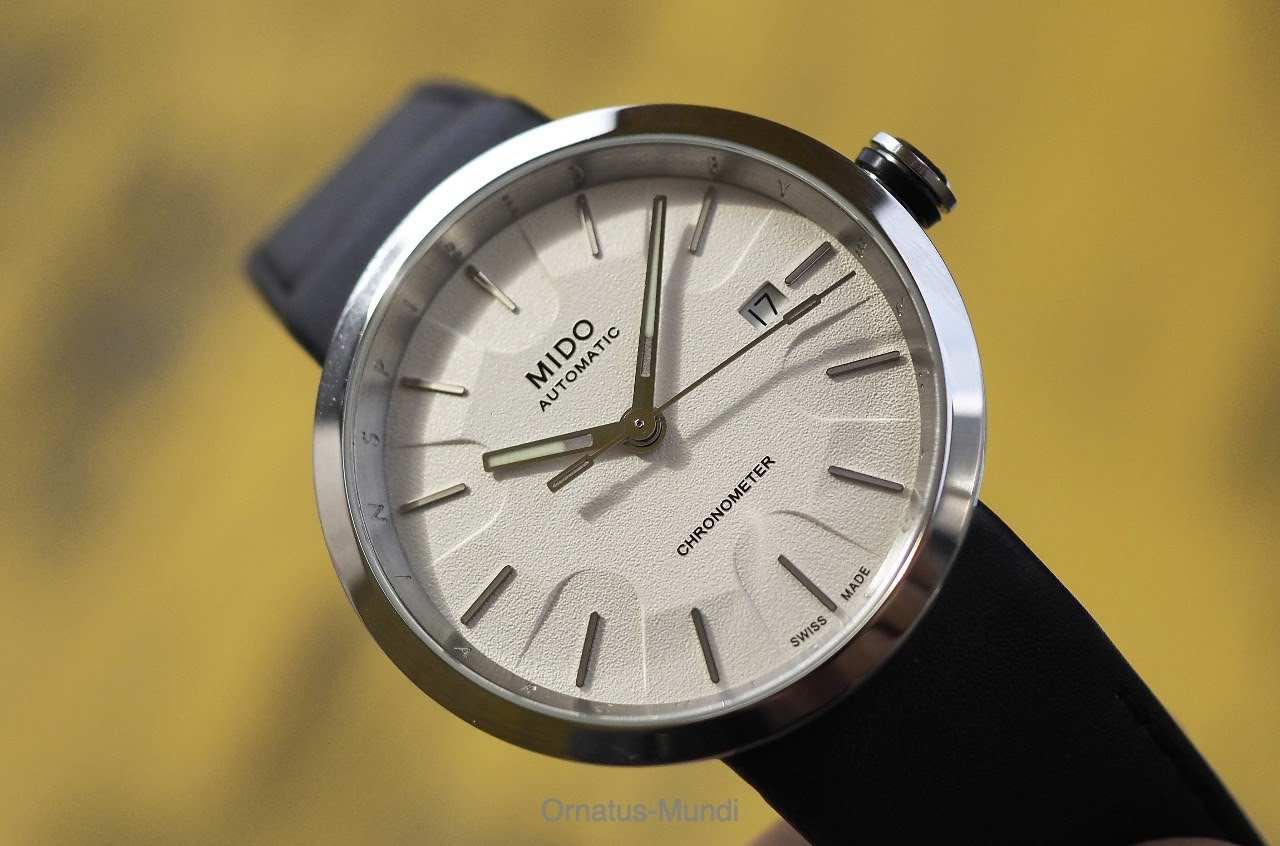
Now, let's see where the inspiration comes from:
1.) The exterior of the Guggenheim Museum New York:
The
Solomon R. Guggenheim museum in New York was designed and conceived by acclaimed American architect
Frank Lloyd Wright to house Solomon R. Guggenheim's art collection, and is dominated by its expressive formal language derived from the shell of a marine mollusc.
It’s easily recognisable also in this new watch:
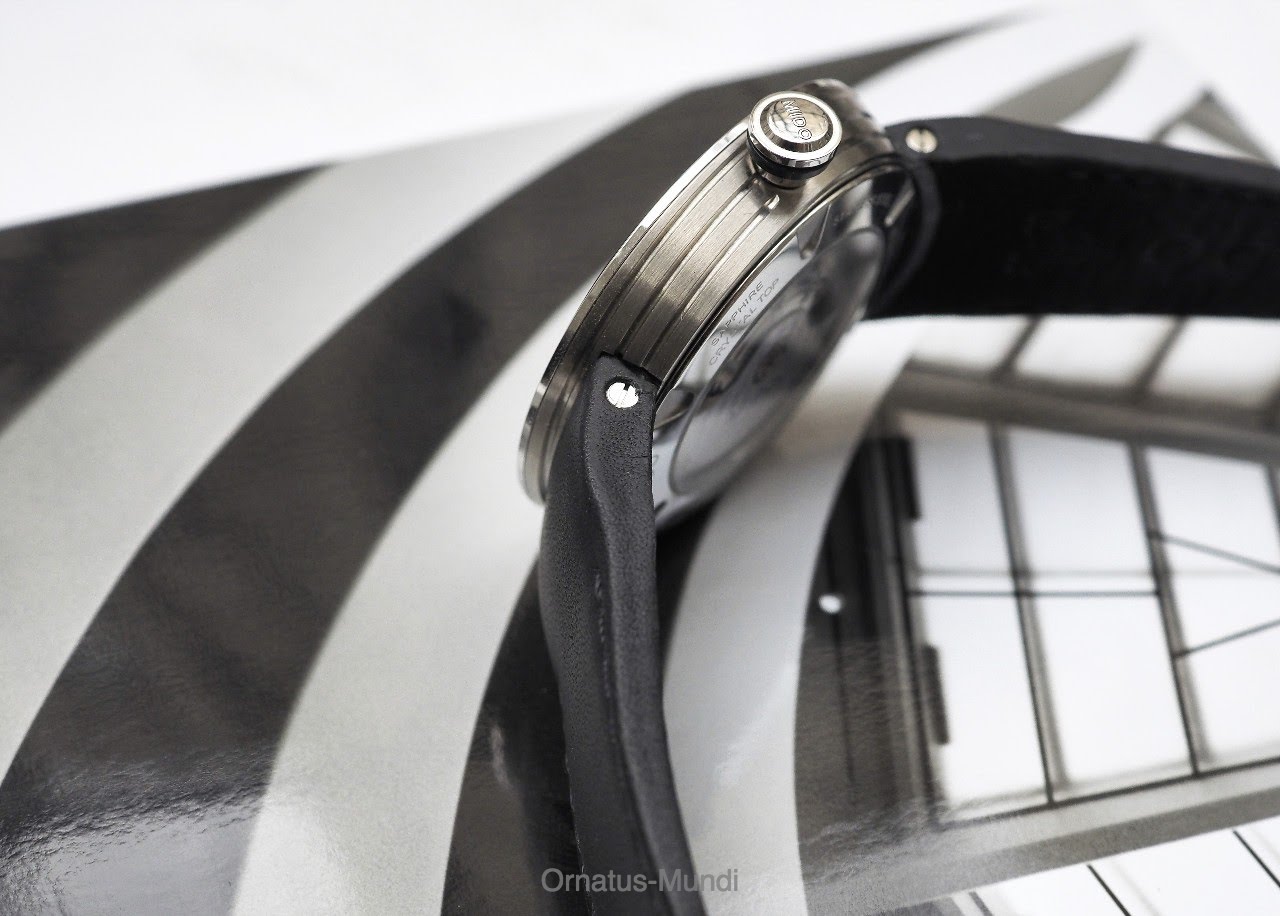
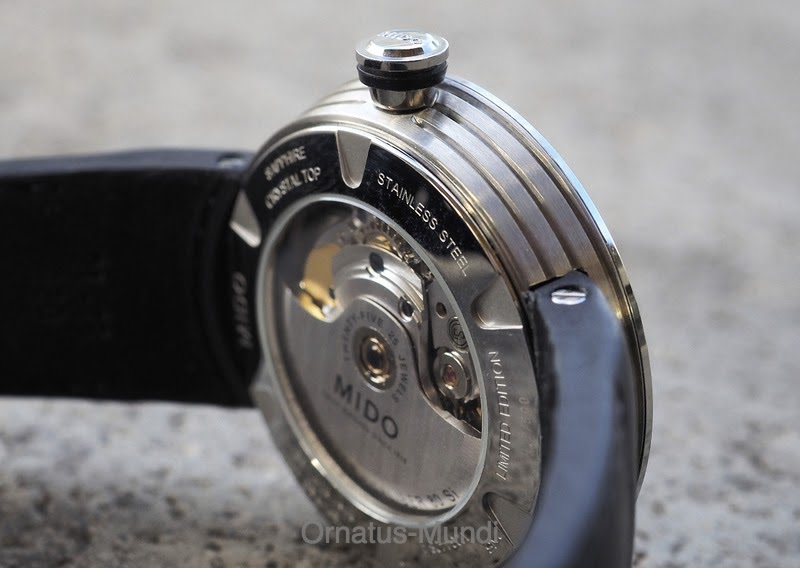
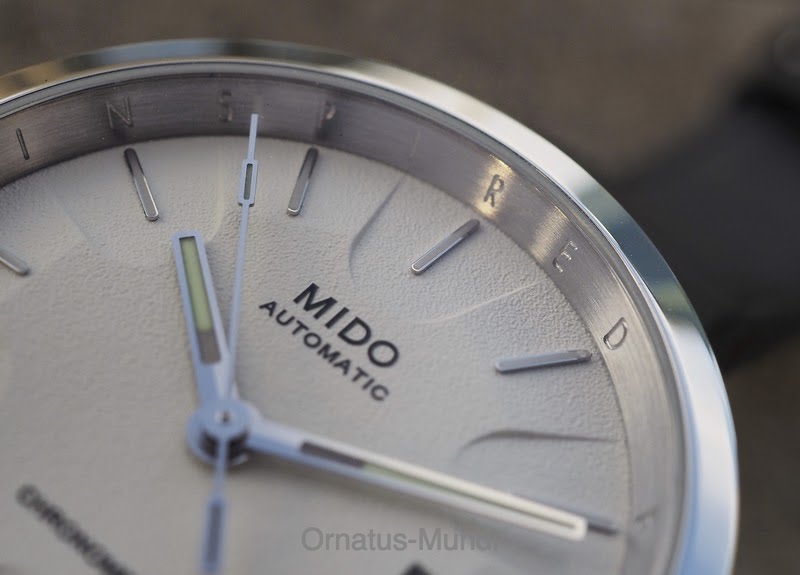
If you look closely, you'll notice that the rims are not simply circular, but circumscribe the case like a coil.

There is a rubber ring aroung the dial (again a reference to the museum's characteristic facade), which facilitates grip. As it moves quite a bit with use, I wonder whether Mido could have spend a bit more thought on perfecting this detail?
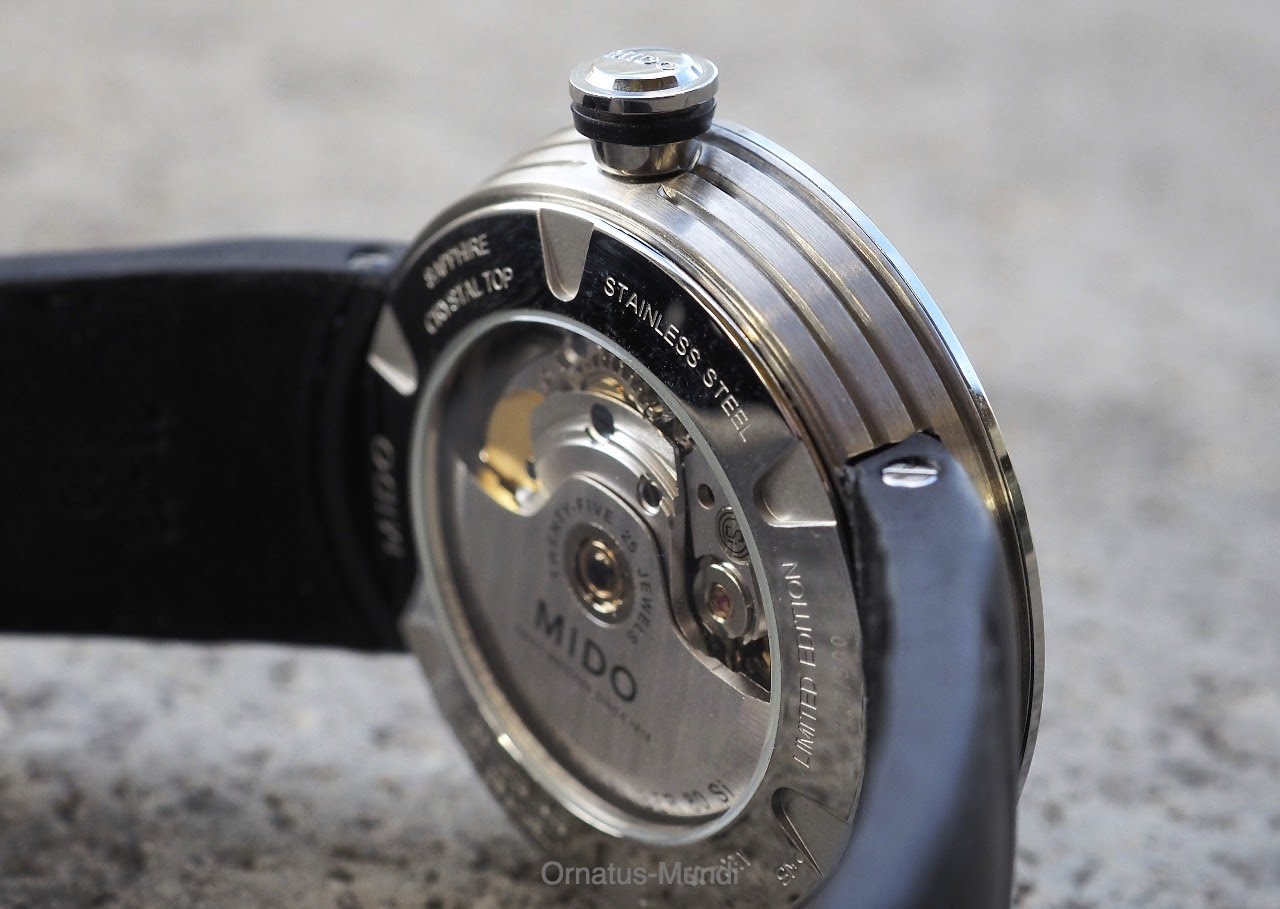
In terms of execution, the rim is a rather simple affair of drilling, nothing special as far as advanced finishing is concerned. The watch, after all, is designed to a price (more later).
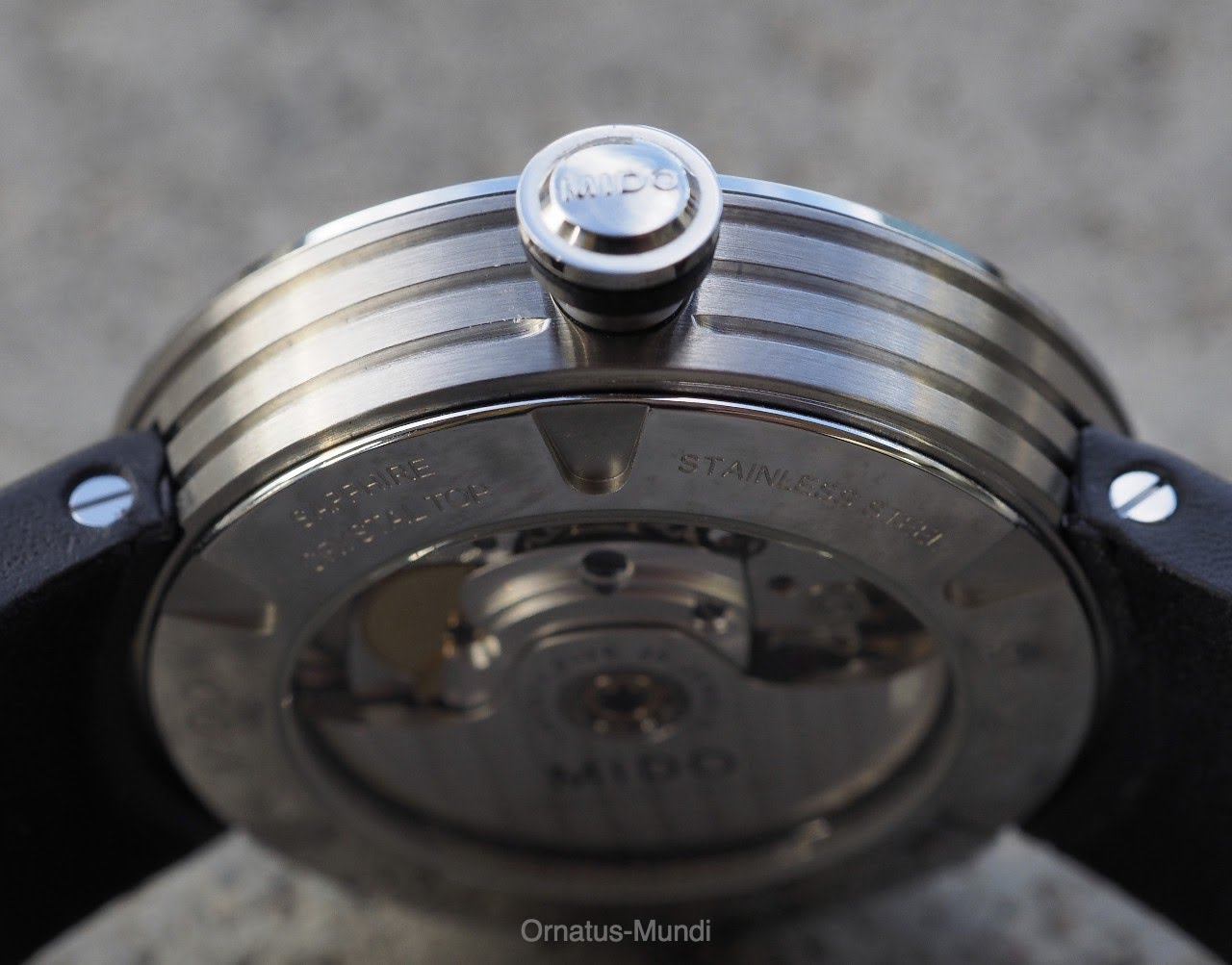
Overall, a very successful interpretation: clearly a reference to the famous building, but self-sufficient enough to stand on its own.

2.) The skylight inside the Guggenheim Museum New York:
Mido's designers allowed themselves more artistical freedom with the dial than with the case. With the base shape truthfully reflecting the rooftop construction of the
museum's skylight windows (including the 6-lobe pattern which suits a watch very well), ...


... the surface texture recalls the
main construction material of the edifice:
poured concrete:
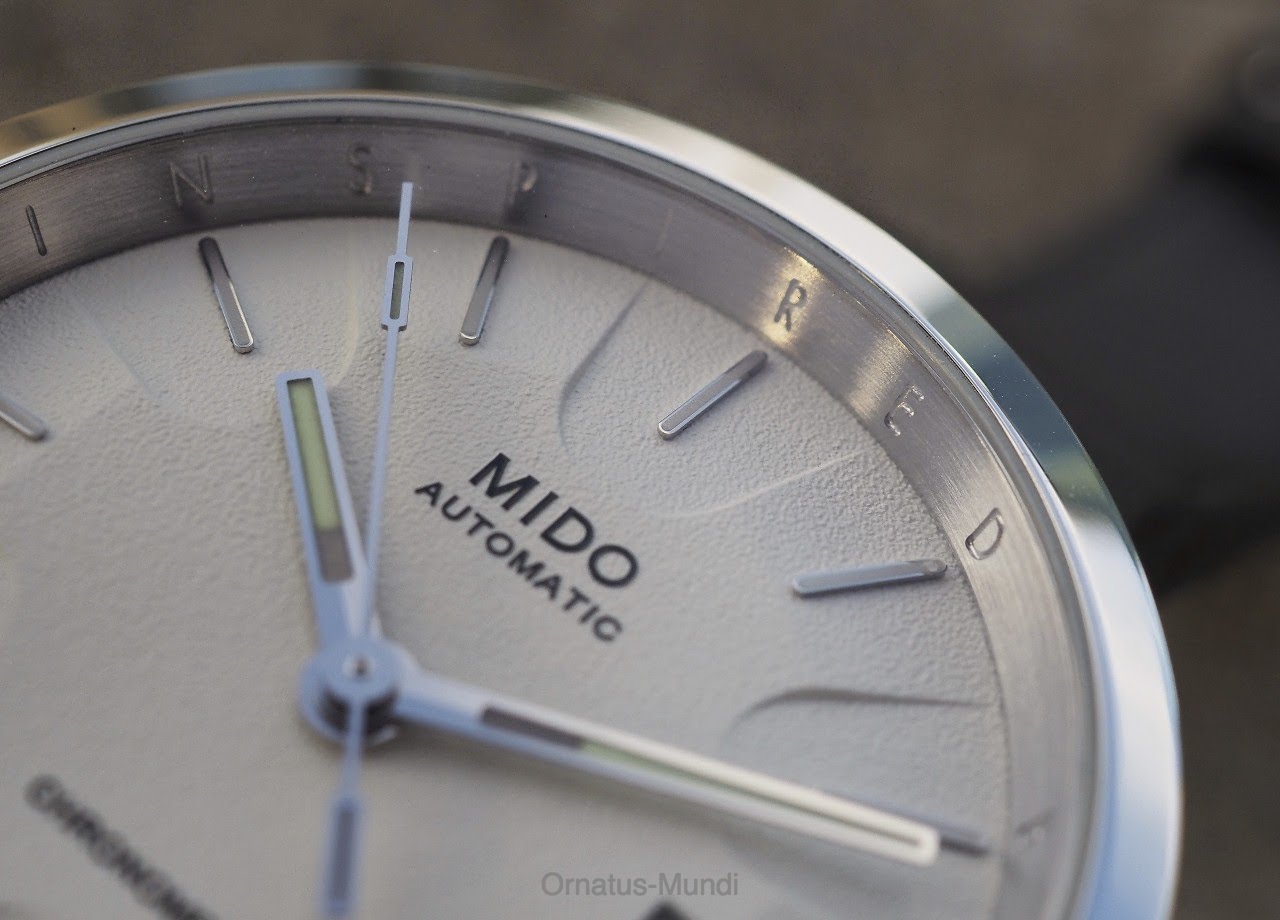
It is this resemblance where I think I have the most porblems with, as I feel this detail borders almost with gaudiness.
Surrounding the inner bezel we find the 'Inspired by Architecture' engraving, again a straightforward affair:

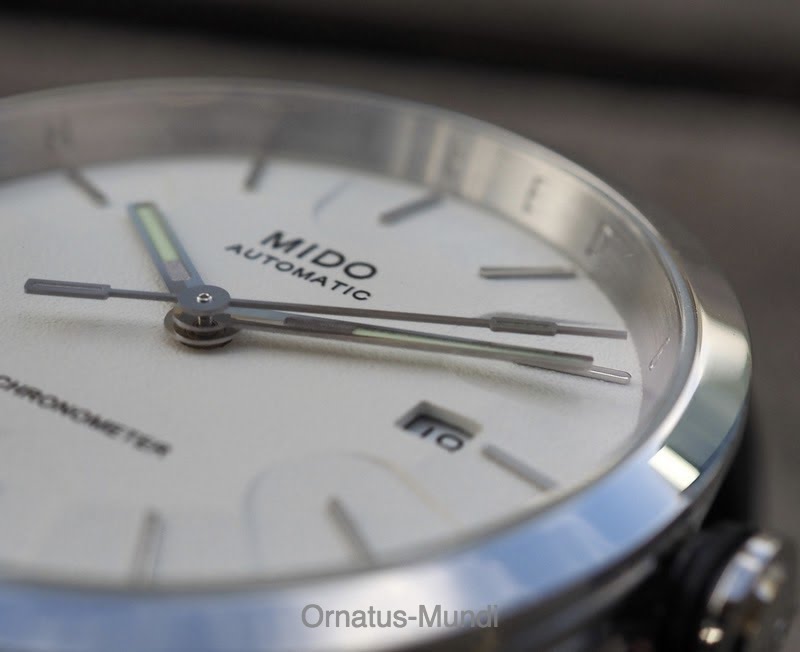
The integration of a dial cutout somehow disturbs the appearance of the dial, and I would probably left it out. The hands have a simple shape as well, and are straight out and not bent towards the lowering outer dial circumfence. This is what I believe a concession towards the desired price of the watch (note that hands are bent manually in a workshop, a step that would add too much cost overheads to the production. You might want to read the report on the
PuristSPro visit at the Zenith manufacture for reference):

On the back side, something very interesting for us indeed: Mido's COSC-certified automatic movement
Caliber 80 Si. The movement is quite interesting and a product of Swatch Group's recent advancements to increase power reserve in its entry- and mid-level movement families.
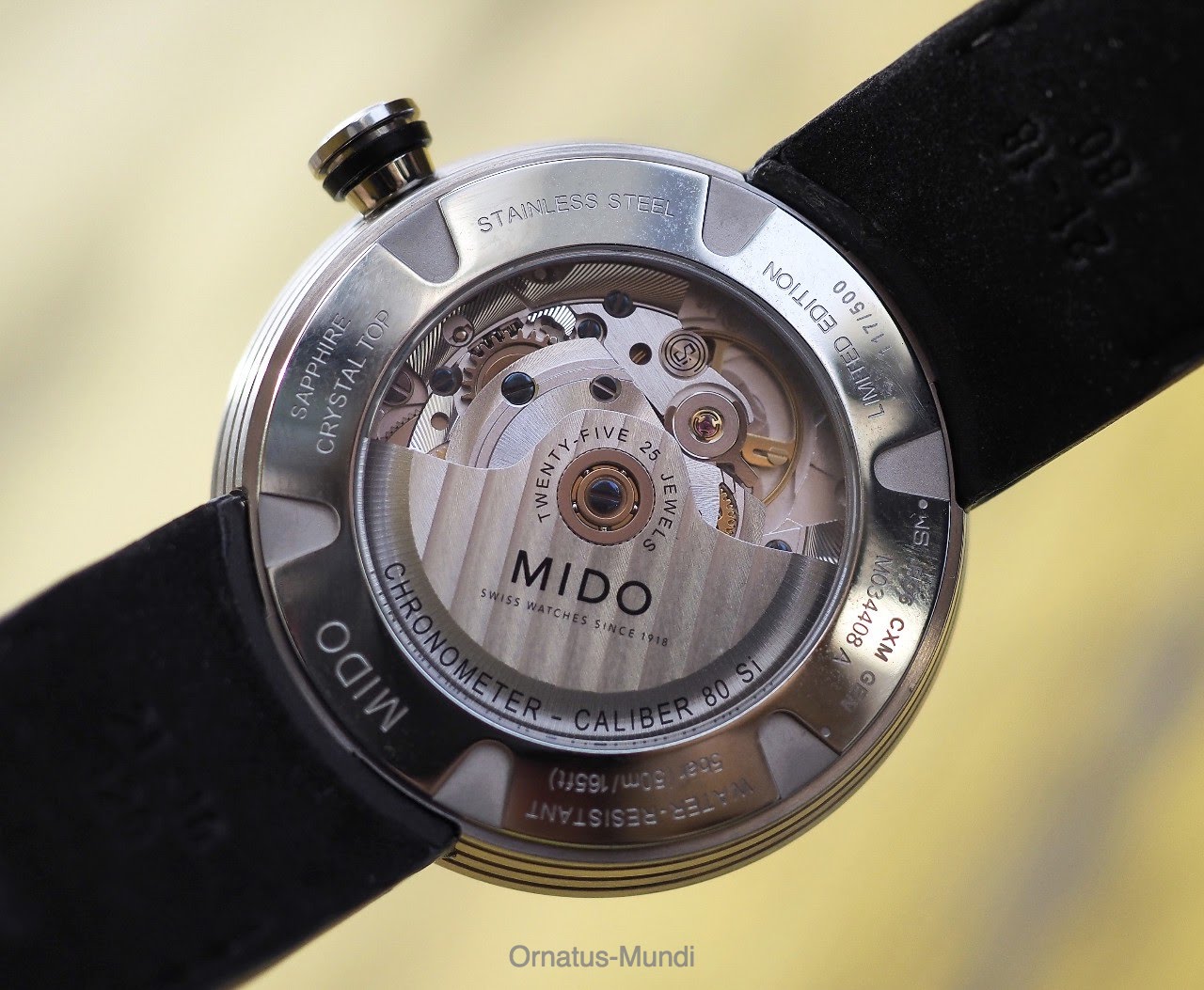
Obviously based upon an ETA 2824 tractor,
it offers robustness, efficiency as well as an extended power reserve of up to 80 hours (thanks also to a
slowed-down beat from 28.800 to 21.600 bph). Another key feature is
economic assembly and regulation: the movement's rate is set with robot
assistance via laser and no manual interference necessary. It has been
used by Tissot already since about four years.
Now, Mido has gotten an upgraded version with a silicon balance-spring (hence the 'Si' badge) and COSC certification (and at ETA named ETA C07.821).
Now finally the decisive part: how does it wear?
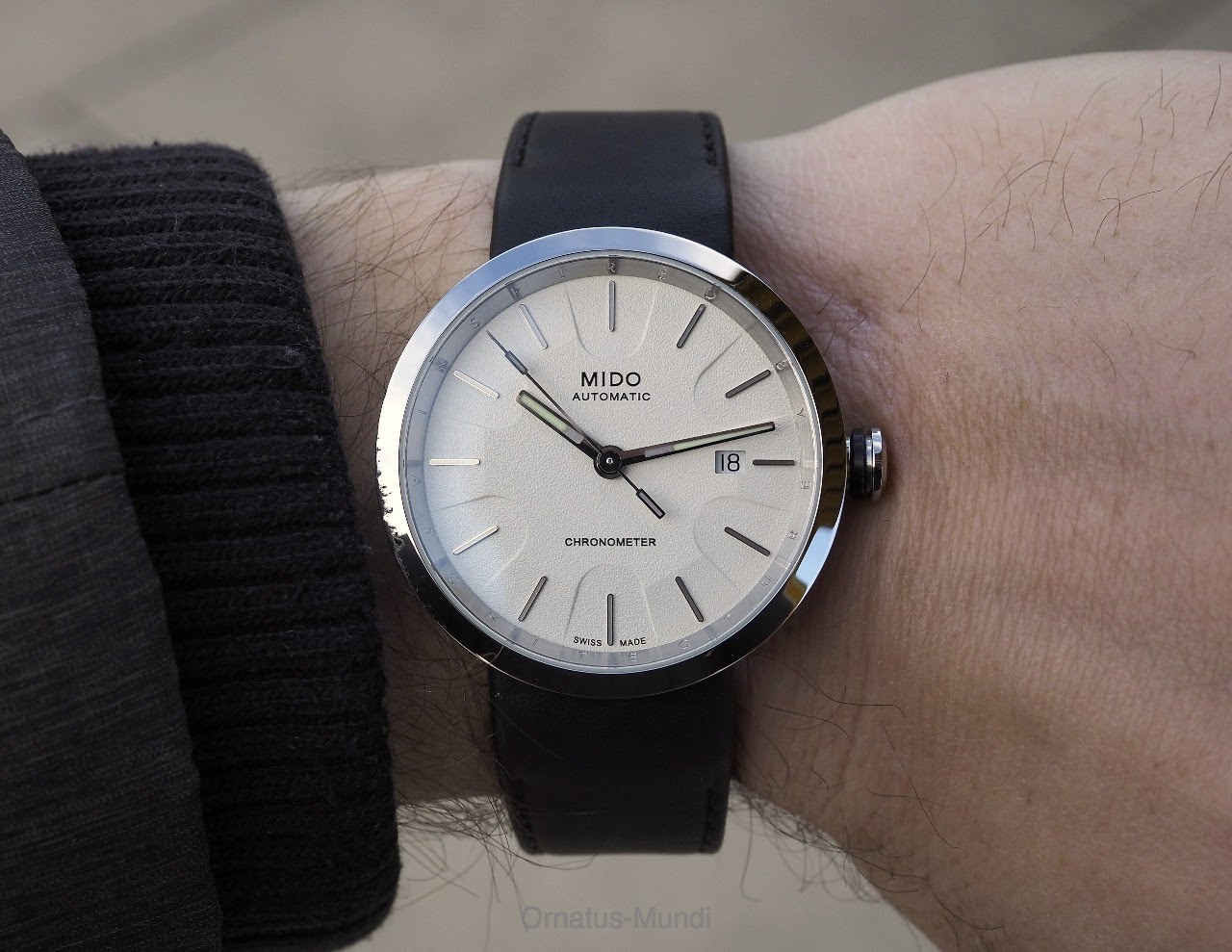
For me, it is a very likeable watch to wear, with lots of presence and character. Dial and case play their role very well.

The watch sits comfortably (on my wrist at least), although I have no high hopes for the longevity of the (proprietary) strap.

The
Mido Inspired by Architecture: The Guggenheim Museum Watch comes
at asuggested retail price of about €1.590. At this level, I think the
few shortcomings I discussed above are forgiveable, particularly if one
considers the really fantastic horological retiurn on investment. At a
very much higher price, of course, one could expect a more stringent
interpretation of the architectural theme, as exemplified e.g. by the
Girard-Perregaux Vintage 45 Le Corbusier (see Crown Comfort's
review here !).

Overall, I like this watch, and would definitely recommend it to any who
looks for a slightly unusual, design-oriented watch with solid
technology and proven performance. Its
limited to 500 pieces, so I expect it to sell out fast.
Thanks for reading,
Magnus
P.S.: Special thanks to Laura from Swatch Group Austria for providing me with this watch for an extended loan. The watch has (regrettably) been returned to Mido in the meantime ;-(
...