
Independents
SJX's analysis of the MB&F Horological Machine No. 4 (HM4) delves into its radical design and engineering, positioning it as one of Maximilian Büsser's most audacious creations. This article explores how the HM4 challenges traditional watch forms, offering a three-dimensional wrist experience that has provoked strong reactions among collectors. SJX highlights the intricate construction and surprisingly high level of finishing that define this unique timepiece.
The Horological Machine No. 4 is the most radical creation from Maximilian Busser, which is saying a lot given his track record. And based on anecdotal evidence gathering from collectors and potential buyers, the MB&F HM4 Thunderbolt has certainly elicited the strongest reactions.
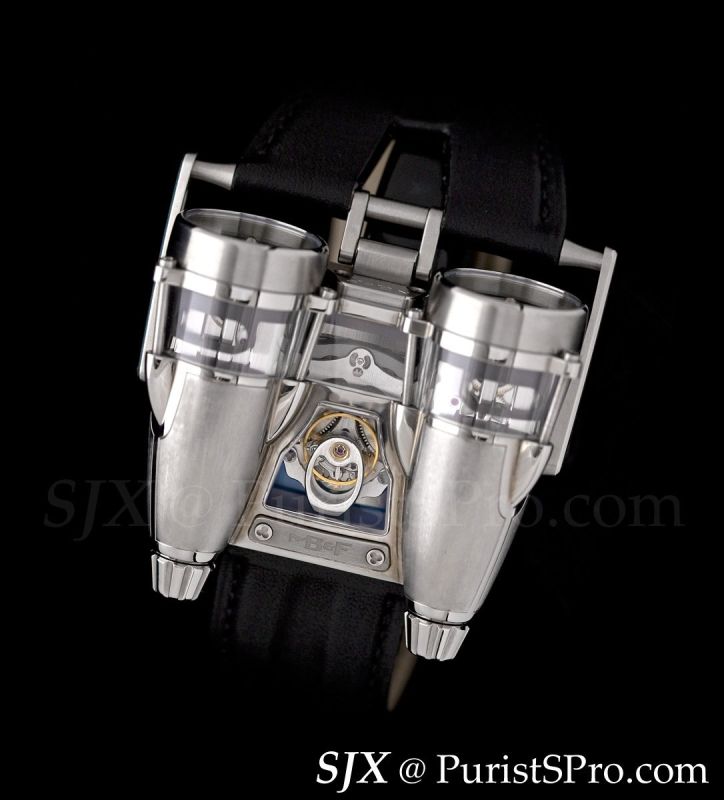
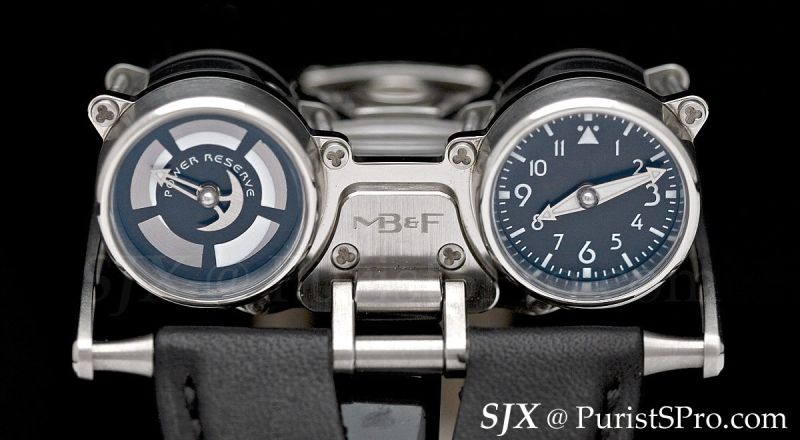
The HM4 reminds me of the pod racer from Star Wars, while the movement is reminiscent of the USS Enterprise. But unlike the previous Machines, the HM4 is not in the traditional form of a watch – a flat object sitting on the wrist – which the others were. Instead the MB&F HM4 is three dimensional; it is a watch that rises from the wrist. I cannot think of another wristwatch that possesses such a form; all other avant-garde timepieces are essentially two-dimensional shapes on the wrist.
Creating the shape of the HM4 called for a block of sapphire and another of titanium, which fit together to form the case. According to Max the piece of sapphire is the single most expensive component of the watch. Notice the beautiful curves of the sapphire on the underside of the watch.
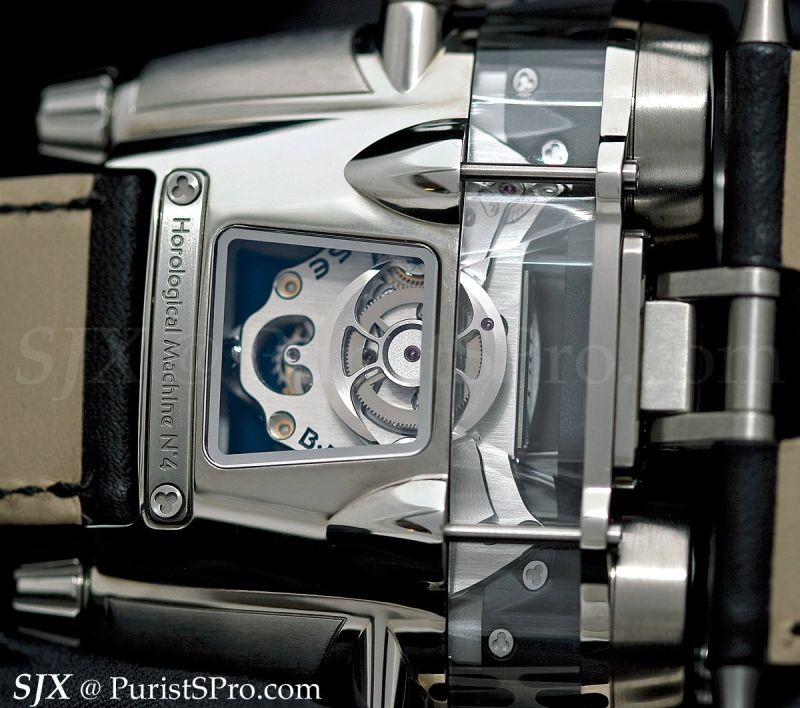
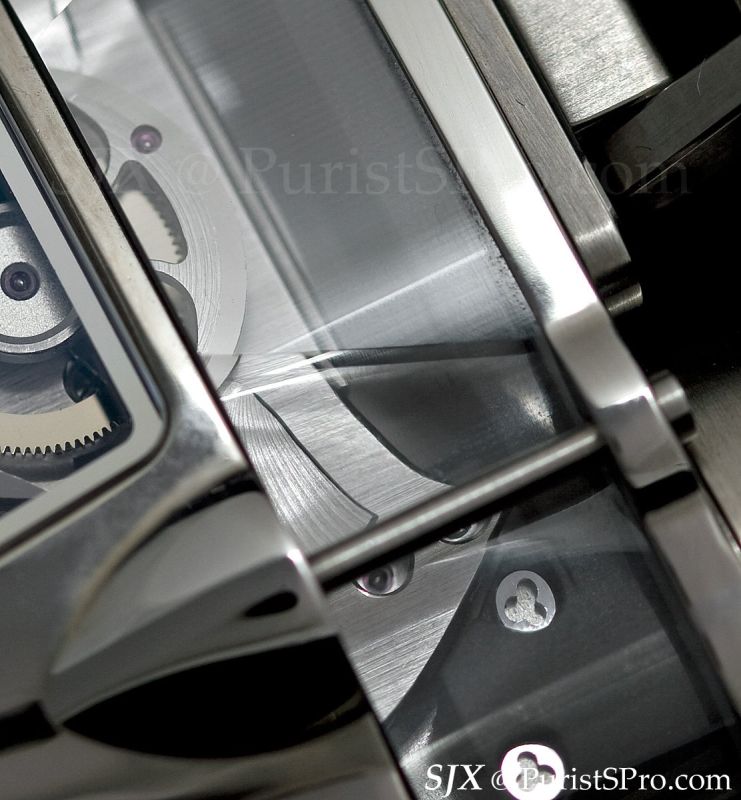
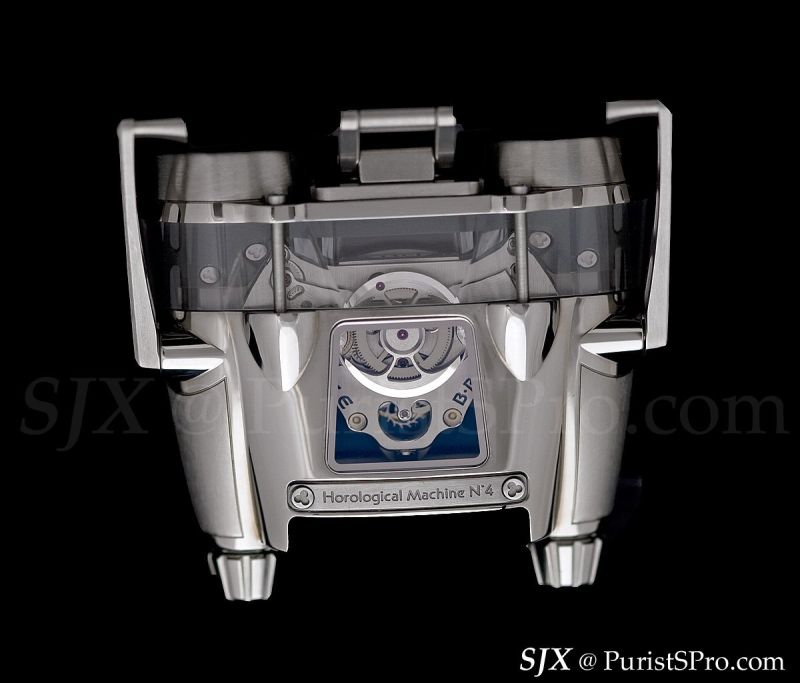
Though the Horological Machines are better known for design than finishing, the HM4 possesses a surprisingly high level of finish, better than that of the earlier Machines. One limiting factor of the HM2 and 3 was the Girard Perregaux base movement, in contrast the HM4 uses an entirely new calibre, developed by Laurent Besse and Beranger Reynard, on which decorative finishing can be well exhibited. The sapphire band running around the case exposes much of the movement, while the balance cock is strategically located. Interestingly the balance wheel is a traditional screwed balance, which looks out of place on such a watch.
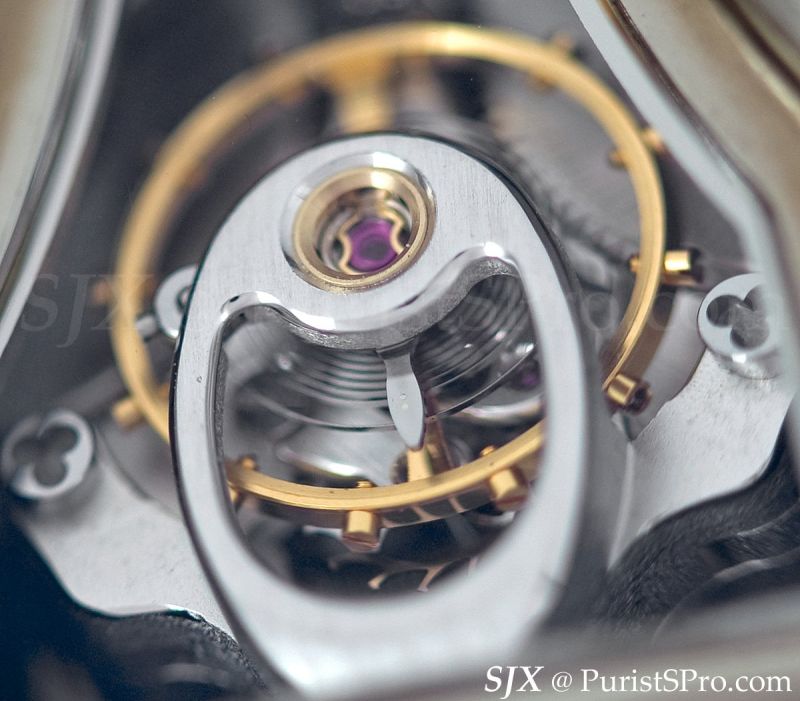
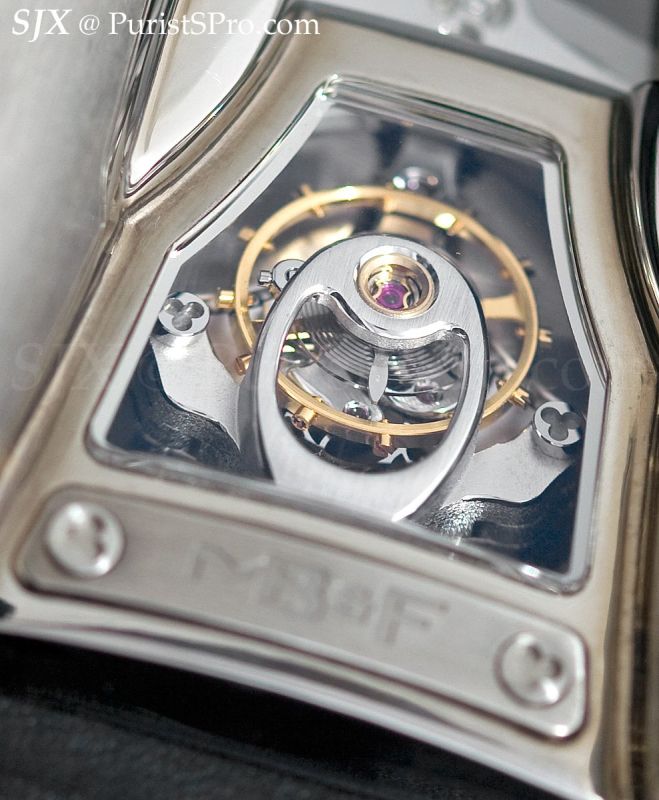
Funnily enough this is the most legible of the HM series. It features a conventional, albeit small, dial with two hands. The dial is a nod to the aviator's B-Uhr of the past, though the hands are not the diamond-shaped hands one finds on the B-Uhr. Max says those hands would have been nearly impossible to tell apart on such a small dial. And the HM4 also wears comfortably on the wrist, thanks to the spring-loaded lug. It just might be the most practical Machine yet.
But radical as the HM4 is, MB&F has arguably become the leading establishment revolutionary. With its success MB&F has become a legitimate and accepted high horology, or at least avant-garde horology, watchmaker. But it is still an outlier in terms of aesthetics and concepts. Those two ideas may converge over time as the curve shifts and the mean for a “normal” watch gets closer to what MB&F makes.
So the various Machines are likely to be the first in a genre. Manufacturing and materials technology is progressing so rapidly that creating watches even more bizarre will become easier. And because of the success of brands like MB&F, the door is open for others to follow suit. It is possible some of the most interesting developments will come from outside the watch industry. As the rest of the world learns about the potential of watchmaking as a business, there will be more watches like the Devon Tread 1, creating by non-watchmakers out of parts from the aviation industry.
And there is potential for such radical watches for the mass market. These would be at a lower price point and of a quality comparable to TAG Heuer, Omega et al, with quartz or run of the mill movements. They could easily be polycarbonate or some other easily moulded material – imagine the HM4 crafted entirely in transparent plastic. Watches “inspired” by MB&F or even watches which push the envelope further are not too far away.
- SJX
This message has been edited by SJX on 2010-09-09 01:11:56 This message has been edited by SJX on 2010-09-10 07:26:56nice post and such hot shots not only in the content but the quality as well . i do appreciate the HM4 to the maximum but i cant see it on my wrist unlike HM2 SV , or HM3 frog . Faisal
Looks like it is only for the super "extremist" ....LOL
I really have to see that watch in the flesh. Looking very attractive. GEO
Max was in town to launch the HM4 a few weeks ago, together with retailer The Hour Glass. Several launch events were held, so as to keep each event small and personal. There were many MB&F owners amongst the guests, and also many with exotic rides. Many were impressed by the HM4, while some were shocked.
NT
This thread is active on the Independents forum with 29 replies. Share your knowledge with fellow collectors.
Join the Discussion →


