
Innovation
MTF presents an insightful interview with Morten Linde, the design visionary behind Linde Werdelin, delving into the brand's unique design philosophy. This second part of the conversation focuses on the SpidoSpeed chronograph and the brand's approach to integrating digital instruments with mechanical watches. The discussion illuminates how Linde Werdelin challenges traditional watchmaking narratives by prioritizing functionality and user experience.


Previously on PuristSPro, we had articles about Danish Design click the link: home.watchprosite.com
and Conversations with Morten Linde – part 1 click the link: home.watchprosite.com
Conversations with Morten Linde – part 2
ML=Morten Linde
PP=PuristSPro
PP: Before we talk about the new SpidoSpeed Chronograph, how does a design story start at Linde Werdelin? Is it from Jorn Werdelin and the marketing department or do the designers set out the ‘story’ sometimes?
ML: This is what we did for the Linde Werdelin watches and instruments. Everybody knows that you don’t use a mechanical watch for diving. Although we have many mechanical divers’ watches today, you can’t use them for diving. You did it in the past because that was all you had but today, it is completely different. We use digital instruments that tell you when to ascend and how long to decompress at different depths.
We asked ourselves: “Why do we keep telling these stories about mechanical divers’ watches when nobody uses it?” It’s….well, it’s a lie. It’s a nice lie and I love watches but it is an interesting thing. Everybody knows that when you do Sports, you need a digital display but when you just want to tell the time, an analogue display does it fastest. You immediately see by the analogue hands that the time is about ten o’clock. I don’t care if it is 1 minute before or after if I only want a graphic indication of time. That’s when Jorn and I decided we could spend some time to solve this or to build a new story around it. That was about 8 years ago when Jorn was still a banker and I had my own design studio. I had worked for many clients but never made something where I build up the whole universe around the product. It was always isolated projects and passed on to the client.
[Editor’s Note: Linde Werdelin marketing includes an ongoing ‘LWuniverse’ depicted in a serialised comic strip about a Chinese female secret agent by French manga artist Dominique Bertail]
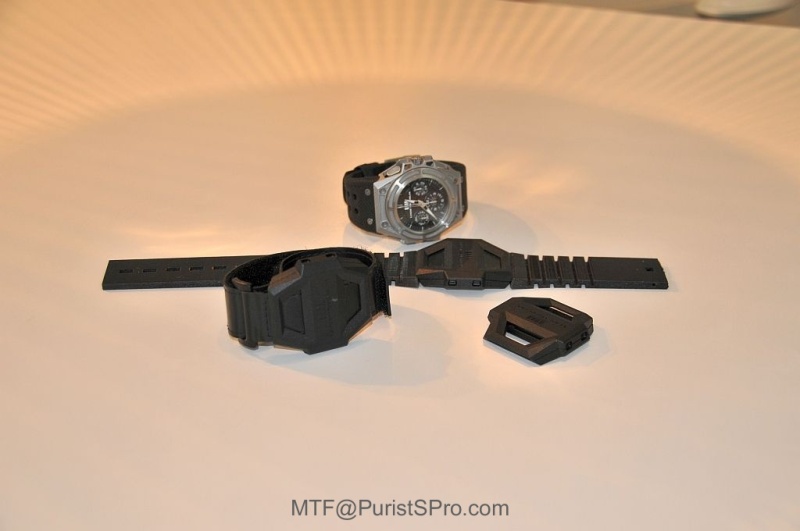
Take the 1st generation Land Instrument, for example, now known as ‘The Rock’ (2nd generation). There was an expedition going up Mt. Everest and they chose the Land Instrument because it had features that integrated terrain inclination, estimated times between waypoints and exposure to ambient temperatures. They did not want the heavy mechanical watch but took the wristband that the instrument clipped to. They asked if we had a light watch and we didn’t at the time (2-Timer) as it was quite a heavy chunk of steel.
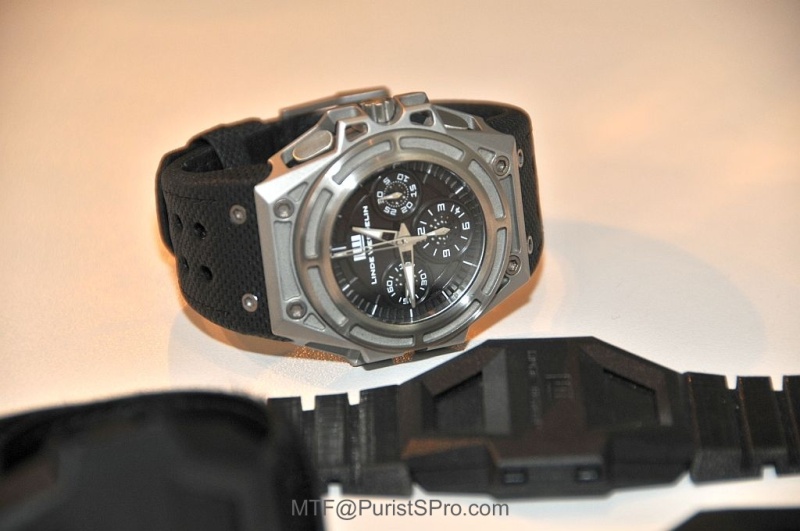
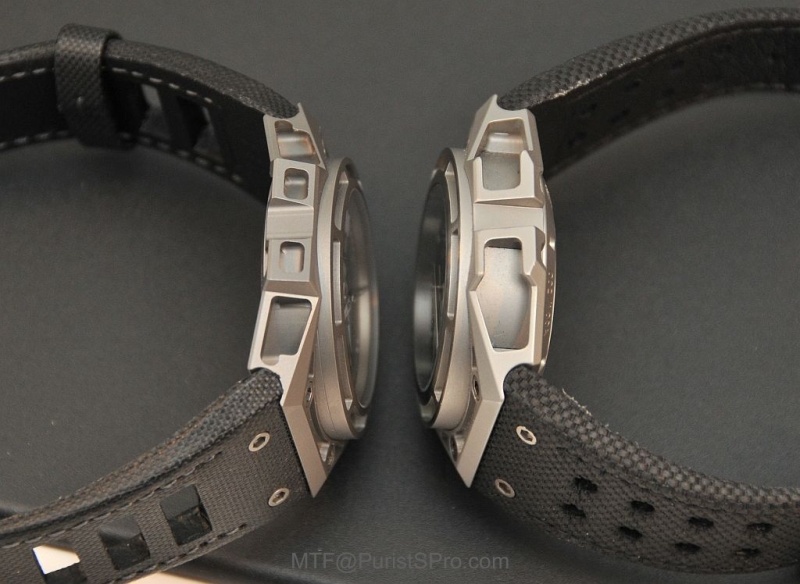
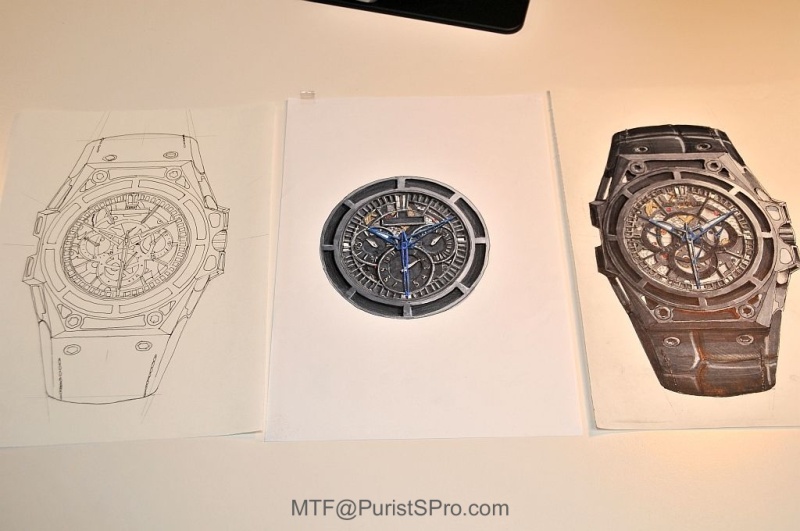
Marketing told us that we needed a light version. We thought about substituting titanium for steel but it was a boring solution and that irritated me. I thought about car racing; if you want to lighten a production car for racing, you take out the passenger seat, carpets, air-conditioner and everything superfluous. We could do the same with the watch case; keeping the strength of the construction but remove material wherever it was not needed for structural integrity or to contain the movement. This actually gives the interesting architecture or design of the watch (SpidoLite). This year we promote the tag line: “What is actually interesting about the SpidoLite and SpidoSpeed is what’s not there.” This becomes the story behind the product.
PP: Did you consider the manufacturing process to remove “what is not there”?
ML: Well, that is part of the problem. How do we do this without it becoming terribly expensive? We found one company to produce the SpidoLite but we were not completely satisfied so we found another company that we could work with to develop the SpidoSpeed. My design colleague, Peter, and I are very interested in material science and mechanical solutions so we visited this company.
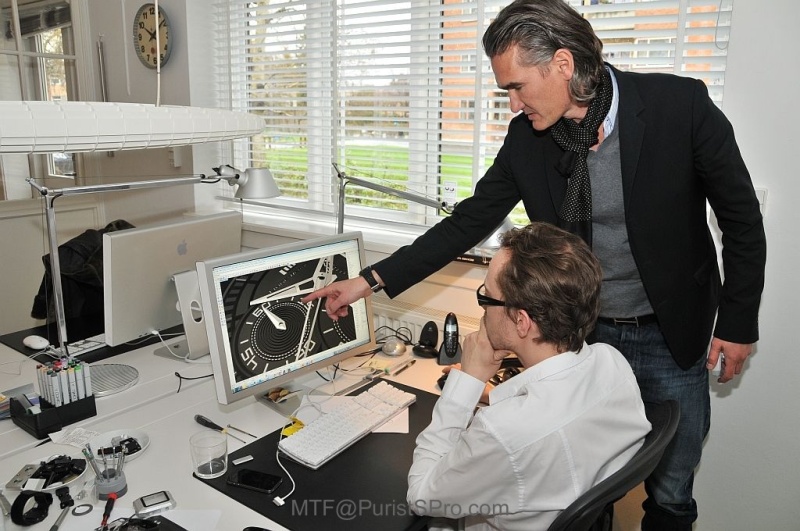
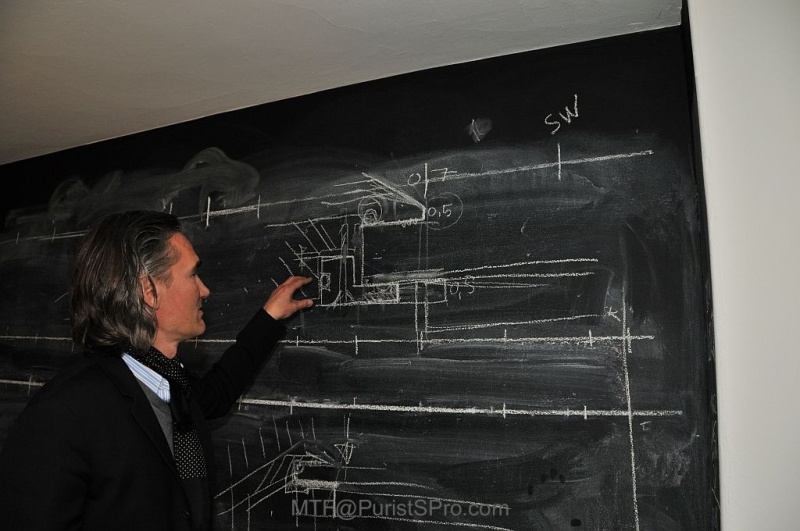
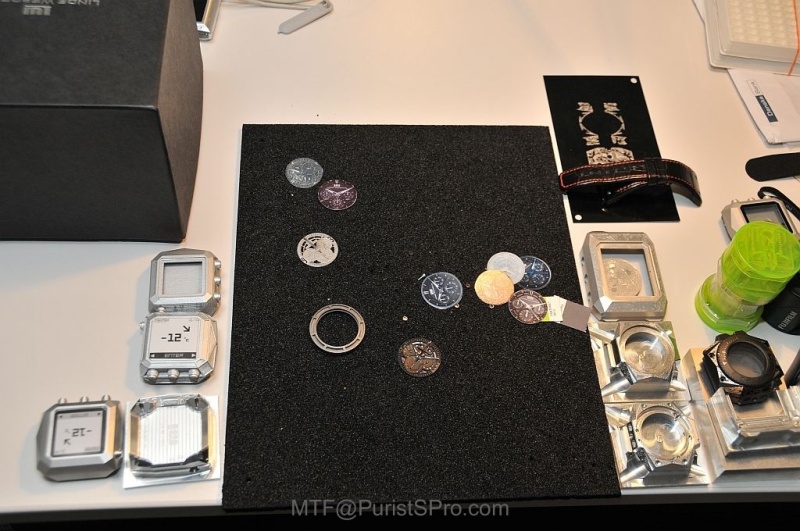
We found that they spoke English and are very good at communicating. We saw their CNC equipment and capabilities demonstrated by the complicated cases made for other companies. We wanted to remove material in 3 dimensions without leaving tool marks in areas that are inaccessible for final finishing. For some areas, the problems were as fundamental as access by the tools to make the design form required. It took a long time with cycles of brainstorming, trial and re-design; we are very pleased with the collaboration. Now, we have a case that can be disassembled by removing a few screws, case back, crown, pushers and the outer case for access to the inner case and the heart of the watch – the mechanical movement. I’ve found that if you work with good engineers the product always gets better after each problem is solved.
PP: What does ‘Spido’ mean in SpidoLite and SpidoSpeed?
ML: It actually comes from the skeletonised case like a spider’s web. ‘Lite’ because they wanted a lighter watch and then ‘Speed’ for the chronograph.
PP: The design difference between the SpidoLite and SpidoSpeed is the two-module (inner/outer) case construction for the newer watch; how did it evolve?
ML: It’s a very clever construction because the problem with the SpidoLite was access into the corners of the skeletonised case to remove tooling marks. We had to reject a high proportion of SpidoLite cases that did not make the grade. The solution for the inner/outer SpidoSpeed cases gives good finishing access. Before machining titanium, we used stereographic formed plastic wax models and steel prototypes to ensure that all the digital instruments, both new and legacy versions, could still attach onto the new watch case.
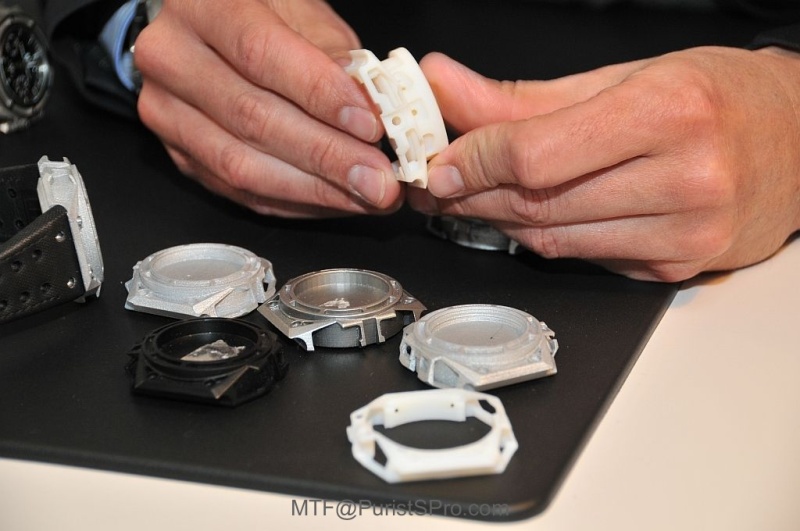
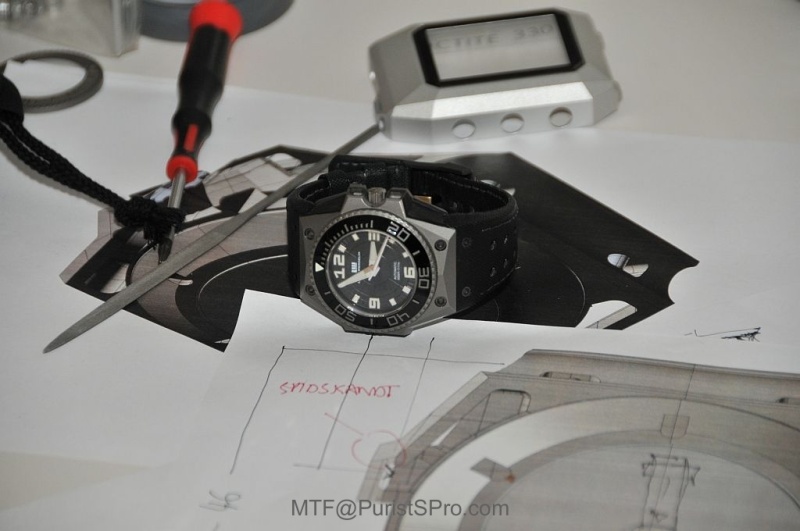
We had to enlarge the cut-outs for the chronograph pushers on the SpidoSpeed and move the Instrument attachment points. I am usually good with construction but did not see the solution and none of us did until we worked with a company with good engineers. I’ve always said that it is easy to make things look good but that is not the point. The important thing is to make them work, and then afterwards, you can always make them look good. I’ve got this ‘functionalist’ inside my veins; it’s part of our “DNA” being Danish, with all our heritage of furniture design and way of thinking.
PP: Looking at the architecture around Copenhagen, there seems to be two distinct styles. Anything old seems to be fussy in detail with high sloping roofs with dormer, gables, pediments and ornaments. Modern buildings seem to be monolithic blocks of wood or glass cladding over some shade of grey concrete. If that is modern Danish grey infrastructure, does that mean that furniture design is the outlet for bright colours and forms?
ML: That is an interesting observation because if you take a guy like Arne Jacobsen, who did many houses and buildings around here. [Editor’s Note: Danish architect and designer b.1902 d.1971] He was inspired by Le Corbusier, Groupius and van der Rohe, so his architecture was quite ‘cold’ but his furniture was always inspired by Nature. He was an architectural ‘fascist’ but his furniture actually softened it up and it became a contrast between those lines. For many of the other furniture architects, they were inspired by ‘peasant’ furniture and ‘Shaker’ purity that resonated with Danish thinking. That was one of the reasons why I went to Japan. Some of the traditional truths from Japan had similar simple philosophy that could be related to Danish design. After the French ascendency in the 18th century, we Danish tried to reduce or minimise decoration from the Rococo. It became more ‘boring’ when it came to Denmark. I don’t know if it was because of the way that we live. It’s colder, rough and windy in Denmark; it becomes dark quickly in winter; something like that.
PP: Did you grow up as a child saying, “I want to be a designer.” Was there a design culture in your family?
ML: My father had a furniture shop. I think he was more creative than he thought he was. He did the furniture, together with the factory, to his specifications. He was not able to draw but he was quite good at discussion with the design architects. I grew up with furniture. Maybe it was ‘luck’ or a better word may be ‘lack’ as I am dyslexic. I found it difficult at school so I needed to find somewhere or an education where there are no books! So, I put it together: a furniture background, no books and I like to do creative stuff; being a furniture architect seemed the way to go. I was fortunate to work with a furniture architect for half a year before applying to School of Arts and Crafts in Copenhagen and two UK schools. I was accepted by all three schools and thought that maybe this plan was a good idea. When I started the course, I knew then that it was for me. It was completely different from school life before; playing with ideas and making things.
PP: Who gives you the design brief at Linde Werdelin?
ML: It normally starts when a ‘problem’ appears. It may be a suggestion from a collector that is repeatedly mentioned by others like PuristS or journalists. We discuss within Linde Werdelin whether it is something that we should look at. I do the design and talk about it with Jorn. He is actually quite creative as well and it may be that he comes up with the idea that is further developed by the engineers and me. We are strong in innovation, design and controlling product development. We are good in marketing and getting better in sales.
PP: Do you hold any patents at Linde Werdelin?
ML: We took out some patents when we started out but then we found that the watch is ‘design-patented’. As we went along, we discovered that our Instruments are so difficult to do. If somebody wants to try to copy it, then we say, “Good Luck! – see you in three to five years because that is how long it will take.” It’s going to take a lot to find out how this works. It’s not only about the attachment ‘click’. It’s about the whole user interface, how the pushers work and the way to put it on and take it off. We thought to patent the idea of putting an Instrument on top of a watch but Porsche Design already did a compass underneath the watch with IWC in 1978. There is nothing really new and a Swedish company did it as well.
PP: Why make a mechanical chronograph?
ML: We always wanted to do a chronograph although we said that we would never make one because for precise measurement, one would use the digital Instrument. It is an interesting movement and this whole thing about having nearly two watches, on top of each other, is appealing.
PP: Whose movement do you use in the chronograph?
ML: It is the LW03 or third movement customised for Linde Werdelin. The first was an Andersen Genève movement (A.Schild 1876 base) in the SpidoLite SA and the second was a Frederic Piguet 1150 with Svend Andersen moonphase module for the Oktopus Moonphase. This time we are working with another independent Swiss maker – Concepto Watch Factory – for the LW03 movement based on their cal. C2251. One of the things we needed to work on was the angle between the crown and the pushers to be as wide as possible to allow the click attachment of our digital Instruments. The regular angle is 17.5 degrees but that is where our Instrument attachments are. We made them more than 32 degrees. After feedback from PuristS and others at Baselworld 2011, we are modifying the pusher shapes to keep the angle but achieve the ‘buttery’ feel when activating the chronograph.
PP: The mechanical chronograph has been superceded by more accurate digital Instruments so what is the ‘design story’ now to buy a mechanical chronograph? What do the buyers get out of the exercise?
ML: I think we should go back to the story that we have the digital Instrument and the mechanical watch. How do they interact? We are not saying that you need a mechanical divers’ watch with a turning bezel or a mechanical chronograph for sports activities. There is some ‘space’ between these two products about where and how they connect; this is the interesting part. We did it with the moon phase saying, “When you don’t have your Instrument you still want to know the best date for night diving – Full Moon – that’s the reason we put a moon display on the Oktopus Moon Phase. There is an interaction between the Instrument and the Watch.
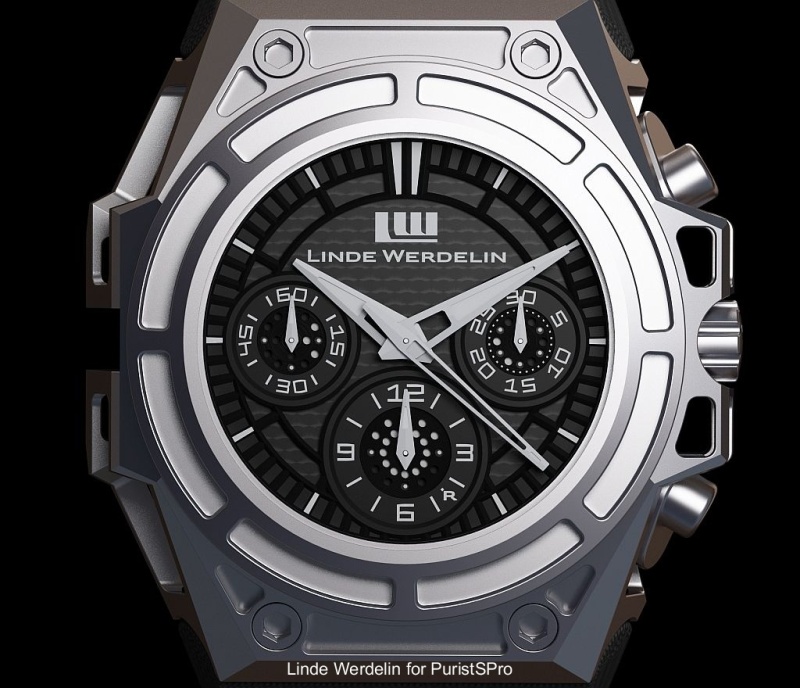
It’s the same thing here (pointing to a marker on the chronograph sub-dial). When you finish ski-ing, the Instrument is placed on its electric charger and we tell people it takes 4.5 hours to fully charge it. Hence the ‘R’ marker on the mechanical chronograph at 4.5h indicates the charging duration for the Rock or Reef Instruments. We’ve also said that we would never do a mechanical depth gauge (chuckles)……..
PP: Some people buy a SpidoSpeed because they like chronographs but with no intention of getting an Instrument. How do you know what a chronograph-collector wants, as part of the design brief?
ML: That’s very simple. Jorn and I collected watches but now we do it on a different scale since we buy watches for Linde Werdelin. When I looked at my private collection, I could see there were many chronographs; so it is something fascinating.
PP: What part of the chronograph do you like?
ML: I like the dial layouts and the pusher action, although I barely use my chronographs. It’s the mechanical thing where 260 small parts inside do what they do. I like the pusher ‘click’. We make our watches with the ‘click’ for that reason. I spent quite some time fascinated by the interplay between all the levers, springs, cams and wheels of the chronograph mechanism.
PP: This is your first chronograph and it will attract a lot of attention because this complication is more difficult to do well than people think. How do you see Linde Werdelin working in this area?
ML: We will probably develop the design and movement with time. That is why this is SpidoSpeed Series A. At this moment, it is a small series for collectors who like this version and we are the only ones doing it. We will develop new versions and incorporate changes from the feedback.
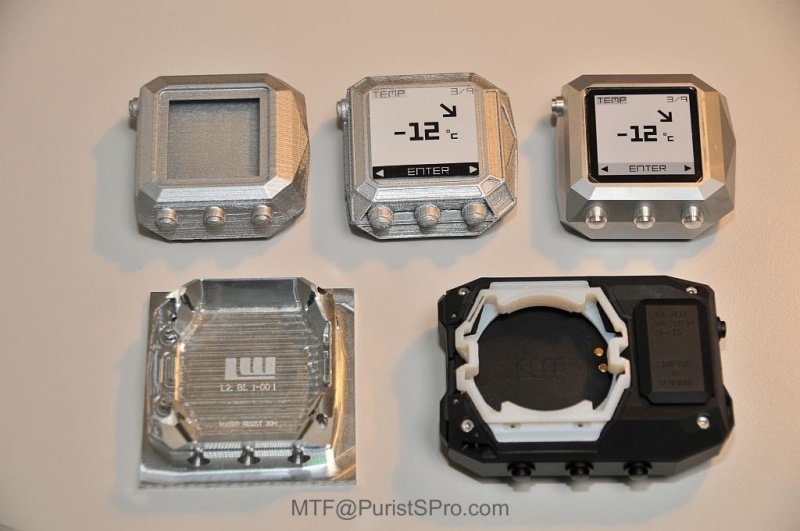
For example, this ‘click’ [demonstrates The Rock Instrument attachment to SpidoSpeed watch] has been carefully developed so that when you are on the piste, there is an audible assurance the Instrument is engaged. It has to be exactly ‘right’ and we spend a lot of time and effort with engineers on the sound. Our possibilities were quite limited and we recorded sounds of things like Leica cameras, door latches, and other objects so we could get the specifications to work with our engineers. It is a digital sound but we had to make it sound like a mechanical lock because there is very little biomechanical feedback of the attachment. That is just to illustrate how we work and the process we will follow to improve our chronographs.
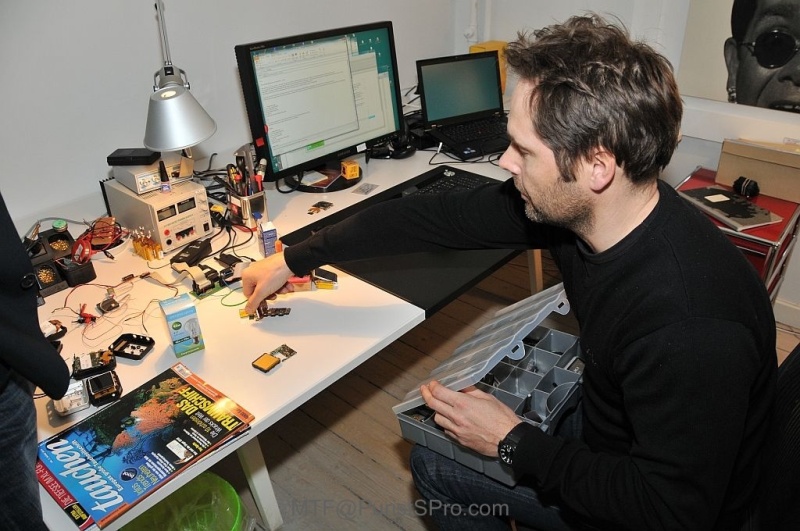
PP: What next for Linde Werdelin?
ML: I hope we can bring out products based on the interactivity between the digital Instrument and the mechanical Watch. My previous example was the moon phase display for best night diving dates. There are still some functions useful to active people for us to explore on watches.
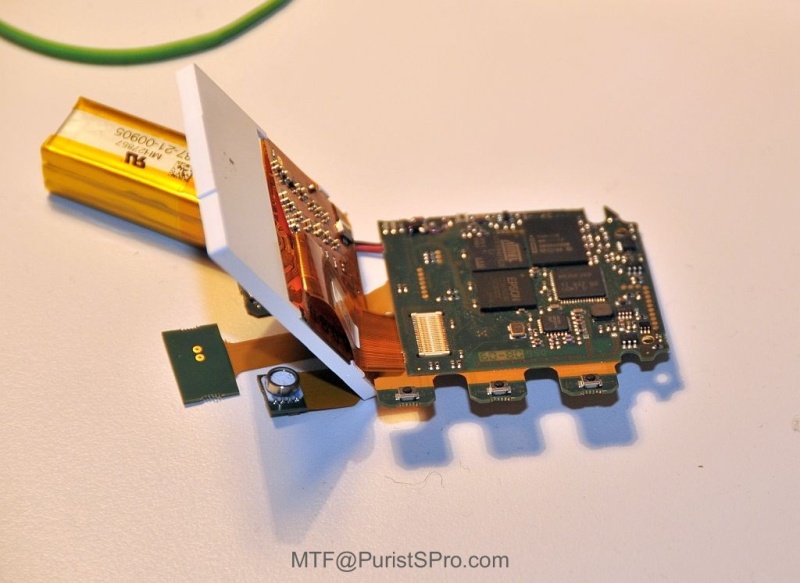
For the Instruments, we can add functions and software to expand usability.
We notice on the PuristSPro website discussions about our “Missing Oktopus”……maybe we could work on that. (smiling)
PP: Yes, we noticed that there were 4 watch lines including the Oktopus and now there are only 3 lines so the Oktopus had gone ‘missing in action’?
ML: It is a line that we definitely have not stopped……..
As a residential architect who has also worked in most construction trades, I agree with the method of designing and building. In my field many can draw or design, but they don't understand how it goes together in the field. When a designer has that connection with construction it makes a world of difference. I apply the strategy to my personal projects at home and work; creating and developing an idea, investigating the details, and realizing a working sample. The new chronograph looks fantasti
MTF
We're a little bit like hockey goalies. What was that line in Braveheart? "He wasn't right... in the head".
We get a great insight into Morten's thinking and influence. Having worked with a designer for my other business, it's always insightful to listen to designers because they view problems and ideas from other angles I'm not used to thinking about. I'm a fan of LW design, and it's great to see a young company such as LW make fascinating products and to also witness their evolution. Cheers, Anthony
when a watch is being designed. I may have more material for a part 3. if needed. Regards, MTF
... to hear the designer talk about his design and evolution of the models and the brand. My father was an architect and my mother was always complaining to me that you should not live in the house designed by the architect but by the carpenter who knows a lot more about "living". (no offense, Mike.... just applies to Japanese architects, I am sure). Anyway, designing must have logic and reasons behind it and in the case of LW, it seems to be well backed by the "practicality" or the voices of th
This thread is active on the Horological Meandering forum with 17 replies. Share your knowledge with fellow collectors.
Join the Discussion →


