New Release
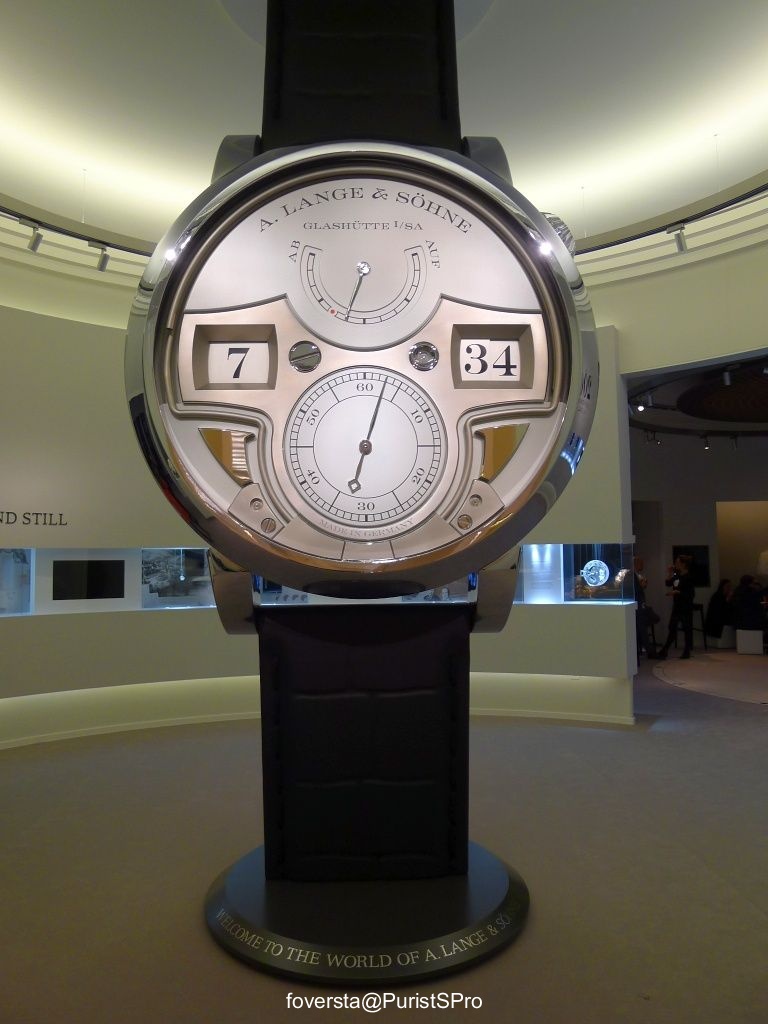
foversta's insightful report from SIHH 2015 provides a crucial look into A. Lange & Söhne's strategy for the year, which he aptly describes as a "musical pause." His analysis delves into how the brand balanced innovation with consolidation, a critical approach for a manufacture known for its complex timepieces. This article remains highly relevant for understanding Lange's product development philosophy and the evolution of key collections like the Zeitwerk, Lange One, and Datograph.
The A. Lange & Söhne 1815 Tourbillon, reference 730.078F, is a distinguished model within the 1815 collection, known for its focus on traditional watchmaking and classical aesthetics. This particular reference stands out for its combination of a tourbillon complication with a black enamel dial, a rare and highly regarded feature that enhances its visual depth and exclusivity. It represents a refined expression of high horology, emphasizing technical sophistication within a restrained design. The hacking seconds mechanism integrated into the tourbillon further underscores its precision engineering.
The watch is presented in a platinum case measuring 39.5mm in diameter and 11.3mm in thickness, offering a substantial yet wearable presence. It is equipped with the manual-wind caliber L102.1, which provides a power reserve of 72 hours. The movement is visible through a sapphire crystal exhibition caseback, allowing appreciation of its intricate finishing and the tourbillon in operation. The dial is protected by a sapphire crystal, and the watch offers a water resistance of 30 meters.
This reference appeals to collectors who value traditional German watchmaking and the technical artistry of a tourbillon, especially when paired with a handcrafted enamel dial. The black enamel dial variant is particularly sought after for its depth and luster, which are achieved through a meticulous firing process. It occupies a significant position within the 1815 series as a high-complication piece that maintains the collection's characteristic legibility and classical proportions.
The Zeitwerk Minute Repeater is not a surprise because it was expected since the Striking Time was unveiled. Pure logic... but there is a main difference between the Striking Time and the Minute Repeater if we forget the notes which are played: the first one strikes "au passage" while the second one strikes on demand. And here lies the specificity of the Zeitwerk Minute Repeater: the way it handles the energy for the striking mechanism. Actually, there are a lot of specificities: it is after all
I wrote about the Zeitwerk Minute Repeater that the watch was expected. It is not the same with this new Lange One at least for me. I was honestly surprised to discover a new version of the "classic" Lange One with its usual case diameter: 38,5mm. Of course, we all knew that the precisely jumping date system in place with the Lange One Tourbillon PC would not only stay with this watch and that it would be deployed in other watches of the collection. Actually, if when it comes to the pure point o
More seriously, I think it would be nice to see again the combo slate dial / PG case. Thanks for your comments! Fx
Remembered reading SJX write up about the design and secret of the Lange 1. The gear train of the older Lange 1 (L901.0), and also the other two older models of 1815 and Saxonia is actually that of the JLC cal. 822. My question is the new Lange 1 (L121.1) still using JLC gear trains or their new in-house gear trains? Many thanks! Best regards, Lim
Actually, the LE of the Saxonia Outsize date introduced at Watches & Wonders two years ago was the kick-off, if I may say so, of the redesign of some watches of the Saxonia line. It is not the first time that watches of this line are changed. But this time, I have the feeling that these subtle details are much more important. Why? Because their aim is to give a new ambition to these watches which get smaller cases and more character. The watch which gains the most in my point of view is the
This thread is active on the A. Lange & Söhne forum with 25 replies. Share your knowledge with fellow collectors.
Join the Discussion →