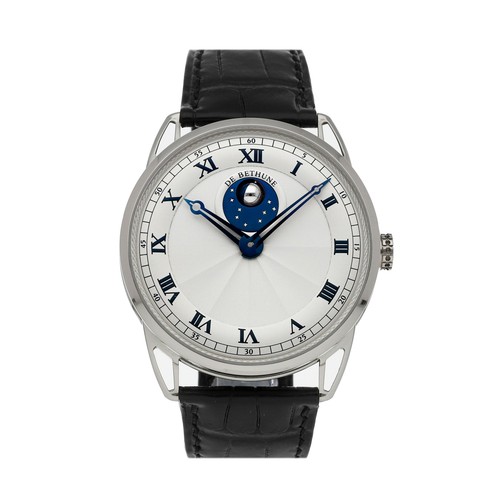
One of the principal themes running through William Gaddis’s massive book The Recognitions is about authenticity. In his story concerning artists, writers, musicians, businessmen, families, clergy and the web of relationships between them we are bombarded with questions about what it means to be authentic. With its negative focus on scoundrels, counterfeiters, forgers, and posers, we see how people struggle for authenticity, or not, in every aspect of their lives. Do they recognize, or are they oblivious to, the deceptions within and around them? Critic William Gass elegantly sums up the focus of the book with one question: “What is real, and where can we find it in ourselves and the things we do?”
How would we interpret the idea of authenticity in a horological work of art? There is no one right answer to such a question, but in detailing my thoughts regarding a particular watch, I aim to sketch a framework for thinking about authenticity in watchmaking.
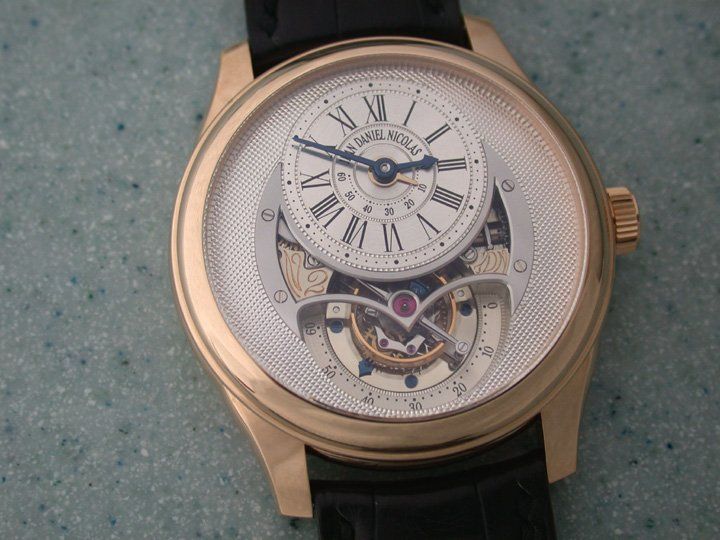
When I decided that it was time to own a tourbillon I felt that in making such a commitment, especially in light of the financial dimension that comes with it, that I didn’t want to compromise from my ideals on any qualitative aspect of the watch. I didn’t want to feel any regrets about any aspect of the watch. There are many tourbillon watches out there that are attractive, technically innovative, historically important, and so on, but all too often there exists some aspect of the watch that had me saying , “I wish it didn’t...” or “If only it...” If things bugged me and I wasn’t an owner, I’m sure they would bug me if I were an owner. The Jean Daniel Nicolas two-minute tourbillon, designed and manufactured by master watchmaker Daniel Roth, is that no-compromise watch for me.
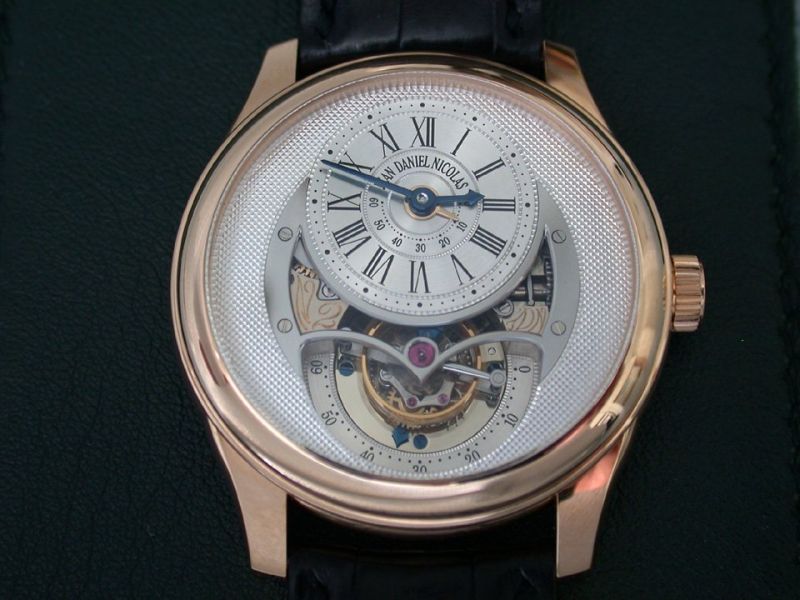
So, what do I hold as important and how does this watch fulfill my conditions? One of the guiding principles that I bring to how I value a watch comes from George Daniels, who said that a watch should have “historic, intellectual, technical, aesthetic, amusing, and useful qualities.” What follows is my interpretation of that mantra as it applies to the Jean Daniel Nicolas watch.
The BackgroundDaniel Roth is an historically important watchmaker. He will forever be remembered for his role in reviving Breguet and founding the brand that bears his name. I suspect the Jean Daniel Nicolas Two-Minute Tourbillon will be viewed as the crowning coda to his productive career, an horological analogue to Beethoven’s highly esteemed late String Quartets or Richard Strauss’s Four Last Songs.
Daniel Roth’s professional career has four main chapters. After spending some stints at Jaeger LeCoultre and other firms coming out of watchmaking school, Daniel landed a position and spent seven years working at Audemars Piguet.
Then, when the Chaumet brothers purchased Breguet with the intention of restoring it to glory, Daniel applied for the position and took control of the technical division, designing the watches and setting up the manufacturing capabilities for the brand. Daniel has a deep appreciation for the work of A.L. Breguet, and he combed the archives and decided to revive the model he thought was most representative of Breguet: the Pocket watch No 5, which he developed into the classic Breguet 3130 with Moon Phase, Power Reserve, and Date (replacing the subseconds of the original, as that is a more useful feature in a modern watch). He is also responsible for the tourbillon and perpetual calendar models that Breguet introduced.
Daniel left Breguet when the firm was sold to InvestCorp and he decided to create watches under his own name in 1988, officially launching the Daniel Roth brand a year later. With their distinctive double ellipse cases and arrow hands, Daniel Roth watches are iconic in terms of design and diverse in their range of complications.
To this day Daniel is still immensely proud of the work he did at Breguet, as well as what he accomplished at the brand that bears his name. However, for the latest chapter in his career he wanted to be purely independent and able to focus all his attention on the watchmaking, rather than on the distractions of running a business (which his wife Nicole attends to in this small family affair). Being unbeholden to investors or a board of directors allowed him to focus of all his attention on making watches that require no compromises to his ideals in terms of design or finishing. This philosophical approach aligned perfectly with what I was looking for.
Manufacture MovementAnother necessary condition for my tourbillon was that the movement be developed in-house. There are many brands that fulfill this condition while many more that do not. And despite my attraction to independent watchmakers, many of them use outsourced ebauches for their tourbillons, even if they are highly customized to suit their own purposes (I thought about the McGonigle tourbillon, which is gorgeous and no doubt a watch I would be happy to own, but the Claret heritage of the movement ultimately was a resistance point for me).
That Daniel actually makes almost all the 75 parts, 45 screws, and 5 hands for his movement himself in his workshop using traditional tools appealed to me. Outsourcing only the springs, jewels, case, and dial (like most brands do) really captures the spirit of independent watchmaking.
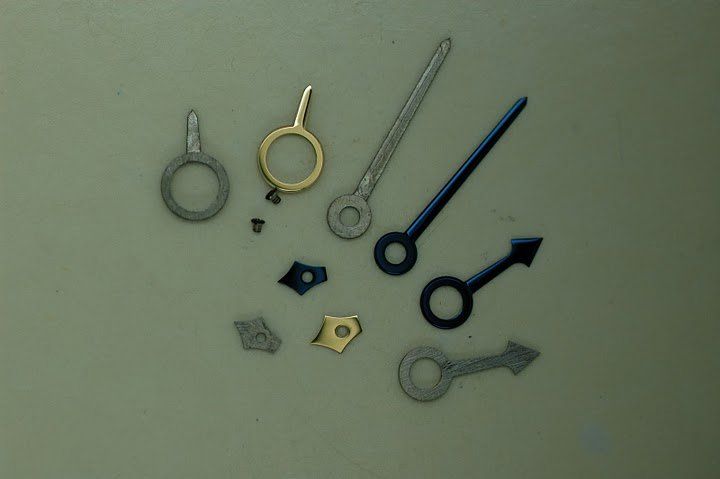 Daniel makes the hands himself - Photo by Daniel Roth
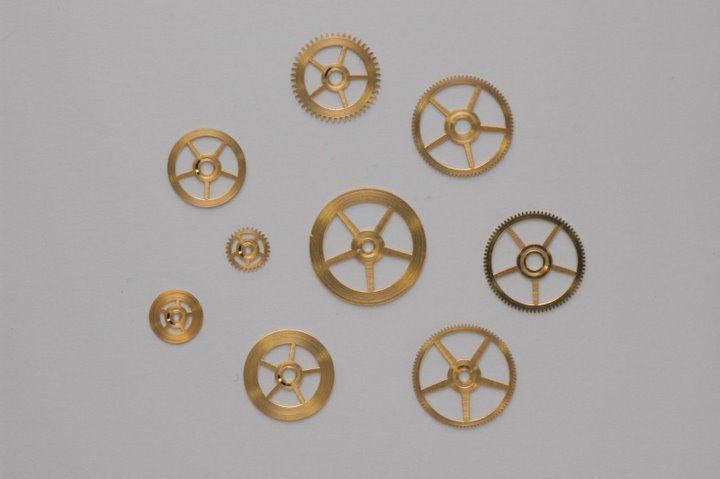 Stages in the production of the wheels - Photo by Daniel Roth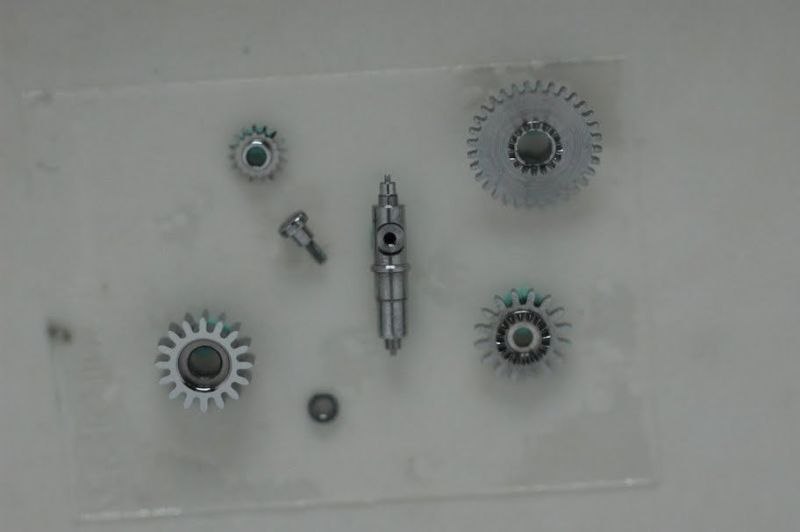
Parts of the Power Reserve Differential - Photo by Daniel Roth
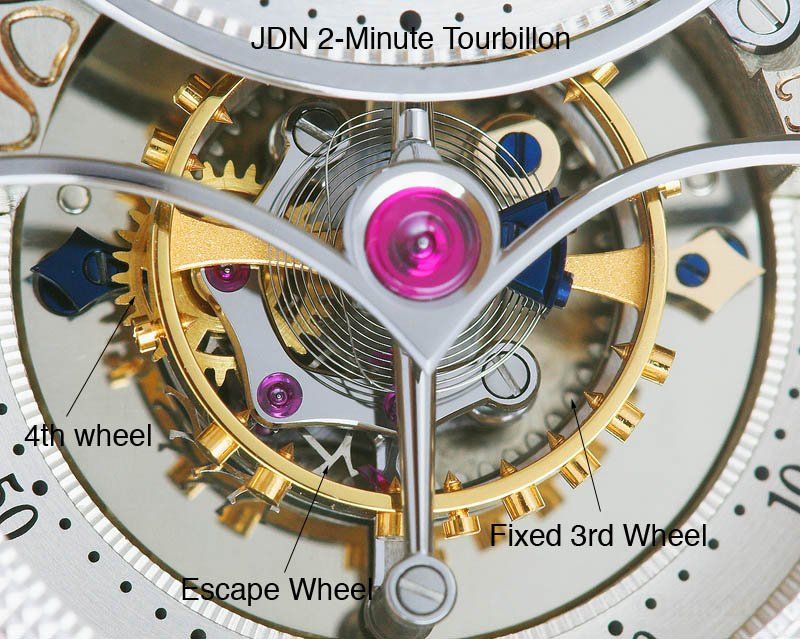
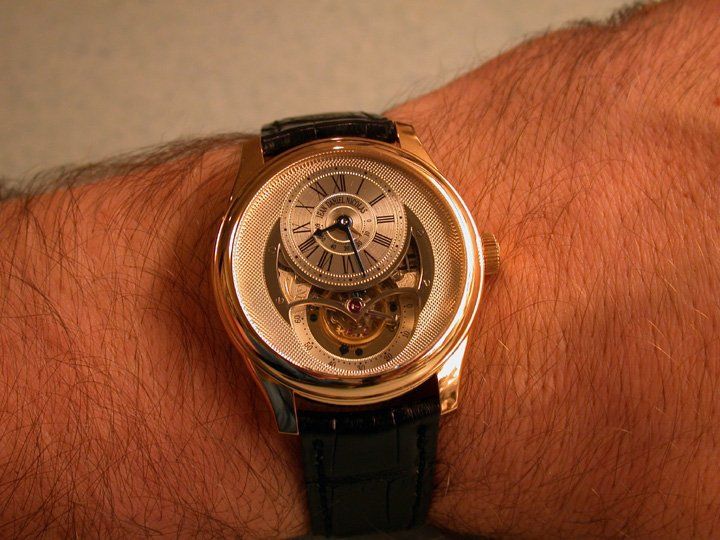
A primary benefit of developing a movement from the ground up, and in conjunction with the design of the entire watch, as Daniel did for the Jean Daniel Nicolas watch, is to achieve a balance of technical and aesthetic concerns in such a way that the watch feels like it couldn’t have been made in any other way. For instance, the two-minute rotation of the tourbillon carriage allows for the seconds to be read in a 180° arc, a design choice that keeps the seconds hand from encroaching on the main dial, which was an aesthetic concern of mine. A more minute detail is the use of a gold hand to indicate the seconds on one side of the carriage, and a blued steel hand on the other, allowing one to distinguish between the sides of the carriage, but also to serve, with the different densities of gold and steel, to balance the carriage.
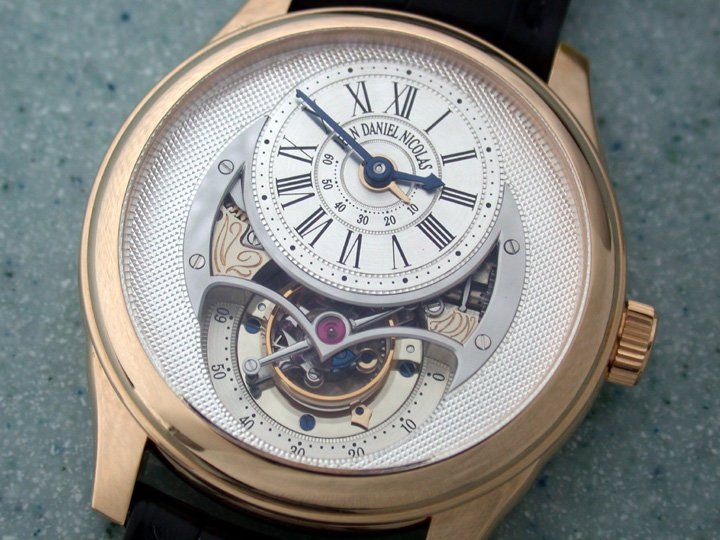
An inherent and interesting feature of the two-minute tourbillon is that the fourth wheel, which is usually the “fixed” wheel in tourbillons that rotate once per minute, has to be located inside the carriage. It runs in a counterclockwise counterpoint to the clockwise direction of the carriage, creating a wonderful visual effect. The fixed wheel in the two minute tourbillon is the third wheel, and Daniel inverted the teeth so that the wheel, when given its mirror polish, is a contrasting background to those blued steel and gold seconds hands, making reading their progress around the dial easy.
Photo by Ian Skellern - Illustration by Curtis Thomson
Daniel’s choice for making the balance beat at 18,000 vibrations per hour was also a point in favor of the JDN. The appeal of slower beat watches to me is twofold: longevity of the watch itself, with less wear and tear on the movement, and the calming counterpoint to the hectic hullabaloo that surrounds us. I look at the watch slowly ticking away and I feel calmer.
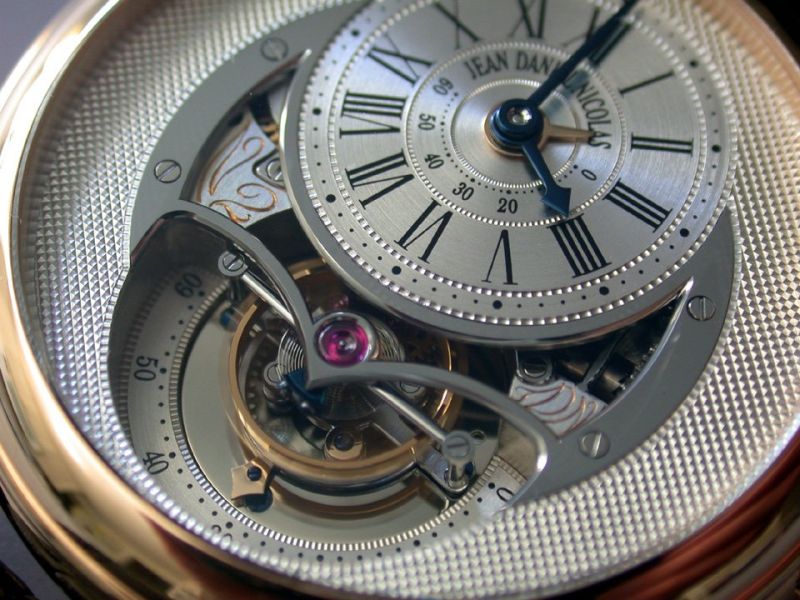
The DetailsThe echoes of the Breguet aesthetic in the dial of the JDN watch are a definite plus for me. I have always loved Bregeut’s textured dials, blued hands, and printed roman numbers. But while I am not particularly attracted to the tourbillon watches of Breguet, I fell hard for the Jean Daniel Nicolas design. It is the bridge that transitions between the classical dial and the tourbillon mechanism which won me over to the JDN. It frames both the dial and the tourbillon carriage and is unlike anything that has been done before. But there is also something inevitable about its design: the curves of the lower half are necessary for reading the seconds while also holding the jewel for the carriage pinion.
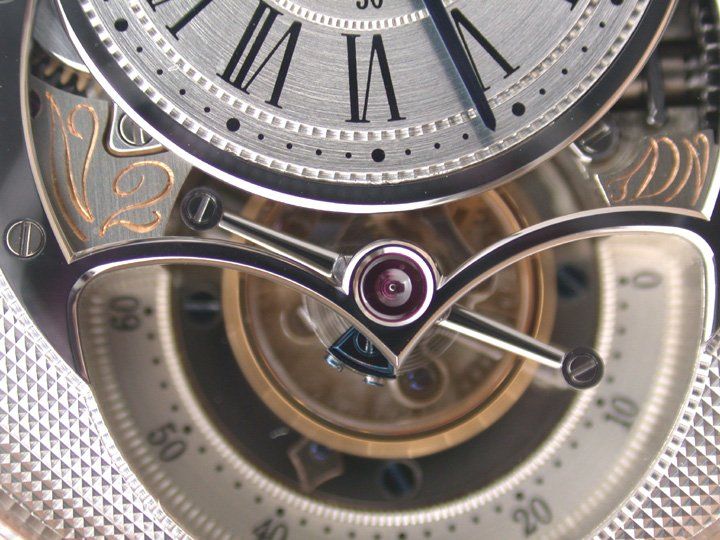
I also appreciate the fact that the dial for the hours and minutes is not cut in to by the tourbillon. The “hole” in the dial of so many tourbillon designs bother me. The solutions to this problem, typically to skeletonize the movement like Vacheron Constantin does so well, or have the open dial like Richard Mille does for his designs, are good, and I considered both skeleton and open dial tourbillons, but the JDN won out. That tourbillon bridge amuses me to no end, and I can’t emphasize enough just how much that one detail won me over to Daniel’s design.
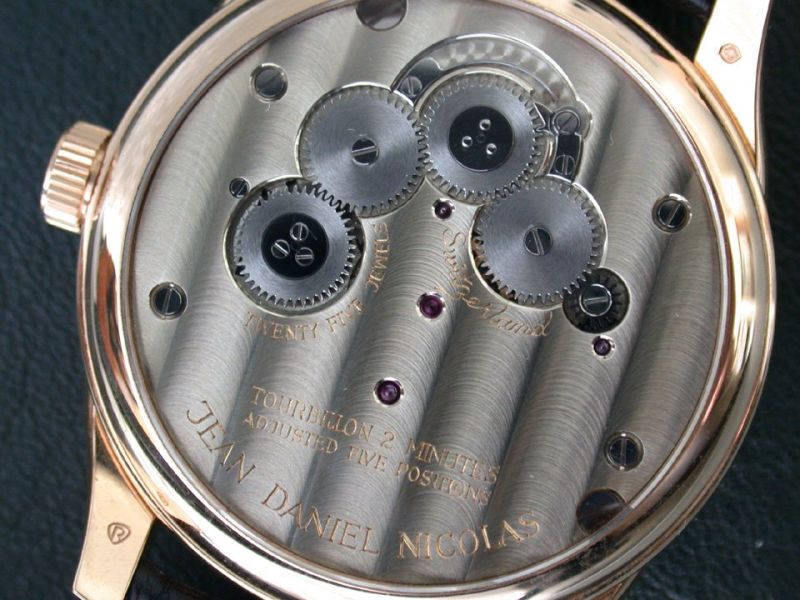
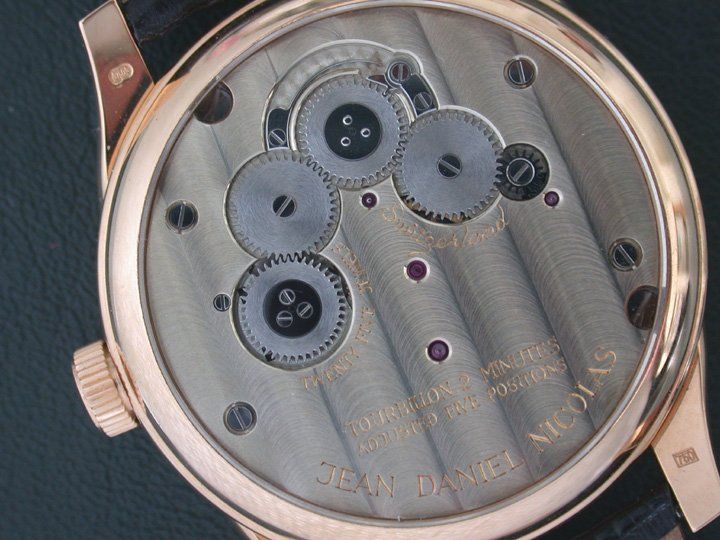
I appreciate that Daniel designed his watch with aesthetic considerations in mind, with little regard for how much work the proper execution of the details might require of him. The bridge contains six interior angles and the backside of the watch has eight sharp angles that require careful hand finishing.
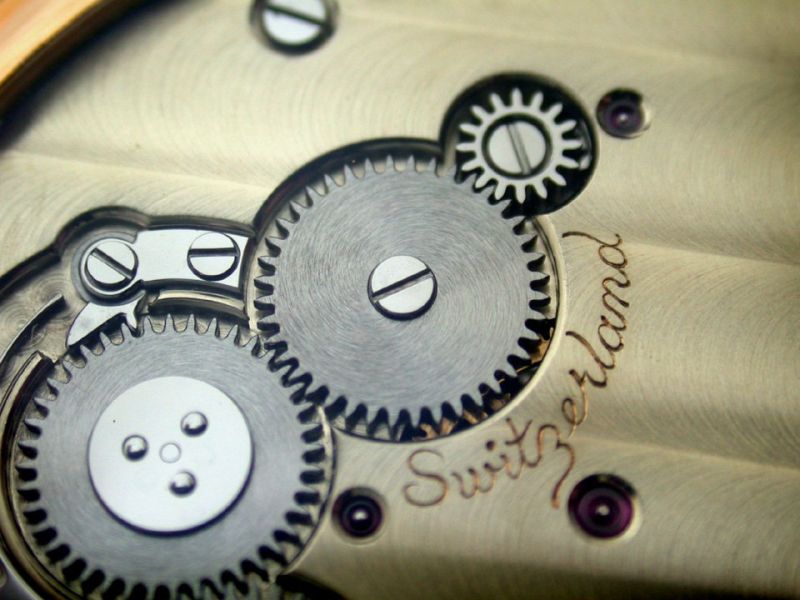
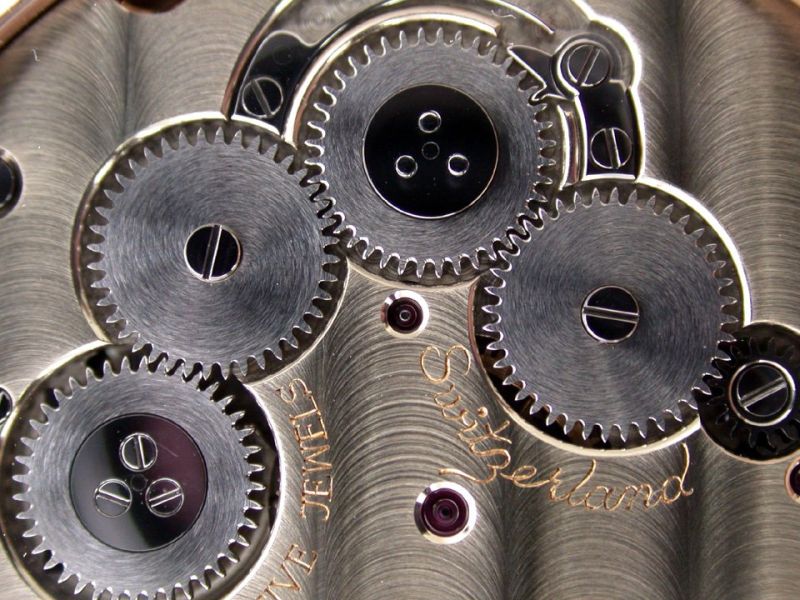
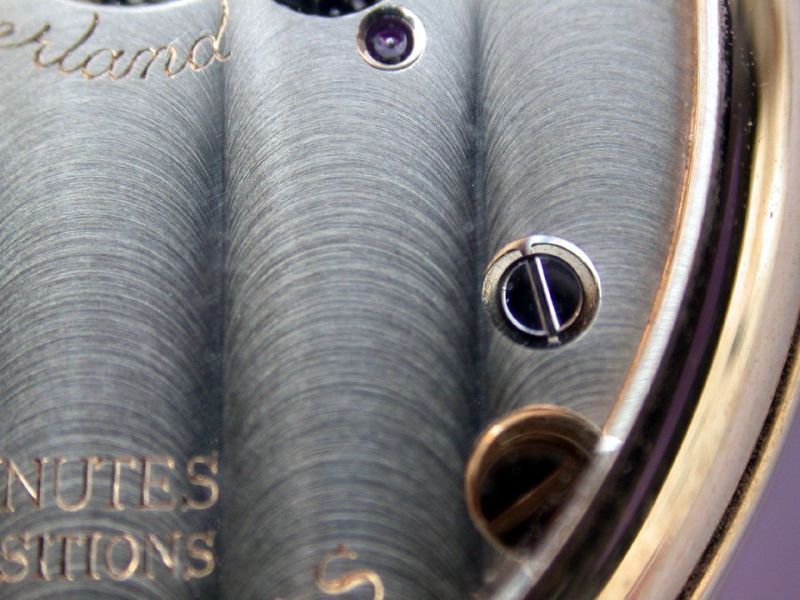
And all that fine finishing is beautifully done. Countersinks are beveled and polished. Screw heads have beveled edges and are given a mirror polish. Perlage is expertly applied. Functional surfaces are mirror polished. Straight and circular grain finishing are beautifully executed.
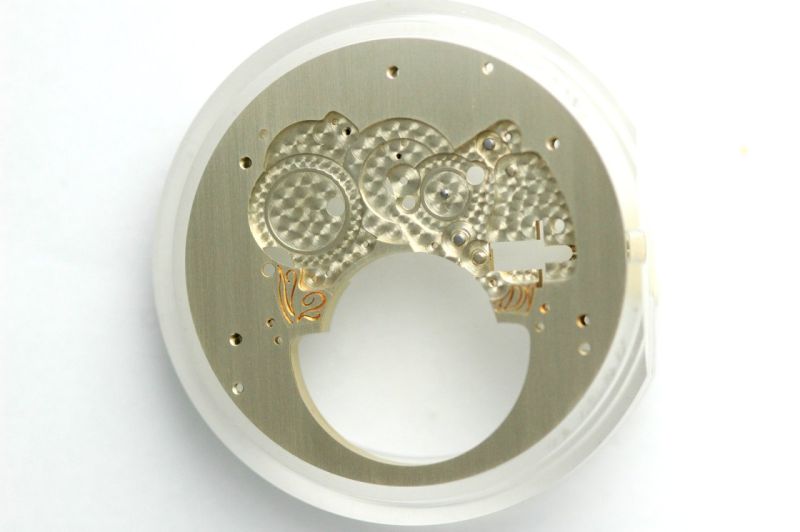
Photo by Daniel Roth
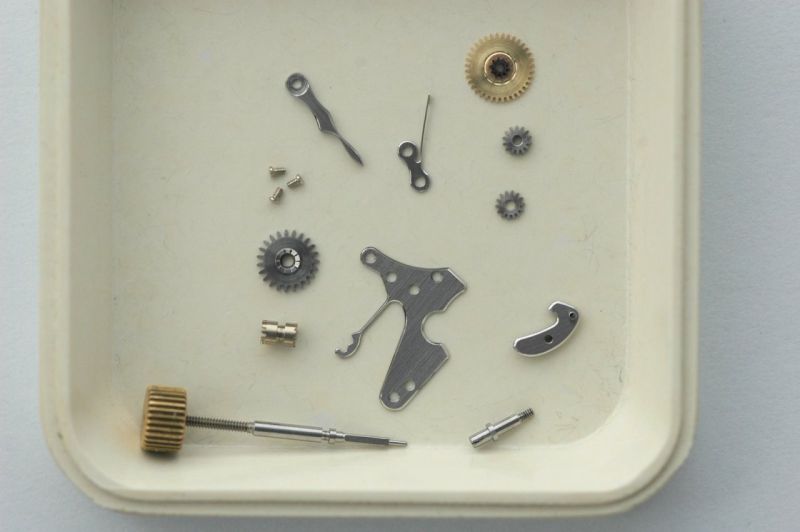
Winding and motion works - Photo by Daniel Roth
And perhaps most famously, the Geneva waves on the plate are superbly applied, giving tight, half-circles that are difficult to achieve.
A detail not to be seen, but rather to be felt, and which pleases me, is the winding of the watch. Winding is a bit stiffer than I am used to, but with the large crown, is a pleasant morning ritual that rewards me with a nice audible click. It takes surprisingly few turns to go from no power to full wind (and don’t be fooled by the 60 hour power reserve display....Daniel has built an extra 12 hours of power reserve beyond that into his watch!)
ConclusionA beautiful watch that rewards its detailed consideration, with a manufacture movement that has interesting technical features, from an historically important watchmaker, using traditional tools and hand-finishing techniques: All the criteria I brought into my consideration of a purchase of a tourbillon watch are present in the Jean Daniel Nicolas Two Minute Tourbillon. This is a watch that does not compromise on its design or execution. It is truly an authentic work of horological art.
In addition to all the horological details there is also one non-horological reason that made the Jean Daniel Nicolas my choice. The extreme rarity appealed to me. Mine is only the third round, and sixth total watch to carry the Jean Daniel Nicolas signature. William Gaddis’s The Recognitions, the work upon which which I have framed this review, ends by observing a composer’s work “is still spoken of, when it is noted, with high regard, though seldom played.” Through the process of getting updates on the progress of my watch, I became quite fond of the Roths. It is hard to imagine nicer, warmer people than Daniel and Nicole. I wish them continued success in making the Jean Daniel Nicolas Two-Minute Tourbillon so that it might be widely noted with high regard -- and more frequently worn:
Bill