Epilogue's post offers a fascinating deep dive into Jardur, a brand often overlooked but rich in history and technical innovation. His exploration of the brand's military connections and unique complications like the degreemetre provides invaluable context for collectors and enthusiasts. This article highlights why these vintage chronographs, particularly the Bezelmetre 960, remain compelling pieces of horological history.
“Jardoure”?
“Jaredur”?
“Jare-dure”?
…
Never have I felt so embarrassed to pronounce a 6 letter word. How the devil am I meant to pronounce this? A la Francaise? På Svenska? As an English gentleman dipping a shortbread biscuit in his tea?
Regardless, owning two of these hotcakes I feel it’s my duty to diffuse some knowledge about Jardur. When it comes to watches, the things I want to read about are twofold: technical and human. The former being information on the movement, production numbers, details; the latter being the human stories involved.
TECHNICAL HISTORY
The Jardur Import Company was established in 1937 by Samuel Klepper, a pilot, and was located in the McIntyre Building, New York.
It specialised in selling equipment for military use such as flight plotters and calculators, as well as watches.
It is said that their instruments were almost exclusively sold through military post exchanges and ship stores; with some imagination one could picture their Jardur watch being worn, in combat, by a pilot.
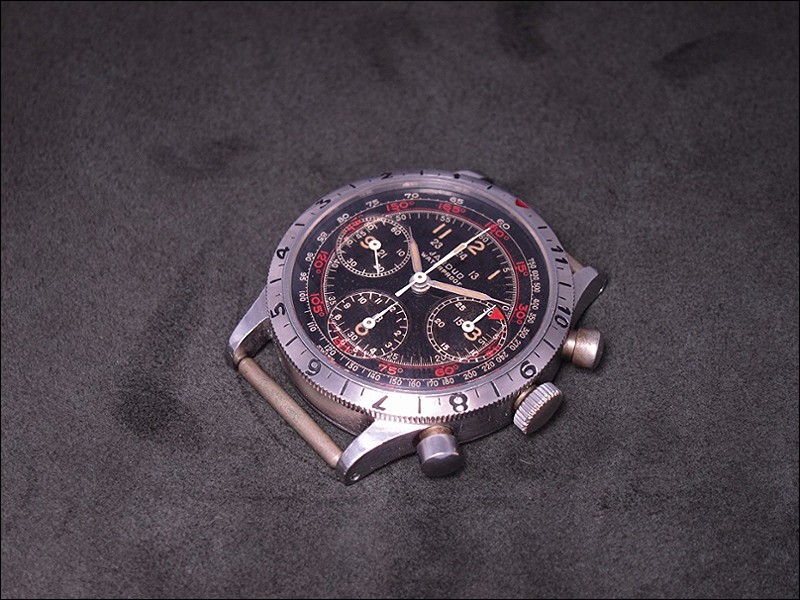
Here I have a black dial Jardur Bezelmetre 960 from the early 1940s (the B950 has olive pushers and is a little older). It was designed to be a cockpit instrument to be worn on the wrist.
It has a Valjoux 72 and one might venture that between 600 and 800 were made. The dial and hands are painted with radium, which adds the excitement when wearing it

With regards to complications it features, as well as a 12h chronograph, both a countdown timer and a degreemetre.
A degreemetre? What is this barbaric contraption I hear you say?=“Aircrafts have a standard rate of turn of 3 degrees per second; by timing your turn with the chronograph, you can measure the amount of turn”. Come on, guys that was obvious.
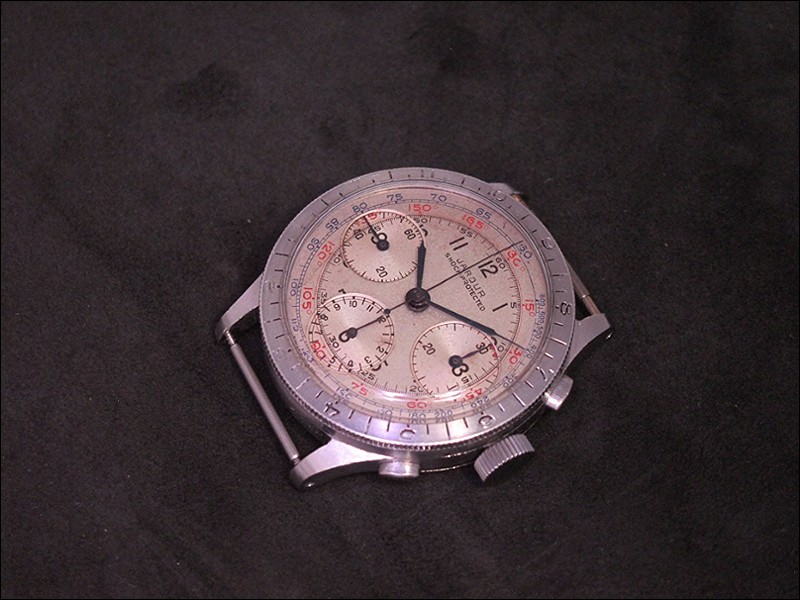
Also present, a white dial Jardur from the late 1930s (estimate based on the olive pushers). It has a Valjoux 71.
As a rule for determining a Jardur’s movement, deduced by observation of web pictures,“olive” pusher chronographs have Valjoux 71s while “flat” pusher chronographs have Valjoux 72s.
I have been told that far fewer were made but I dare not guess how many.
It has the same functions as the B960.
HUMAN HISTORY
To give a sense of the relationship between men and their watches, or should I say their tools, the book “Watches I have Known” recounts a touching story of a man and his Jardur in time of war.
"He always kidded me that his watch was more on time than the plane's clock and even the briefer giving us the "hack" command. I kept trying to bet him something so I could have that watch, but I never beat him. Even a friendly game of cards but he held onto this watch.” Deep sigh, "On a long mission near Berlin, we got jumped and shot up. The starboard outer engine was hit and started to burn, but we got it out. The starboard inner was hit but kept running, but a little rough and a 109 got the starboard waist gunner. It was all I could do to keep her in the air.”
The pilot continued, “We fell behind, but a couple of Mustangs with more guts than brains stayed and covered us. I was so concerned about flying I hate to admit I did not notice my co-pilot's voice getting slowly softer. He responded OK, and I thought it was a couple of shot out windows letting the noise of that rough engine drown out his voice." “He was facing me, but I could see that he was fifty years or so away.” "We made the coast and crossed the channel somehow and, one blessed moment, I could see our field in the far distant. Just as we started the landing check, he reached over and touched my hand as it held the wheel." "He took my hand off the wheel and softly said, 'OK, now it is yours." That JARDUR was in my hand, and I screamed for someone to come up to check him" "Do I have to say it, but of course he was gone. Made it long enough to help me get home." "I've worn this watch since, finished my tour and survived the war, and since then have never bought, worn or accepted a different watch."
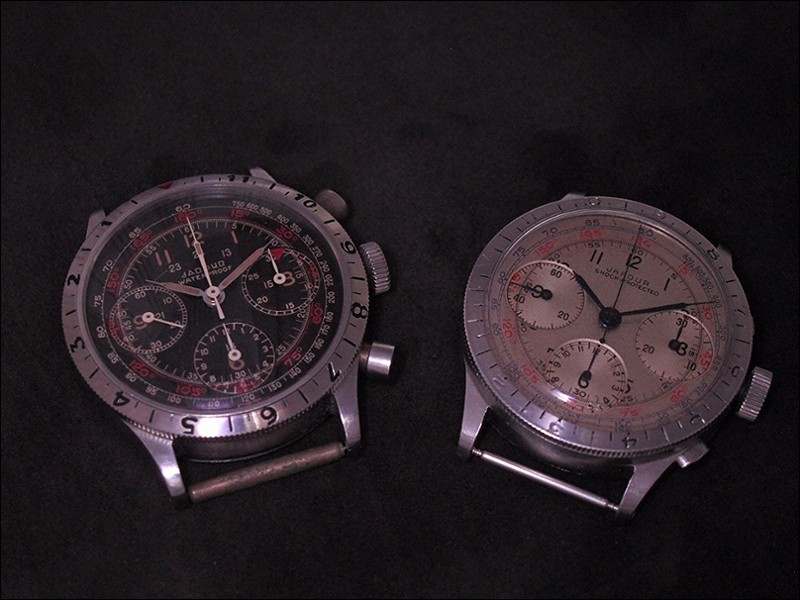
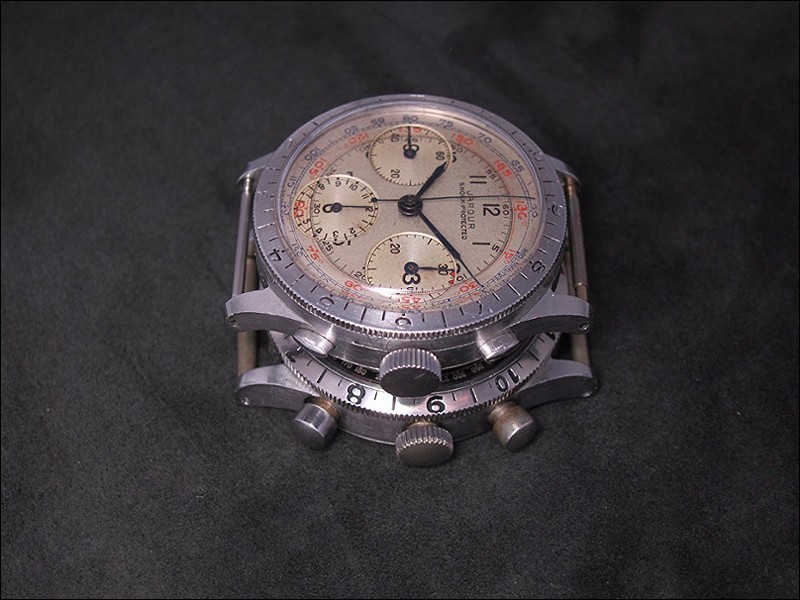
Thanks to these soldiers my two Jardurs will see calmer days on my wrist.
Further research and questions.
1. Production numbers?
2. Production date of these two Jardurs?
Jardur, j’adore. Et vous?
Many thanks to Blomman for teaching me how to make and use a light box!
Source: Jardur website; Jardur Instagram page; The Watch Spot Blog; Own pictures


