
Wristshot
Leo2b's captivating photography of his Jaeger-LeCoultre timepiece, affectionately dubbed 'Red,' offers a masterclass in watch appreciation. His original post beautifully showcases the watch's aesthetic appeal, inviting fellow collectors to share their perspectives on this distinctive model. This article delves into the community's insights, exploring the allure and unique characteristics that make this JLC a standout.


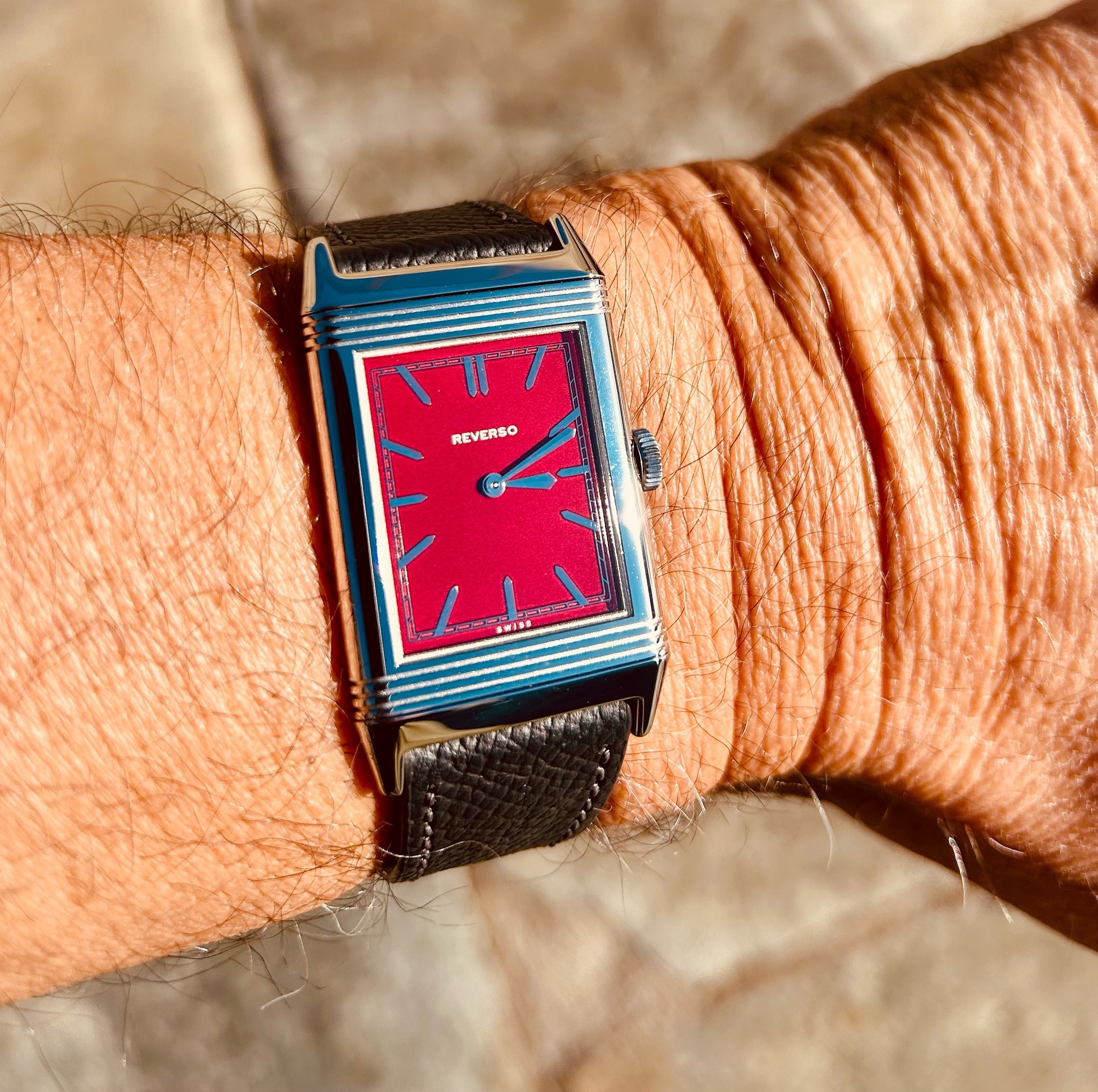
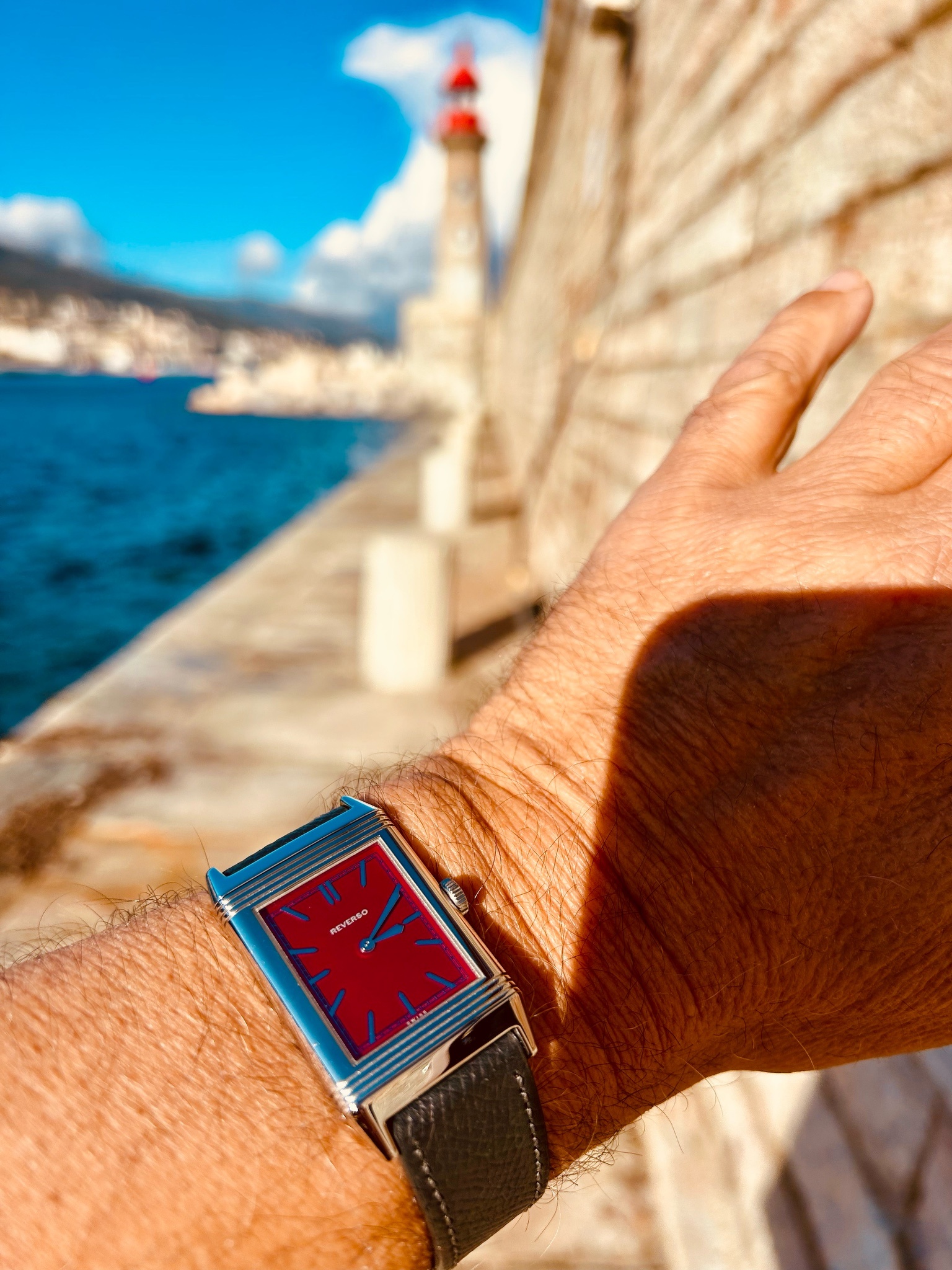
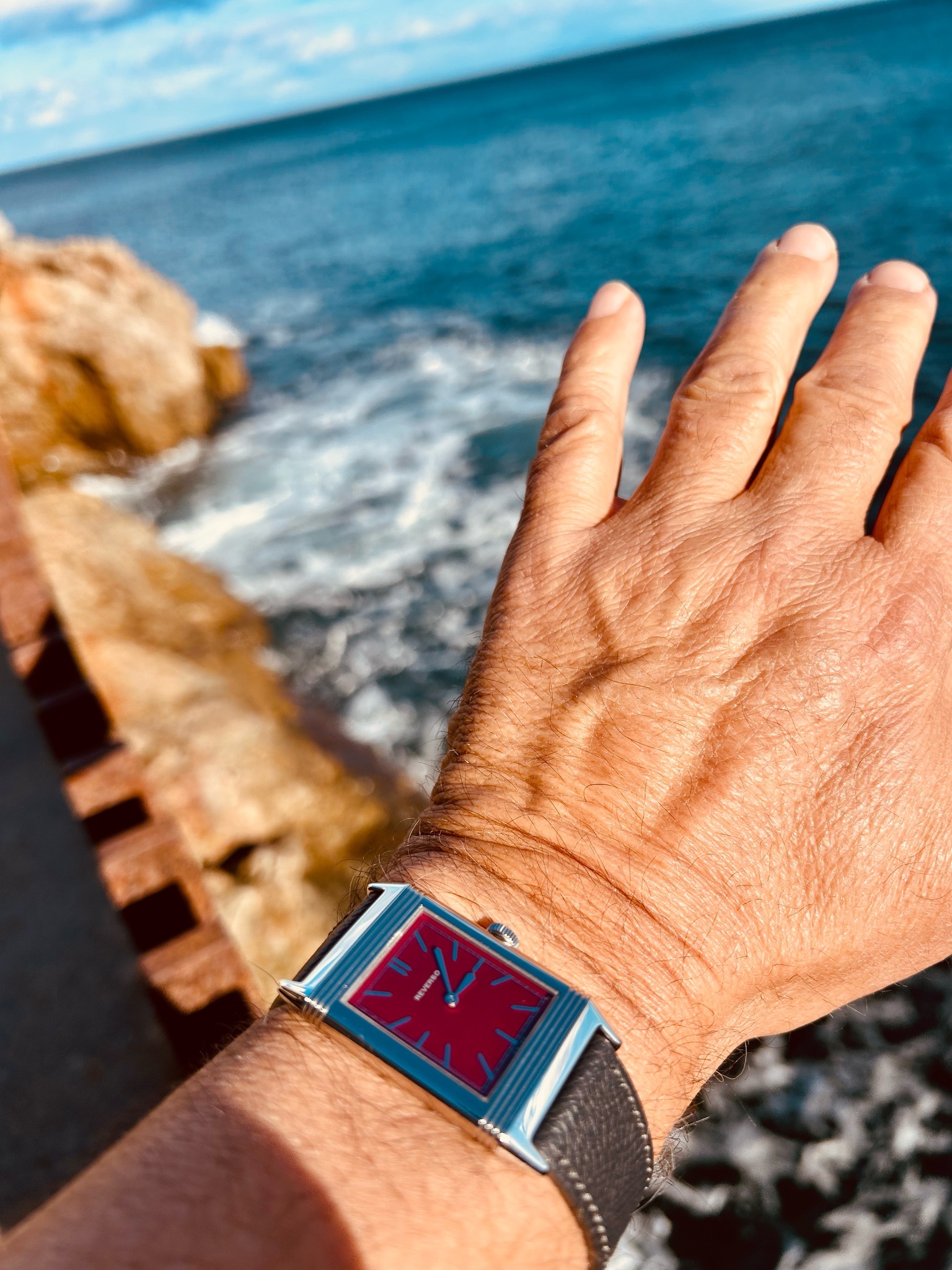
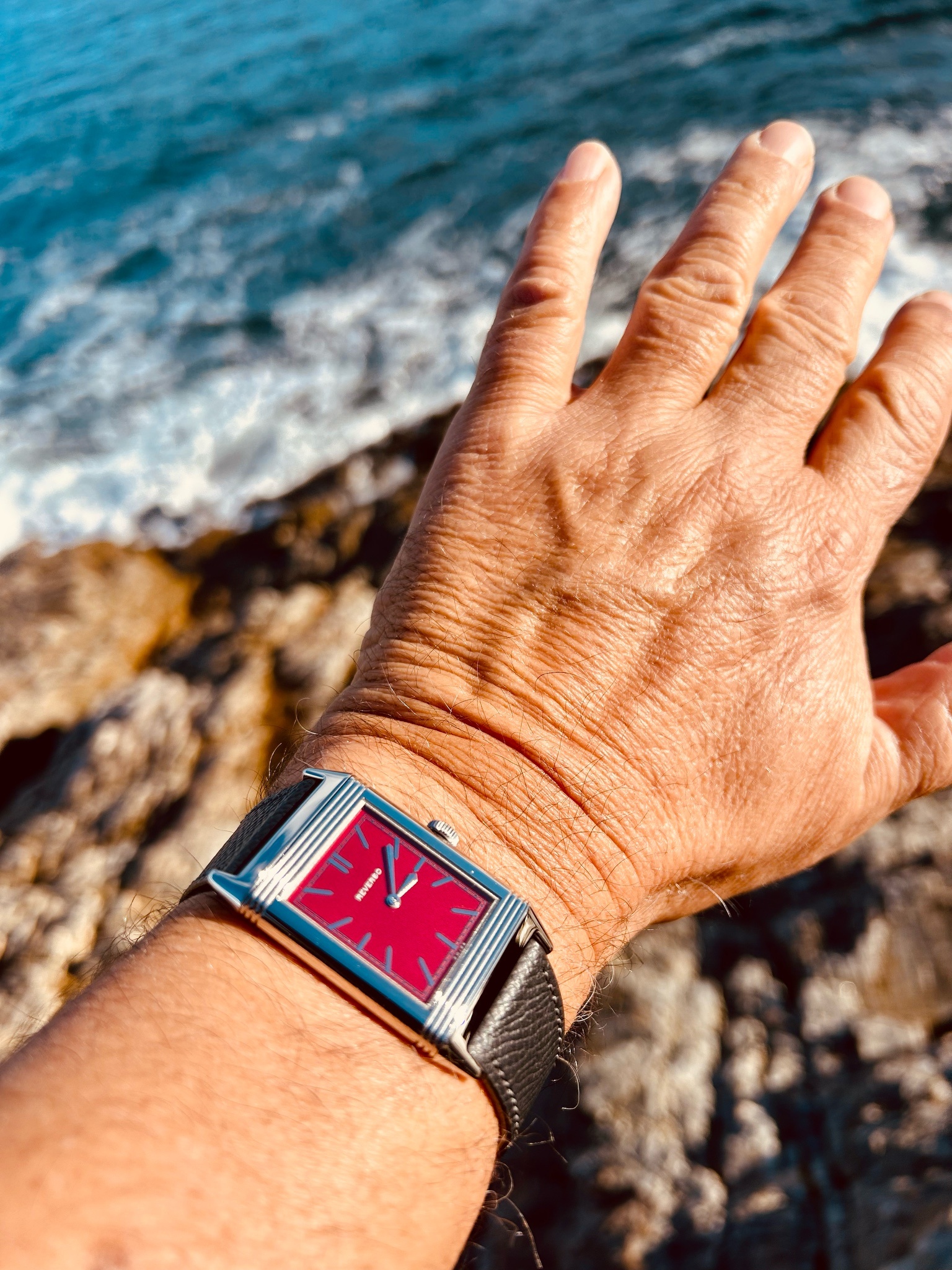
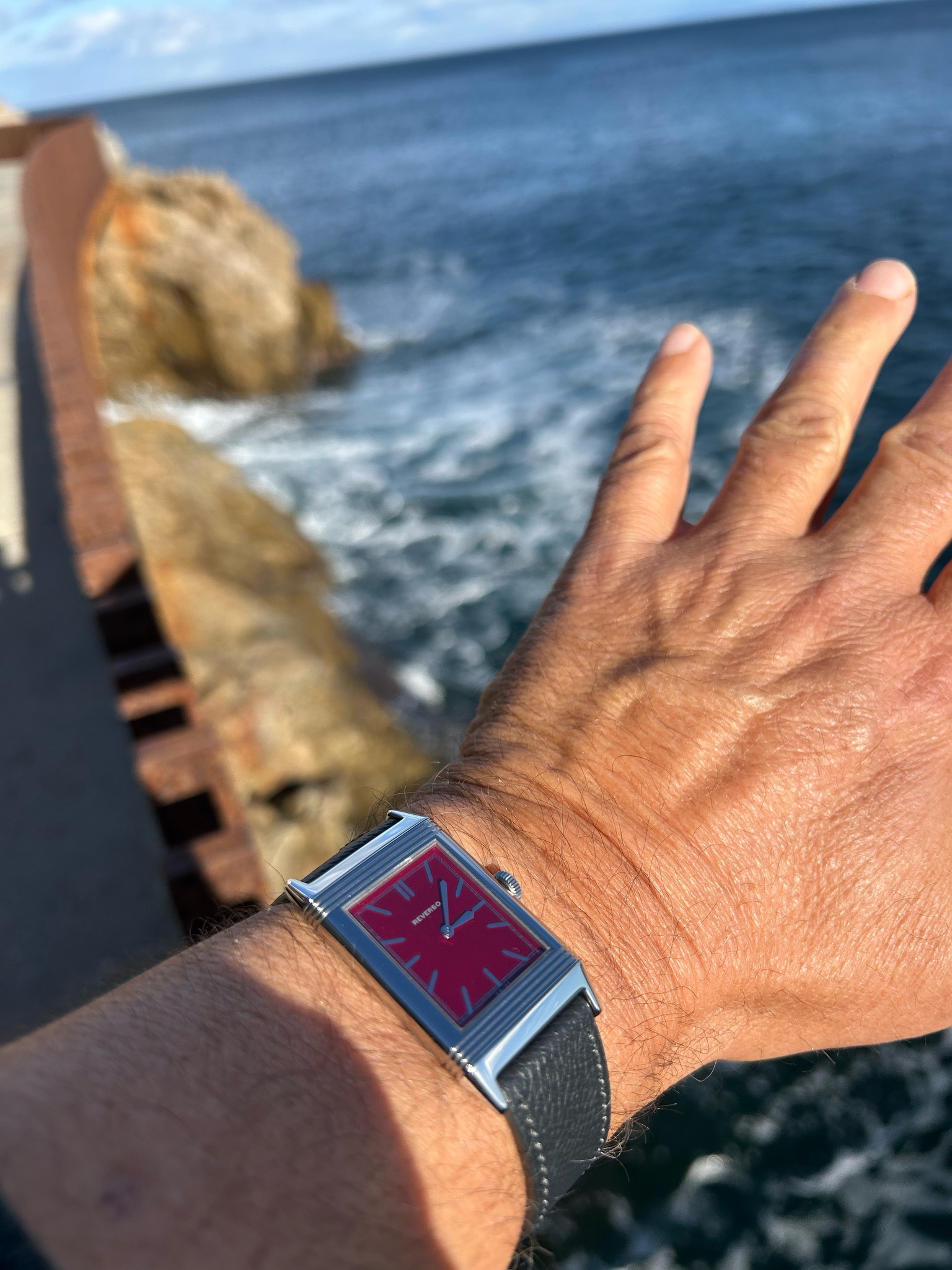
The Jaeger-LeCoultre Reverso stands as one of horology's most enduring and recognizable designs, born from the practical needs of 1930s polo players who required protection for their watch crystals during matches. This Art Deco masterpiece has evolved far beyond its sporting origins to become a canvas for artistic expression and technical innovation. The reversible case mechanism, operated by sliding catches on either side, remains fundamentally unchanged from César de Trey's original 1931 concept, representing nearly a century of continuous production.
This particular example showcases the Reverso's capacity for bold dial variations, featuring a striking red lacquered face that transforms the typically conservative dress watch into something far more expressive. The rectangular case proportions and linear indices maintain the model's classic geometry while the vibrant dial color demonstrates Jaeger-LeCoultre's willingness to experiment within established parameters. The ribbed case sides, a signature design element, provide both aesthetic interest and practical grip when operating the reversal mechanism.
Red-dialed Reversos occupy a unique position within the model's extensive catalog, appealing to collectors seeking distinctive variations on the classic theme. While production numbers for specific dial colors remain undisclosed by Jaeger-LeCoultre, colored dial variants typically command attention in the secondary market due to their relative scarcity compared to traditional silver or black faces. The Reverso's modular design philosophy has allowed the manufacture to experiment with numerous dial treatments over the decades, making examples like this both contemporary and rooted in the model's experimental tradition.
although the case size is just a little too large for the 'vintage' aesthetic
This thread is active on the Jaeger-LeCoultre forum with 31 replies. Share your knowledge with fellow collectors.
Join the Discussion →