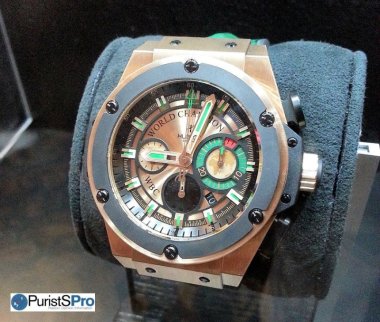
Manufacture
SJX provides a comprehensive tour of Hublot's Nyon manufacture, offering readers an inside look at the brand's production processes and philosophy. This report highlights Hublot's commitment to in-house manufacturing and its unique corporate culture, providing valuable context for understanding the brand's identity and growth.
Hublot’s manufacture in Nyon, north of Geneva, was inaugurated in 2009. It sets the stage for Hublot’s second stage of growth, after the turbo-charged early years when Jean-Claude Biver first took over and grew sales ten-fold.
Nyon was selected by Jean-Claude Biver for its location, conveniently accessible from Geneva, the Vallee de Joux and Evian in France. The town is better known as the headquarters of UEFA; Hublot is the only watch manufacturer located there.
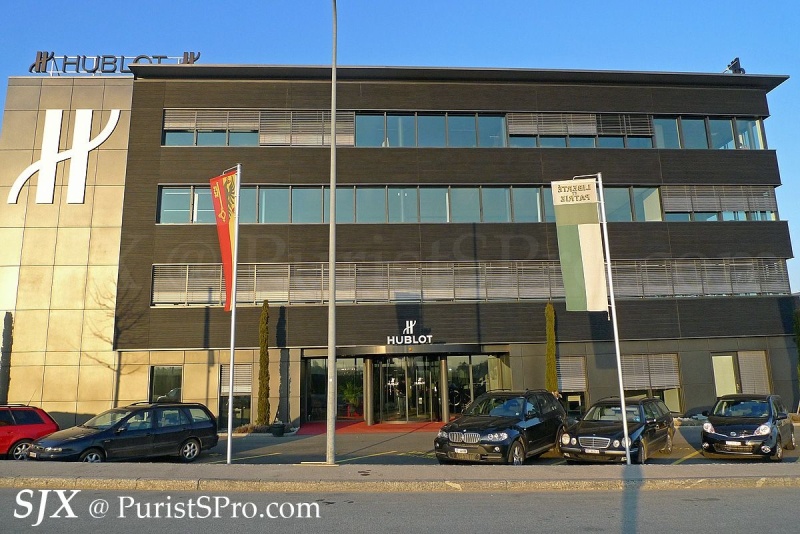

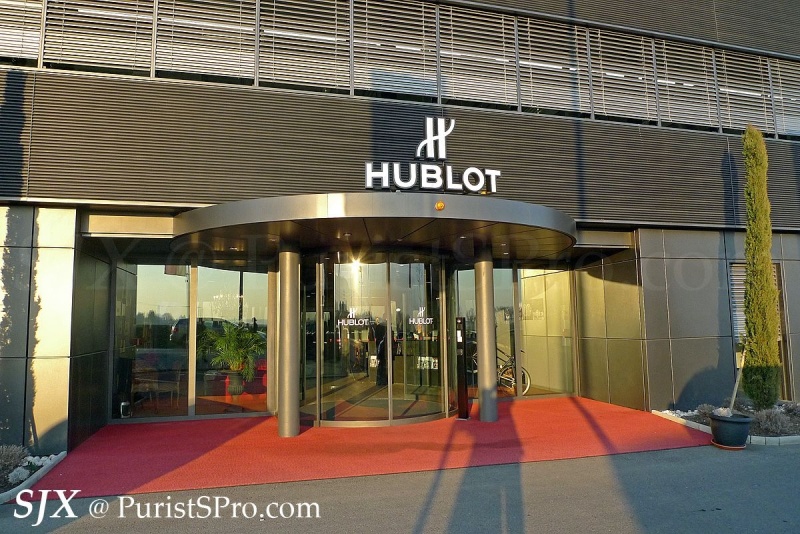
The six storey Hublot building is easily recognisable from a distance. Even without the enormous logo out front the building is entirely in black and grey, echoing the favourite shades of the Big Bang. This colour and stylistic theme is echoed through the entire structure, as we will see later. The mantra of fusion literally permeates the entire building as well as the people. The folks at Hublot love their job, and their boss, more than the average watch manufacture.
Many thanks to the team at Hublot for this wonderful visit.
- SJX
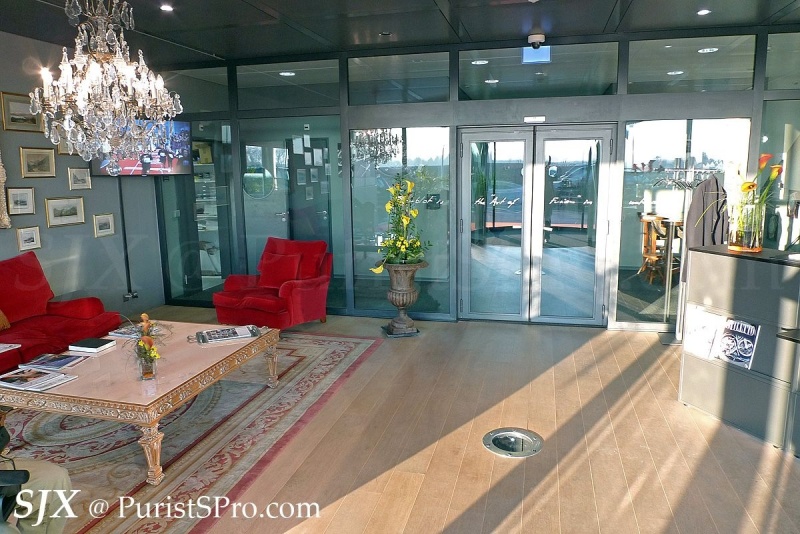
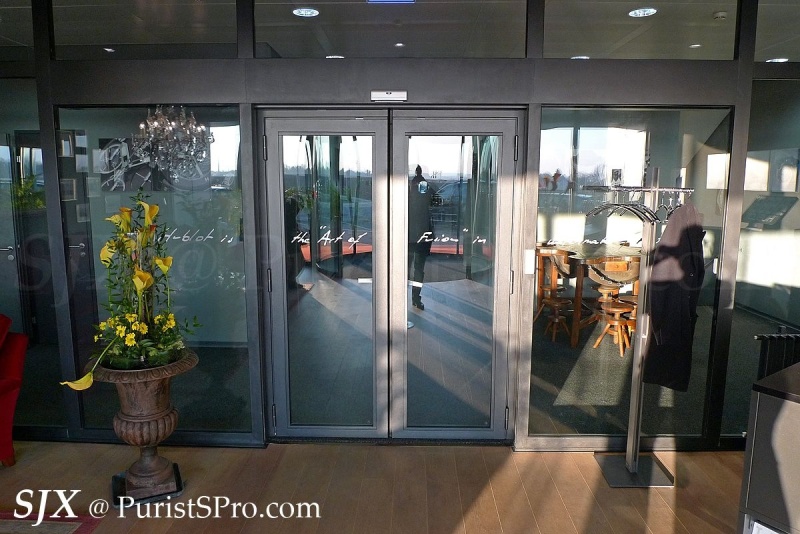
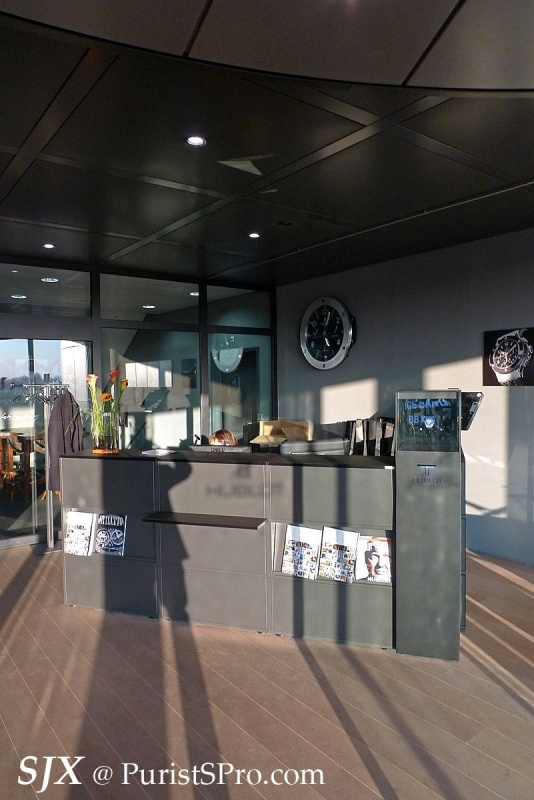
Below: The entrance lobby
This message has been edited by SJX on 2011-04-03 05:29:17
For those who think Hublot merely buys Valjoux 7750 movements and case them as I did in the past, this should serve to convince you otherwise. The machining workshop is undergoing significant expansion as the photos below illustrate. Several new machines have been delivered and many more are expected, as the tape outlines on the floor suggest. All of this brings Hublot to its target of becoming more vertically integrated as well as expanding annual production to 10,000 to 15,000 of the new UNICO
Parts made in-house, as well as parts sourced from external suppliers, are sent to the control department to ensure they meet standards in terms of dimensions, finish and appearance. One of the standard procedures is a video microscope to compare parts against a template. Parts that fail to pass are and a report is drawn up identifying the defects.
This is unusual for a watch manufacture – an in-house electroplating and coating workshop. These are not too common at watch factories, especially smaller ones like Hublot, because of the special permits required due to the hazardous chemicals needed to do plating and coating. But because of Hublot’s emphasis on colours and materials, this is a key aspect of the manufacture. Doing this in-house allows for an almost unlimited range of colour variations for watch parts. Eventually this
Subassembly of various parts are done prior to assembly of the movement. This includes things like fitting of pinions to wheels and pressing of jewels. The movement itself is then put together in another workshop, assembly line style with each watchmaking fitting certain components. One of the interesting aspects of the assembly area is the air curtain fitted in each of the booths. These laminar flow booths create a local clean area which allows the movements to be assembled in a contaminant-fre
Once the movements are completed, the rest of the watch is put together. This primarily consists of fitting the dial and hands, and then casing up. The Hublot case is more complicated than the average watch case, due to the multitude of materials used. The construction is essentially a sandwich – a Kevlar middle band in-between a metal top and bottom. This case construction was designed for easy modification of aesthetics – each of the parts can be varied to create a different models
This thread is active on the Hublot forum with 47 replies. Share your knowledge with fellow collectors.
Join the Discussion →