Complications
SJX's post highlights the intricate artistry of the Cartier Rotonde de Cartier with polar bear décor, featuring the rare plique-à-jour paillonné enamel technique. This article delves into the subtle nuances of this Métiers d'Art piece, explaining the historical context and complex process behind its creation.
When I first encountered this watch at SIHH 2011 it didn’t strike me as particularly impressive. Through the glass display it merely looked like a stylised polar bear in various shades of blue.
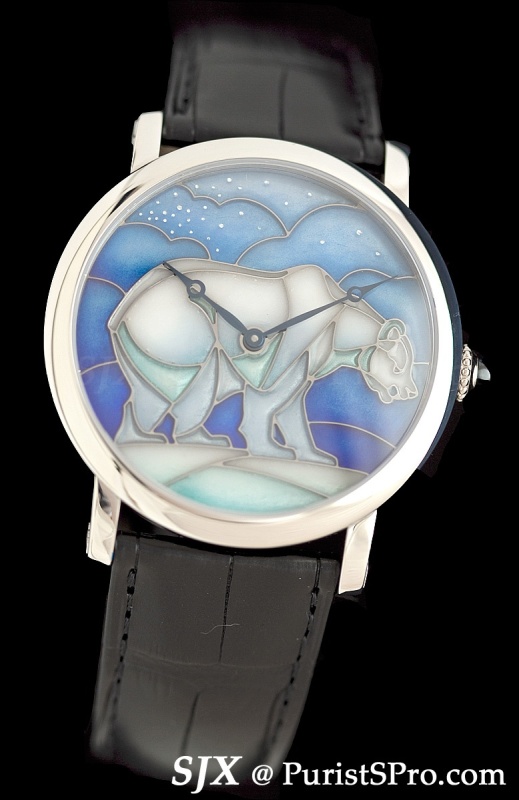
Unlike the Tortue X jaguar, the Rotonde de Cartier with bear décor doesn’t jump out at you. Rather it’s a subtle piece with nuances that only emerge upon closer examination.
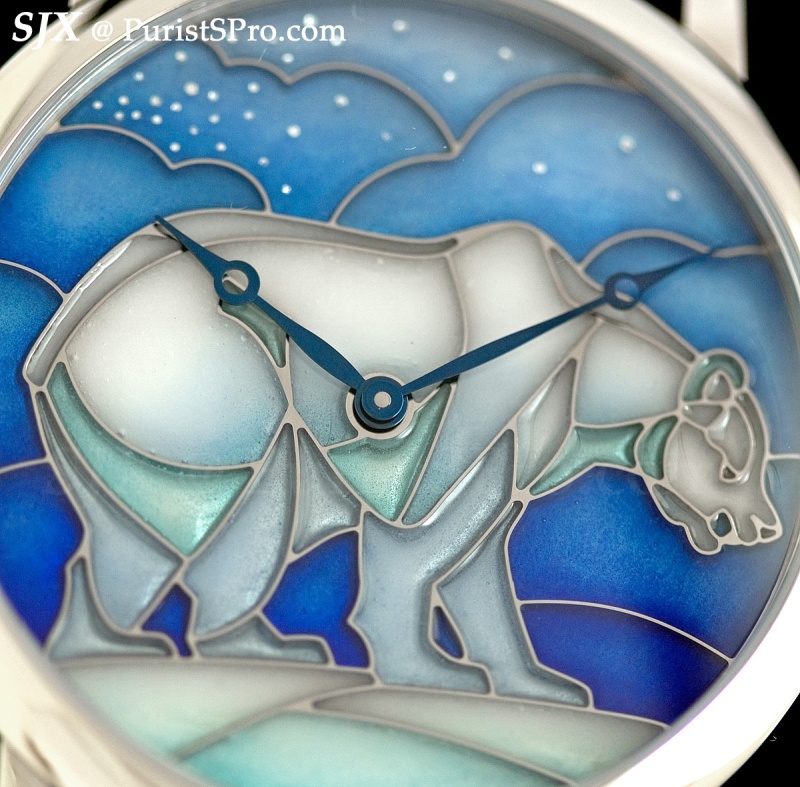
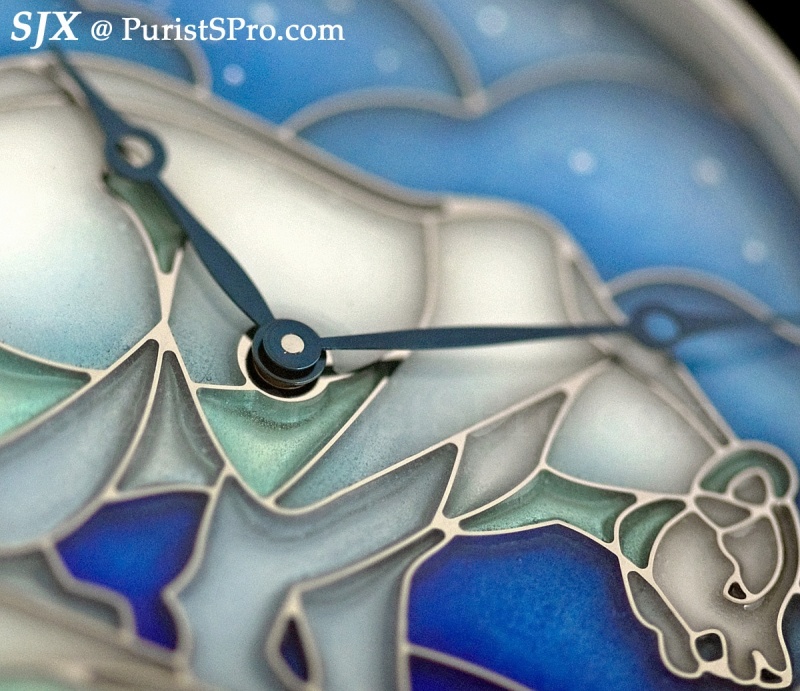
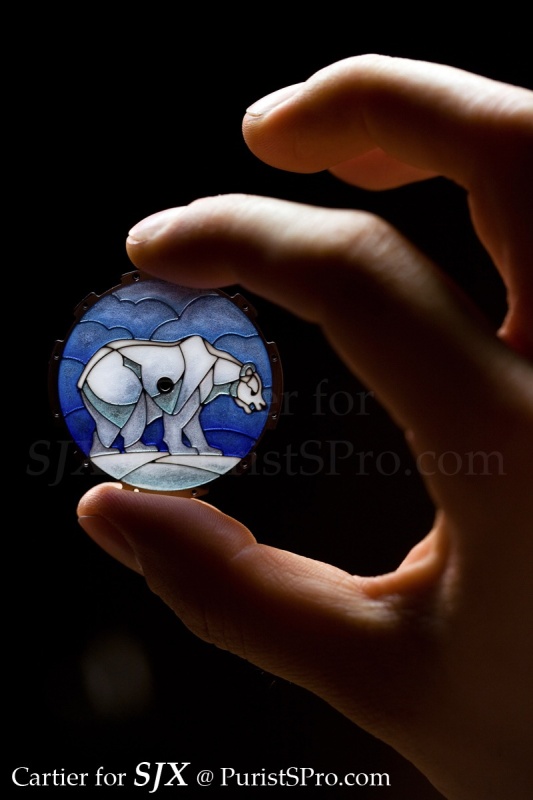
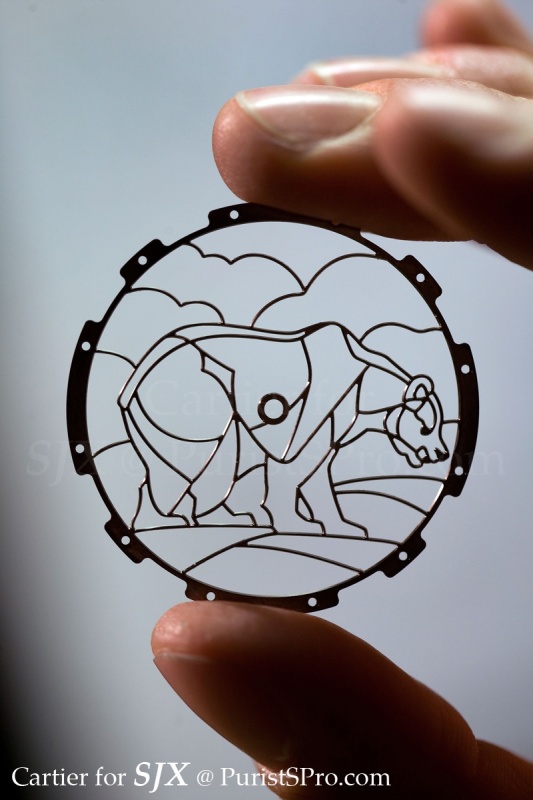
The bear is executed in plique-à-jour paillonné enamel. It is similar to cloisonné in that the enamel is filled into cells, except that cloisonné enamel has wires soldered onto a metal base. In contrast, plique-à-jour enamelling has the enamel suspended in a metal frame with no backing, it is similar to a stained glass window.
This technique of enamel originated in the Byzantine empire (as did many other enamel techniques). It was especially popular in the French royal court in the 14th century, where the term plique-à-jour was first used.
At the turn of the century plique-à-jour enamel was widely used for Art Nouveau jewellery. And it was at the beginning of the 20th century that Cartier first offered items showcasing this enamel technique.
Because of the nature of this style of enamelling, lighter colours work best for the translucence of the enamel to show. When the polar bear watch was under development, the original idea was for a brown bear. But eventually it was decided that a polar bear and an icy background with its lighter tones would work better.
The bear begins with the skeletonised dial, essentially the frame with the motif that will hold the enamel.
Once the colours are decided, the enamel has to be mixed in the correct proportions to get the right gradation of colour.
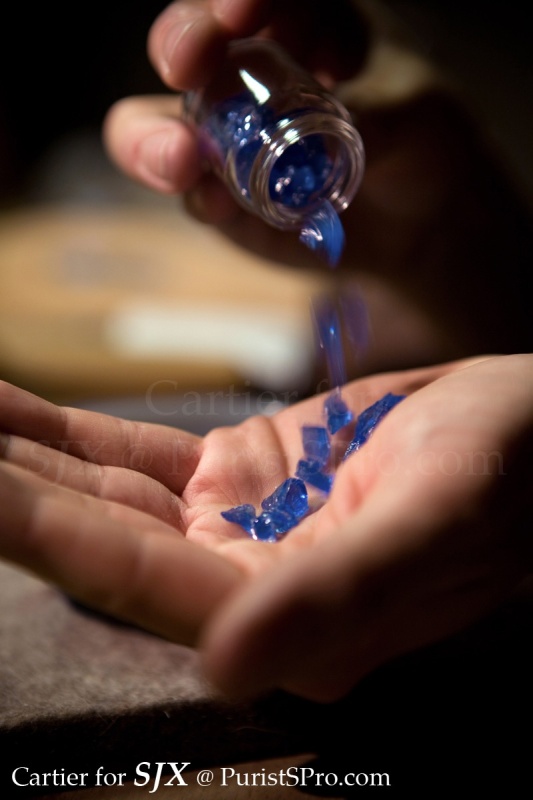
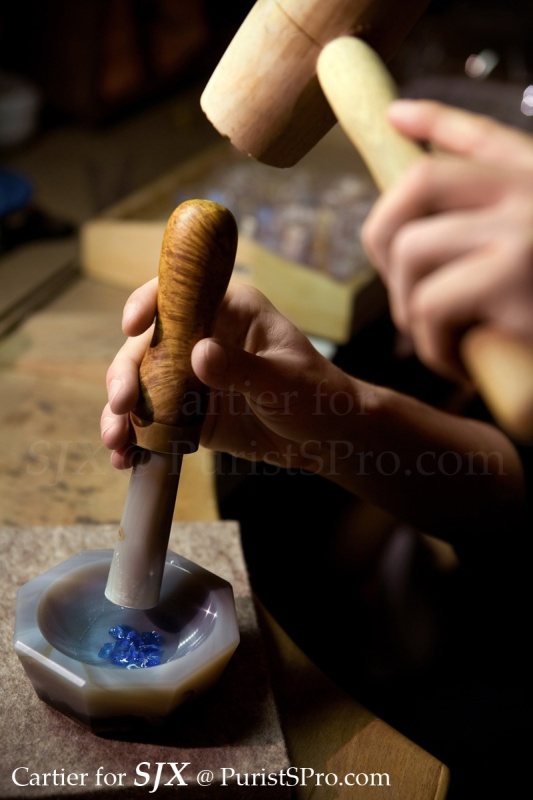
Then the mixture is ground with a mortar and pestle. Grinding the enamel is done manually, and the mixture has to be fine enough to ensure the resulting enamel is smooth.
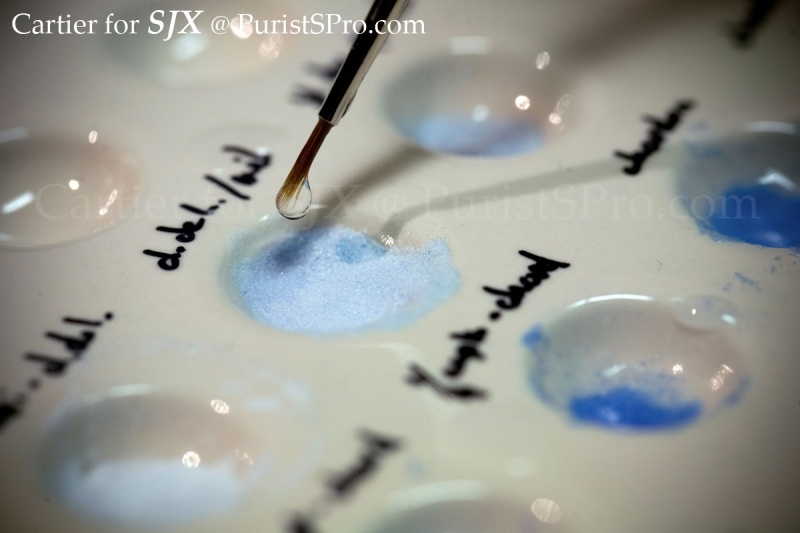
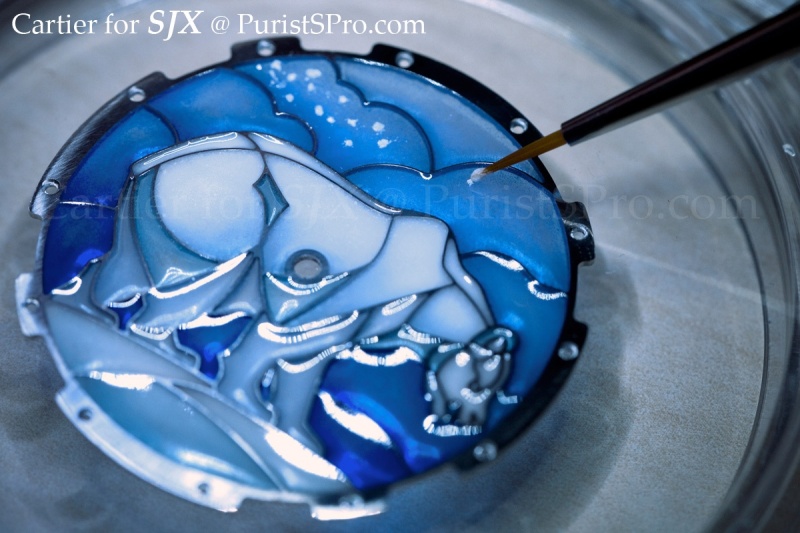
The dial is then painted in and fired, multiple times for different sections and colours. According to Ines Hamaguchi, the enameller who creates the polar bear dial, the trick is to get the enamel to adhere without a backing.
Though I have no practical knowledge of enamelling, I reckon the process begins with an initial thin layer of enamel that is held by surface tension, followed by subsequent coats of enamel and firings to build up the layers.
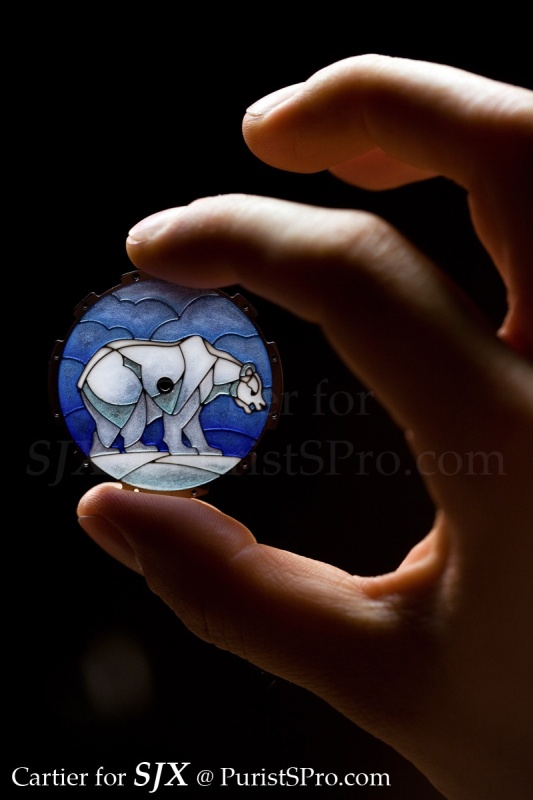
The dial before the silver stars are added
And then the finishing touch, the stars in the night sky. These are miniscule piece of silver foil applied to the night sky. Each star is covered by a touch of translucent enamel to seal them in, preventing the silver from tarnishing.
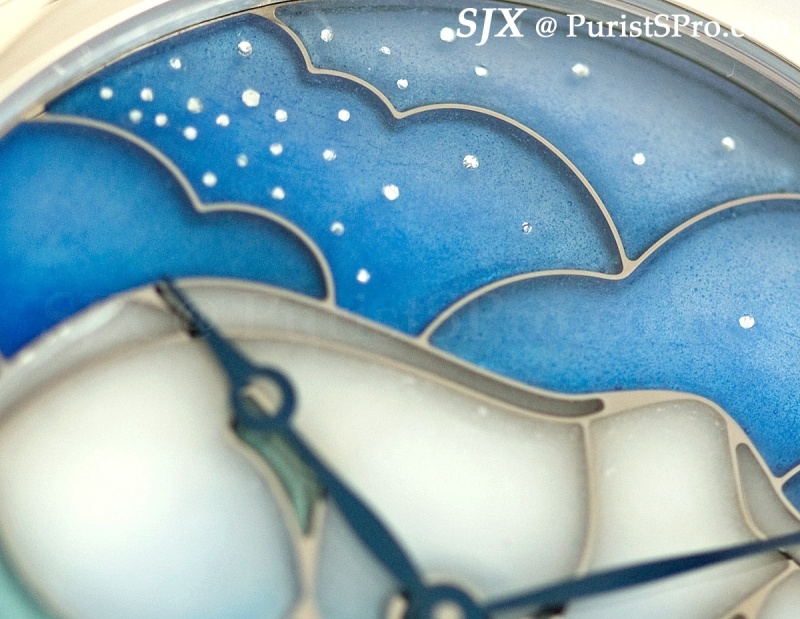
And then the dial is complete. The resulting dial is beautifully detailed with subtle gradations in colour and tone. It is almost a shame there has to be a movement behind it.
Ines Hamaguchi explains the process of creating the polar bear
- SJX
This message has been edited by SJX on 2011-06-18 22:23:09something so calming and soothing about this watch especially in the height of summer. Thank You for Sharing. S
This watch is soothing all year round! - SJX
I like it. There was another piece from Cartier I also loved at the SIHH, it was the one with the colorful turtle. What a beautiful watch! Much better live than on the pics. Pics from the net. Vte
Of all the Metier d'Art pieces it is the most deceiving. From afar it looks fairly boring, but up close you understand how tiny each piece of the mosaic is. - SJX
Reminded me a bit of VC & A made by L'Atlier, but it is quite different way of making and impressively "clear" result. Btw, is she related to Hamaguchi san at AP? Just curious..... Or was he Hamada? Can't remember... Thanks anyway. Ken
I recall there is a Hamaguchi-san at AP (or was it R&P). Ms Hamaguchi the enameller is an independent artisan, rather than a Cartier employee and she's in Vallee de Joux, as far as I can recall. - SJX
This thread is active on the Cartier forum with 15 replies. Share your knowledge with fellow collectors.
Join the Discussion →