SJX provides an in-depth look at the Cartier Pasha Flying Tourbillon Skeleton, highlighting its distinctive modern, geometric skeletonization. He contrasts it with traditional skeleton watches and other Cartier models, emphasizing its unique Pasha case and Geneva Seal flying tourbillon caliber. SJX also traces the lineage of skeleton tourbillons within the Pasha collection, referencing earlier collaborations with Gerald Genta and Girard-Perregaux.
Skeletonised movements have become one of the hallmarks of the Cartier Fine Watchmaking collection. Not skeleton watches in the traditional style with ornate floral engraving on filigree bridges, but modern, geometric shapes and straight lines. The most well known is the Santos Skeleton, which also happens to be one of the best sellers of the range.
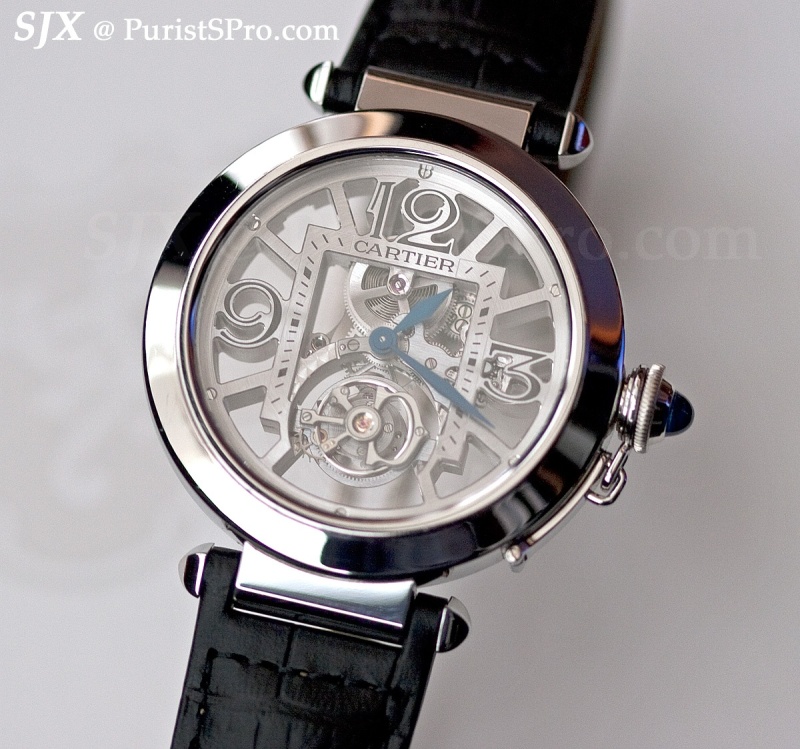
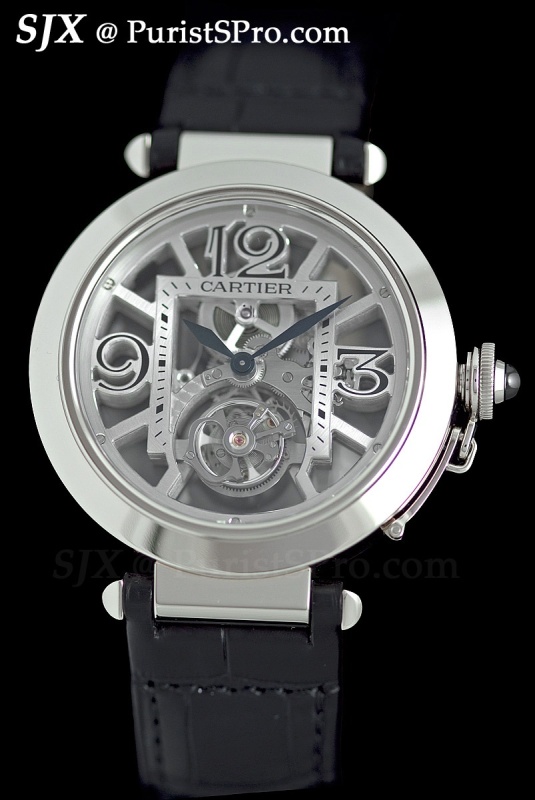
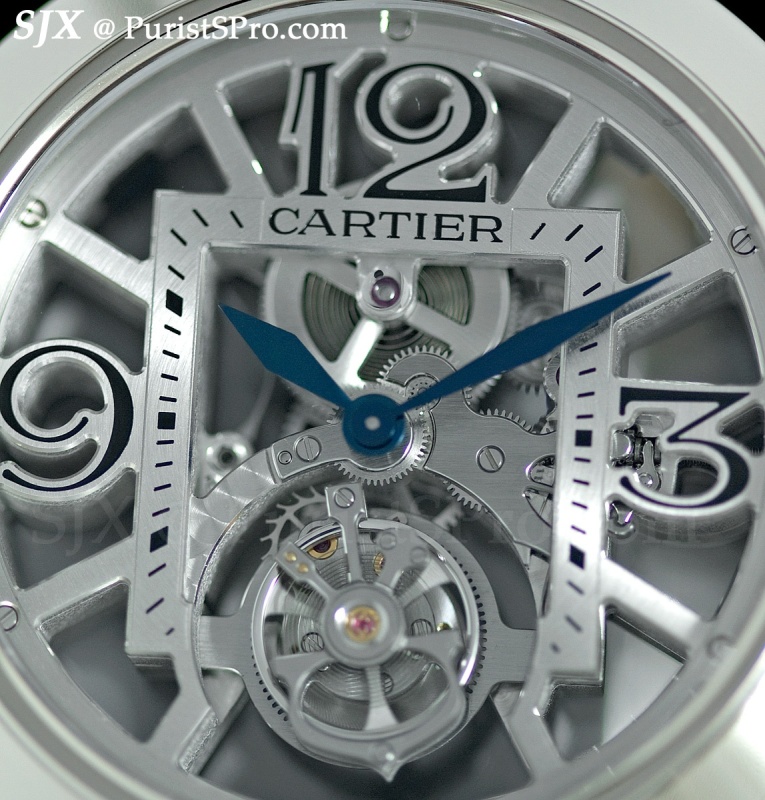
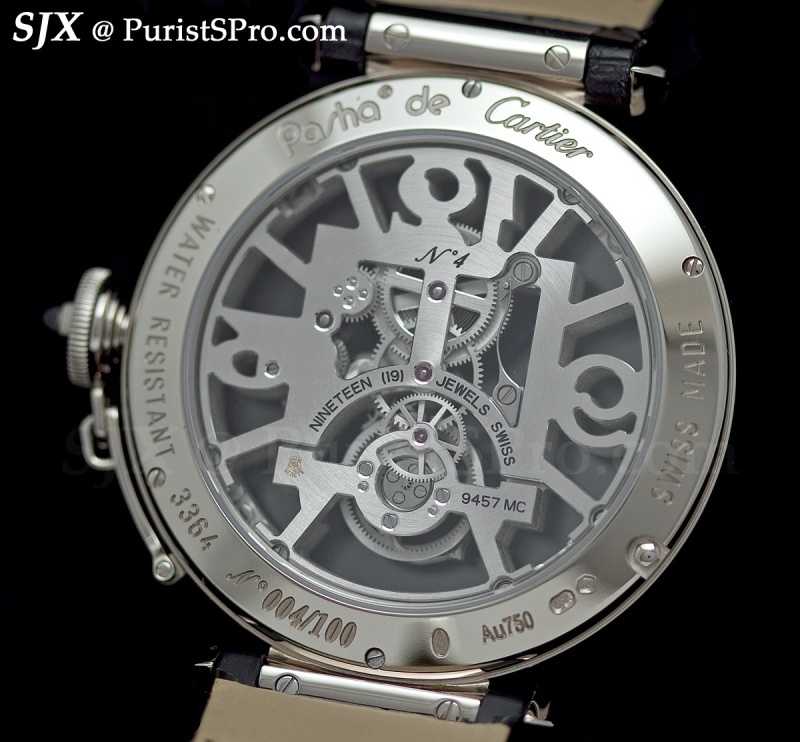
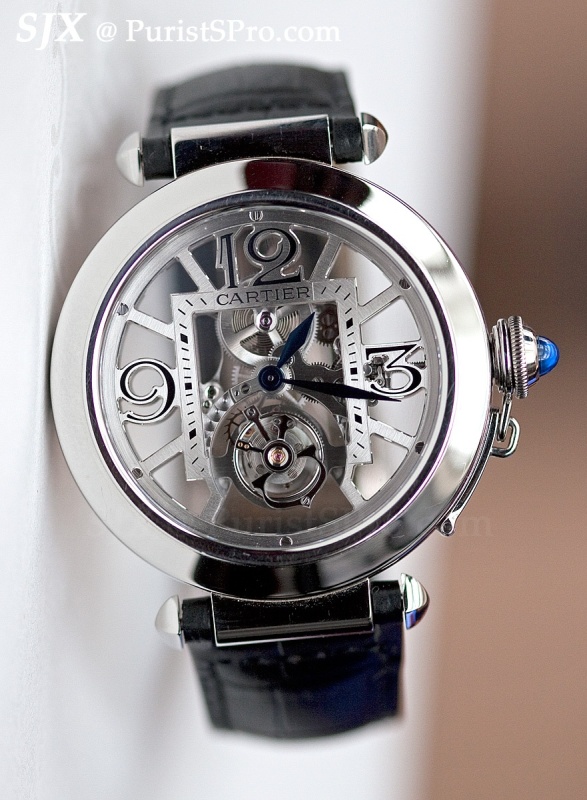
Cartier also makes several skeleton tourbillons, with the best known being the Rotonde Skeleton Tourbillon. But more appealing in my opinion, and also more distinctive, is the Pasha Skeleton Tourbillon, which is a limited edition of 100 pieces. Housed in a 42 mm white gold case, which to me is an excellent size as it is proportional to the movement, the Pasha tourbillon uses the Geneva Seal flying tourbillon calibre made in Geneva, originally based on a Roger Dubuis movement design.
Here the bridges are in the shape of Arabic numerals and baton indices, which are less striking than the oversized Romans used for the Santos Skeleton. But the distinctive Pasha case, especially with its canteen crown, mean the watch still has a recognisable style.
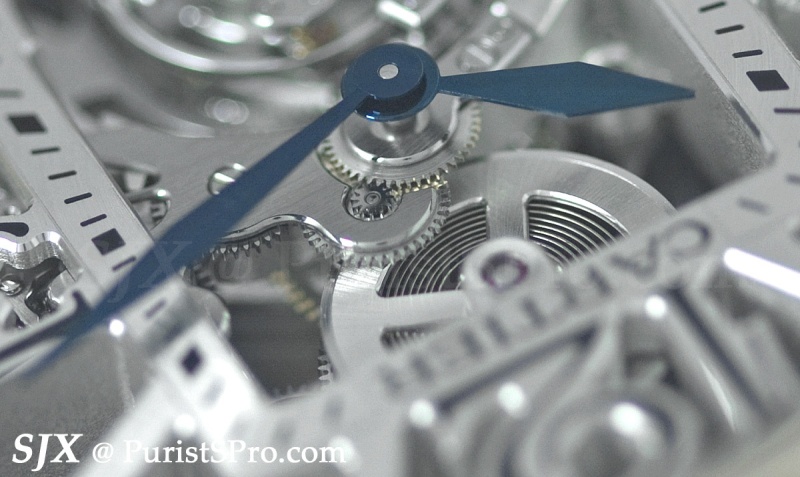
As with all Cartier skeleton watches, a high level of finishing is evident in the movement. That being said, I still wish the bridges had angled, sharp inward corners, rather than rounded ones.
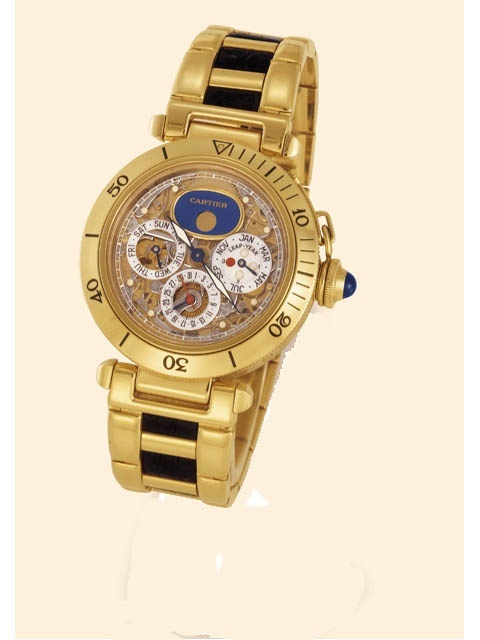
It is not well known, but the tourbillon complication, with a skeleton or at least open face, inside the Pasha case has actually a strong lineage in Cartier, at least since the late 1980s.
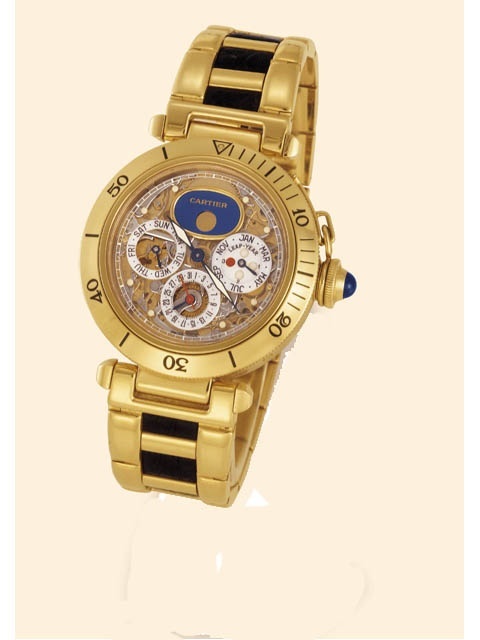
20 years ago Cartier relied on Gerald Genta for many of its highly complicated movements, and amongst the watches offered in the Pasha case was a skeletonised tourbillon with perpetual calendar.
Photo courtesy Antiquorum
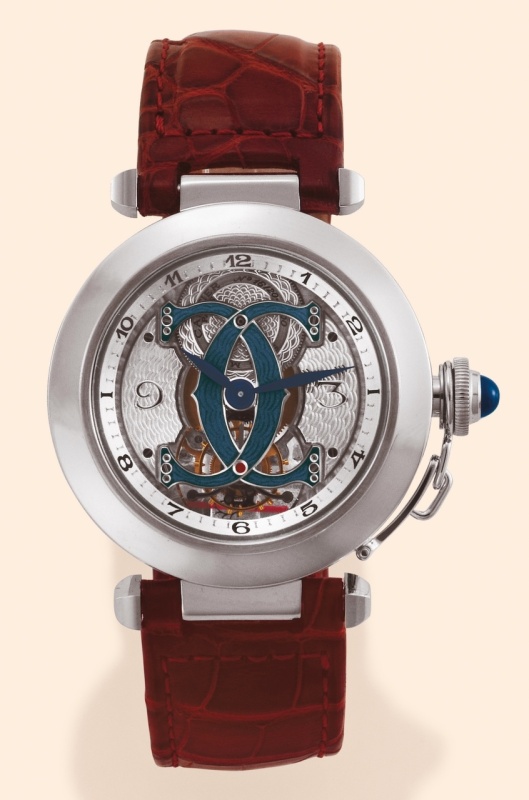
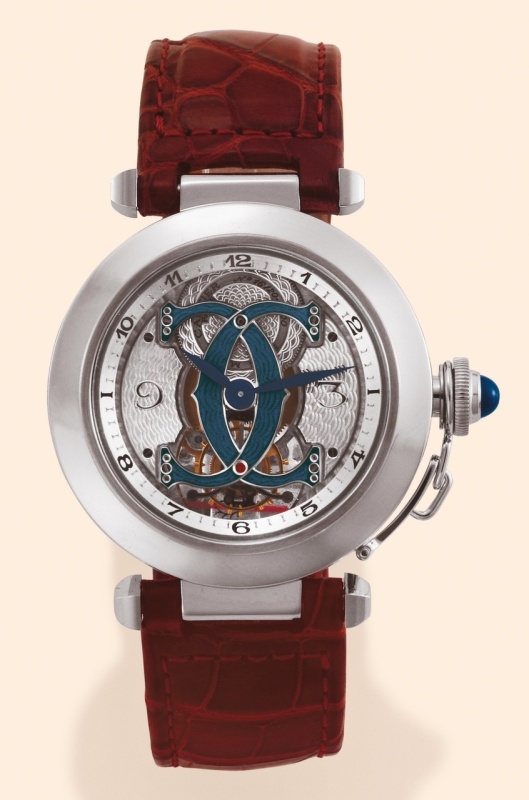
Subsequently in 2000, Cartier presented a 20 piece limited edition Pasha tourbillon with a blue enamelled, interlocking "C" logo as the bridge on the front of the watch. This used a Girard-Perregaux movement, similar to that in the famous Three Gold Bridges tourbillon; the linear layout of the GP movement is visible below the "C" bridge. Like all the other high horology Cartier watches of that period, this was part of the Collection Privee Cartier Paris line.
Photo courtesy Antiquorum
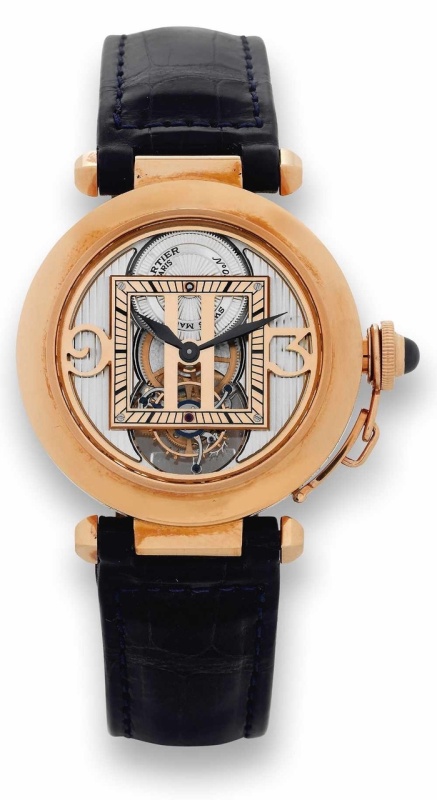
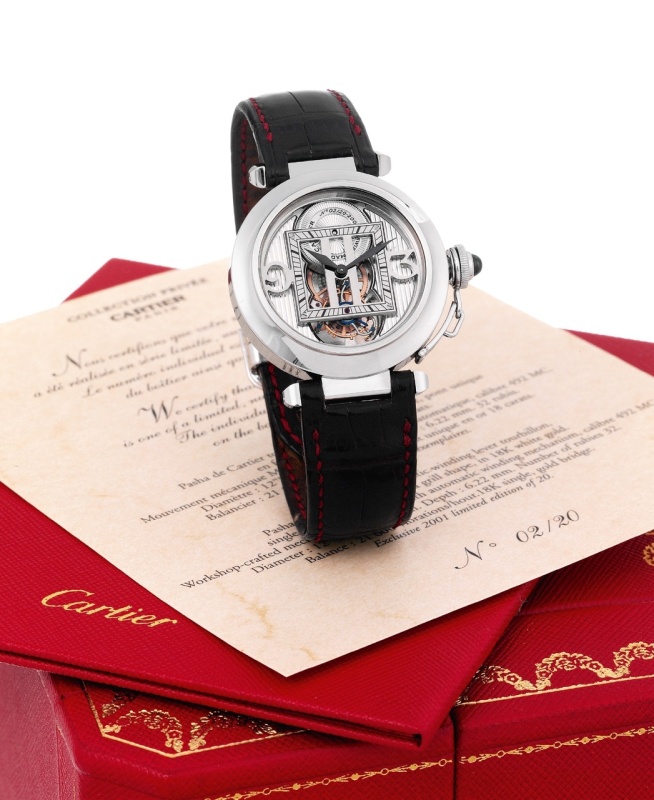
Three years later Cartier unveiled another CPCP limited edition with the same GP tourbillon movement, but with the bridge in a square, geometric shape. There were 20 pieces each made in rose and white gold.
Photos courtesy Antiquorum
The Pasha case is not widely used in the Fine Watchmaking line, but as one of the trademark Cartier case shapes, I foresee it will eventually gain more prominence.
- SJX
This message has been edited by SJX on 2012-11-18 02:30:24 This message has been edited by SJX on 2012-11-18 02:30:59