Manufacture
MTF presents the fourth part of the Cartier Métiers d’Art Watch Collection 2013, focusing on the ancient and intricate technique of gold granulation. This article delves into the historical origins of this craft, particularly its association with the Etruscan civilization, and showcases Cartier's dedication to reviving forgotten decorative arts in haute horlogerie.


Since Cartier decided to set up the Haute Horlogerie division, they have tried new techniques in both future technology and ancient skills to explore the possibilities of craftsmanship. On one hand, they are pushing the frontiers of mechanical engineering and on the other hand, they are reviving forgotten decorative arts like plique-à-jour enamelling, grisaille enamelling, straw marquetry, granulation and cameo.
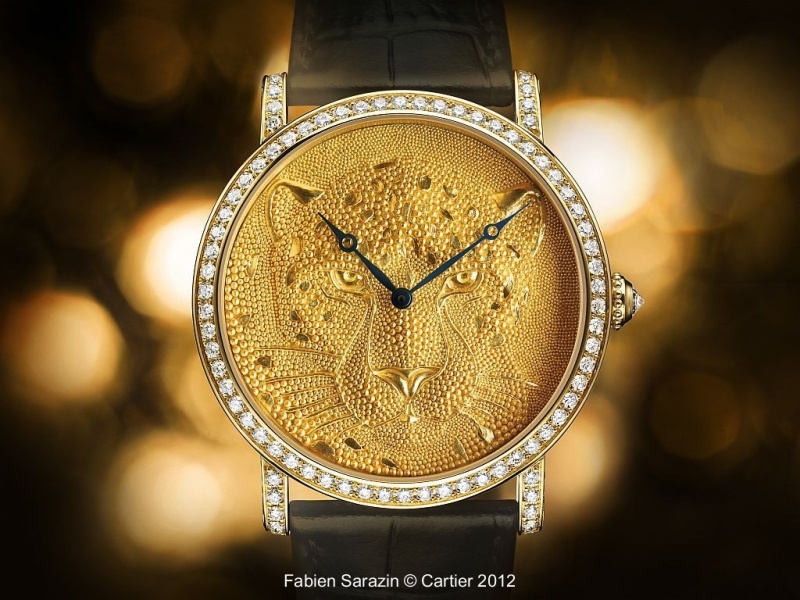
In this fourth report of the techniques found in the Métiers d’Art Watch Collection, we will be looking at an ancient gold handcraft technique – Gold Granulation.
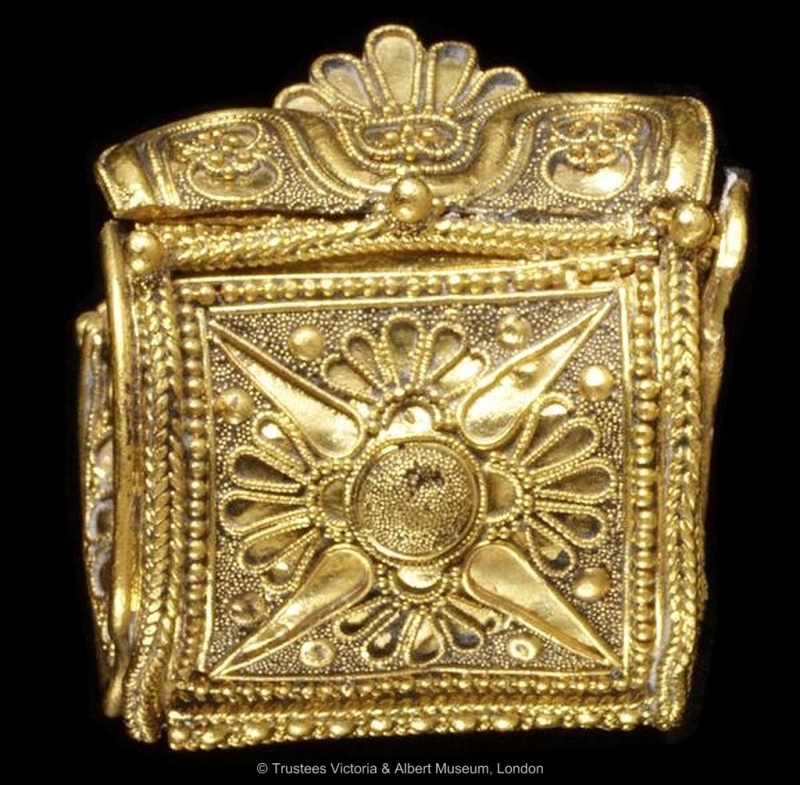
Etruscan bag-shaped earrings
Tuscany (Etruria), c. 550-450 BC
Sheet gold with filigree and granulation
Gold granulation technique is associated with the Etruscan civilisation of ancient Italy (800 BCE - 500 BCE). It was an ancient culture that called itself 'Rasenna', located roughly where modern Tuscany is today. The Romans called their predecessors - the 'Tusci' that is also the origin of the modern word - Tuscany. We have no written texts from the Etruscans (Rasenna) so everything we know about them is from grave goods and tomb excavations.
Although Etruscan gold jewellery represented the zenith of the ancient granulation art, it is thought that other Mediterranean influences like Syro-Phoenician settlers were the origins. However, it is still widely regarded that the Etruscans took the art to the highest level. They have been copied and reproduced by many cultures since.
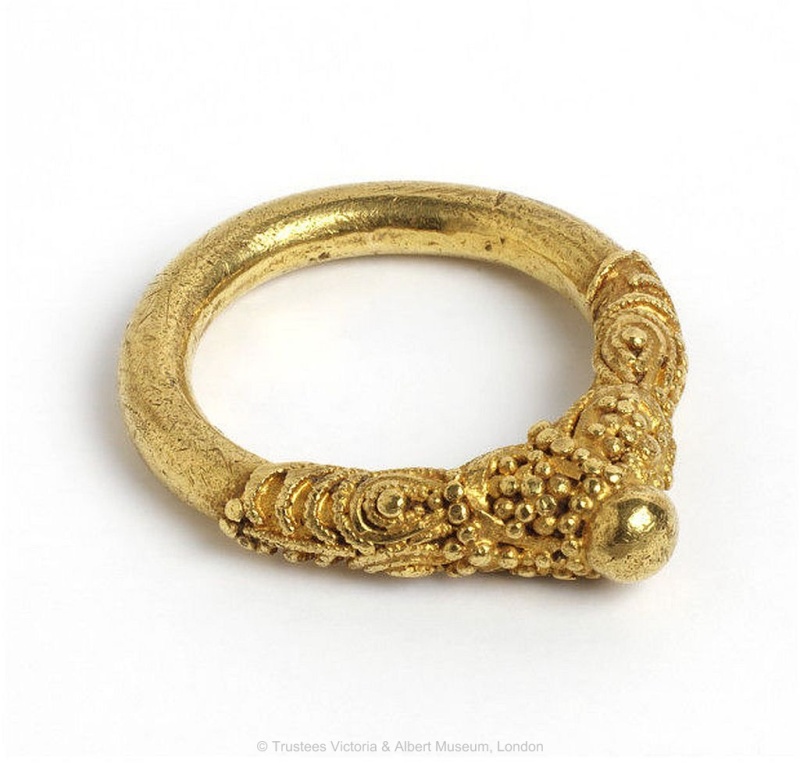
Ring
England, c. 800-900 A.D.
Gold, granulation, filigree
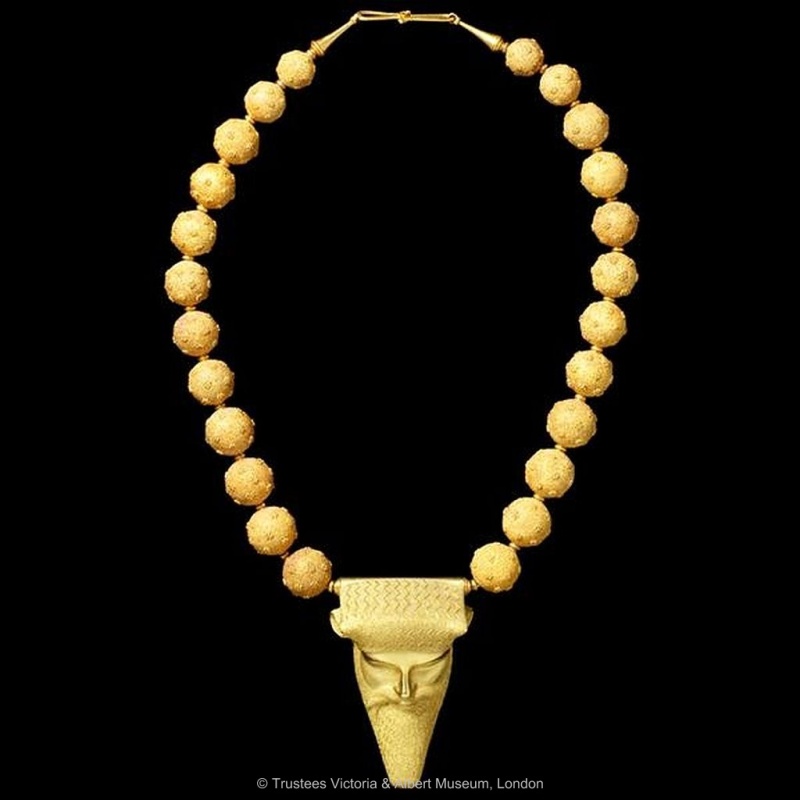
Necklace with pendant mask of the river god Achelous
London, c.1865 A.D. by Carlo Giuliano
Granulated gold beads and mask
Etruscans granulation process was tedious and intricate. The process began with the production of tiny gold pellets. It is conjectured that the gold pellets were then stuck to pre-drawn patterns with a copper solution combined with vegetable or fish glue.
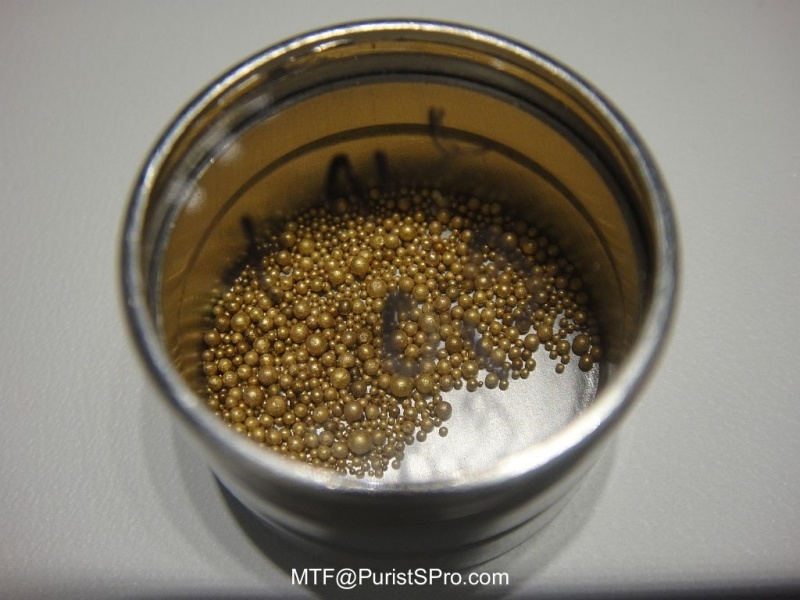
The next step was to solder the granules or beads to fix them permanently to the base gold plate. The mystery is the lack of solder on the excavated jewellery today. One hypothesis is that soldering was done, using arseniates and reducing the solder to an imperceptible dust.
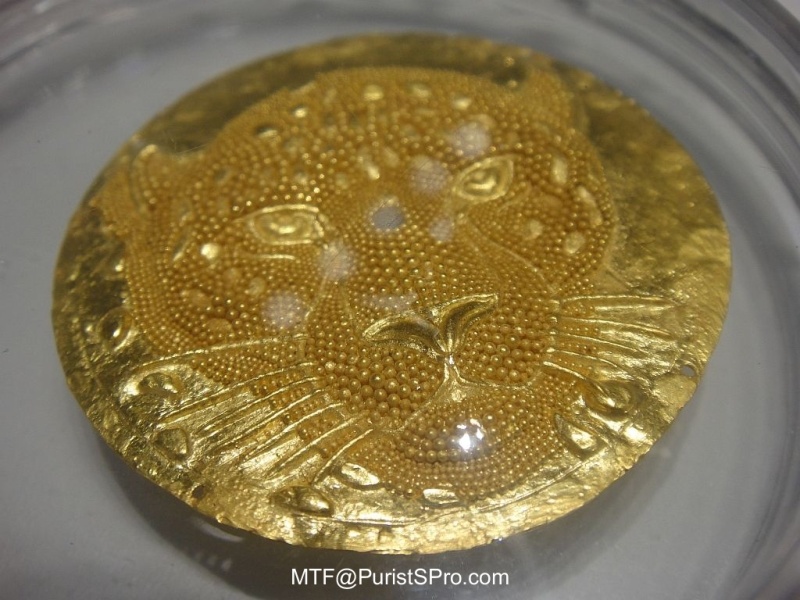
Care was taken not to melt the little granules onto the surface but instead, to solder them on with a tiny heated point. They left omissions and imperfections, on purpose, to give artistic character.
Cartier utilizes much the same process used by the Ancient Etruscans.
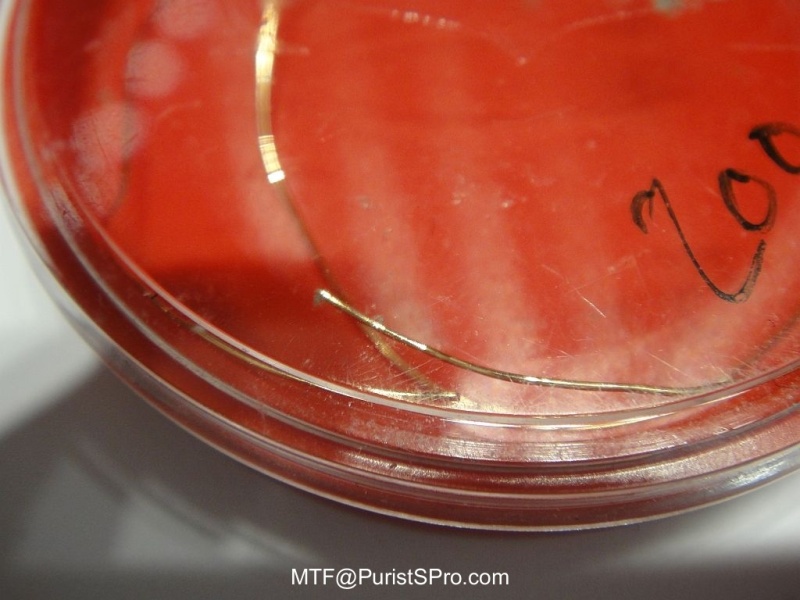
They begin with tiny gold balls from threads or wires of gold; cut and heated over a flame.
In order to prevent the gold pieces from melting into each other, they are moisten and stirred into powdered charcoal in a crucible; repeating until the crucible is full.
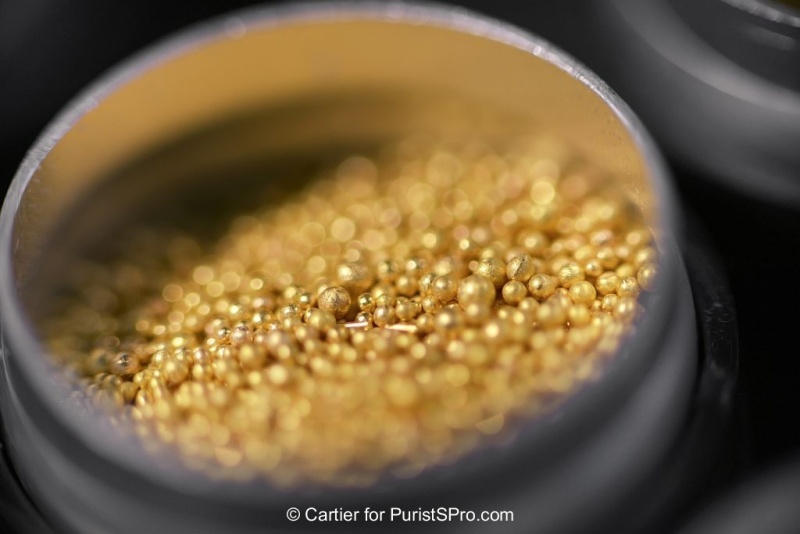
The crucible is heated until cherry red. Small samples are then lifted and dropped into water. if the granules form spheres, the heating is sufficient and the batch may be cooled and retrieved.
For small number of larger, flatter granules, the gold pieces can be set onto a charcoal block and heated with a blow-torch.
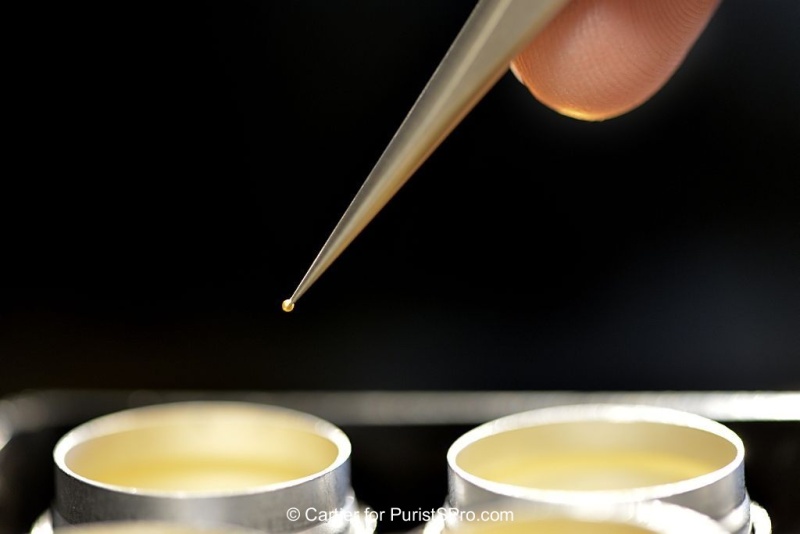
The granules are sorted by graduated sieves.
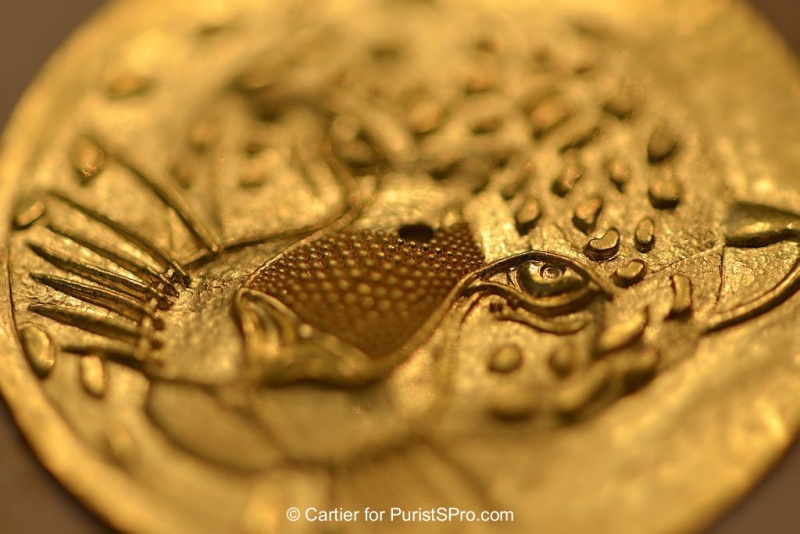
One by one, the gold balls are placed and fused to a gold plate creating the ancient granulated effect.
The chemistry secret that allows this process is the 'eutectic mixture' principle. An eutectic system is a mixture of chemical compounds with a single chemical composition, that solidifies at a lower temperature than any other composition made up of the same ingredients.
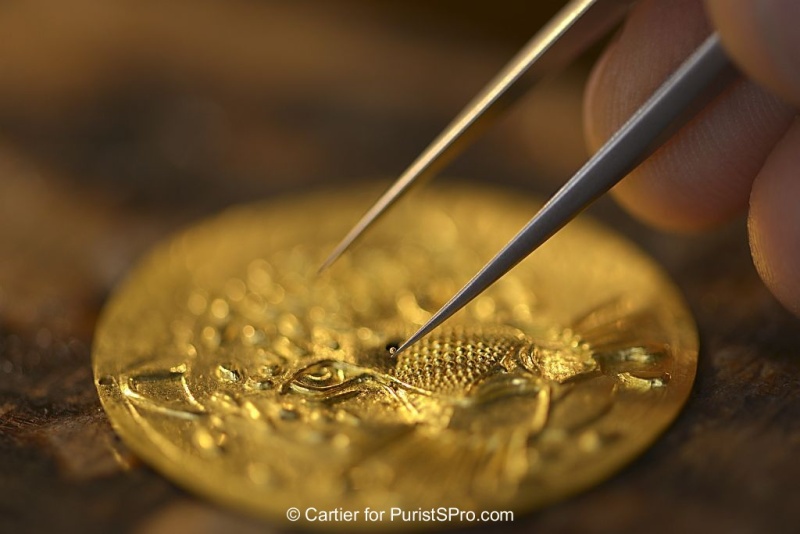
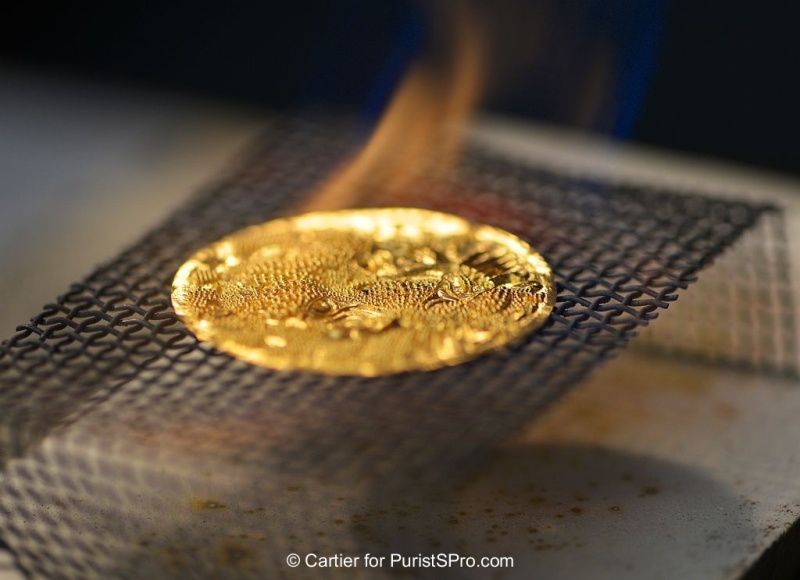
The carbon from the organic component of the eutectic mixture acts as a reducing agent, combining with oxygen and "disappearing" as carbon dioxide. It does double duty; first as a glue to hold the gold granule and then as the flux for the soldering process.
The copper compound, activated by the glue and flux, forms a low-melting alloy exactly at the point of contact. The eutectic alloy forms the 'weld' between the granule and the base.
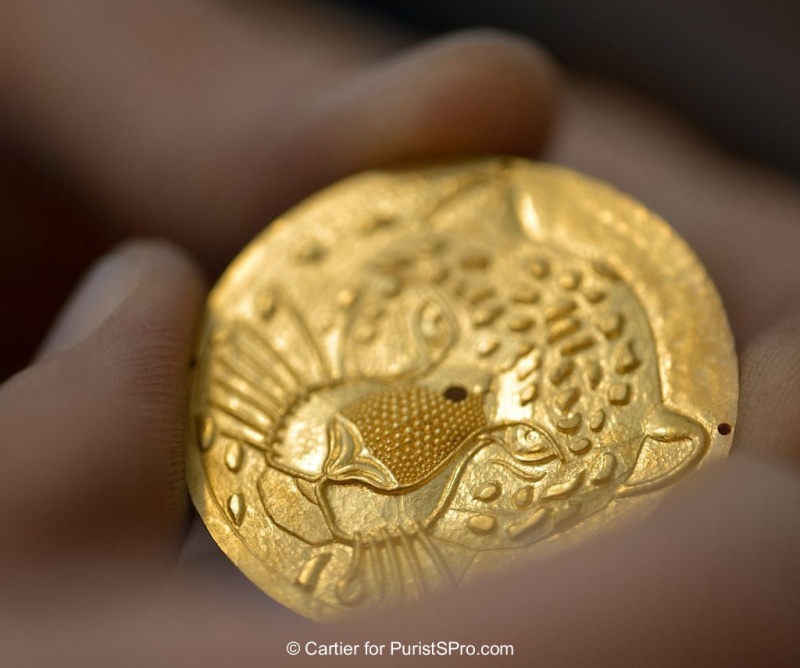
Due to the painstaking intricate work involved in creating the timepiece, Cartier has set a limit of 20 pieces for this model.
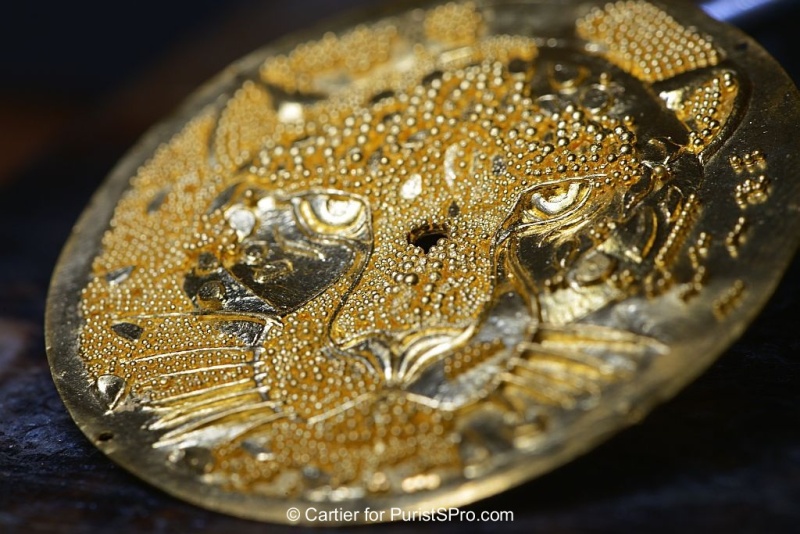
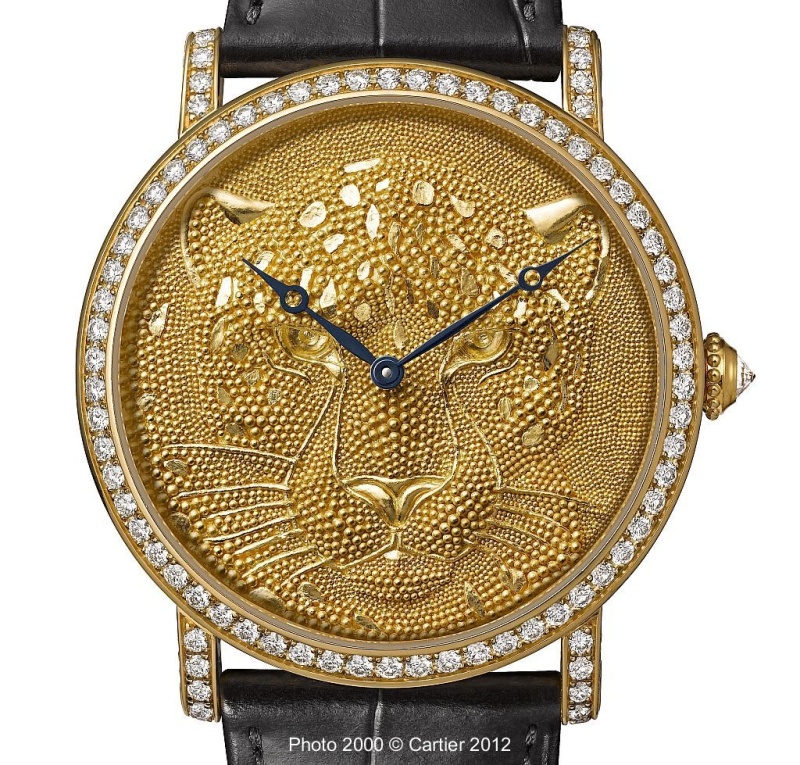
Rotonde de Cartier 42 mm watch, panther, granulation
Case: 18-carat yellow gold set with 306 brilliant-cut diamonds for 3.63 carats
Dial: 22-carat yellow gold, granulation with panther motif
Hands: apple-shaped in blued steel
Crown: beaded, 18-carat yellow gold, set with a diamond
Strap: semi-matt black alligator skin
Double adjustable folding clasp 18-carat yellow
gold set with 43 brilliant-cut diamonds for 0.42 carats
Water-resistance: 30 metres / 100 feet / 3 bar
Movement: Manufacture mechanical with manual winding, calibre 9601 MC
Case back: sapphire crystal
Numbered limited series of 20 pieces.
Cartier Métiers d’Art Series
Cartier Métiers d’Art part 1 - Grisaille Enamel: CLICK the following URL link:
cartier.watchprosite.com
Cartier Métiers d’Art part 2 - Miniature Painting and Plique-à-jour Enamel: CLICK the following URL link:
cartier.watchprosite.com
Cartier Métiers d’Art part 3 - Engraving and Champlevé Enamel:CLICK the following URL link:
cartier.watchprosite.com
Cartier Métiers d’Art part 4 - Gold Granulation: CLICK the following URL link:
cartier.watchprosite.com
Cartier Métiers d’Art part 5 - Agate Cameo Carving: CLICK the following URL link:
cartier.watchprosite.com
Dr M. Teillol-Foo (2013) PuristSPro
This message has been edited by MTF on 2013-09-10 12:31:20
Thanks a lot! It's really amazing marvel! Great! Any idea of the price of such a masterpiece ?
:-) dikie, We were told the recommended prices of the Cartier watches launched at SIHH 2013 but I did not write them down. As there are only 20 pieces limited edition, they will most probably be available from Cartier own boutiques, "upon request and availability". As global prices vary with local taxes and government policy, any price mentioned for one country does not apply to another country. Regards, MTF
Spaetzle. It's a pasta dough that is chopped into small pieces. Then dropped into boiling water for cooking. Kind of how the gold is formed in small beads. Very interesting. Thanks for sharing!
This thread is active on the Cartier forum with 3 replies. Share your knowledge with fellow collectors.
Join the Discussion →