Innovation
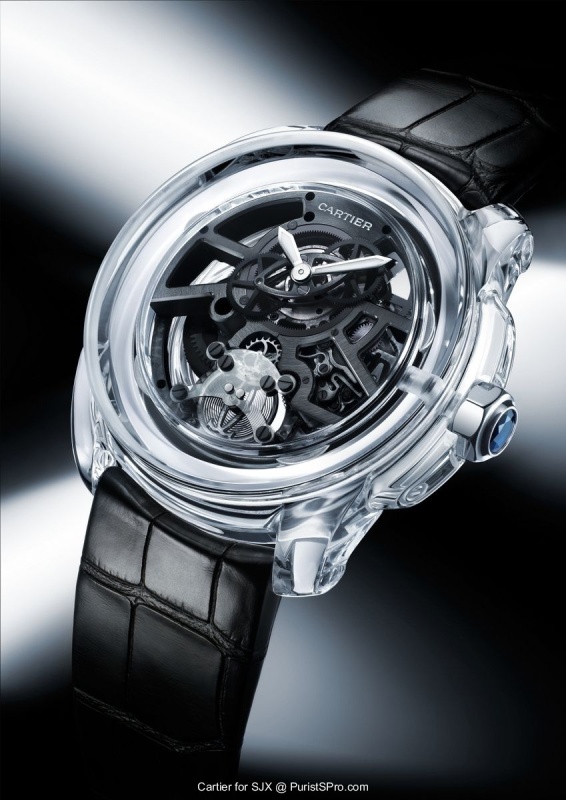
SJX's 2012 report unveils the Cartier ID Two concept watch, a groundbreaking timepiece focused on maximizing power reserve through innovative materials and engineering. This article introduces Cartier's ambitious project, which aims for an astounding 32-day power reserve in a conventionally sized watch. It provides an initial overview of the technical advancements that challenge traditional watchmaking norms.




Just yesterday Cartier presented the ID Two concept watch to selected members of the global watchmaking press, at its manufacture in La Chaux-de-Fonds.
I am still travelling so here is a quick overview to explain this remarkable new concept watch. An in-depth article with analysis and more opinion will follow soon.
The ID One was a regulation and lubrication free timepiece. Similarly the ID Two tackles a key practical issue in movements - that of the useful power reserve.
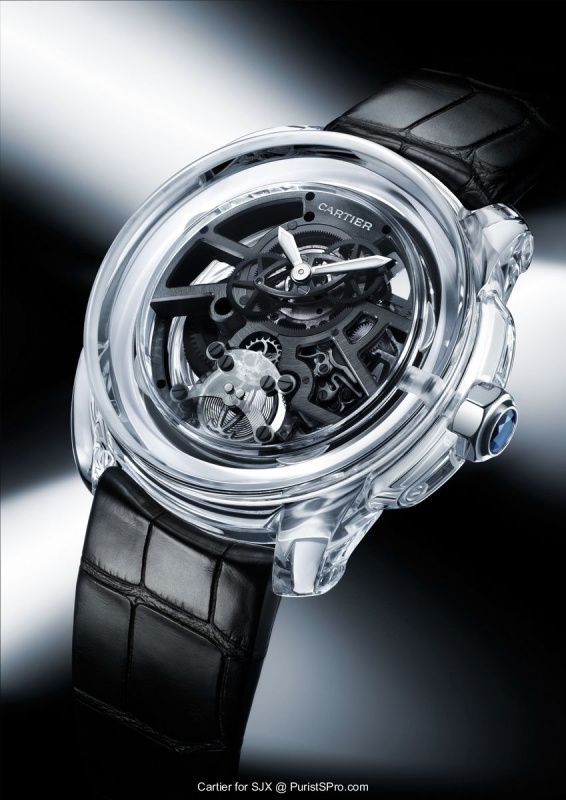
The ID Two has an astounding power reserve of 32 days (that’s the predicted optimal power reserve, the prototype now runs for a mere twenty plus days), achieved with a conventionally sized movement in conventionally sized case. The movement measures 31.5 mm by 10.45 mm, inside a 42 mm case.
As with the ID One, this exceptional power reserve in the ID Two was achieved with a combination of novel materials and clever engineering.
The development team had three goals in mind, maximise transmission of energy from barrel to gear train and escapement, reducing energy consumption and maximising the energy stored in the barrel.

To achieve the first goal, the team started with the carbon crystal escape wheel and lever from the ID One. That is lubrication free and naturally more energy efficient.
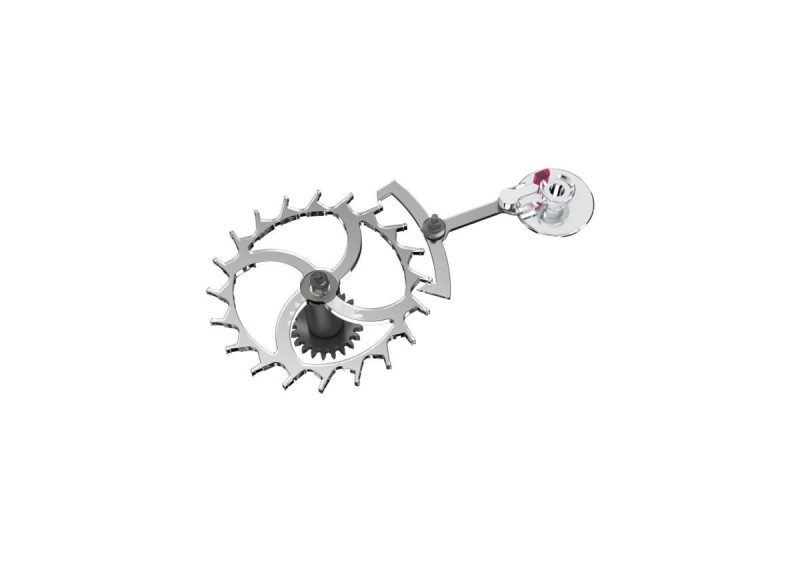
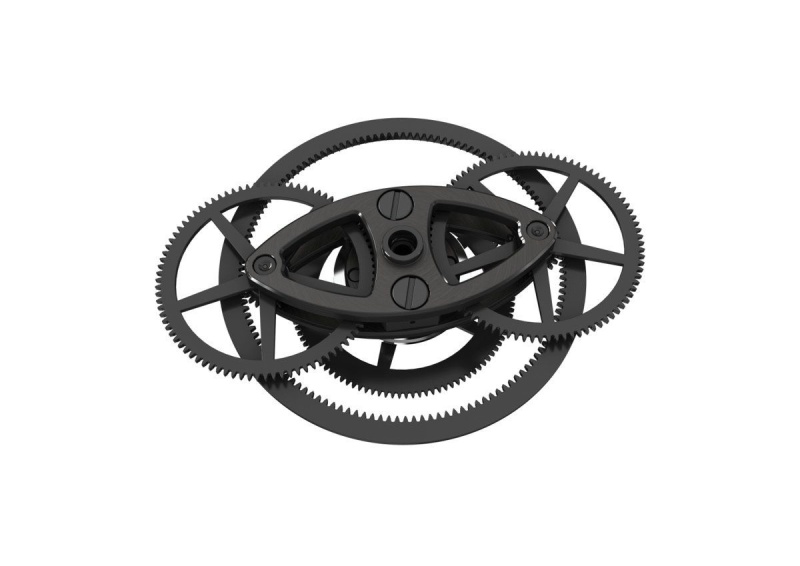
And the ID Two has a unique differential gear train that has a high speed reducing ratio, making it significantly more efficient than a regular gear train. Personally I think this is the innovation with the most commercial potential in the near term. It's elegant but substantial, and I wonder why no one thought of it before. The downside here is that a direct seconds hand is not possible, but an indirectly driven seconds hand can be added.

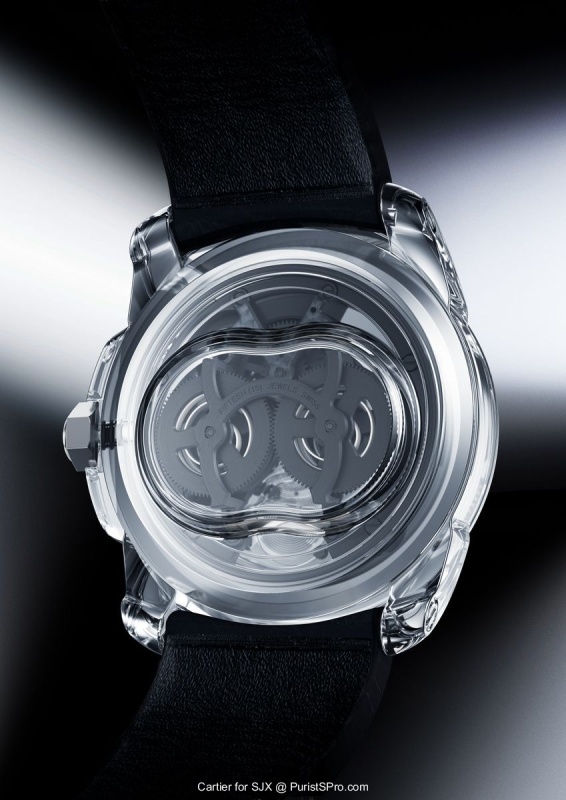
Most radical is the solution for the second goal of minimising energy consumption. The inside of a watch case is a 99.8% vacuum, which boosts the efficiency of the escapement tremendously.
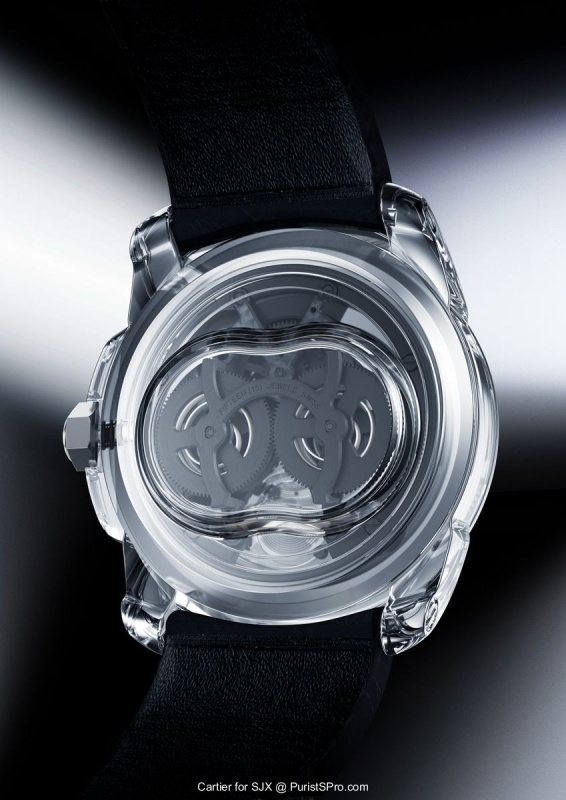
Because it’s a vacuum, the case back is held in place by air pressure, with nanoparticle gaskets. Combined with the ultra smooth surface of the sintered Ceramyst case, that eliminates leakage so the vacuum will last about a decade. And the case is entirely clear, made from a transparent ceramic Cartier calls Ceramyst (which I think is similar to the clear aluminium used in windows of military vehicles). Personally I feel this is the least practical of the innovations in the ID Two.
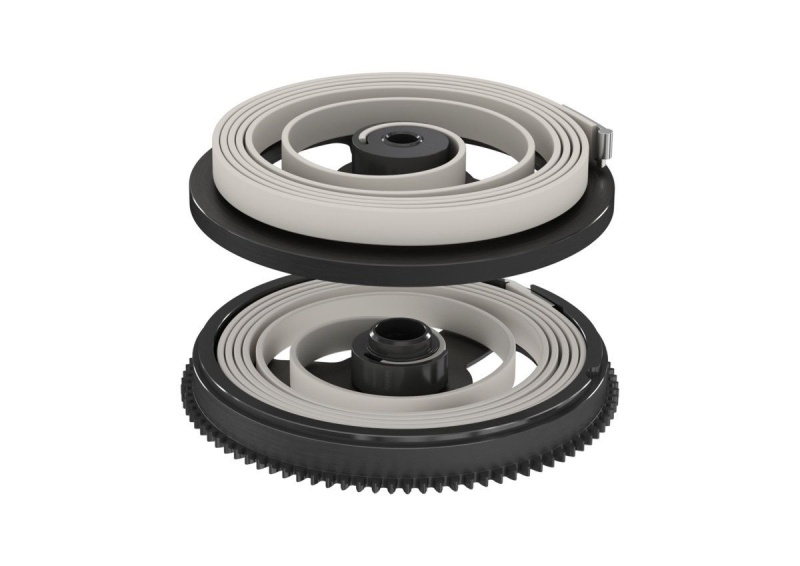
To achieve the third goal of maximising energy storage, Cartier created fibreglass mainsprings coated with parylene. The watch uses double barrels, with a pair of fibreglass springs stacked in each of the barrels. The properties of fibreglass mean it can store more energy and deliver more stable torque. I expect this will be fairly low cost when made in large volumes, so this has exciting implications for watches at all price points.

Carole Forestier and the rest of the team at Cartier deserve tremendous kudos for their creative thinking. This watch will not be commercialised in this form, but it is a signficant and amazing project with intriguing potential.
- SJX
This message has been edited by SJX on 2012-07-19 08:22:27Yes, it might do contribute also its share to accuracy and power reserve, but is it really worth it? If they want to bring a service free watch into the market then this feature is redundant. Thank you for the info. Moritz
not exactly a 'romantic" or "elegant" material. the watch looks nice but i also wonder about the ceramyst implementation (it's way up there with windshield or at least it seems that way). great tech for sure to have that kind of a reserve. personally, i'd be ok with 8 days as it would be just enough to wind down on, say, a sunday where one winds down as well and gets to power up the watch for the coming week. overall, i like the aesthetics. it's very nice. i'm just on the fence with having fiber
How is the vaccum be maintained when setting the hands and winding the watch? I do love the concept through and the use of fibreglass and clear ceramic actually enhances the geek technical appeal to me. The high reduction gearing is also a nice touch.
Cartier tested it and found no leakage; apparently the gap is too small to be significant. - SJX
I like innovative challenges by the watch brands. Interesting features, indeed. Practicality for a long run and retail availability aside, as a concept watch, this is a very attractive one. Vacuum seal durability or how to service or how long this fiberglass spring will last are some questions to be answered, but it it is used for a future watch, I would be very interested. Obviously, much more wearable than Lange 31 :-) Thanks for the scoop, SJX! Ken
I recall that Andreas Strehler had re-conceived the tradition gear train with his "Papillon," but the ID Two gives us a traditional hour and minute hand, which I prefer, as I suspect most watch enthusiasts do as well. I'll look forward to reading more about this watch in the near future! Bill
This thread is active on the Cartier forum with 15 replies. Share your knowledge with fellow collectors.
Join the Discussion →