Innovation
MTF delves into Cartier's 'ID Stream' of innovation, connecting historical concepts with modern horological advancements. This post illuminates how Cartier's experimental ID ONE concept watch, introduced in 2010, directly influenced the technology found in the 2013 Astrotourbillon Carbon Crystal watch, showcasing a continuous thread of innovation from the brand's origins.


What is the connection between the first and second pair of photos?
Pair 1
Pair 2
Both pairs show the Dream and the Reality at Cartier.
1st pair:
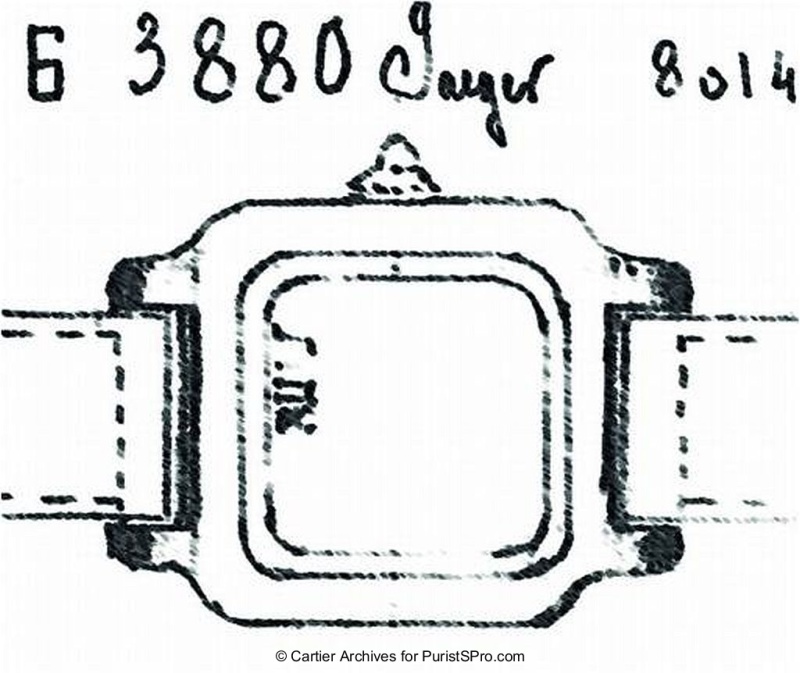
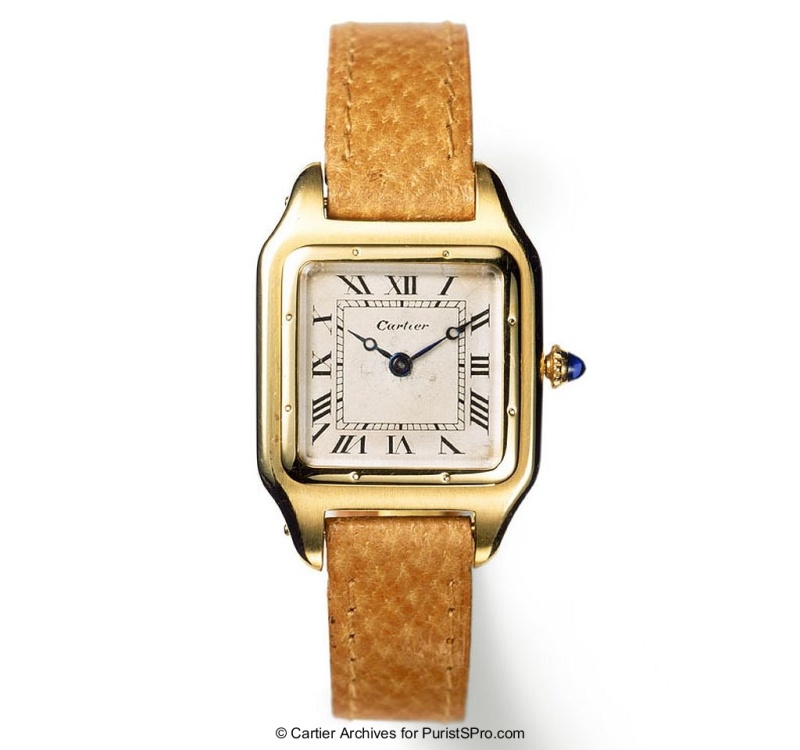
The concept drawing of a 'wrist-worn watch' inspired by the experimental 1904 watch made for Santos Dumont became the production Santos watch; the 1915 production version is shown.
Santos Wristwatch, Cartier Paris, 1915.
Made by Jaeger marked on the dial: Cartier case of polished and satin-?nish gold, raised bezel of polished gold with 8 screws. Beaded winding crown capped with a sapphire cabochon. Leather strap, deployant buckle of yellow and pink gold. Square grained-silver dial with Roman numerals around a “railroad” minute track. Round LeCoultre calibre 126 movement, Côtes de Genève decoration, silver-plated, 8 adjustments, 18 jewels, Swiss lever escapement, bimetallic balance.
2nd pair:
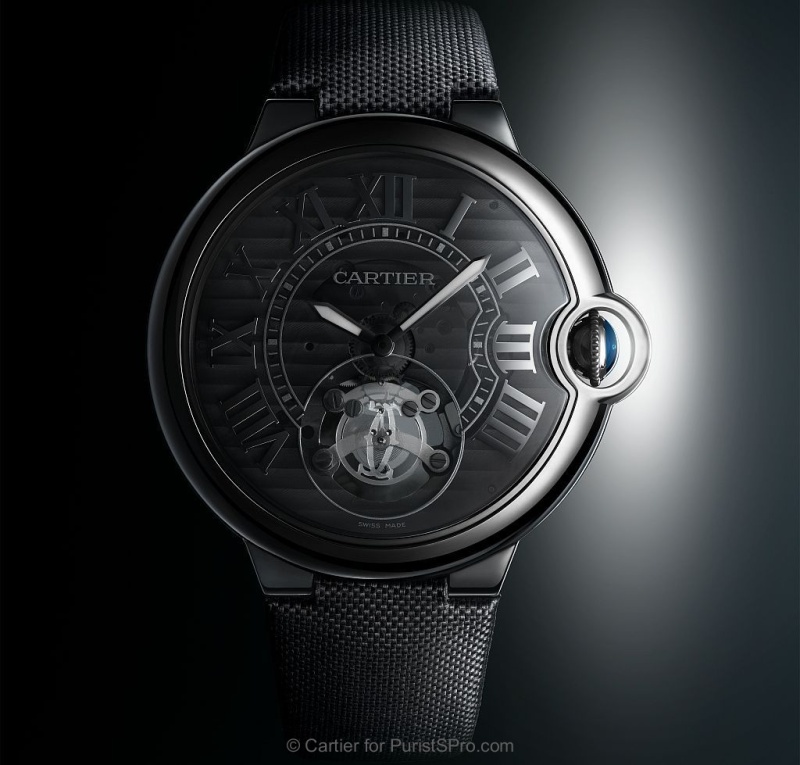
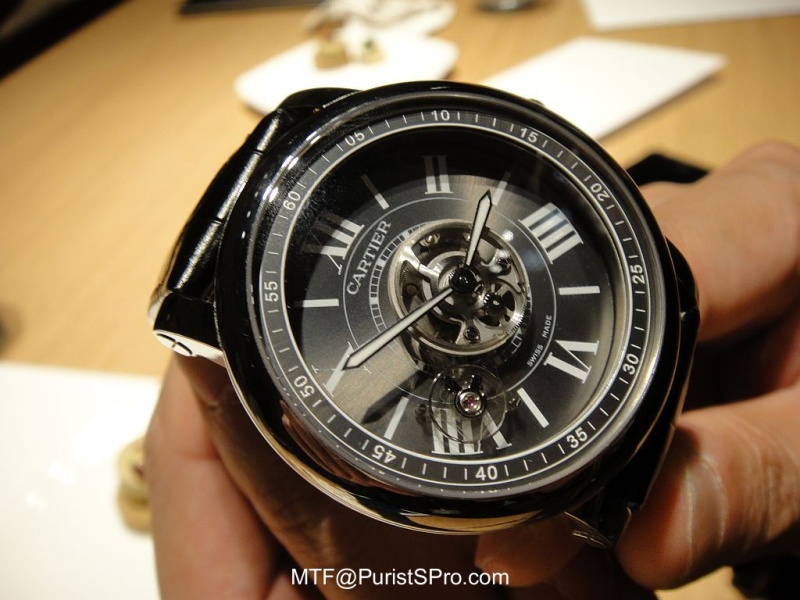
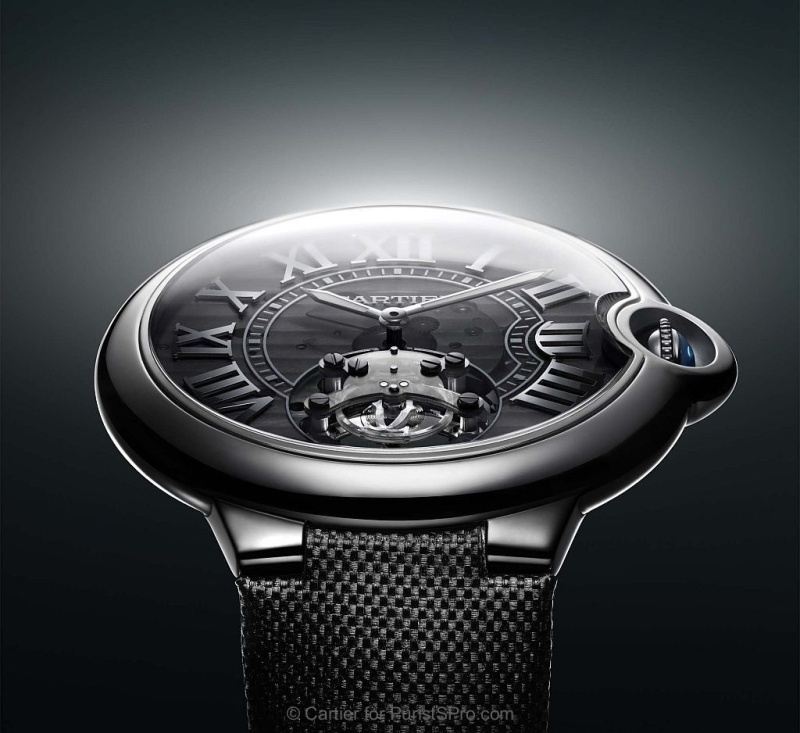
The ID ONE concept watch introduced in 2010 was not made to be commercialised and yet the technology has been adopted and adapted in the latest 2013 novelty from Cartier - Astrotourbillon Carbon Crystal watch.
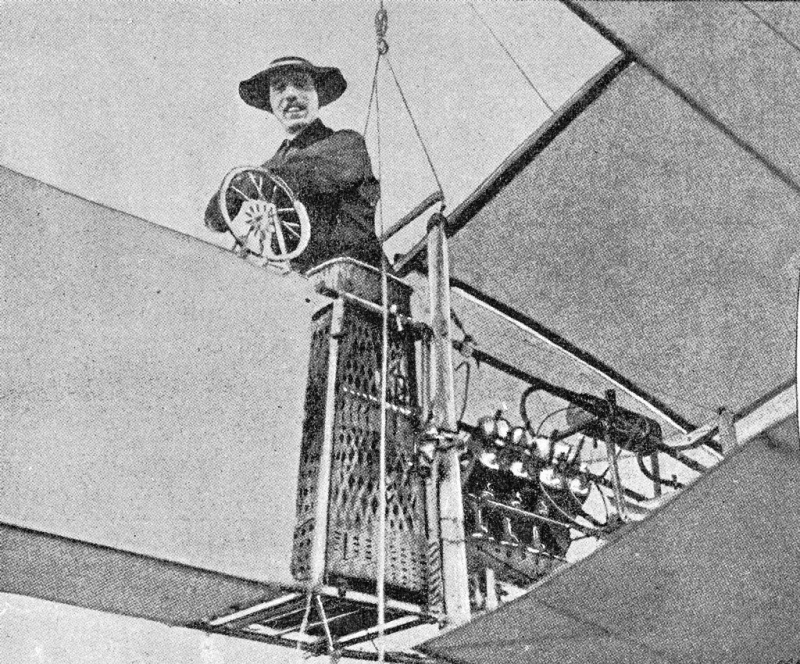
Alberto Santos-Dumont
On November 12th 1906, the Brazilian pioneer pilot Alberto Santos-Dumont took to the controls of a 50 hp machine. The airplane rose above the grass over a distance of 220 meters. The 21-second flight achieved a speed of 41.3 km/h and was recognized as the first world record in aviation.
As he landed his machine, Alberto Santos-Dumont already knew he had made the history books. A glance at his wrist, bearing the wristwatch specially designed for him two year before by his friend Louis Cartier, was enough. The first true wristwatch became a watchmaking icon under the name “Santos”.

Cartier ID One concept watch
There has been some clear thought and product development stream at Cartier that I call the 'ID Stream'. Cartier ID ONE and Cartier ID TWO are not just watches. They are “proof-of-concept” in the Cartier ID programme.
ID stands for “Innovation and Development” or “IDeas”. These are unique pieces intended to test a vision or indicate a direction. Created in 2010, the Cartier ID ONE concept watch has been manufactured and assembled according to an innovative concept using cutting-edge technologies and materials.
CASE
Niobium-titanium 46 mm case, fabric strap, adjustable folding clasp in 18K white gold.
Sapphire crystal and caseback.
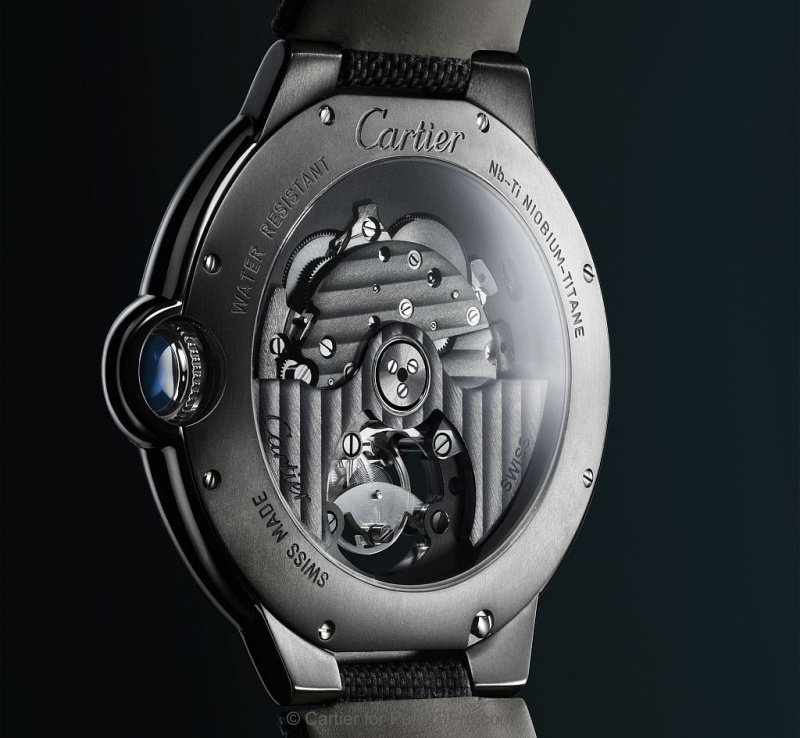
MOVEMENT
Cartier manufacture mechanical movement with automatic winding, requiring no adjustment.
Diameter: 16 ½ lines (36.8 mm)
Thickness: 6.12 mm
Number of jewels: 17
Number of pieces: 177
Anchor and anchor wheel: carbon crystal, without jewel pallet-stones.
Double-barrel with around 52 hours power reserve.
Main plate in brass coated with ADLC (Amorphous Diamond-Like Carbon) and decorated with Côtes de Genève.
HAIRSPRING in Zérodur®, without index assembly
BALANCE-WHEEL mono-bloc, in carbon crystal, 28,800 vibrations / hour
OSCILLATING WEIGHT in tungsten carbide coated with ADLC
- ensure the balance-wheel is perfectly balanced or poised, either with adjusting screws or by removing material from the rim,
- adjust the hairspring with the balance-wheel by modulating its active length, usually by adjusting the index assembly. Adjusting the index moves the curb pins, betwixt which, is the outermost coil of the hairspring. That changes the effective length of the balance spring (the part that expands and contracts at each oscillation).
- ensure good match between the escapement components (anchor and escape-wheel), by adjusting the position of pallet-stones on the anchor.
From Day 1, the movement could deviate from true adjustment by any number of external forces: impact shock, magnetisation, strong thermal variation or when the oils decompose or dry out. If this happens, the movement has to be re-adjusted.
For the first time, Cartier presents an adjustment-free mechanical watch: correctly manufactured and assembled from the beginning, it remains in true adjustment throughout its lifetime.
Indeed, thanks to an innovative conception requesting breakthrough materials and technologies, this concept watch does not need the usual adjusting components of mechanical movements:
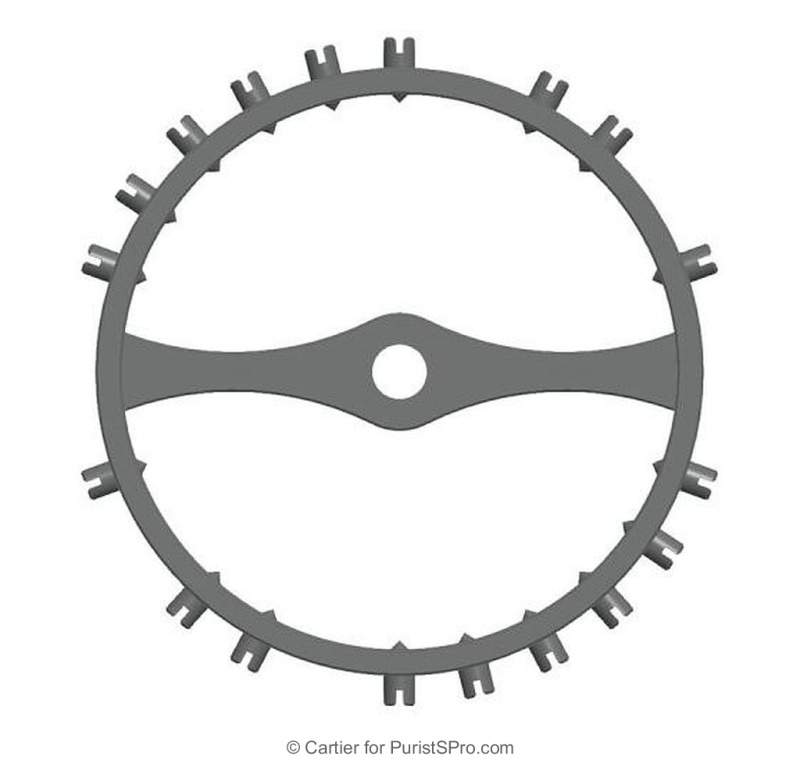

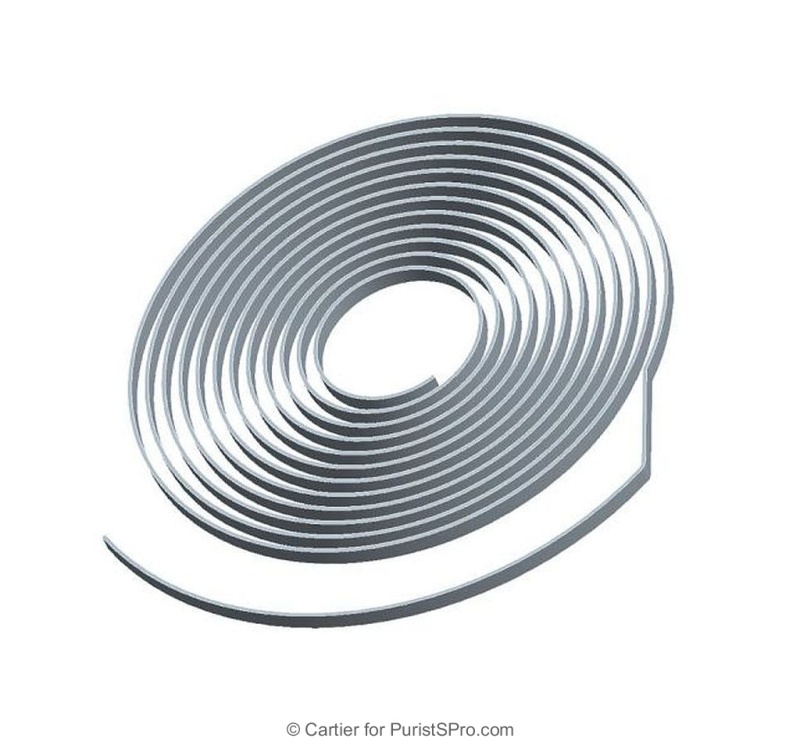
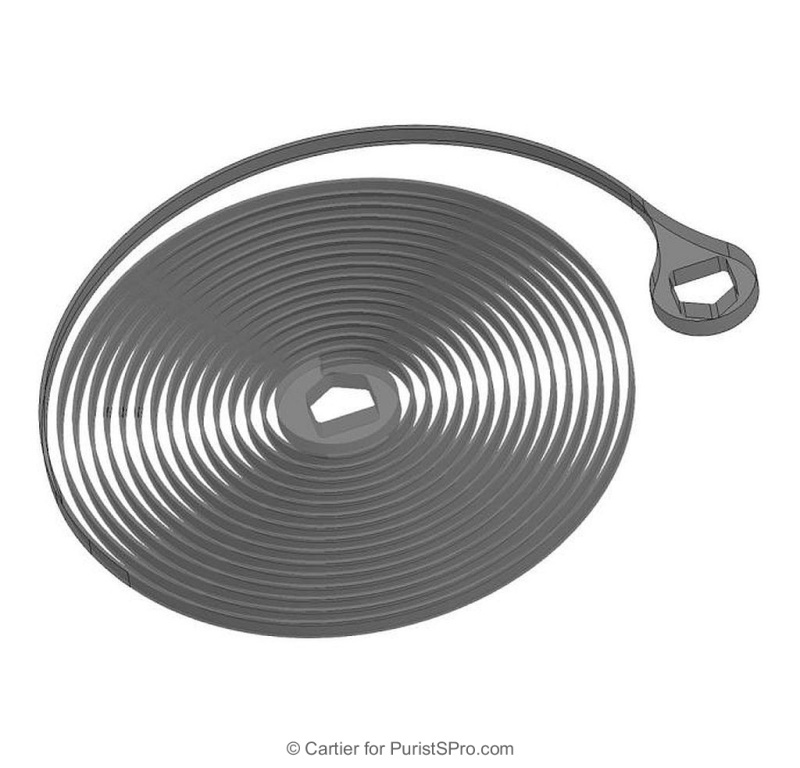
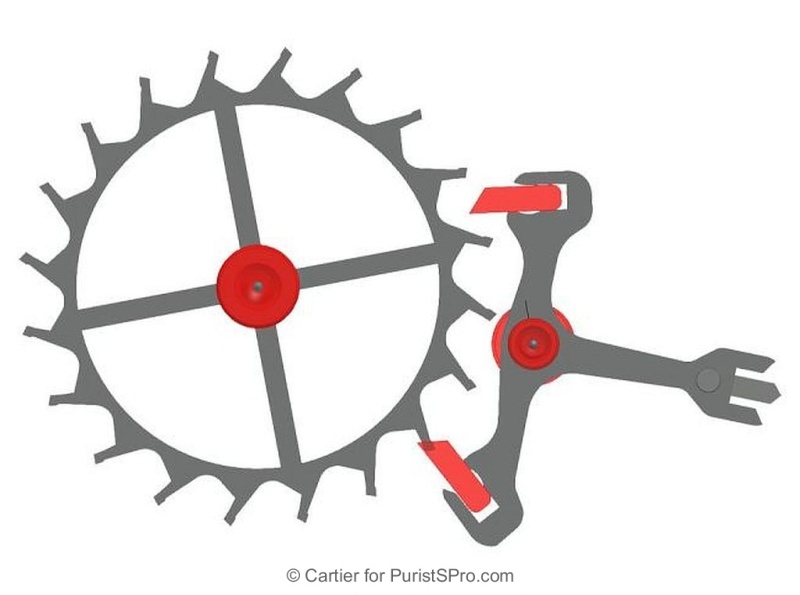

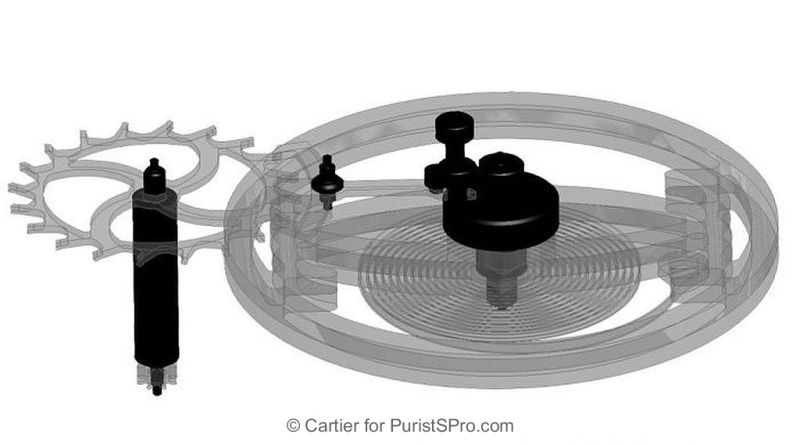
The Zerodur® and carbon crystal components of the ID One are manufactured by CSEM (Swiss Center for Electronics and Microtechnology) in Neuchâtel. Cartier has applied for a patent (pending) on the manufacturing process for the Zerodur® hairspring.
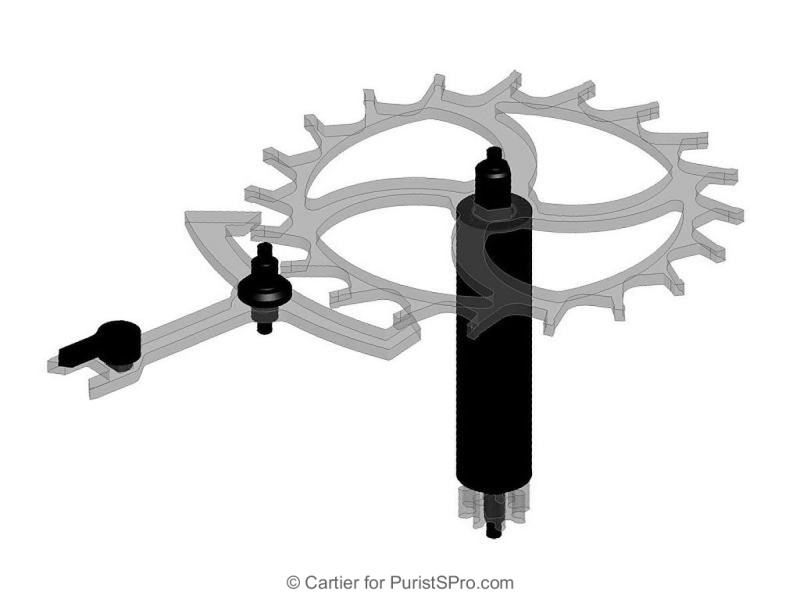
Titanium pivots are shown in Black
The wheels of the gear train are also made of carbon crystal for lubrication-free function. The pivots in the gear train and escapement are made of titanium, which is a-magnetic, lighter, and more elastic than steel. Titanium pivots withstand shocks without breaking.

Lifetime Performance:
The ID ONE watch remains perfectly adjusted throughout its lifetime because:
- Carbon Crystal escapement cage mounted on silent-blocks (trueshock-absorbers) to protect the regulating components (hairspring, balance-wheel, anchor, escape-wheel, escapement axis). The escapement, comprising the escape wheel, anchor, balance and hairspring, is housed inside a carbon crystal cage which sits on silent blocks which are dampers that absorb shock. Both the upper and lower platforms of the cage are supported by silent blocks made of titanium and rubber.
Rubber absorbers are shown in Red.
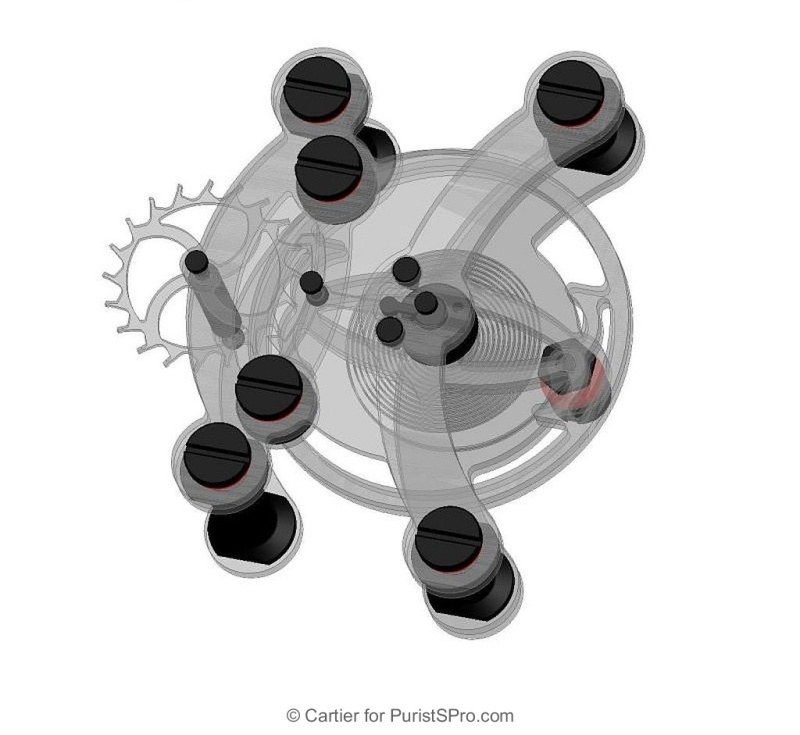
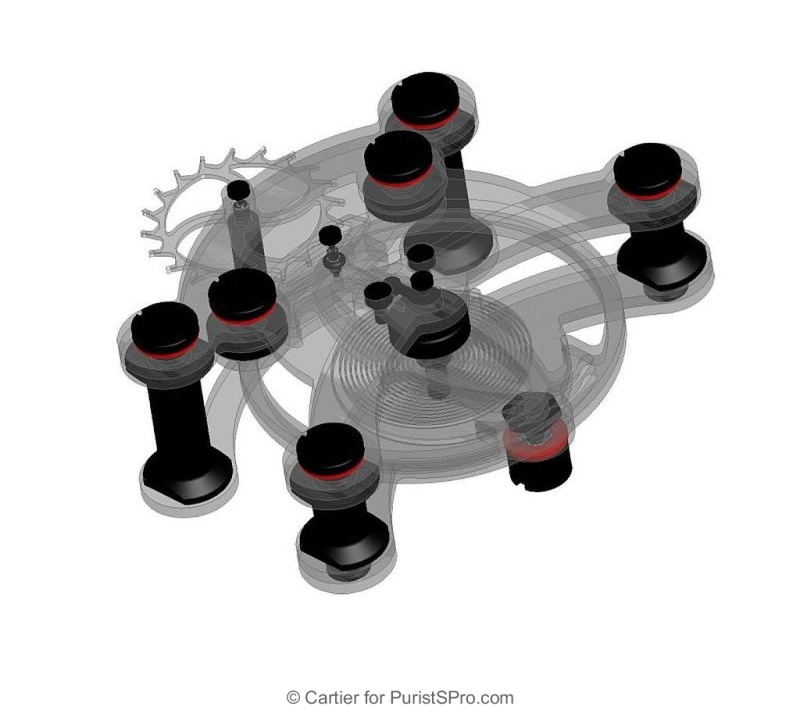
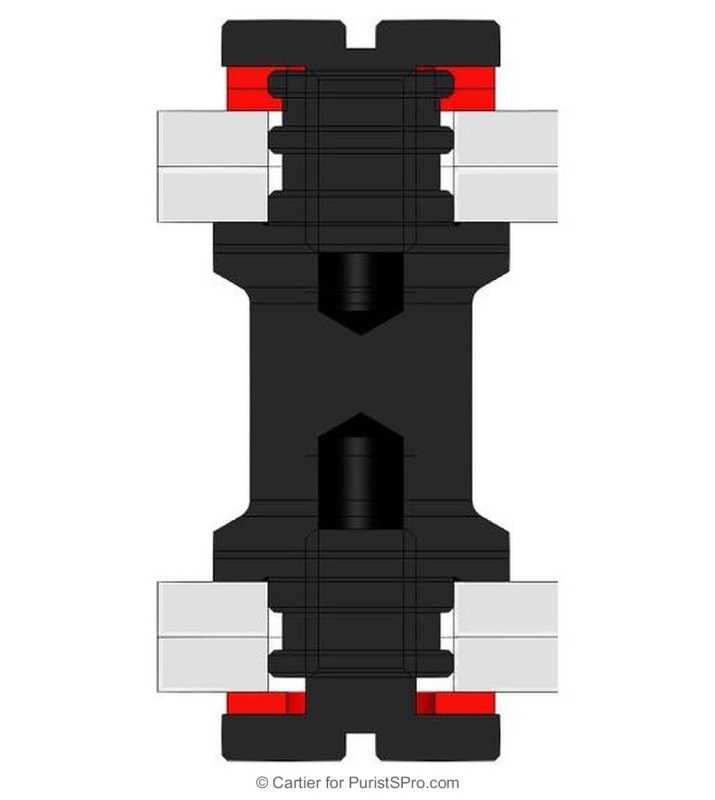
- Components have a very low friction coefficient. Whether coated with ADLC or made of carbon crystal, the watch components do not need liquid lubrication (oil or grease).
The brass movement plates and steel wheels are treated with ADLC to give a low coefficient of friction; no lubrication is necessary.
ID ONE Timekeeping
Compared to a standard automatic movement, the ID ONE realises minimal chronometric error throughout its range of power reserve. The greatest deviation is +1 second. On average, the ID ONE gains 0.8 seconds a day. To put that into context, a quartz wristwatch can deviate by 0.5 seconds a day, while a mechanical traditional anchor escapement wristwatch gains over 2 seconds a day.
The ID ONE movement has three advantages:
1. No regulation
2. No lubrication
3. Escapement with one second daily deviation for the life of the movement
Those advantages are carried forward on the 'ID Stream' to the new 'Astrotourbillon carbon crystal' watch.......
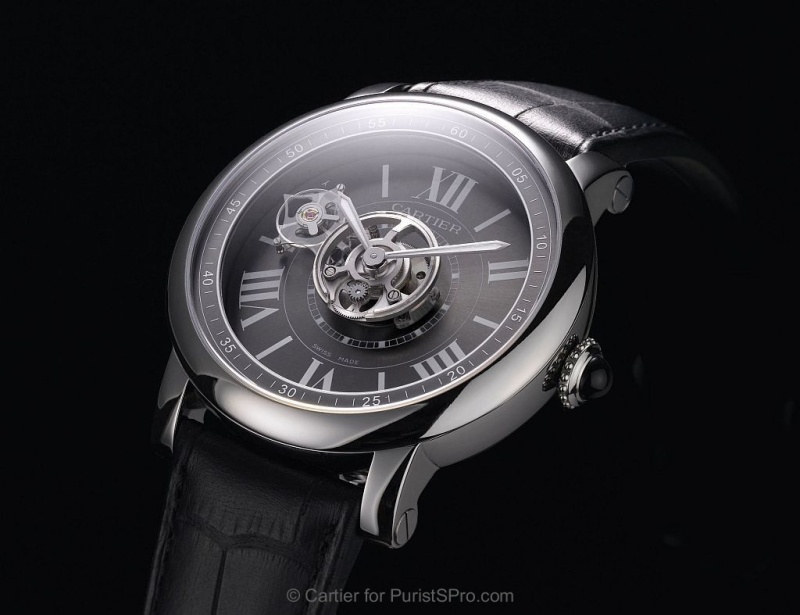
Case: Rotonde de Cartier 47 mm, niobium/titanium
Circular-grained crown set with black synthetic spinel cabochon
Alligator strap
Adjustable folding clasp in 18-carat white gold
Water resistant to 30 m / 100 ft / 3 bars
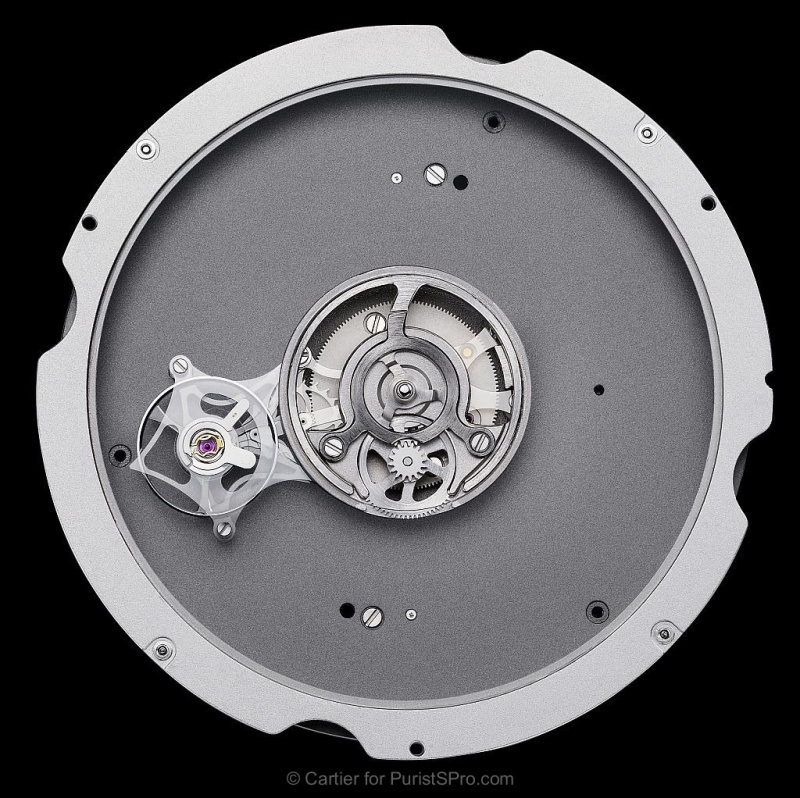
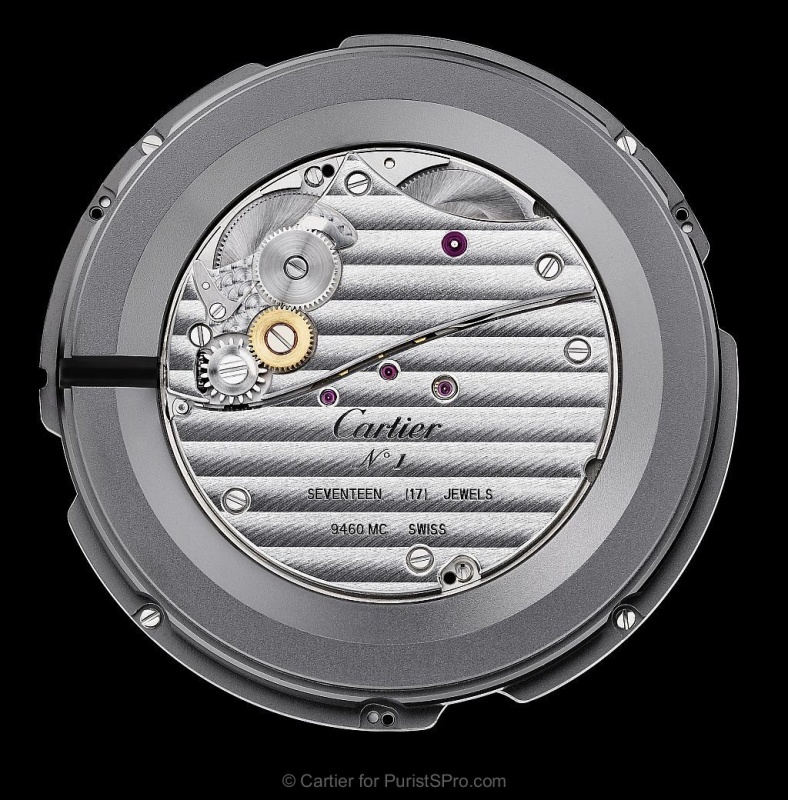
Diameter: 40.1 mm
Thickness: 9 mm
Number of components: 195
Frequency: 3 Hz, or 21,600 vibrations per hour
The enormity of Cartier's achievement cannot be emphasised enough. The holy grail of the watchmaker's concept dream of an adjustment-free mechanical watch has been realised in the real world and for the real customer.
This is far removed from the sterile R&D laboratory and it demonstrates that cutting edge technology in Cartier horology Dreams can become Reality.......chapeau!
Cartier Connections series [CLICK to re-direct]
Cartier Connections part 1: The Sheikh and The Dachshund
Cartier Connections part 2: Of Wings and Skeletons
Cartier Connections part 3: Tokyo to Paris and back
Cartier Connections part 4: A Tale of Two Doggies (Cartier Tank MC)
Cartier Connections part 5: Carbon Crystal Dreams and Reality
Cartier Connections part 6: Of Feathers and Hammers - Cartier ID TWO
This message has been edited by MTF on 2013-11-19 23:20:50
I was expecting some manufacture to join the material and microelectronics technology available on the 21st century but, so far, the attempts were made only on some parts (hairsprings, balance etc.). It seems that Cartier did this in fullest. Very impressive. Shame on me that don't follow some brands. Cartier now got my entire attention. Thank you for presenting this. Nilo
Nilo, it may be surprising at first glance that Cartier takes such a drastic step forward but thinking about it, there is a logic behind the moves. Cartier was already at the forefront of wristwatch innovation a century ago. Now, they have the biggest revenue in the Richemont Group with the resources to play the Long Game. There is no need for flashy headline grabbing with Cartier; their long history allows for very long term planning. Thanks for watching. Regards, MTF
But Cartier remains! Fx
Thanks a lot for this article Melvyn which explains this innovative trend from Cartier. I hope to be able to see this Astrobillon Cristal which really looks stunning. Fx
This thread is active on the Cartier forum with 4 replies. Share your knowledge with fellow collectors.
Join the Discussion →