Vintage
Ping Tsai's "What's in a legacy? Part I" delves into 125 years of Bulgari's rich history, offering a compelling narrative on the brand's enduring success and design evolution. This article, originally published in 2010, provides a foundational understanding of Bulgari's journey from its late 1800s origins to a global luxury powerhouse. It highlights key historical interpretations and design philosophies that have shaped the brand's identity.


What's in a legacy? Part I
Highlights & Historical Interpretations from 125 Years of Bulgari
By Ping Tsai
© March 2010
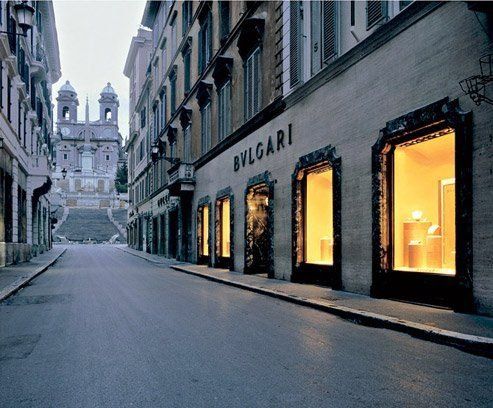
Bulgari Boutique on Via dei Condotti in Rome, Italy - photo courtesy of Bulgari
For a company that's been around since the late 1800s and has annual sales in excess of a billion dollars, Bulgari isn't likely to face much doubt of its success on a global scale. Whether you love their watches, adore their jewelry, are skeptical of their business decisions or simply couldn't care less for anything the mega company has to offer, Bulgari's continuance down the path of longevity cannot be denied. In today's struggling luxury markets, where even the finest of brands may not survive on their own, longevity is rare, extolled and extremely sought after. Simply put, it is success.
When founder Sotirio Bulgari passed the company down to his sons, Constantino and Georgio and subsequent generations to come, he passed along with it a rich heritage of classic Greek and Roman jewelry techniques and design which the company has consistently looked back upon for inspiration. Bulgari recognized the popular fascination with ancient Roman fashion and sense for aesthetic beauty. This closely regarded attention to history has yielded highly crafted quality jewelry and watches and several design concepts, some of which are particularly significant in the evolution of Bulgari's style. These concepts are important in illustrating the devotion to looks that are timeless by nature and could be as relevant today as they were more than a thousand years ago.
1. Bright and vibrant colored, often smooth surfaced gemstones. Bulgari was one of the first jewelers to use polished cabochon-cut stones (considered second-rate gems by more traditional jewelers) in a prominent way. Inspired by ancient Roman art and jewelry, this created jewels with a great sense of bold and smooth volume and became one of Bulgari's most popular characteristics for decades to follow.
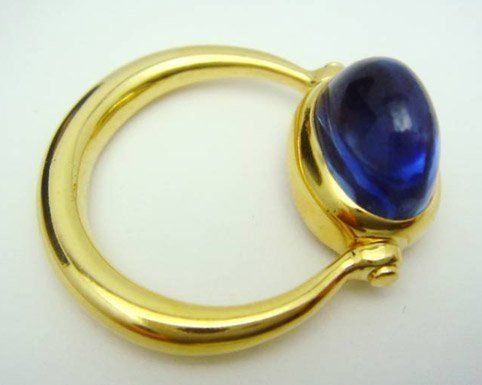
Bulgari Sapphire Cabochon Ring
Photo from www.vroma.org
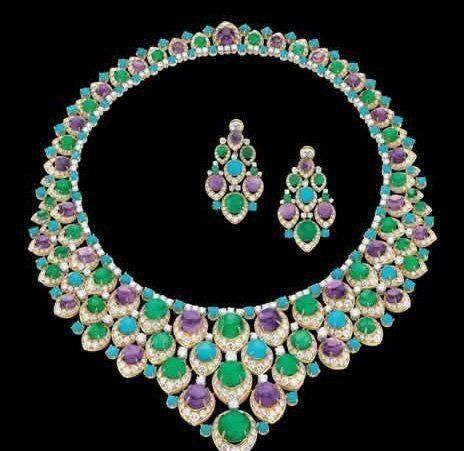
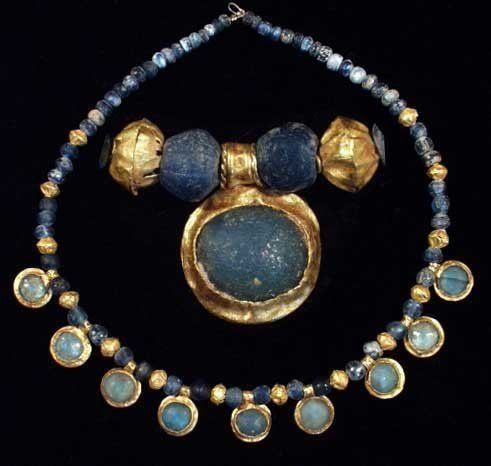
In the 1960s, Bulgari used striking color combinations of different gemstones that were chosen (and combined) for their chromatic effect (as opposed to being chosen for their value). This was very unconventional at the time. The designs were considered decisive with stylized forms and soft volumes.
Bulgari necklace and matching earrings in yellow gold with turquoises, cabochon amethysts, cabochon emeralds and diamonds, 1965
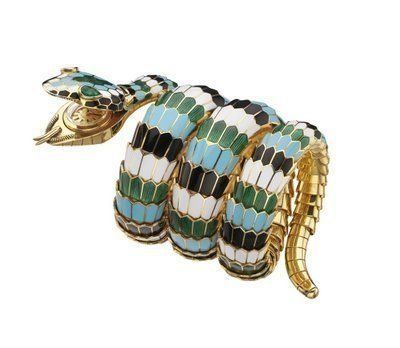
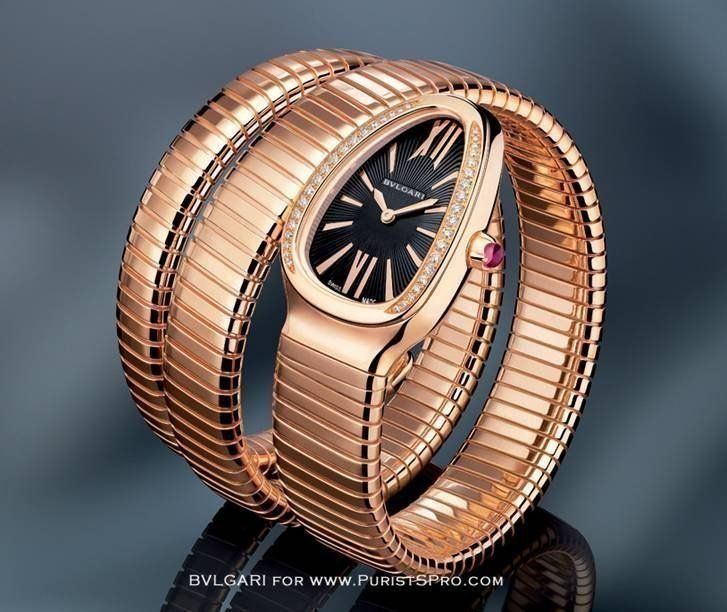
2. The Serpent motif. The new Serpenti Collection of watches will be presented at Baselworld this year and is reflective of Bulgari's long standing use of the snake as a design theme. In ancient Roman times, people often wore talismans for good luck or to ward off ill-fortune. One of the most common ancient Roman symbols used in these talismans was the image of the coiled snake. It represented immortality and was particularly common in bracelets. Some tomb sculptures show women with as many as seven such bracelets on each arm, which may have served as extra security for the afterlife.
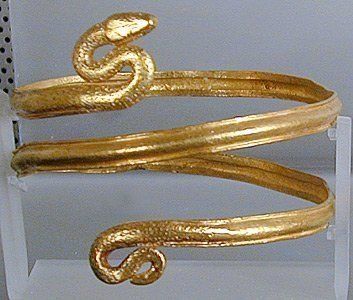
Photo from www.vroma.org
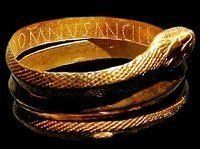
Photo from www.explore-italian-culture.com
Roman gold snake bracelets from the late fourth-second century BCE
3. Ancient Roman coins. Since jewelry was a reflection of wealth in ancient Roman times, it became well fitting to show it through the use of ancient Roman coins in its design. Using coins in jewelry was not a Roman invention but their appearance in brooches, rings and necklaces became much more common in the Roman period.
Ancient Roman gold ring with portrait of emperor Marcus Aurelius (121 AD to 180 AD) – photo from www.vroma.org
"Gemme nummarie" or coin jewelry is a concept that Bulgari has masterfully reinterpreted over the years incorporating actual ancient coins into their designs of necklaces, rings, earrings etc. in a very literal approach.
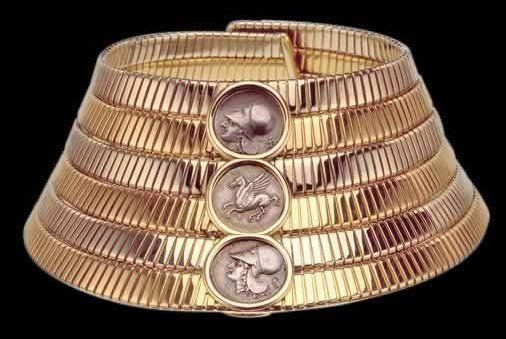
Two-colour gold tubogas and ancient coin necklace, 19 80 from www.Bulgari.com
Perhaps in a much more liberal and figurative approach, the idea is most evident in their extensive use of the signature circular disc shape throughout all their products.
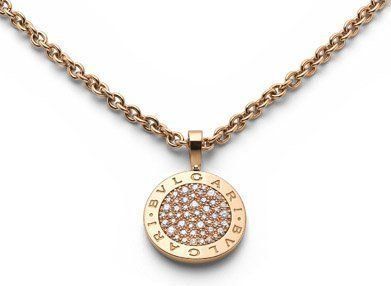
BVLGARI-BVLGARI pendant in 18kt yellow gold – www.Bulgari.com
4. The BVLGARI logo. In Roman type, simple and elegant, it personifies the true essence of classic Roman style and aura.

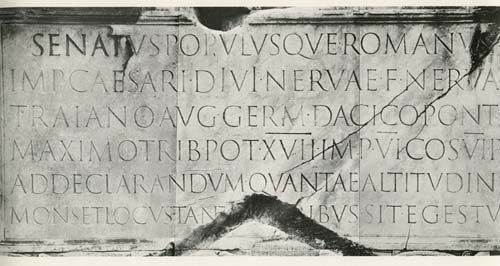
Spliced photograph of the inscription at the base of Trajan's Column in Rome, Italy – photo by Edward M. Catich from The Roman Inscription in Rome. Published by the Catfish Press, St. Ambrose College, Davenport, Iowa
Romans wrote only in uppercase or capital letters with beautifully proportioned straight lines, curves, and angles until quite late in their history. The lower case letters were a medieval invention and didn't show up until the 5th and 6th centuries, with a few examples dating a little earlier. Good examples of the fine style of Roman capital letters can be seen in the inscriptions carved with mallet and chisel into stone monuments such as Trajan's Column in Rome, Italy.
In addition, there was no "J" in ancient Latin and the "U" was seldom seen and usually follows a "V". The Romans wrote an "I" where we might write a "J" and pronounced it as a consonant with a "yuh" sound in these places. The "V" stood for our "U" and made a "W" sound where we might make the "V" sound reading the word in modern English .
The Bulgari logo, a design motif and stamp of identity on the 'BVLGARI BVLGARI' watch bezel as well as other products utilizes classic Roman lettering. However, Bulgari's version is modernized with spacing and letters that are slightly wider.
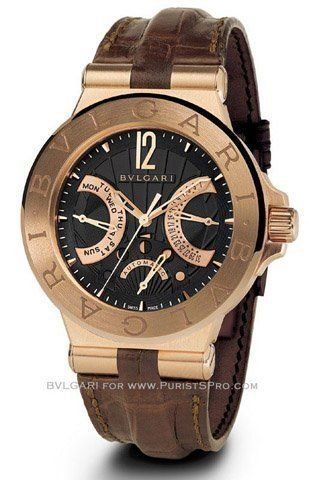
Bulgari Diagono Moonphases with BVLGARI-BVLGARI logo bezel
Through looking back from time to time, Bulgari has managed to propel itself forward and now in its fourth generation, achieve timeless continuity and success. By creating pieces that adopt elements from the past and reinventing them in a modern way for the current time, they are illustrating graphically the co-existence of ancient and modern cultures and traditions which is a feature of all modern Italian culture. By doing this all throughout their history, they've managed to establish consistency in an exciting and unpredictable fashion. In the process, they've gained an ever growing understanding of their customer base. In a competitive industry where remaining true to one's vision and in the same token ensuring survival seems nearly an insurmountable feat, Bulgari is without a doubt, "in the zone" and finds itself doing just fine.
Next to follow : What's in a legacy? Part II: A Pictorial History of Watches by Bulgari
This message has been edited by AnthonyTsai on 2010-03-11 22:32:43 This message has been edited by AnthonyTsai on 2010-03-16 18:51:36
I can't wait to read the next installment. It's important for someone like me, who comes into any discussion about Bulgari from a luxe jewelry/consumer goods standpoint (as a fan of their jewelry and perfumes), to get a better understanding of Bulgari's patrimony and its effects on the evolution of their designs over the years. Great reading! Cheers, Daos
It always means a lot when you read and comment on my posts. Took me a little while to put together but I guess it's a good base point to shoot off from.
Beautiful substantial pieces! Thank you for the historical assessment of Bulgari; truly a great jewelry brand!
No message body
Good stuff Ping! It's always fascinating hearing about the roots of a brand and where they came from and how they progress to the present day. looking forward to part II. -MW
...and I only got a fraction of it in this review. Their history is extensive. I tried to focus on just a few key points that I thought were interesting. Thanks for checking it out.
This thread is active on the Bulgari forum with 22 replies. Share your knowledge with fellow collectors.
Join the Discussion →