Discussion
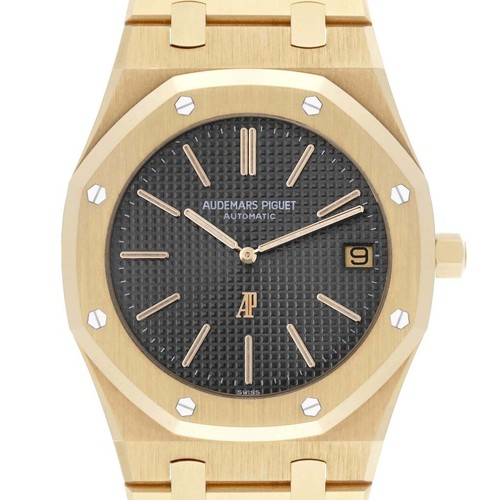
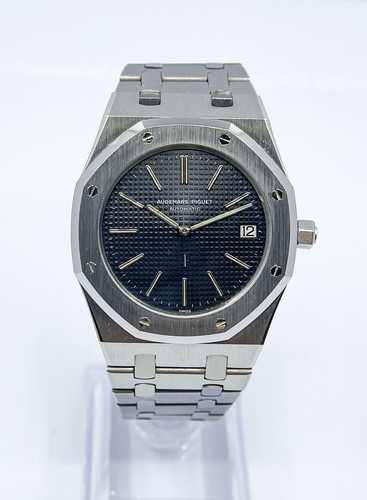
April 15 - 25, 1972: Audemars Piguet introduces the Royal Oak at the Basel fair. The Royal Oak 5402 below left AP on June 15, 1972. It is one of the first 40 Royal Oaks ever produced. "Introducing steel at the price of gold" was their slogan in the advertisements. The general public was shocked: a s
April 15 - 25, 1972:
Audemars Piguet introduces the Royal Oak at the Basel fair. The Royal Oak 5402 below left AP on June 15, 1972. It is one of the first 40 Royal Oaks ever produced. "Introducing steel at the price of gold" was their slogan in the advertisements. The general public was shocked: a steel watch with visible gasket and screws at the price (CHF 3300) of a 18k Patek Philippe and at a price multiple of a Rolex Submariner. Sales were very sluggish for quite a while before style icons like Gianni Agnelli were seen in public wearing the 5402.
July 1972:
Texas Instruments sees significant potential in the market for hand-held calculators. In July 1972 it enters this market with its first model, the Texas Instruments TI-2500 Datamath at a cost of USD 149.99. It was a huge success from the outset and many versions of the TI-2500 were following. Below you see the TI-2500 Datamath 1st. version.
Design Icons: We will probably only know in 10, 20 or 30 years from now, whether SIHH 2018 has given birth to a design icon. I guess one of the most relevant criteria is for the design to be time-less. To survive generations successfully. To be "modern" even after 40+ years.
It is of course unfair to send a calculator into the race with a wrist watch to discuss iconic design. Consumer electronics are bound to NOT be time-less. The two items below disrupted design at the same time back in 1972. But the way we perceive those two designs today is as diametrically opposed as it could possibly be.
Cheers, HSTE

The Royal Oak reference 5402 is recognized as the original iteration of the model, introduced in 1972. This reference established the design language that would define the Royal Oak collection, characterized by its integrated bracelet and octagonal bezel secured by visible screws. It was initially presented as a luxury sport watch, distinguishing itself through its material and finishing in a period dominated by more traditional dress watch aesthetics. The 5402 was produced in various series, with the A-series being the earliest and most sought after by collectors.
The watch features a 39mm stainless steel case, often referred to as the "Jumbo" size, which was considered substantial for its era. It houses the self-winding Caliber 2121, a thin movement derived from Jaeger-LeCoultre's Caliber 920, known for its full-rotor design. The movement provides a power reserve of approximately 40 hours. The crystal protecting the dial is acrylic, and the watch offers a water resistance of 50 meters, suitable for general wear.
For collectors, the reference 5402 holds significance as the foundational model of a major watch series. Its various production series (A, B, C, D) present nuances in dial text and case back engravings that are closely examined. The integrated steel bracelet is an integral part of its design, contributing to its distinct profile. The blue dial, often with a "tapisserie" pattern, is a hallmark of this early reference, though other dial variations exist.
that at the time AP didn't want that RO, and the product manager in charge told Gerald Genta that he would agree to pay for a production of 1000 pieces on his personal money and presented it at basel world, those 1000 have been sold in less than one day and that is how the RO was born. maybe it is a legend but would be interesting someone could confirm that story.
and you must be right, maybe the PM paid for those 40.
I don’t think so. Only evolutions or remakes or fake vintage.
Cheers, HSTE
Cheers, HSTE
This thread is active on the Horological Meandering forum with 20 replies. Share your knowledge with fellow collectors.
Join the Discussion →