Vintage
Nicolas (amanico) shares his enduring fascination with the Audemars Piguet Millenary Starwheel, a timepiece that continues to captivate collectors with its unique wandering hours display. His post invites readers to appreciate the Starwheel's distinctive aesthetic and consider its place among Audemars Piguet's diverse offerings, even in comparison to modern references like the Code 11.59. This article delves into the Starwheel's appeal, enriched by community contributions.

The Audemars Piguet Starwheel represents a distinctive chapter in the brand's history of horological innovation, particularly from the late 20th century. Introduced in the early 1990s, the Starwheel mechanism revived a wandering hours complication first seen in the 17th century. This departure from conventional hour and minute hands underscored Audemars Piguet's commitment to exploring alternative time displays, positioning it as a pioneer in avant-garde watchmaking beyond its iconic Royal Oak line. The Starwheel's unique presentation quickly garnered attention for its blend of historical inspiration and contemporary execution.
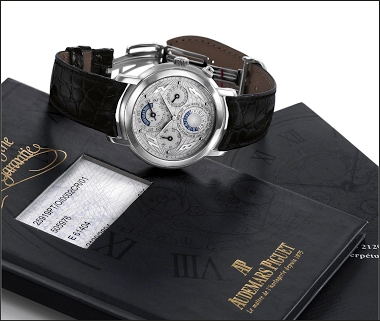
Technically, the Starwheel operates through three rotating sapphire discs, each bearing four numerals (1-12). These discs orbit a central axis, with the active hour numeral pointing to a fixed minute track positioned along the upper arc of the dial. This particular reference, 25898ST, features a round steel case, a departure from the oval form factor typically associated with the Millenary collection, under which some Starwheel models were later categorized. The deep blue dial provides a striking backdrop for the intricate Starwheel display, emphasizing legibility despite its unconventional nature. Powering this complication is the automatic Audemars Piguet Caliber 2224/2811, a testament to the brand's in-house movement capabilities.
As a limited edition of just 125 units, the Audemars Piguet Starwheel reference 25898ST holds a significant position in the collector's market. Its rarity, coupled with its unique wandering hours complication, appeals to enthusiasts seeking pieces that showcase Audemars Piguet's technical prowess and willingness to innovate beyond traditional aesthetics. This model is not merely a time-telling instrument but a conversation piece, representing a period when haute horlogerie embraced creative reinterpretations of time display, making it a highly sought-after artifact for discerning collectors of complicated and historically significant watches.
...interesting case, and easy to read (good contrast) and viewable under the cuff...
Had to let them go, the Rosegold was the late George Cramer's
This thread is active on the Audemars Piguet forum with 29 replies. Share your knowledge with fellow collectors.
Join the Discussion →